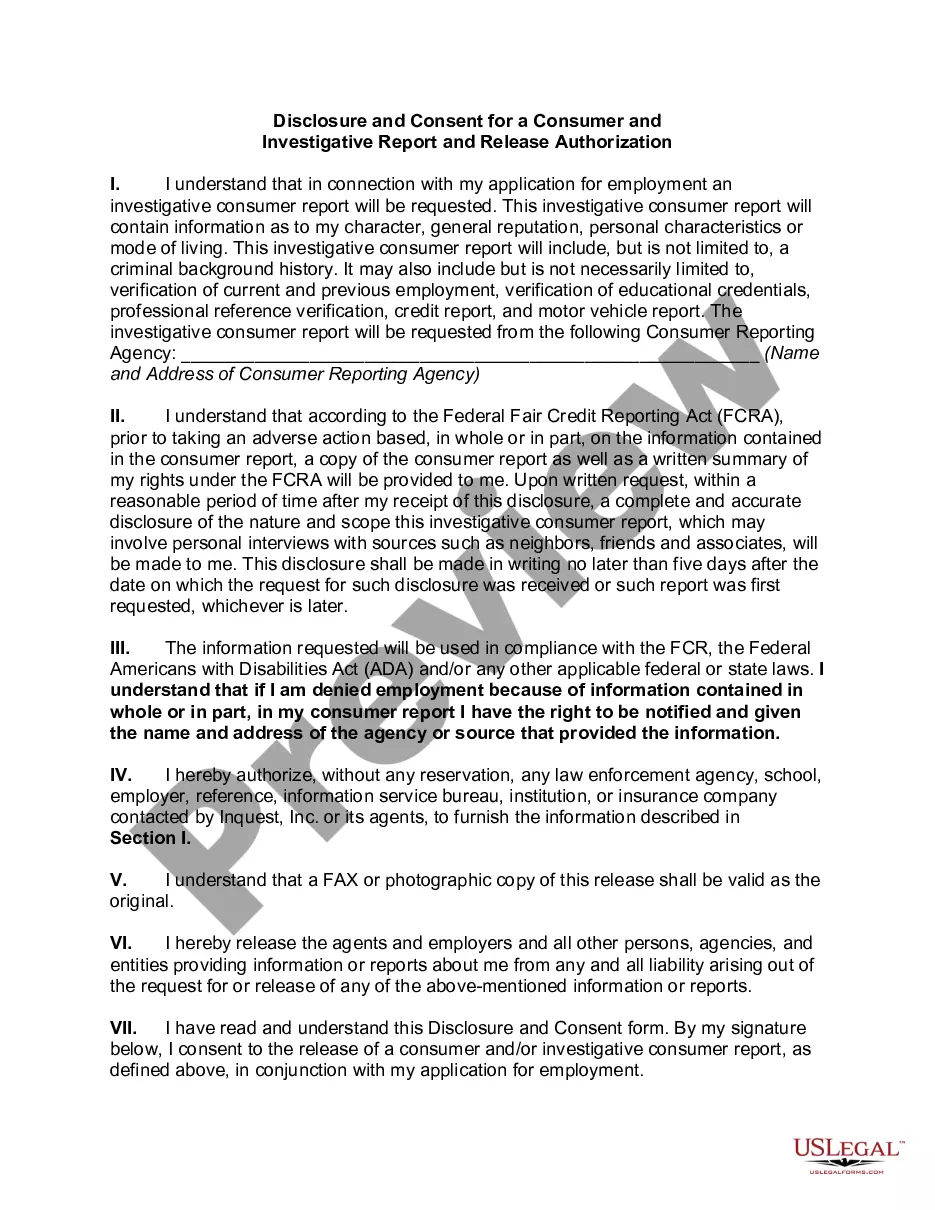
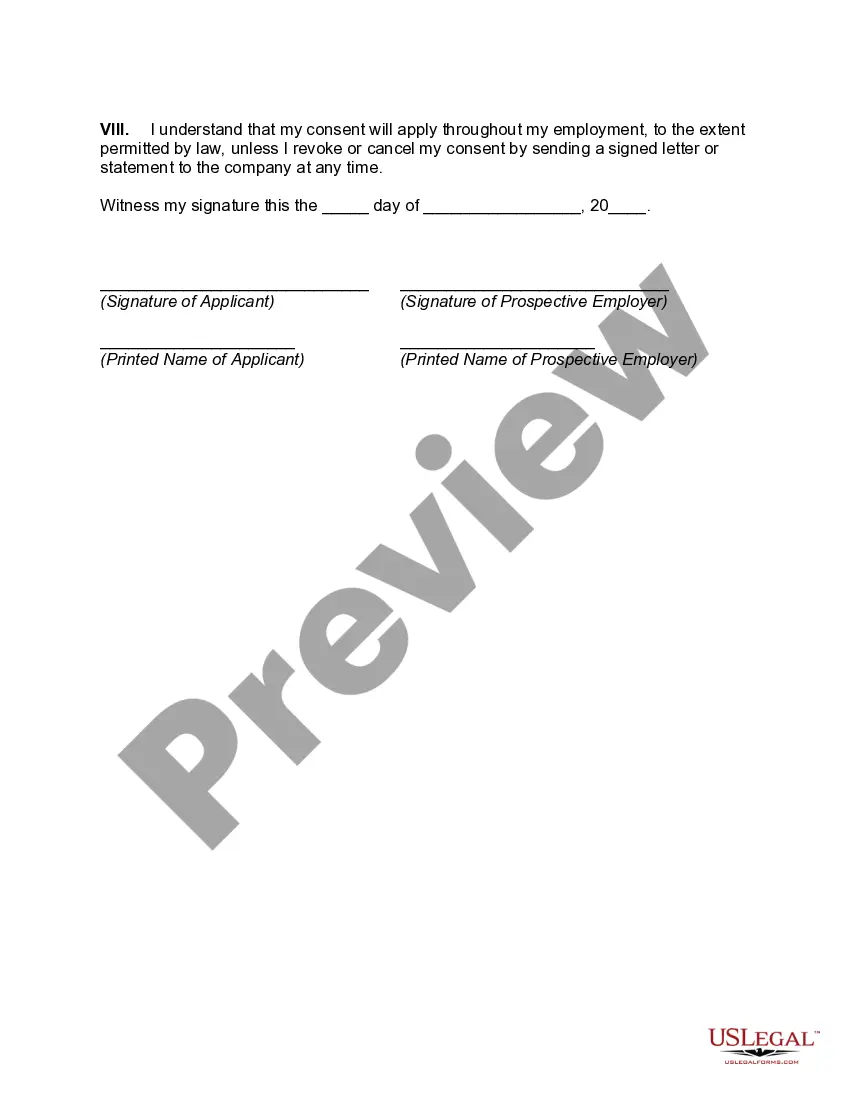
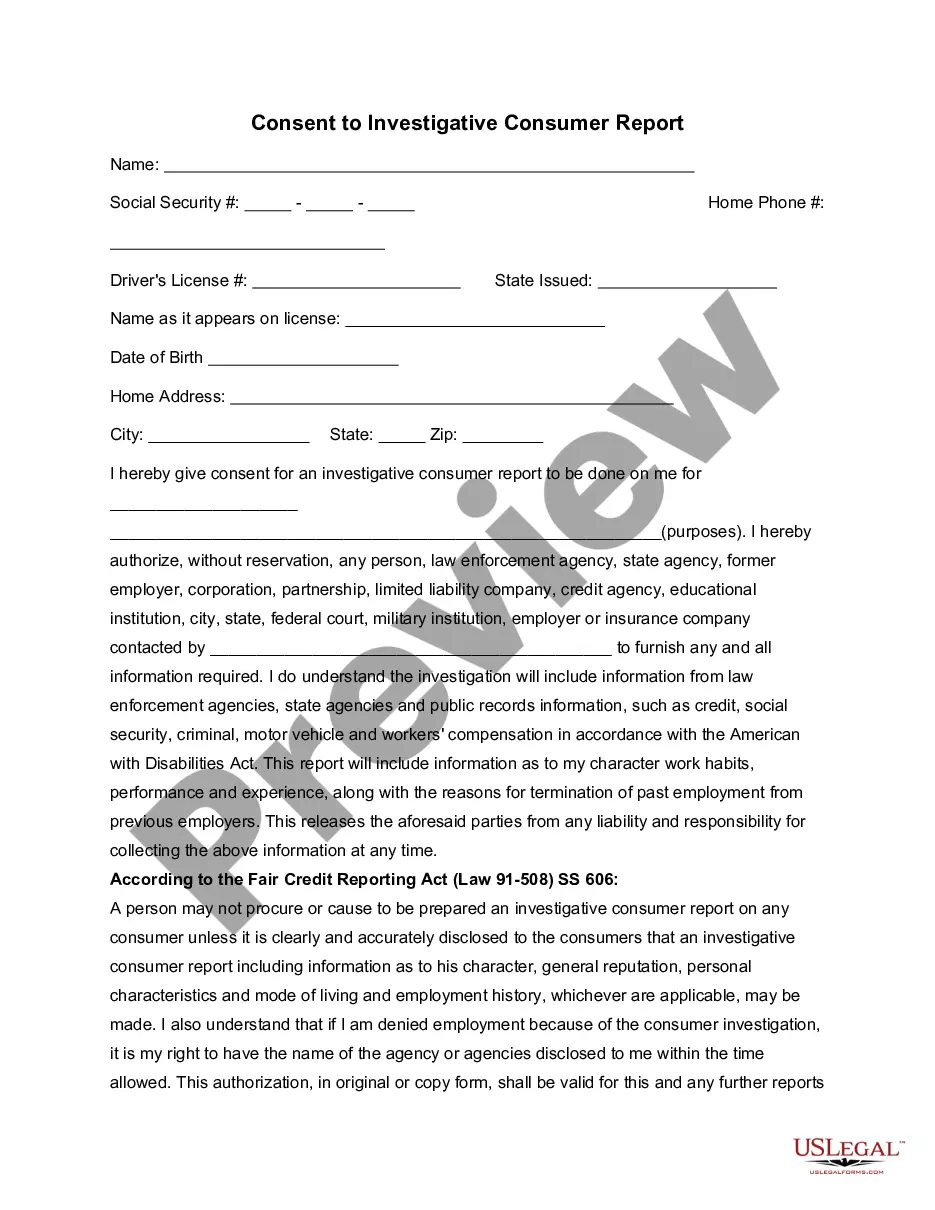
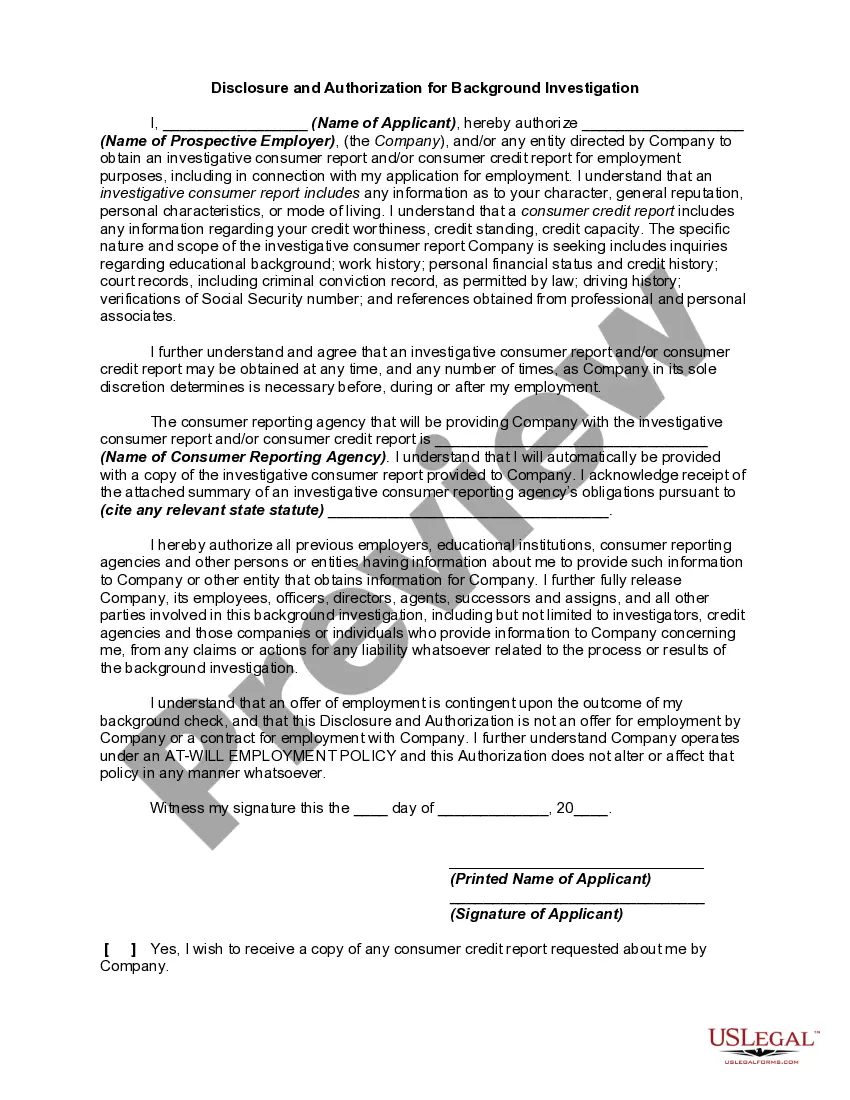
Consumer Investigative Release With Example In Kings
Description
Get your form ready online
Our built-in tools help you complete, sign, share, and store your documents in one place.
Make edits, fill in missing information, and update formatting in US Legal Forms—just like you would in MS Word.
Download a copy, print it, send it by email, or mail it via USPS—whatever works best for your next step.
Sign and collect signatures with our SignNow integration. Send to multiple recipients, set reminders, and more. Go Premium to unlock E-Sign.
If this form requires notarization, complete it online through a secure video call—no need to meet a notary in person or wait for an appointment.
We protect your documents and personal data by following strict security and privacy standards.

Make edits, fill in missing information, and update formatting in US Legal Forms—just like you would in MS Word.

Download a copy, print it, send it by email, or mail it via USPS—whatever works best for your next step.

Sign and collect signatures with our SignNow integration. Send to multiple recipients, set reminders, and more. Go Premium to unlock E-Sign.

If this form requires notarization, complete it online through a secure video call—no need to meet a notary in person or wait for an appointment.

We protect your documents and personal data by following strict security and privacy standards.
Looking for another form?









Form popularity
FAQ
Federal data privacy laws The U.S. does not yet have a comprehensive federal consumer data protection law that covers all varieties of private data. But it does have several federal laws that protect specific data sets, such as the U.S. Privacy Act of 1974, HIPAA, COPPA, and the Gramm-Leach-Bliley Act.
The FTC has supported industry self-regulation and taken enforcement actions as needed. The FTC also has endorsed certain legislative initiatives (e.g., the Children's Online Privacy Protection Act) to address specific online privacy concerns.
The collection or use of personal information by the federal government is governed primarily by two laws: the Privacy Act of 1974 and the privacy provisions of the E-Government Act of 2002.
When companies tell consumers they will safeguard their personal information, the FTC can and does take law enforcement action to make sure that companies live up these promises.
