Request Letter For Church Membership In Virginia
Description

Get your form ready online
Our built-in tools help you complete, sign, share, and store your documents in one place.
Make edits, fill in missing information, and update formatting in US Legal Forms—just like you would in MS Word.
Download a copy, print it, send it by email, or mail it via USPS—whatever works best for your next step.
Sign and collect signatures with our SignNow integration. Send to multiple recipients, set reminders, and more. Go Premium to unlock E-Sign.
If this form requires notarization, complete it online through a secure video call—no need to meet a notary in person or wait for an appointment.
We protect your documents and personal data by following strict security and privacy standards.

Make edits, fill in missing information, and update formatting in US Legal Forms—just like you would in MS Word.

Download a copy, print it, send it by email, or mail it via USPS—whatever works best for your next step.

Sign and collect signatures with our SignNow integration. Send to multiple recipients, set reminders, and more. Go Premium to unlock E-Sign.

If this form requires notarization, complete it online through a secure video call—no need to meet a notary in person or wait for an appointment.

We protect your documents and personal data by following strict security and privacy standards.
Looking for another form?







Form popularity
FAQ
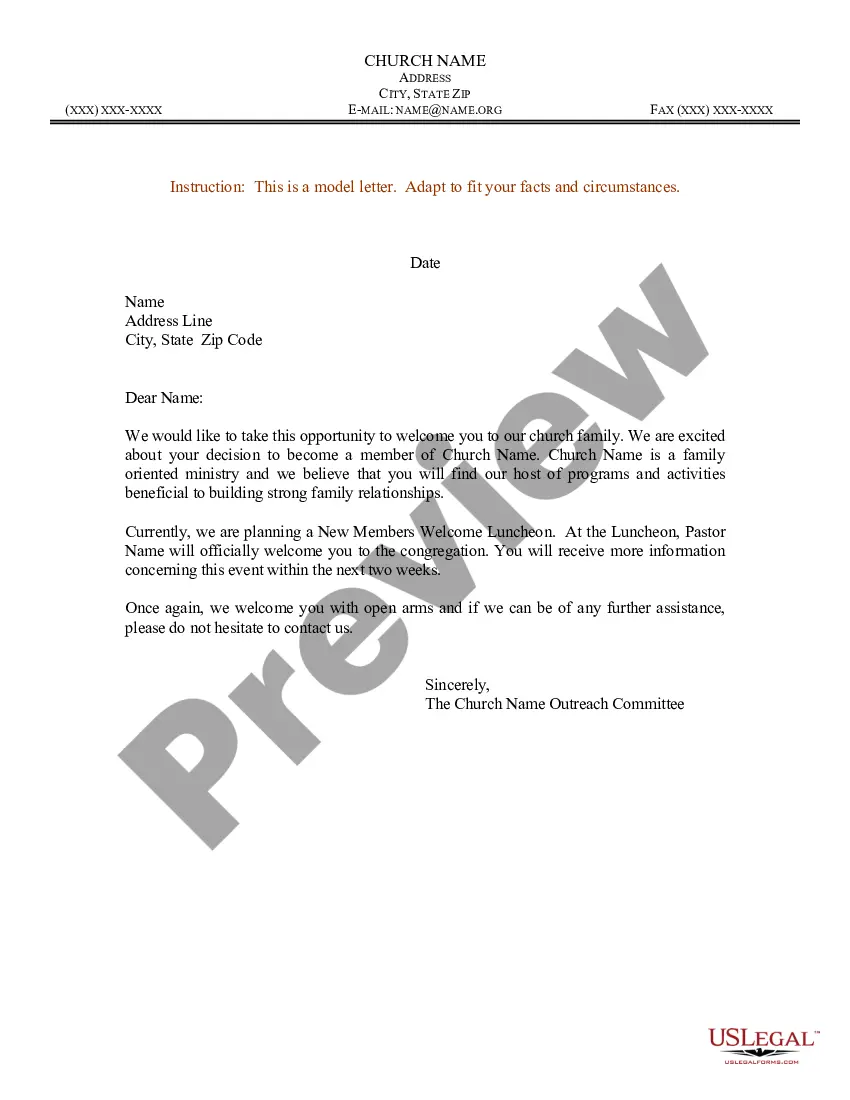
The introduction Start with a smile and hello or welcome, and move on to sharing your name. After that, you'll need to share the name of your church or internal church group and the purpose of the service or meeting.
Place it on church letter head is the first thing. Use a business style form. Introduce yourself, then write why you are writing the letter. List the reason why your member would be a good fit as a pastor of that church your are writing too. Then sign it, list your name and a phone number that they can contact you.
How to write an introduction letter Write a greeting. Include a sentence on why you are writing to them. Present the full name of the person you are introducing. Explain their role and how it's relevant to the reader. Provide additional information. Include any necessary contact information. Close with any next steps.
Sample for Church Welcome Letter We're so pleased to have you take the time to visit our church community…. We're glad you were able to attend and hope that you found your visit to be inspiring, meaningful, and even challenging. It was incredible of you to take out some time for your spiritual peace.
Be specific: Explain which unit you want to join and why. Be sincere: Express your genuine desire to join, as well as any relevant experience. Respectful: Use a formal tone and treat church leaders with dignity. Proofread: Check for typographical or grammatical errors.
Begin your letter with a formal greeting such as “Dear Church Members”. End your letter with a blessing or prayer, such as “May God Bless You” or “In Christ's Love”.
The letter should be addressed appropriately to the head of the new association. You can point out anything about their association that you particularly like/admire and then lay out your reasons for wanting to join with them. Your reasons may be practical, spiritual, financial or all of those.
Communicate respectfully with the pastor about your decision to leave. In doing so, it is appropriate to express appreciation for the things that were received during your time at the church. Express sincere thanks for the pastor's ministry and the church's to you.
Communicate Personally and Respectfully Before you write a resignation letter, it's important to communicate your decision personally and respectfully to the leader or pastor you report to. Explain your reasons honestly but kindly, emphasizing that this decision is about what's best for both you and the church.
Using Proper Salutations and Closings When beginning and ending your letter, use appropriate salutations and closings. Begin your letter with a formal greeting such as “Dear Church Members”. End your letter with a blessing or prayer, such as “May God Bless You” or “In Christ's Love”.

