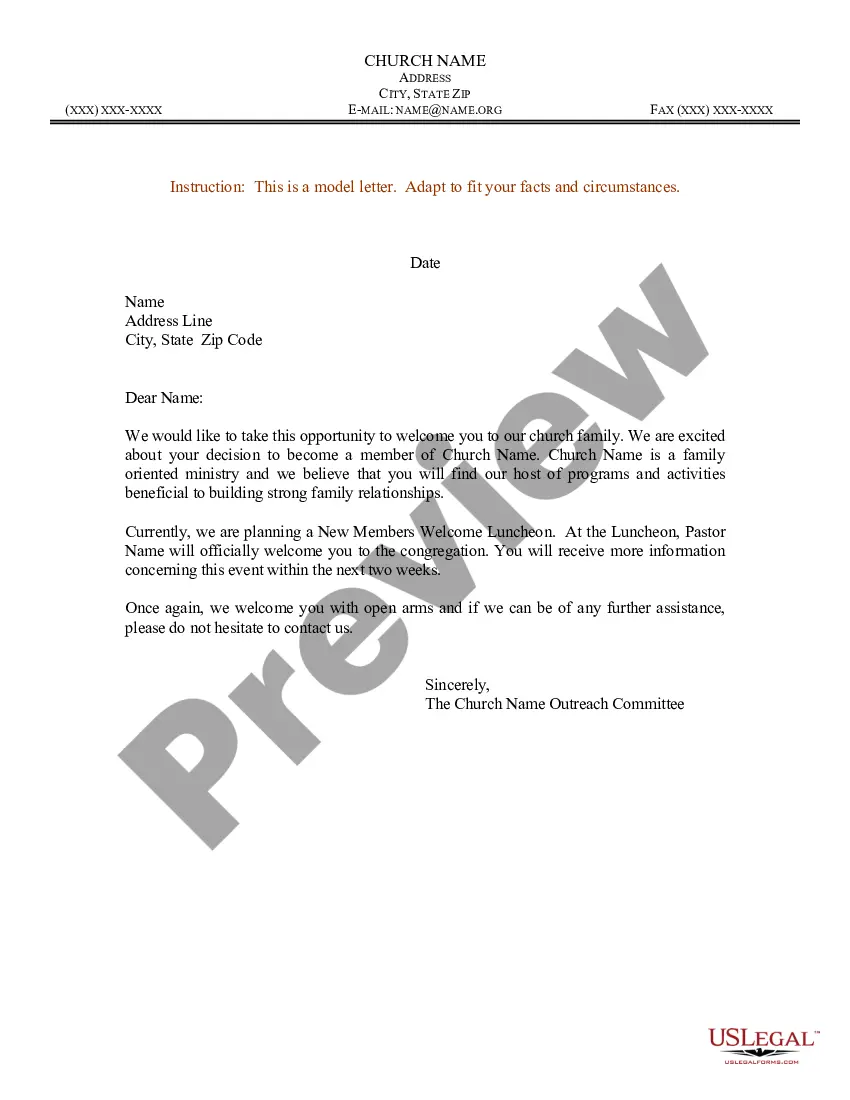
Church Membership Request Letter Without Church In Tarrant
Description

Get your form ready online
Our built-in tools help you complete, sign, share, and store your documents in one place.
Make edits, fill in missing information, and update formatting in US Legal Forms—just like you would in MS Word.
Download a copy, print it, send it by email, or mail it via USPS—whatever works best for your next step.
Sign and collect signatures with our SignNow integration. Send to multiple recipients, set reminders, and more. Go Premium to unlock E-Sign.
If this form requires notarization, complete it online through a secure video call—no need to meet a notary in person or wait for an appointment.
We protect your documents and personal data by following strict security and privacy standards.

Make edits, fill in missing information, and update formatting in US Legal Forms—just like you would in MS Word.

Download a copy, print it, send it by email, or mail it via USPS—whatever works best for your next step.

Sign and collect signatures with our SignNow integration. Send to multiple recipients, set reminders, and more. Go Premium to unlock E-Sign.

If this form requires notarization, complete it online through a secure video call—no need to meet a notary in person or wait for an appointment.

We protect your documents and personal data by following strict security and privacy standards.
Looking for another form?








Form popularity
FAQ
A determination letter is an official document from the IRS that confirms your church is a tax exempt, 501(c)(3) organization. Often, vendors, donors and potential funders will ask for this letter as proof that your organization is a legitimate, charitable organization.
Using Proper Salutations and Closings When beginning and ending your letter, use appropriate salutations and closings. Begin your letter with a formal greeting such as “Dear Church Members”. End your letter with a blessing or prayer, such as “May God Bless You” or “In Christ's Love”.
The IRS determination letter notifies a nonprofit organization that its application for federal tax exemption under Section 501(c)(3) has been approved. This is an exciting day for an emerging nonprofit! Having your IRS determination letter in hand affords your nonprofit organization several unique advantages.
The lay member does this by formally requesting that the pastor of the church to which he or she is transferring ask for the proper letter or certificate of transfer from the former church. When the letter or certificate is sent, the lay person ceases to be a member of the former local church.
based church is, by definition, both a nonprofit organization and a 501(c)(3) taxexempt entity. The best practice is to solidify that standing by incorporating at the state level and seeking official IRS determination.
Churches (including integrated auxiliaries and conventions or associations of churches) that meet the requirements of section 501(c)(3) of the Internal Revenue Code are automatically considered tax exempt and are not required to apply for and obtain recognition of exempt status from the IRS.
The following types of organizations are not required to file Form 1023 for recognition of exemption under Internal Revenue Code section 501(c)(3): Churches, including synagogues, temples and mosques. Integrated auxiliaries of churches and conventions or associations of churches.
Dear Recipient's Name, I hope this letter finds you well. I am writing to request permission to use the church premises for describe the event or purpose, e.g., "a community meeting," "a family gathering," "a charity event," etc.. The event is planned for date from start time to end time.
A “Letter of Transfer” form is helpful when transferring membership from one congregation to another congregation. Parishioner submits request to their church office (of current congregation) to transfer membership to new congregation.
A Church Membership Certificate is a document that is used to certify and verify the membership of one of your church associates. This is proof that this specific individual is a member of the church group. This document can be used in officially recognizing and honoring a member of the church group.

