Removal Request Letter With Numerous Questions In North Carolina
Description


Form popularity
FAQ
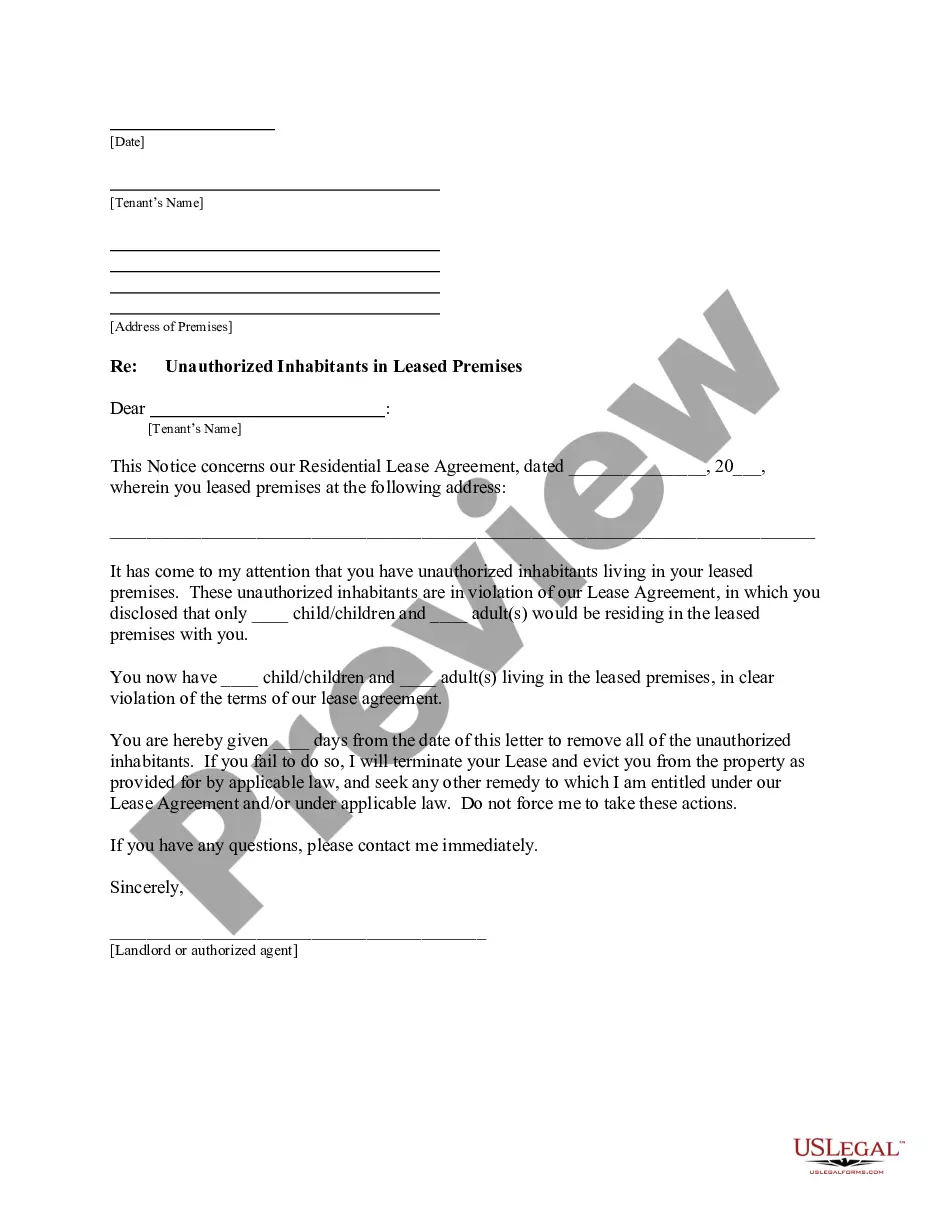
After the notice period has ended, the landlord may go to court to take out Summary Ejectment papers. The court papers state why the landlord wants the tenant to move out and when and where the court hearing will be held. The court papers must be delivered to the tenant. This is usually done by the sheriff.
Landlords cannot force tenants out of their homes without going to court, for instance, by changing the locks, turning off utilities or removing the doors.
Can a tenant appeal an eviction order? Yes. Even if a tenant misses a court date or loses in small claim court, the tenant may appeal the eviction order. Tenants who file an appeal will get a new trial in district court in front of a different judge.
The eviction process can take 30 - 45 days, or longer. The time starts from when you have eviction court forms delivered to your tenant to the time they must move out.
Tenants can only be evicted by the Sheriff's Office, and only after the Court has entered a judgment against them and the Clerk issues a “Writ of Possession.” Normally, the eviction process takes about 3 weeks.
Having an eviction on your record can be a major red flag and make it difficult to find a rental that meets your needs. Evictions stay on your record for seven years, but many people are not the same person they were seven years ago.
All you have to do is give him a written notice stating that you are terminating his tenancy and he has 30 days to move. Sign it, date it, and give him a copy. Keep a copy for your records and if he doesn't move in 30 days, you can then begin the legal eviction process.
It's illegal in North Carolina for landlords to use self-help tactics to evict a tenant. These include removing the front door, changing the locks, turning off utilities, and removing the tenant's belongings. This is called an illegal eviction or illegal lockout.