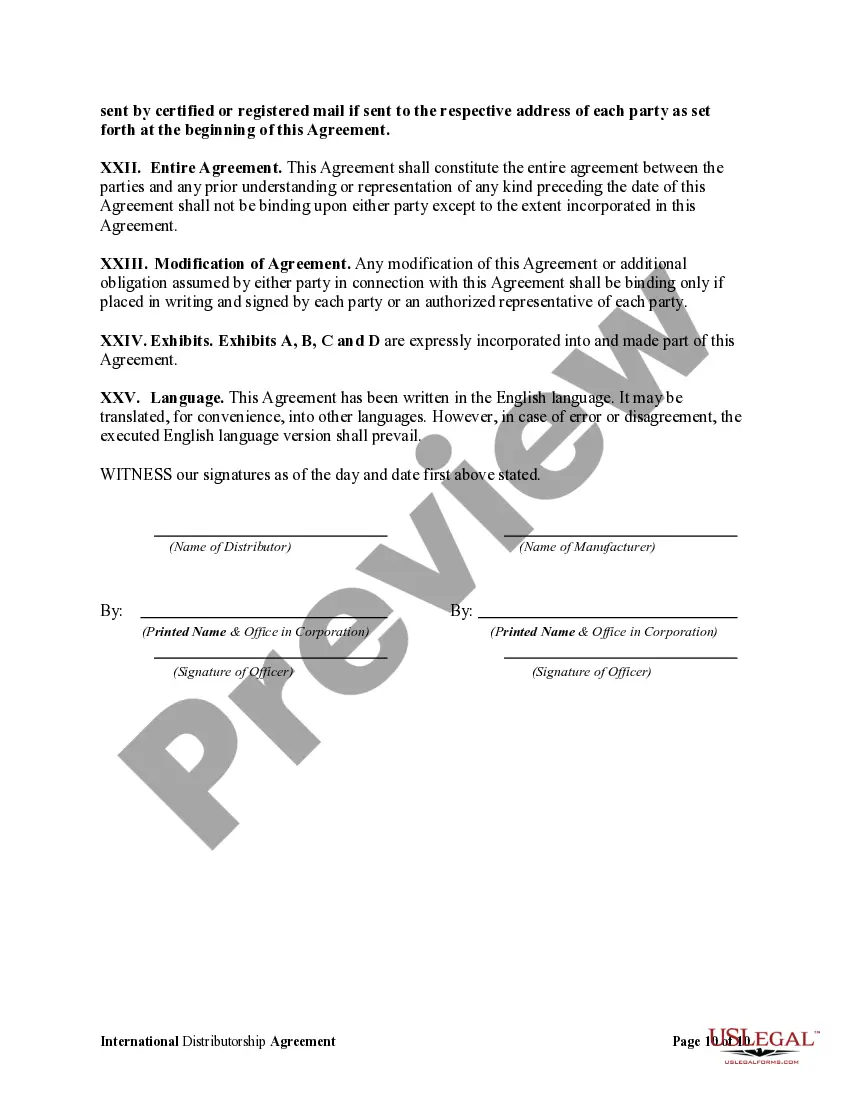
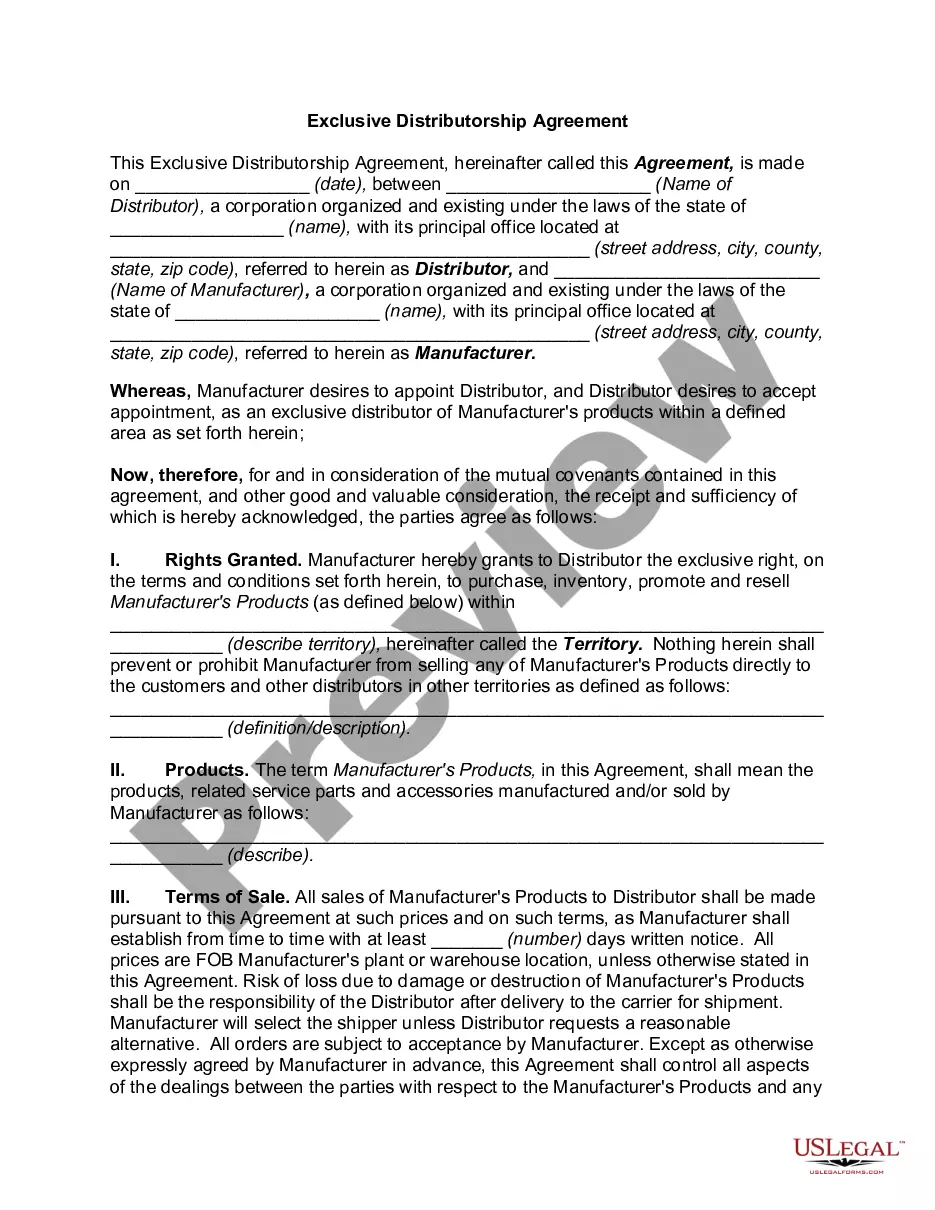
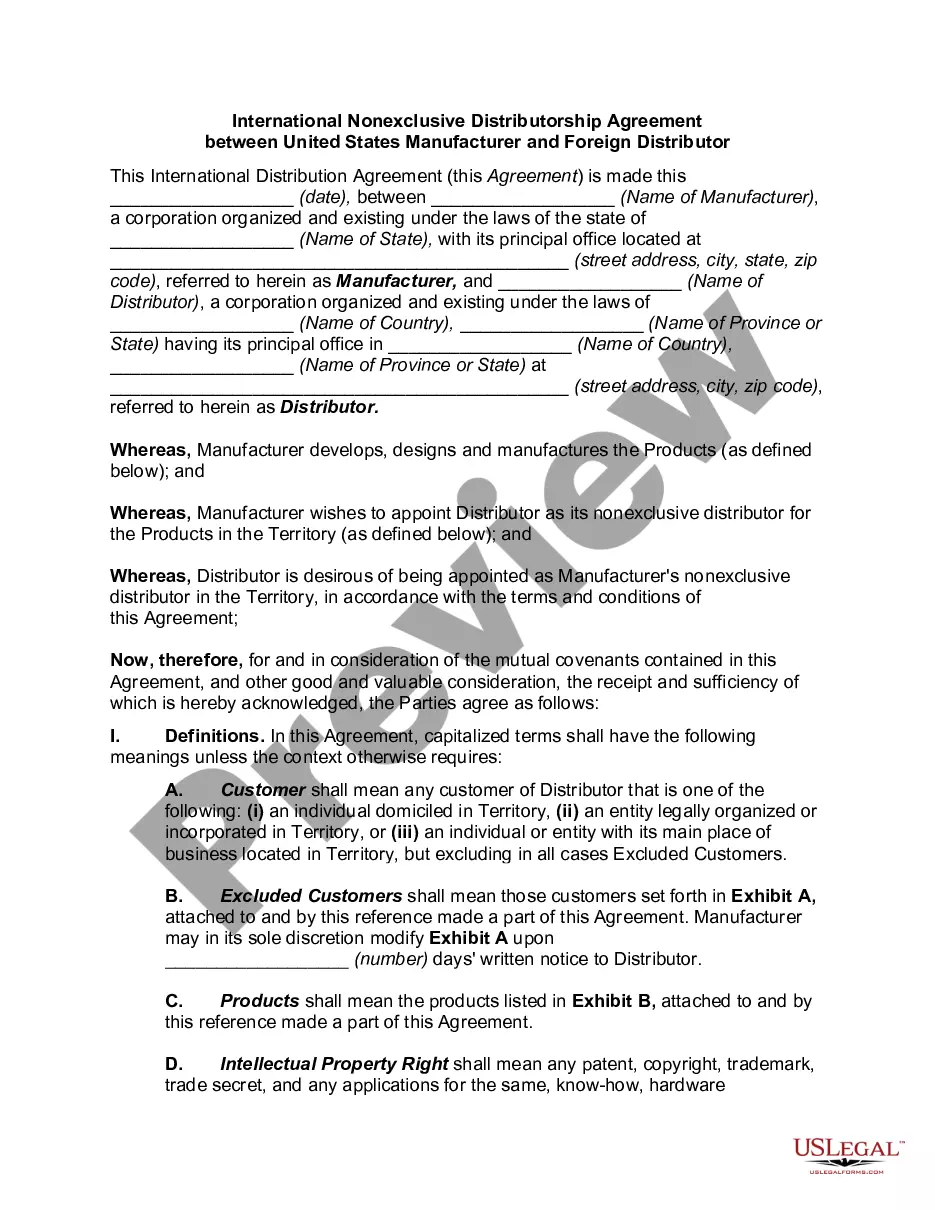
International Exclusive Distribution Agreement Format In Travis
Description

Get your form ready online
Our built-in tools help you complete, sign, share, and store your documents in one place.
Make edits, fill in missing information, and update formatting in US Legal Forms—just like you would in MS Word.
Download a copy, print it, send it by email, or mail it via USPS—whatever works best for your next step.
Sign and collect signatures with our SignNow integration. Send to multiple recipients, set reminders, and more. Go Premium to unlock E-Sign.
If this form requires notarization, complete it online through a secure video call—no need to meet a notary in person or wait for an appointment.
We protect your documents and personal data by following strict security and privacy standards.

Make edits, fill in missing information, and update formatting in US Legal Forms—just like you would in MS Word.

Download a copy, print it, send it by email, or mail it via USPS—whatever works best for your next step.

Sign and collect signatures with our SignNow integration. Send to multiple recipients, set reminders, and more. Go Premium to unlock E-Sign.

If this form requires notarization, complete it online through a secure video call—no need to meet a notary in person or wait for an appointment.

We protect your documents and personal data by following strict security and privacy standards.
Looking for another form?








Form popularity
FAQ
An international distribution agreement is a legal contract between two parties that authorizes one party to sell or distribute the other's products. This type of arrangement usually benefits both businesses because it makes the process more efficient and can help each company increase its customer base.
The CISG does not apply to distributorship agreements: Helen Kaminski Pty. Ltd. v. Marketing Australian Products, Inc.
As discussed in the Fact Sheets on Dealings in the Supply Chain, exclusive contracts between manufacturers and suppliers, or between manufacturers and dealers, are generally lawful because they improve competition among the brands of different manufacturers (interbrand competition).
Examples of companies that use exclusive distribution include Apple for its high-priced and luxury products, as well as companies like Lamborghini, BMW, Rolex, and Mercedes. These companies appoint only a few distributors to cover a specific region, maintaining exclusivity in their distribution agreements.
The CISG only applies to sales of goods between merchants, not sales to consumers, and does not generally apply to services arrangements.
Thus, the question of whether a distributorship contract is governed by the UCC will depend on the exact nuances of the contract. To determine whether the UCC applies, “courts generally examine the transaction to determine whether the sale of goods predominates.” Princess Cruises v. GE, 143 F. 3d 828, 833 (4th Cir.
The CISG is intended to apply to commercial goods and products only. With some limited exceptions, it does not apply to personal, family, or household goods, nor does it apply to auctions, ships, aircraft, or intangibles and services.
Write the contract in six steps Start with a contract template. Open with the basic information. Describe in detail what you have agreed to. Include a description of how the contract will be ended. Write into the contract which laws apply and how disputes will be resolved. Include space for signatures.
In terms of content, an Estate distribution letter should include: the deceased's personal details; a detailed and complete list of all assets and liabilities; the Beneficiary names and the details of their respective inheritances; any details on debt settlement and creditor communication;