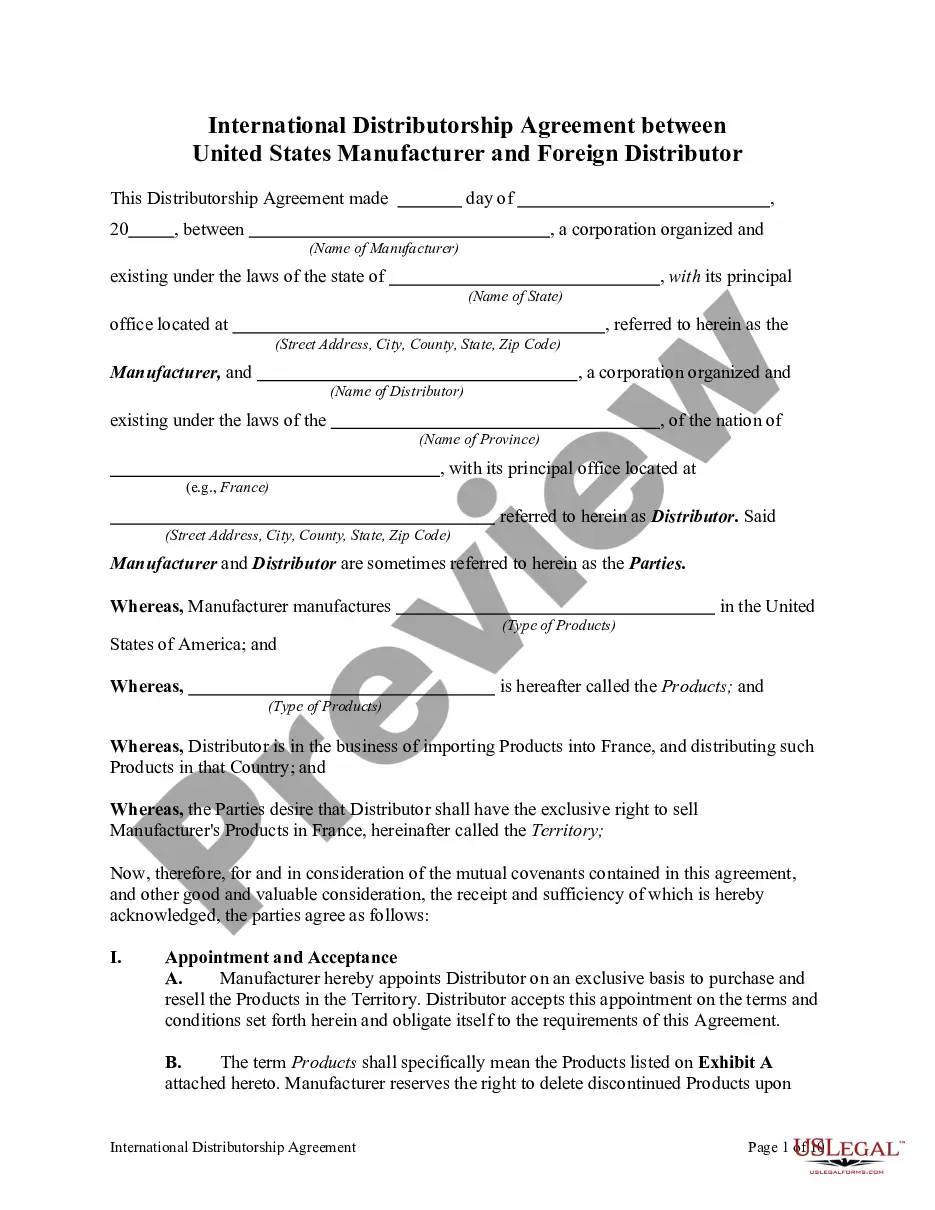
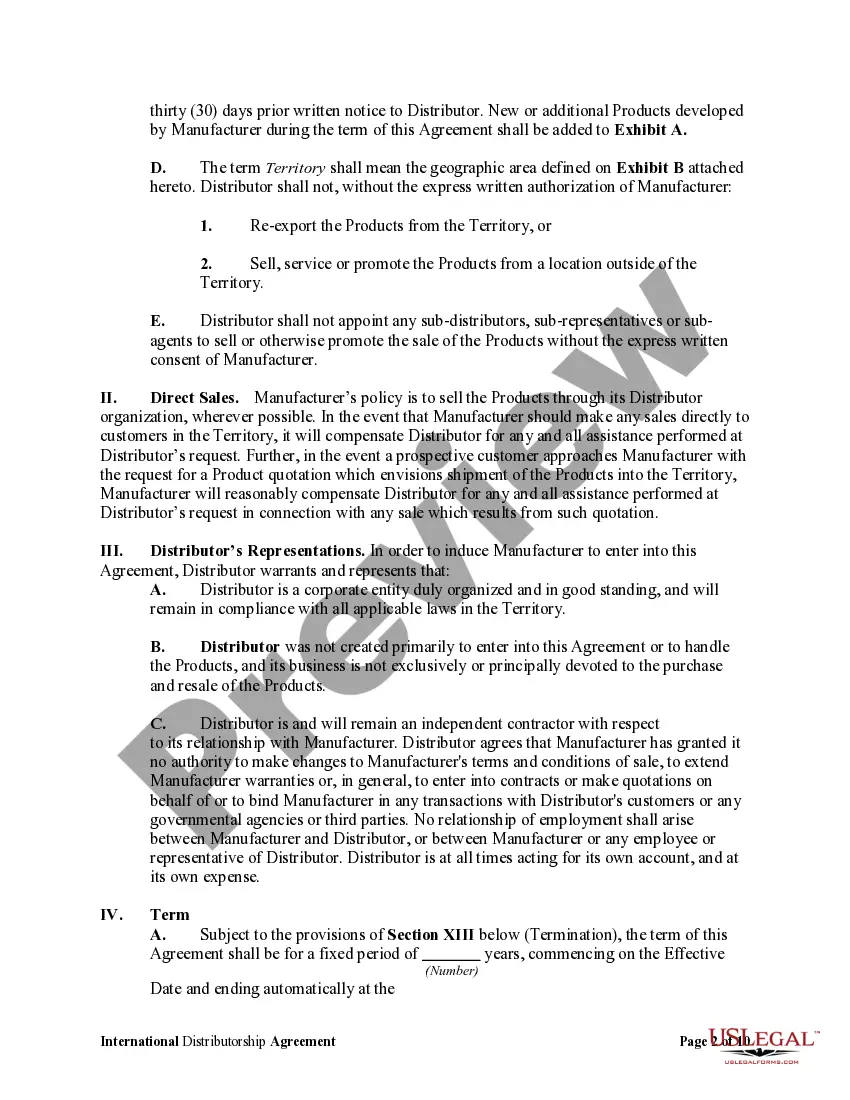
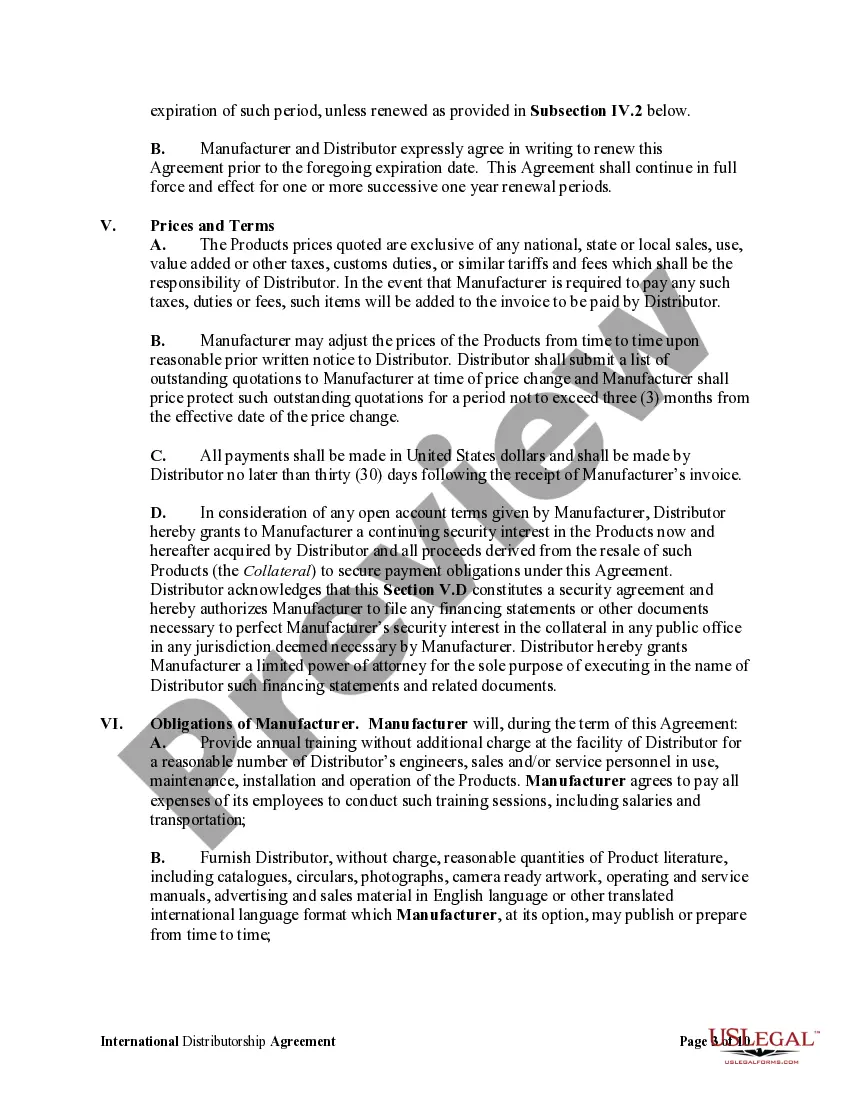
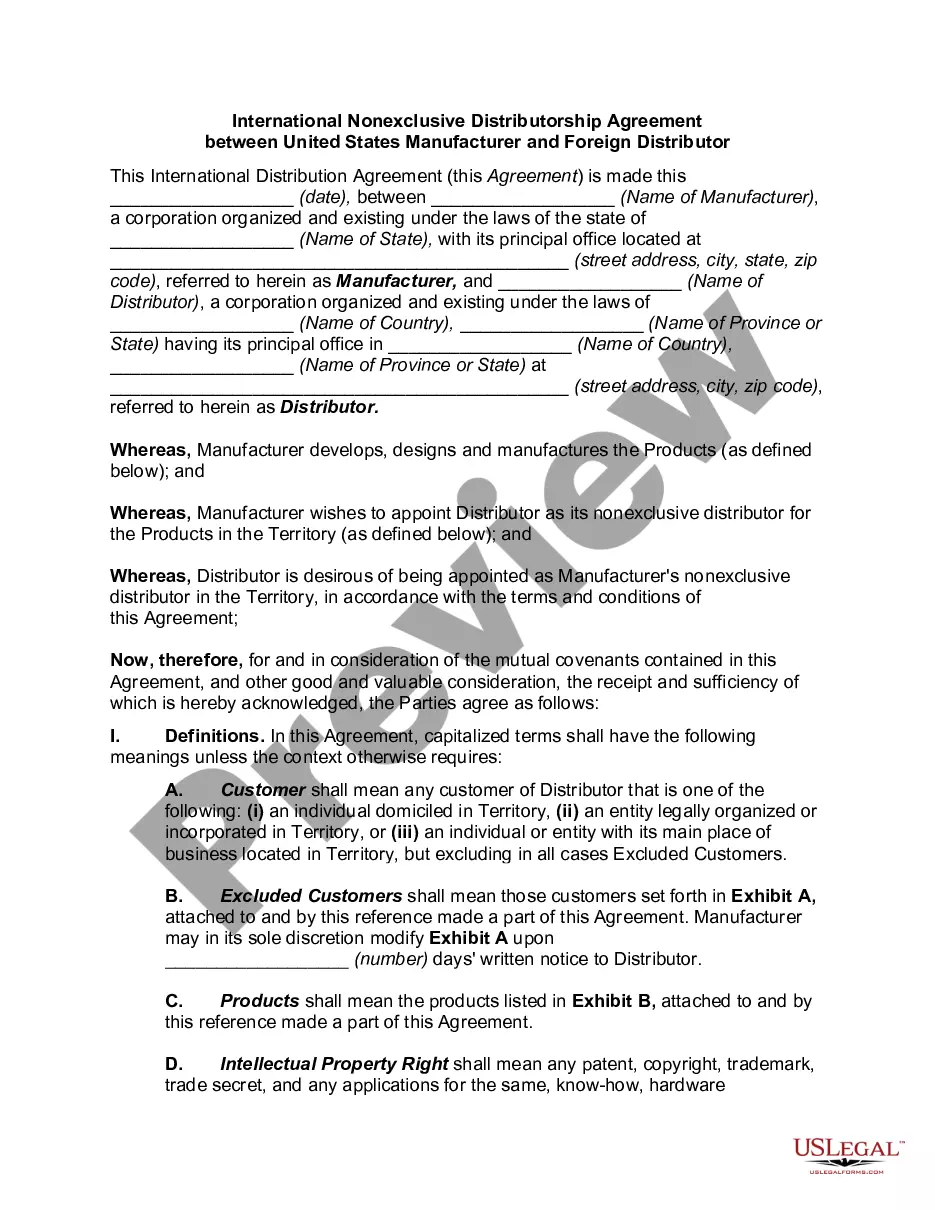
Sample Agreement For Exclusive Distributorship In Suffolk
Description
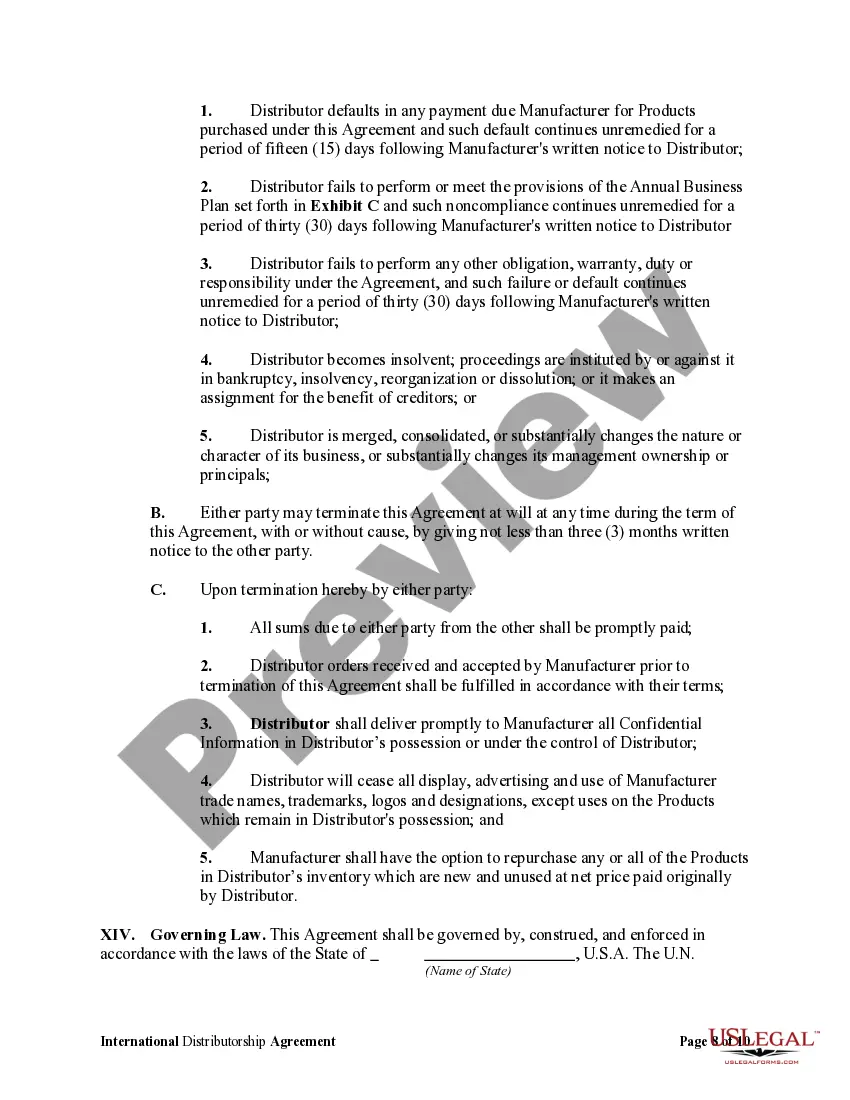
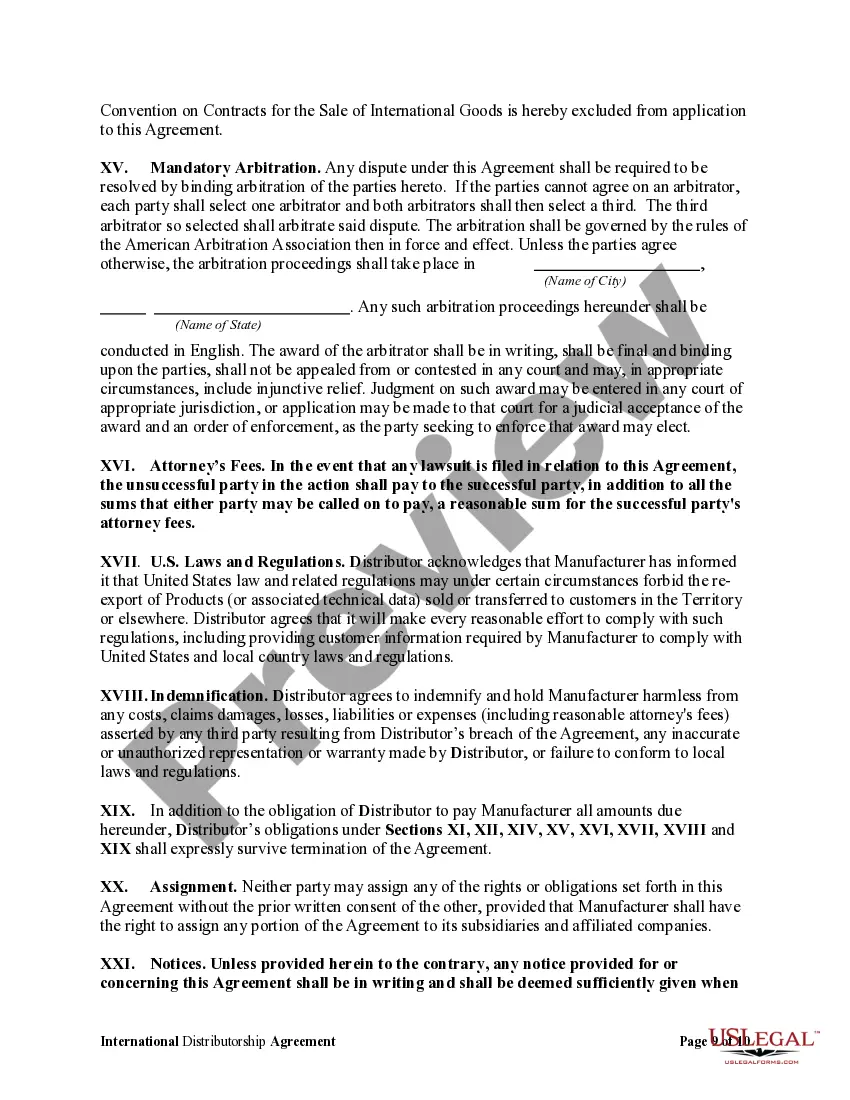
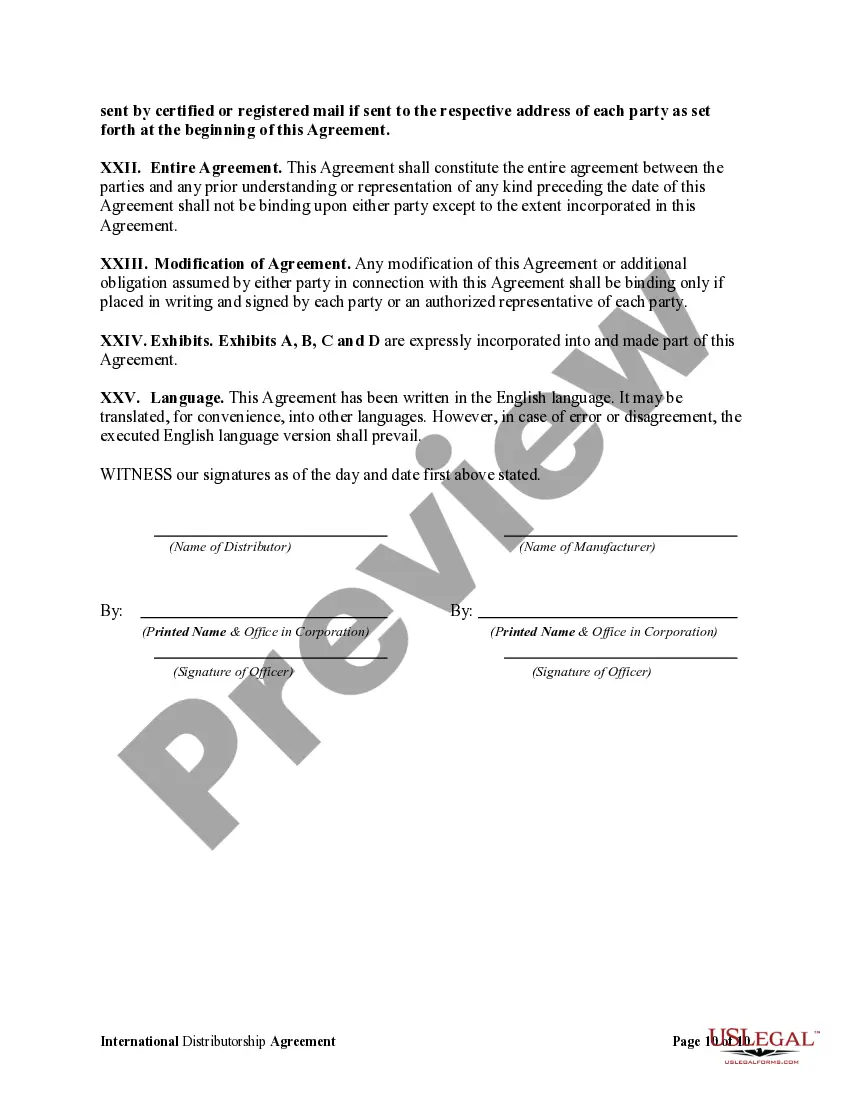
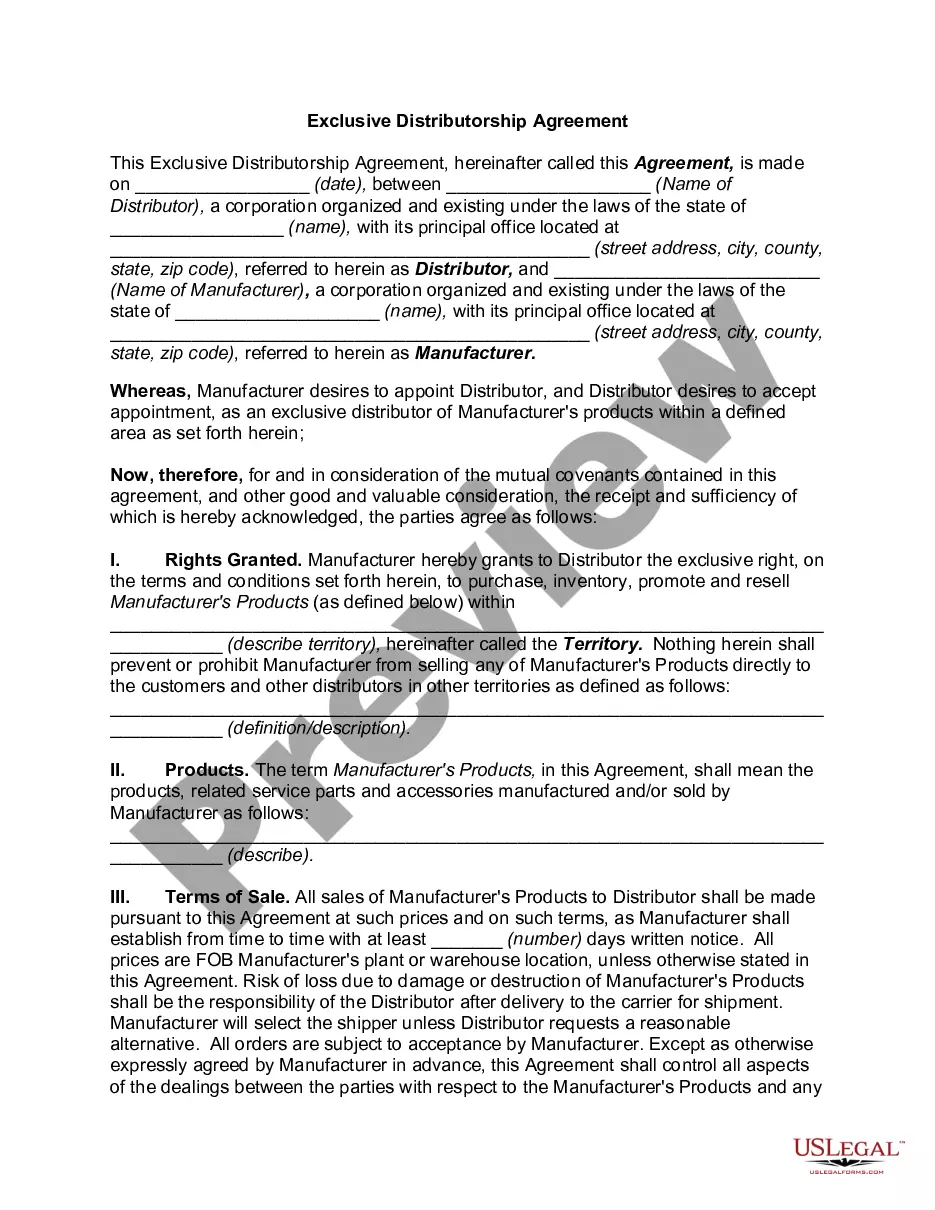
Get your form ready online
Our built-in tools help you complete, sign, share, and store your documents in one place.
Make edits, fill in missing information, and update formatting in US Legal Forms—just like you would in MS Word.
Download a copy, print it, send it by email, or mail it via USPS—whatever works best for your next step.
Sign and collect signatures with our SignNow integration. Send to multiple recipients, set reminders, and more. Go Premium to unlock E-Sign.
If this form requires notarization, complete it online through a secure video call—no need to meet a notary in person or wait for an appointment.
We protect your documents and personal data by following strict security and privacy standards.

Make edits, fill in missing information, and update formatting in US Legal Forms—just like you would in MS Word.

Download a copy, print it, send it by email, or mail it via USPS—whatever works best for your next step.

Sign and collect signatures with our SignNow integration. Send to multiple recipients, set reminders, and more. Go Premium to unlock E-Sign.

If this form requires notarization, complete it online through a secure video call—no need to meet a notary in person or wait for an appointment.

We protect your documents and personal data by following strict security and privacy standards.
Looking for another form?




Form popularity
FAQ
Here are six steps you can take toward becoming a distributor: Identify your industry. The first step to becoming a distributor is identifying the industry you'd like to serve. Register your business legally. Seek suppliers and manufacturers. Plan your logistics. Apply as a distributor. Build relationships.
As discussed in the Fact Sheets on Dealings in the Supply Chain, exclusive contracts between manufacturers and suppliers, or between manufacturers and dealers, are generally lawful because they improve competition among the brands of different manufacturers (interbrand competition).
The Company represents and warrants that no other person or entity has any rights to sell and promote the Company's products or services, including those products or services listed in Attachment A (the “Products”) hereto, within the Exclusive Territory in derogation of the rights granted to the Exclusive Distributor ...
Here are six steps you can take toward becoming a distributor: Identify your industry. The first step to becoming a distributor is identifying the industry you'd like to serve. Register your business legally. Seek suppliers and manufacturers. Plan your logistics. Apply as a distributor. Build relationships.
There are three types of distribution channels: direct, indirect and hybrid. Direct. With the direct channel, the company sells directly to the customer. For example, a brewery that brews its own beer and sells it to customers at its own brick-and-mortar location employs a direct channel of distribution.
Exclusive distribution is when a manufacturer grants a single retailer or distributor the exclusive rights to sell their products within a specific region. The goal with this strategy is to create a sense of scarcity. If the product is only found in certain locations, demand can go up.
Although some claims under Sherman Act, Section 1 are per se illegal under the antitrust laws, exclusive dealing is not. Instead, courts analyze these claims under the rule of reason. That means that the court won't allow any shortcuts.
Thus, the question of whether a distributorship contract is governed by the UCC will depend on the exact nuances of the contract. To determine whether the UCC applies, “courts generally examine the transaction to determine whether the sale of goods predominates.” Princess Cruises v. GE, 143 F. 3d 828, 833 (4th Cir.