Distributorship Agreement Distributor For Sale In Nevada
Description

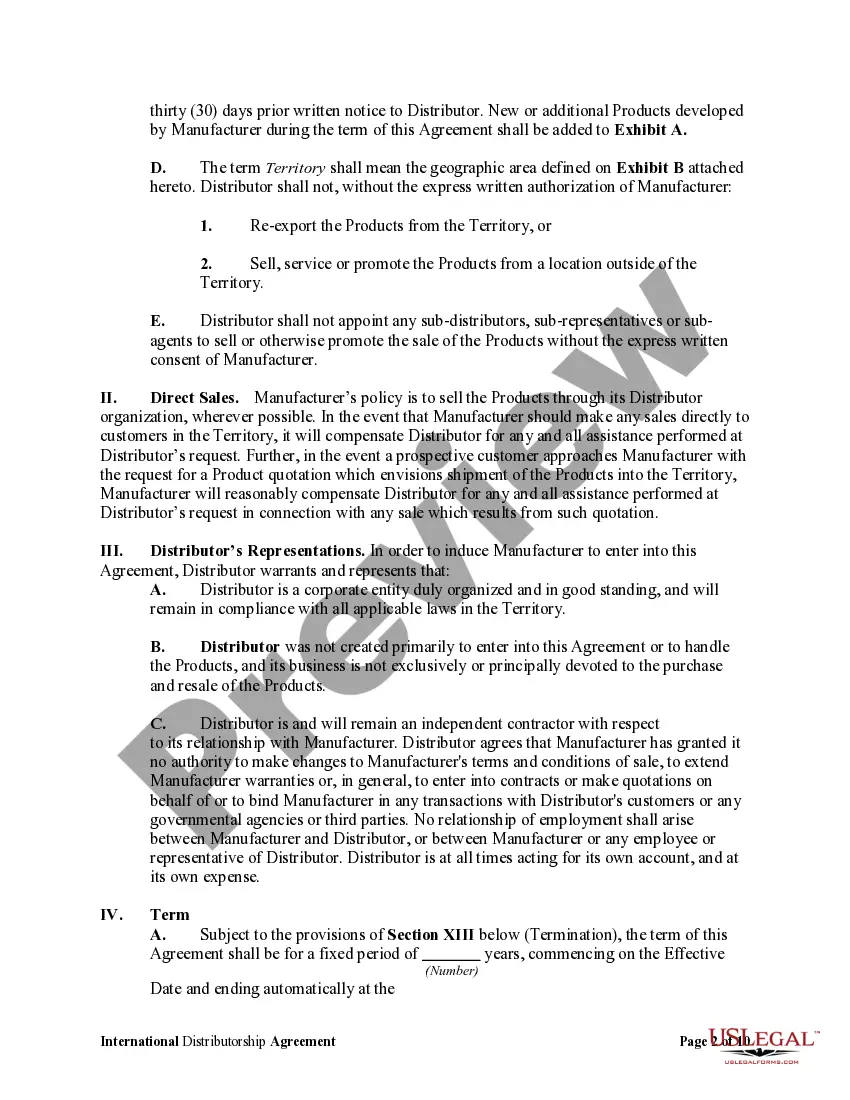
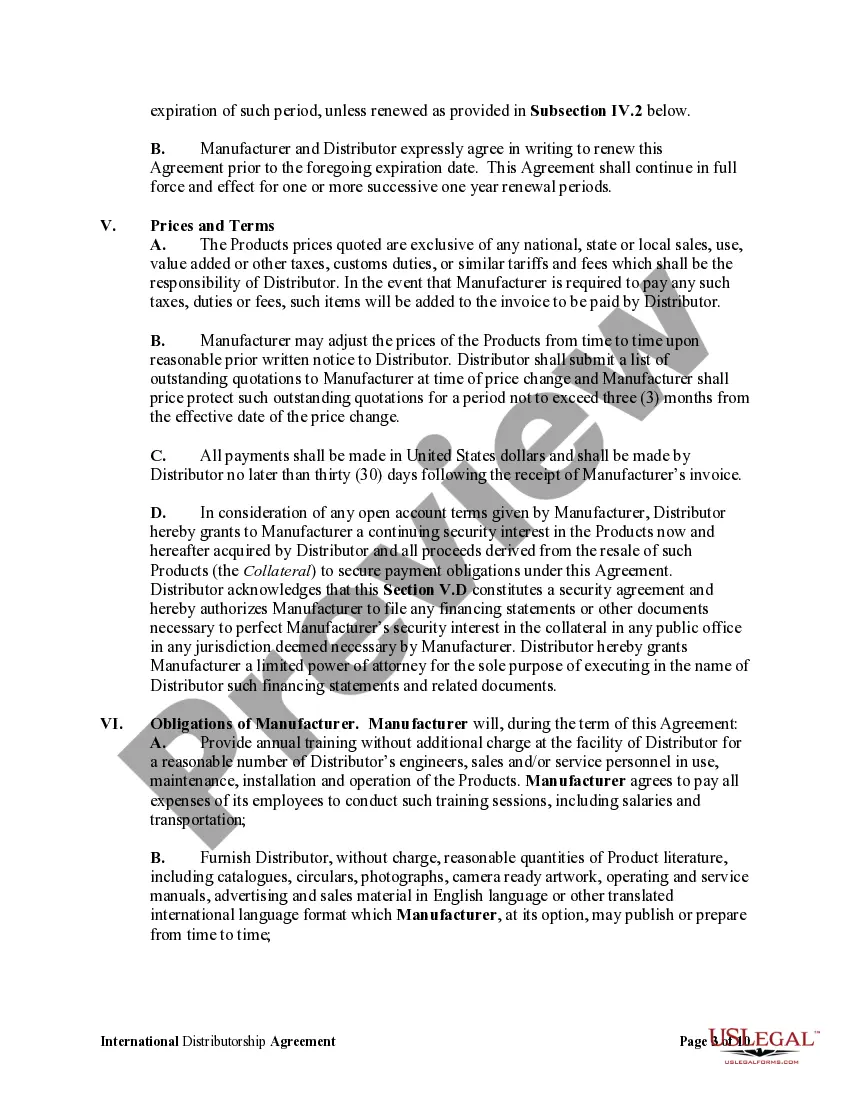
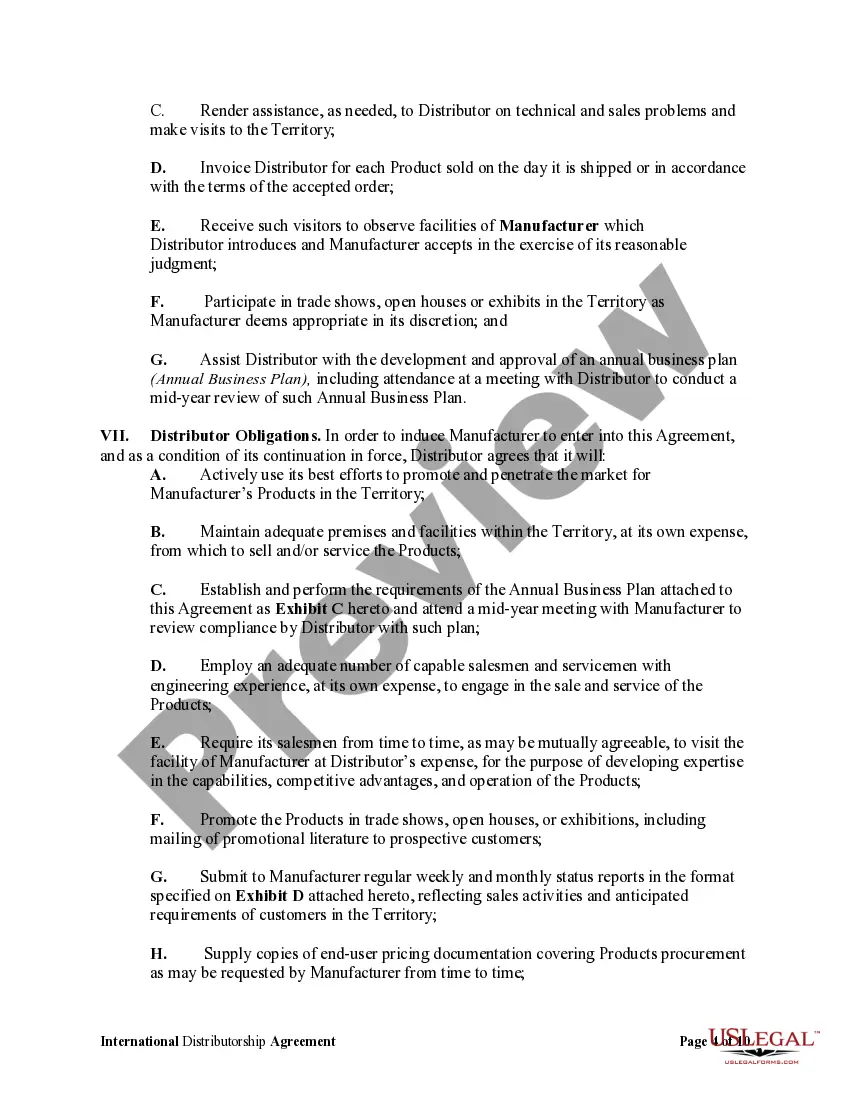
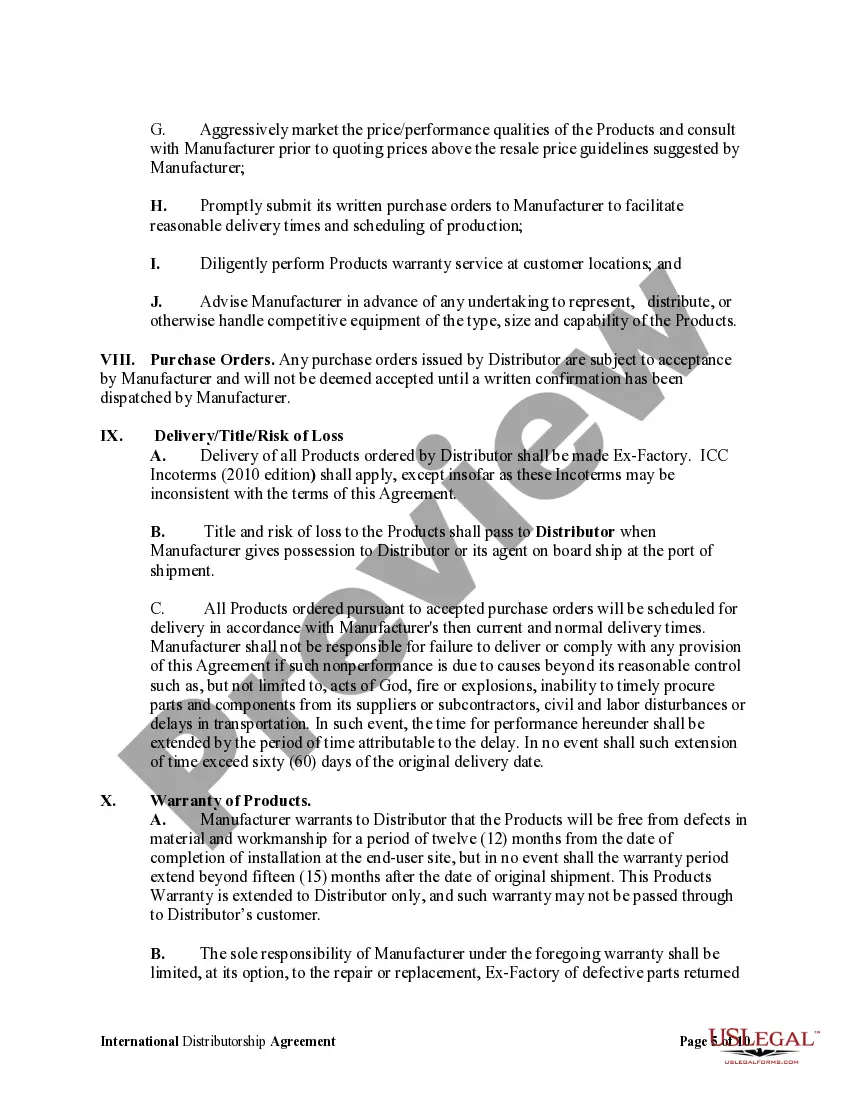
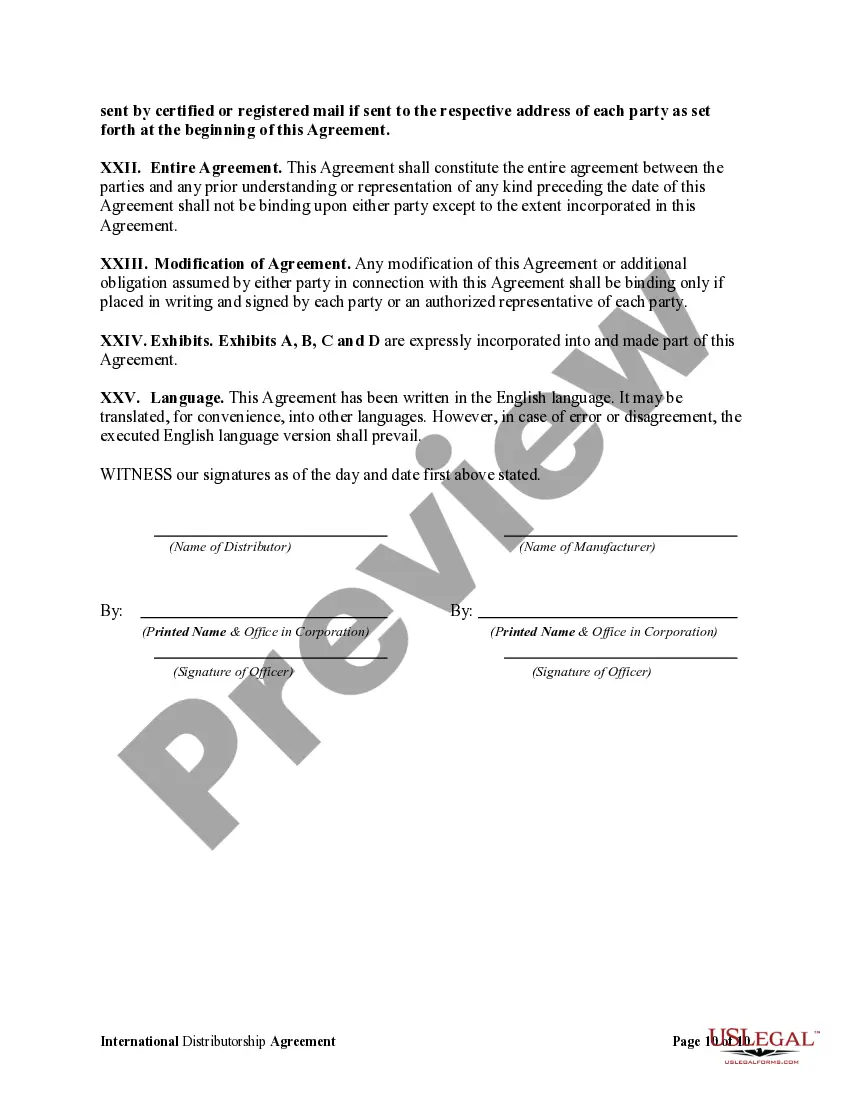
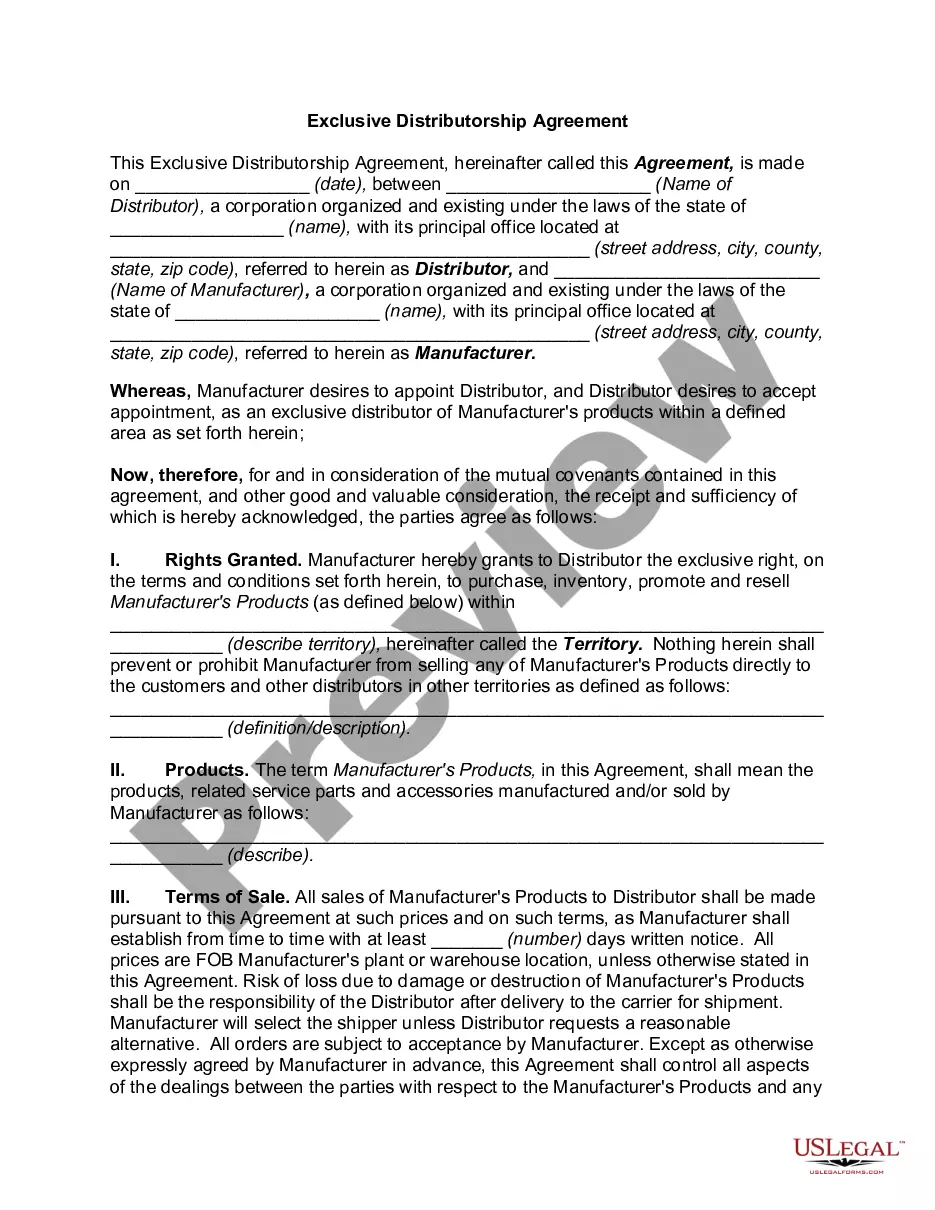
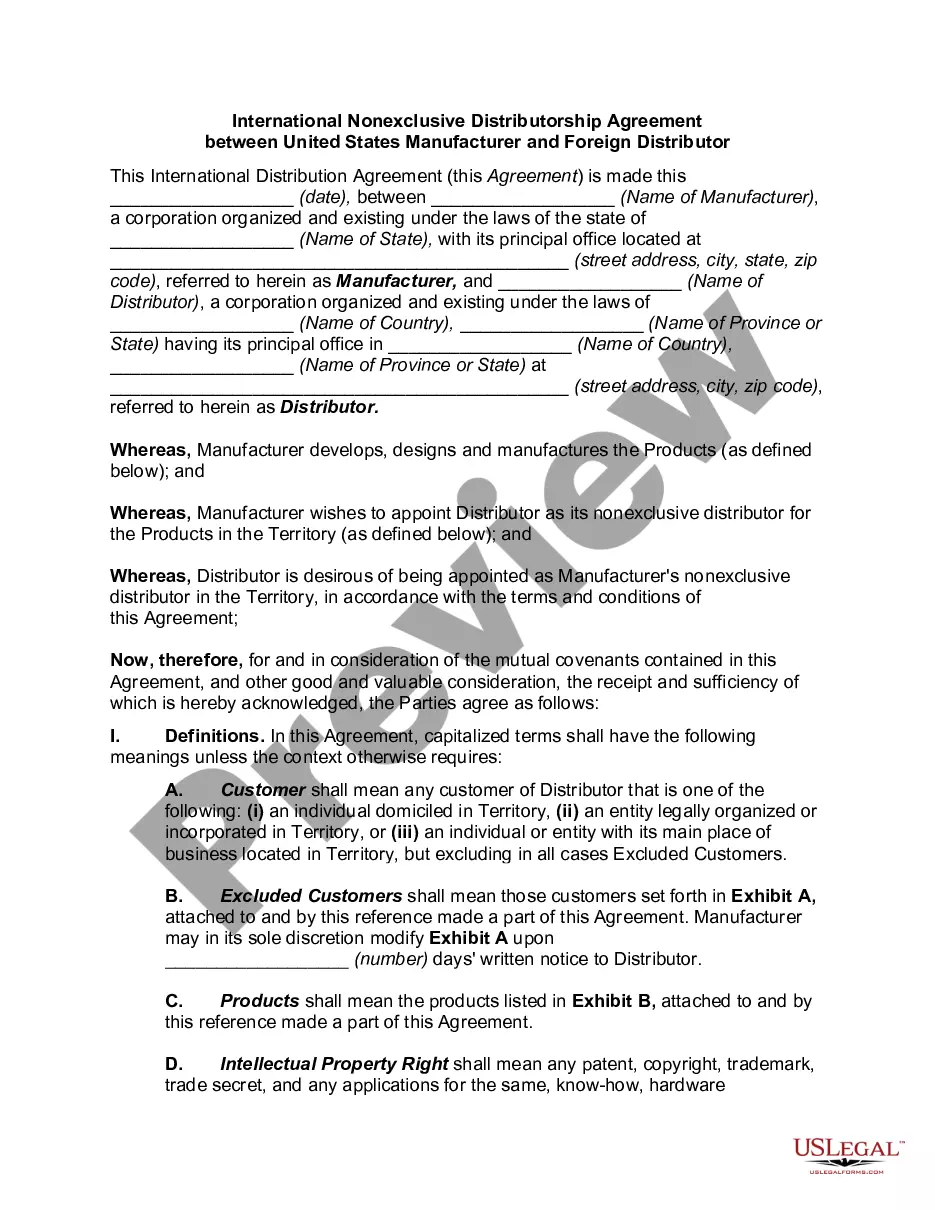
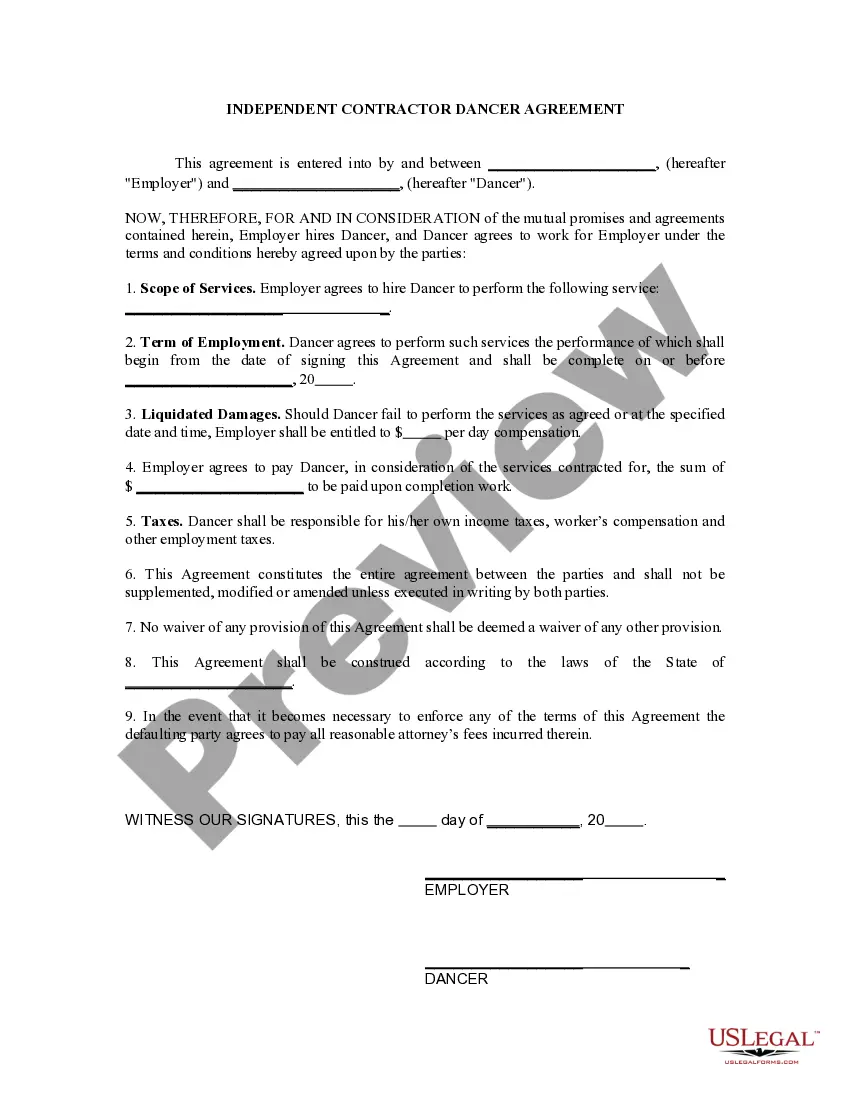
Get your form ready online
Our built-in tools help you complete, sign, share, and store your documents in one place.
Make edits, fill in missing information, and update formatting in US Legal Forms—just like you would in MS Word.
Download a copy, print it, send it by email, or mail it via USPS—whatever works best for your next step.
Sign and collect signatures with our SignNow integration. Send to multiple recipients, set reminders, and more. Go Premium to unlock E-Sign.
If this form requires notarization, complete it online through a secure video call—no need to meet a notary in person or wait for an appointment.
We protect your documents and personal data by following strict security and privacy standards.

Make edits, fill in missing information, and update formatting in US Legal Forms—just like you would in MS Word.

Download a copy, print it, send it by email, or mail it via USPS—whatever works best for your next step.

Sign and collect signatures with our SignNow integration. Send to multiple recipients, set reminders, and more. Go Premium to unlock E-Sign.

If this form requires notarization, complete it online through a secure video call—no need to meet a notary in person or wait for an appointment.

We protect your documents and personal data by following strict security and privacy standards.
Looking for another form?








Form popularity
FAQ
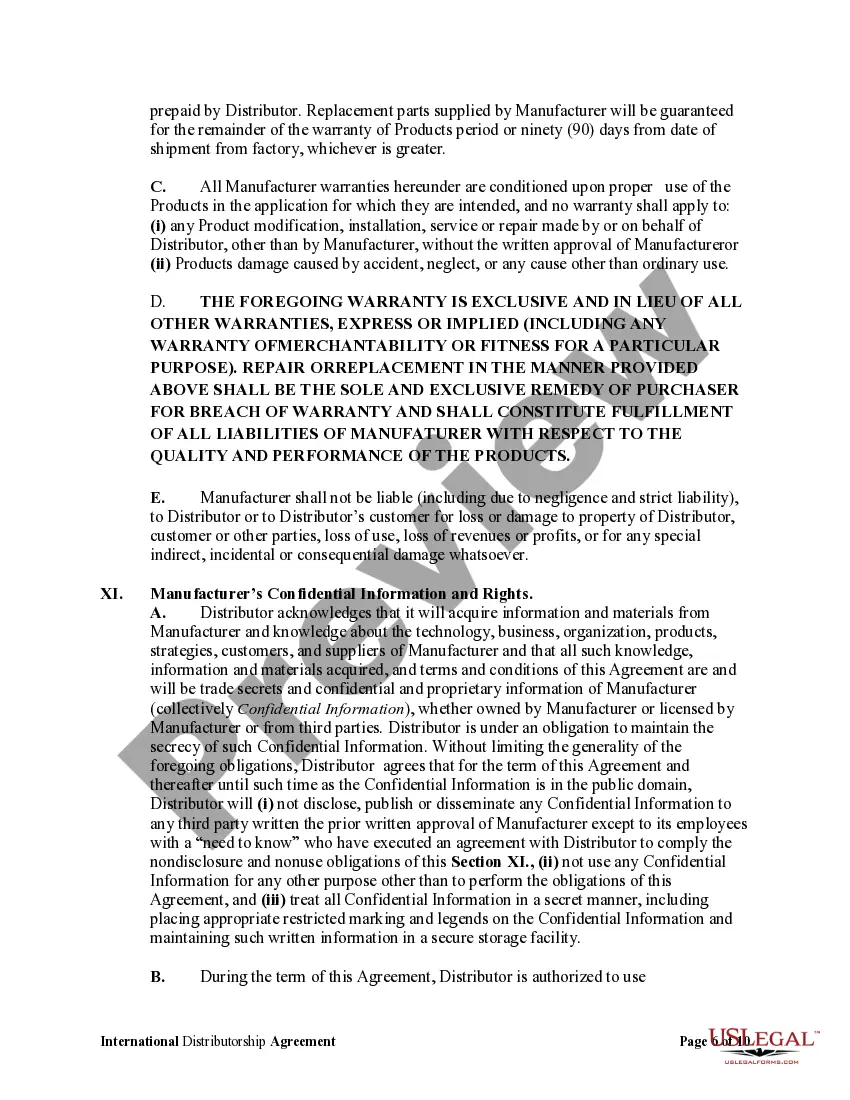
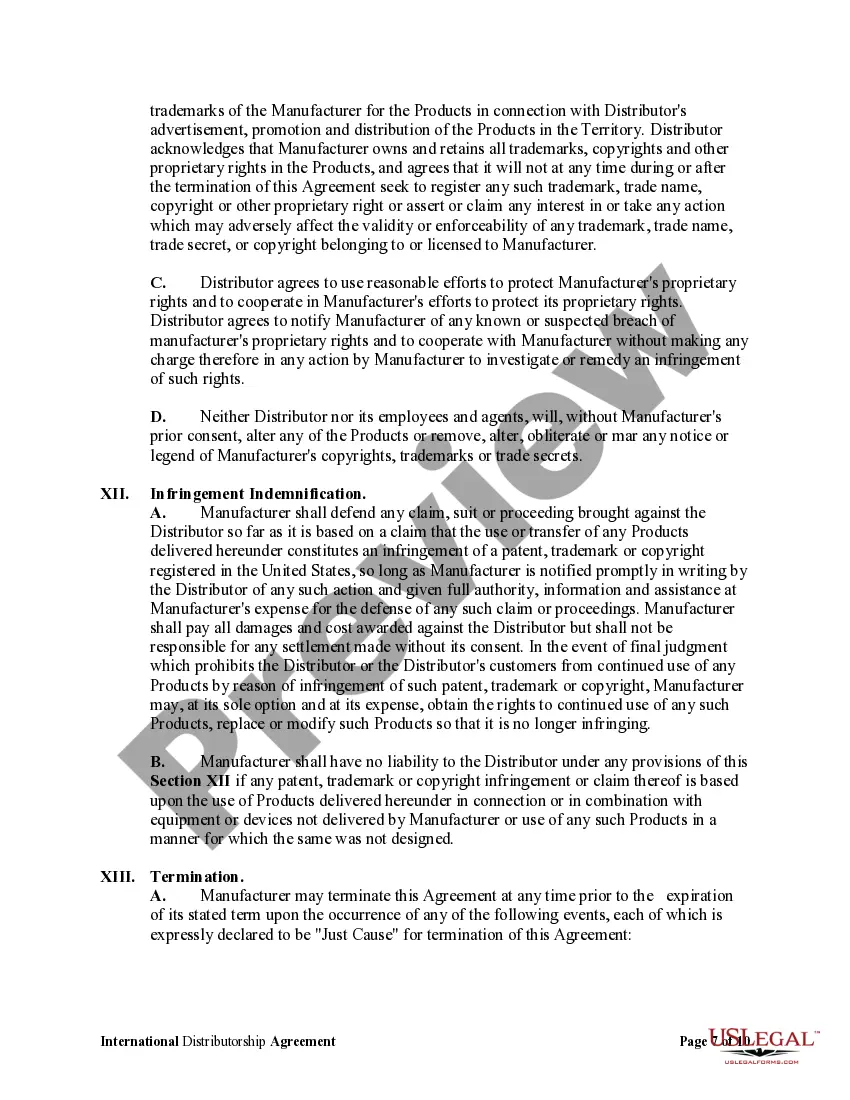
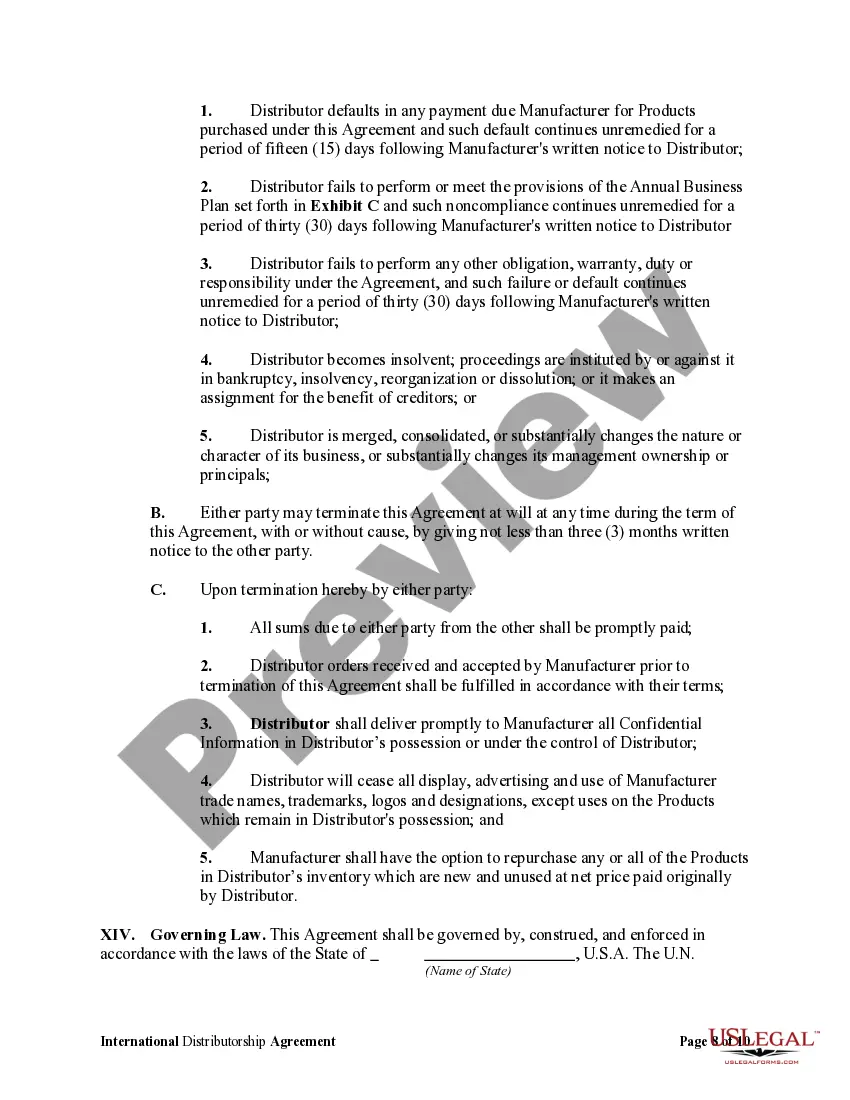
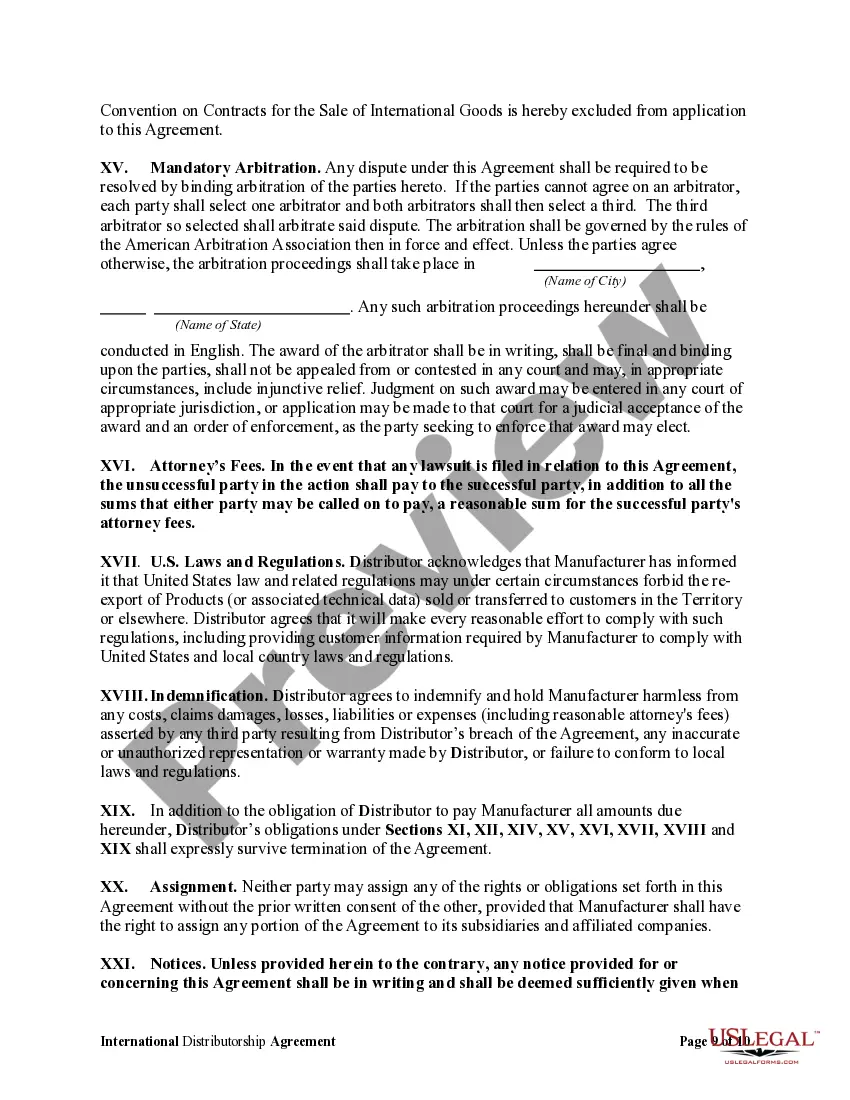
Distribution agreements often include terms about termination conditions, allowing either party to exit the contract under specified circumstances. These contracts can also address intellectual property rights, ensuring that distributors understand how to handle branding and proprietary information.
A digital distribution deal grants the distributor the right to distribute digital copies of the music. This includes streaming, downloads, and other internet-based methods for accessing music. A physical distribution deal, on the other hand, covers physical mediums such as CDs, vinyl, or cassettes.
A distribution agreement, also known as a distributor agreement, is a contract between a supplying company with products to sell and another company that markets and sells the products. The distributor agrees to buy products from the supplier company and sell them to clients within certain geographical areas.
How to become a distributor Identify your industry. The first step to becoming a distributor is identifying the industry you'd like to serve. Register your business legally. Seek suppliers and manufacturers. Plan your logistics. Apply as a distributor. Build relationships.
Differences between agency and distribution An agent is appointed to negotiate or conclude contracts on the supplier's behalf. A distributor effectively becomes the supplier and contracts are made directly between the distributor and the customer.
Distributors buy the products directly from the company, distribute it in the market and also provide after sales services, which the Agents do not provide. While an Agent can be called the company's representative, a Distributor cannot, as he buys the products and then resells them.
When it comes to distribution agreements, there are four main types: exclusive, sole, non-exclusive and selective. It is important for suppliers as well as distributors to recognizse the advantages and disadvantages of each arrangement in order to pick the one that best fits their needs and objectives.
A distribution agreement is a powerful tool that defines the rules of engagement between suppliers and distributors. These agreements can not only streamline your distribution process but also shield your business from potential pitfalls.
Under the terms of a licence or distribution agreement a licensee is generally granted the right to use your intellectual property (including your trade mark) or to distribute your product within a defined territory.
Music distribution is about making music available on platforms like streaming services & stores, focusing on reaching listeners & selling music. Licensing, however, involves granting rights to use music in media like films, TV, advertisements, or video games.