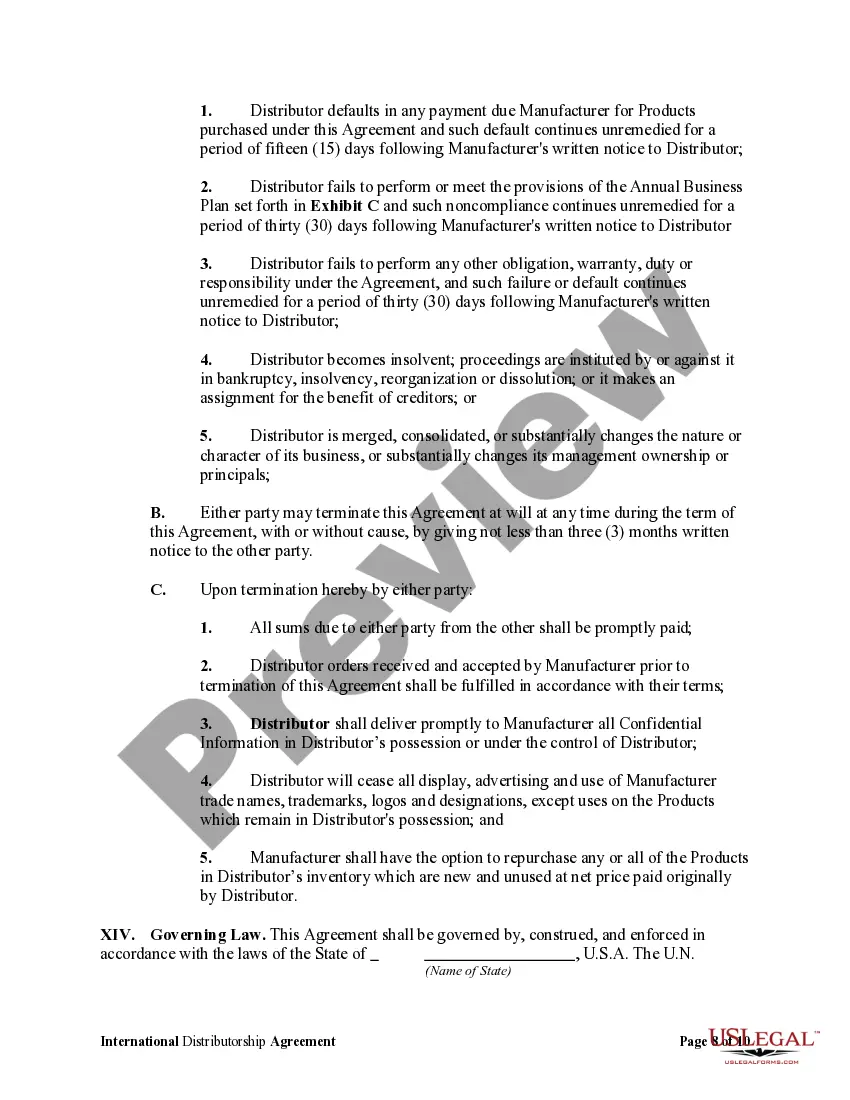
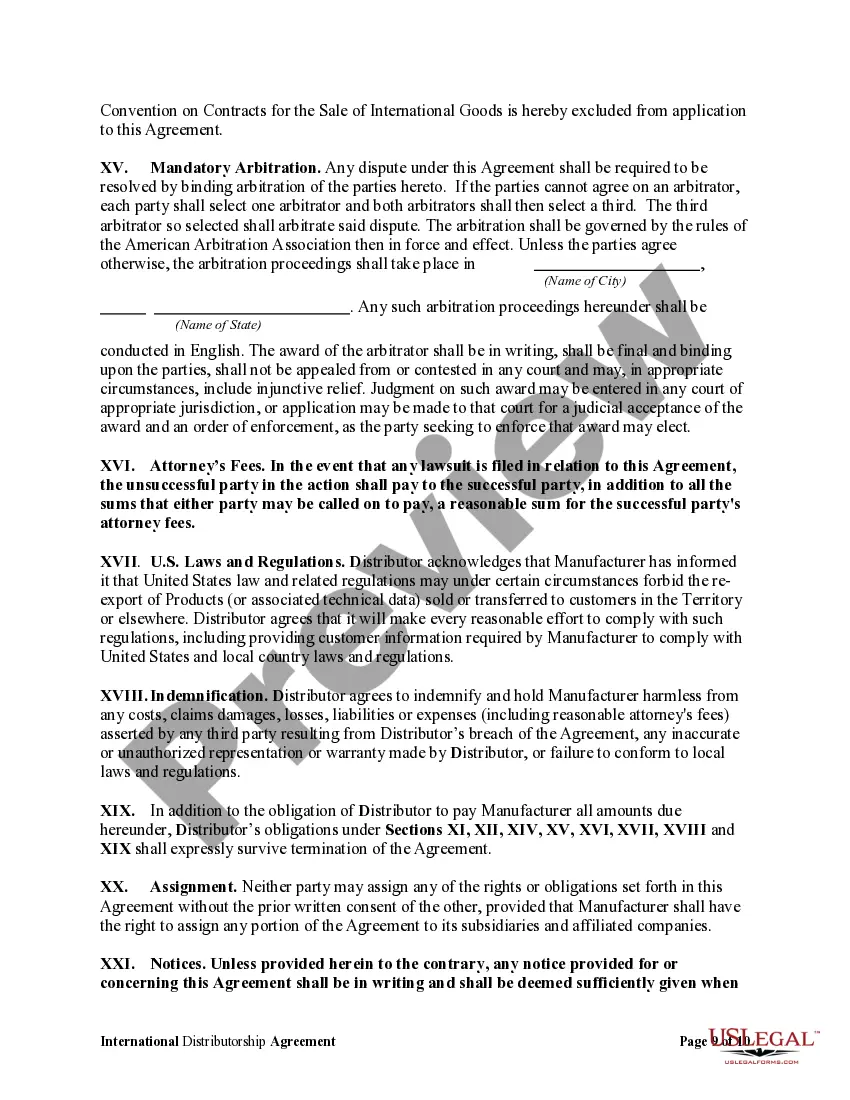
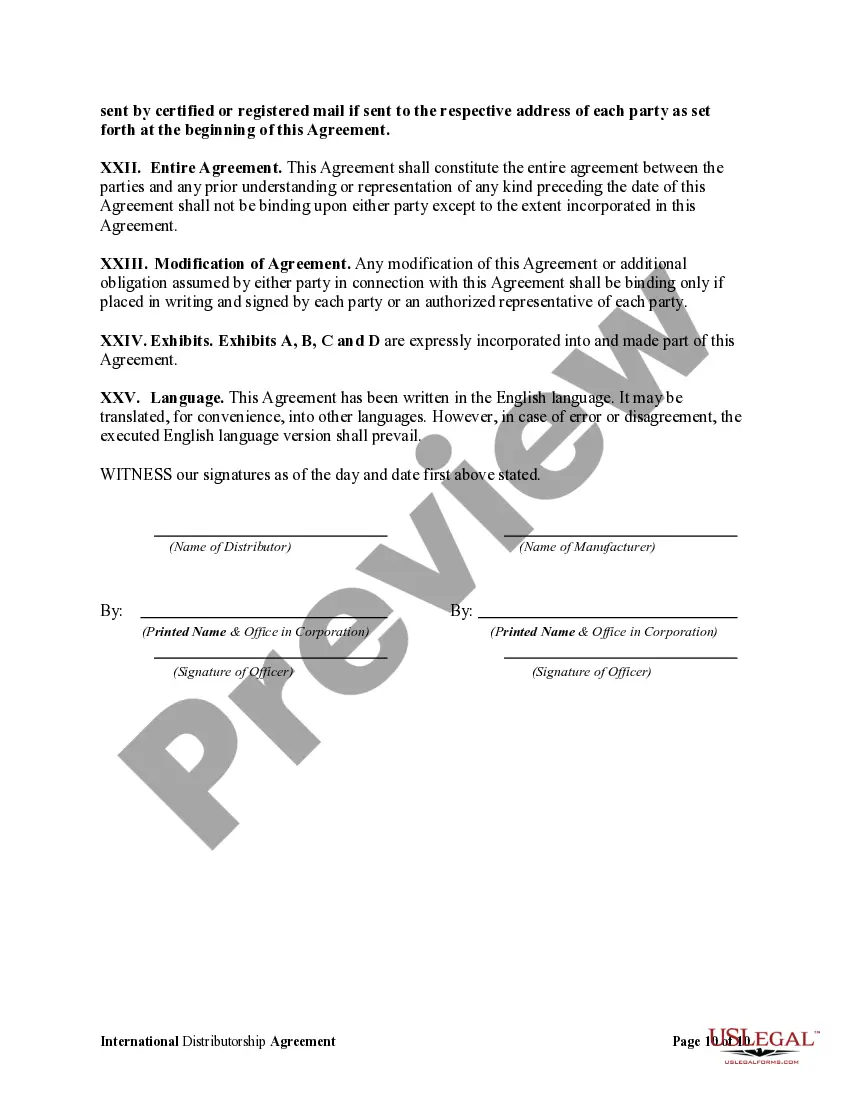
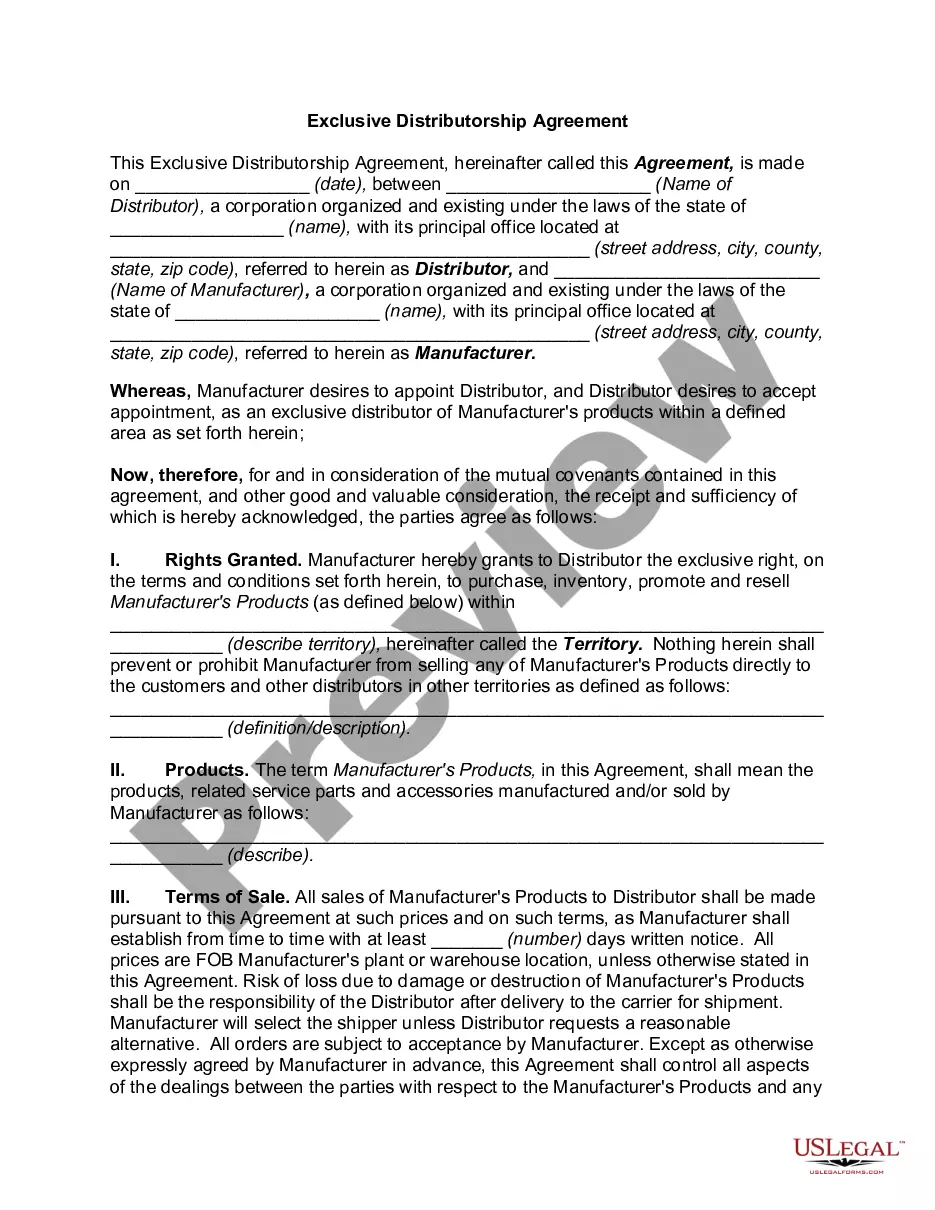
International Exclusive Distribution Agreement With China In Michigan
Description
Get your form ready online
Our built-in tools help you complete, sign, share, and store your documents in one place.
Make edits, fill in missing information, and update formatting in US Legal Forms—just like you would in MS Word.
Download a copy, print it, send it by email, or mail it via USPS—whatever works best for your next step.
Sign and collect signatures with our SignNow integration. Send to multiple recipients, set reminders, and more. Go Premium to unlock E-Sign.
If this form requires notarization, complete it online through a secure video call—no need to meet a notary in person or wait for an appointment.
We protect your documents and personal data by following strict security and privacy standards.

Make edits, fill in missing information, and update formatting in US Legal Forms—just like you would in MS Word.

Download a copy, print it, send it by email, or mail it via USPS—whatever works best for your next step.

Sign and collect signatures with our SignNow integration. Send to multiple recipients, set reminders, and more. Go Premium to unlock E-Sign.

If this form requires notarization, complete it online through a secure video call—no need to meet a notary in person or wait for an appointment.

We protect your documents and personal data by following strict security and privacy standards.
Looking for another form?
Form popularity
FAQ
An exclusive distribution clause prevents the supplier from forming other distribution contracts in a given market or territory. This gives the distributor the exclusive right to sell the products in that region. Exclusivity might be provided contingent on the distributor's performance.
A Standard Clause providing a distributor with the exclusive right to resell products purchased from a manufacturer, producer, or other supplier within a specified geographic territory during the term of the underlying distribution agreement.
The clearest method for achieving exclusivity in negotiation is an exclusive negotiation period during which both sides agree not to talk to third parties, even if approached unexpectedly by others. In some arenas, these terms are called no-talk periods.
By means of an exclusive distribution agreement a supplier agrees to sell its products to only one distributor, or a limited number of them as per the draft for a new Vertical Block Exemption Regulation (“VBER”), for resale in a particular territory or to a specific group of customers, or reserves such distribution ...
Exclusive distribution is when a manufacturer grants a single retailer or distributor the exclusive rights to sell their products within a specific region. The goal with this strategy is to create a sense of scarcity. If the product is only found in certain locations, demand can go up.
Examples of companies that use exclusive distribution include Apple for its high-priced and luxury products, as well as companies like Lamborghini, BMW, Rolex, and Mercedes. These companies appoint only a few distributors to cover a specific region, maintaining exclusivity in their distribution agreements.
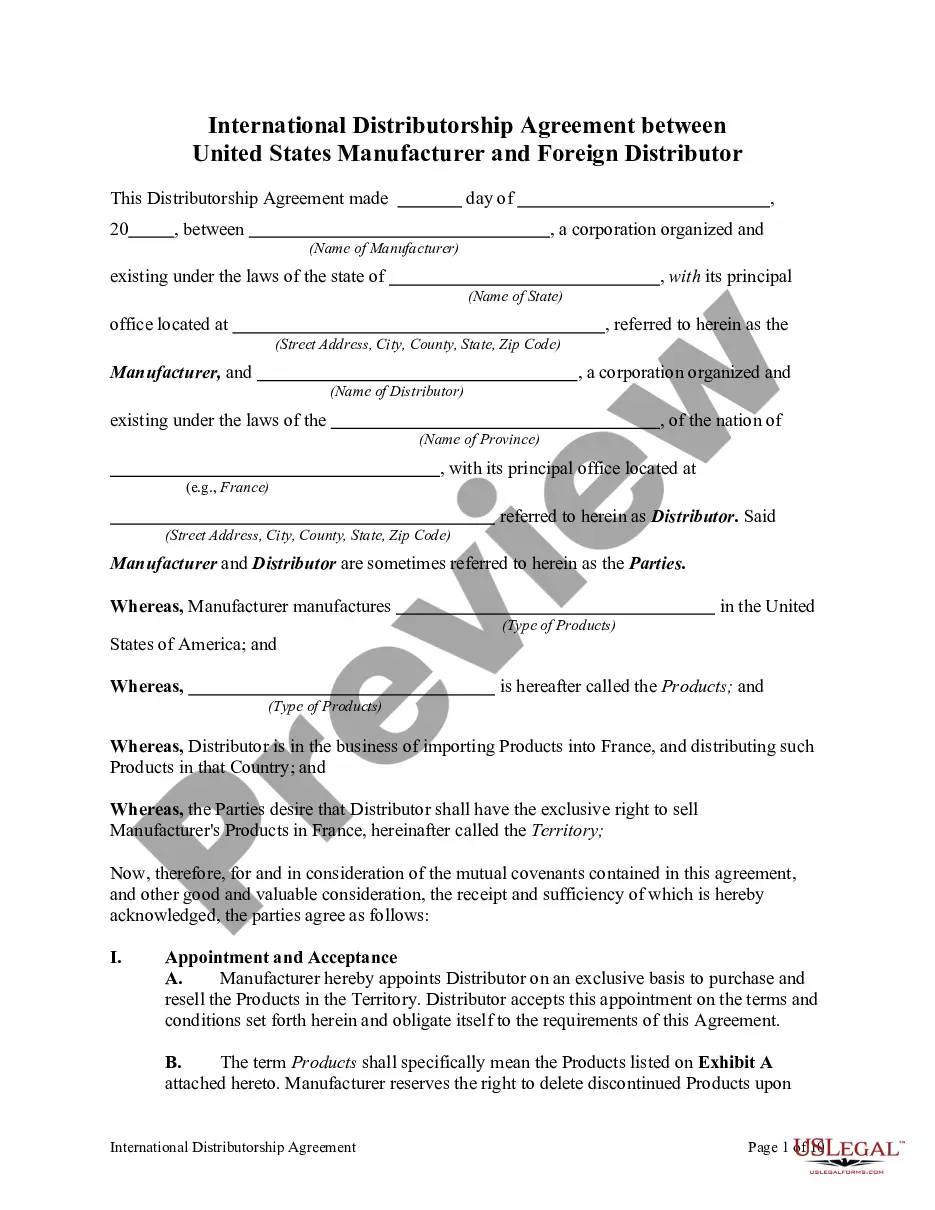
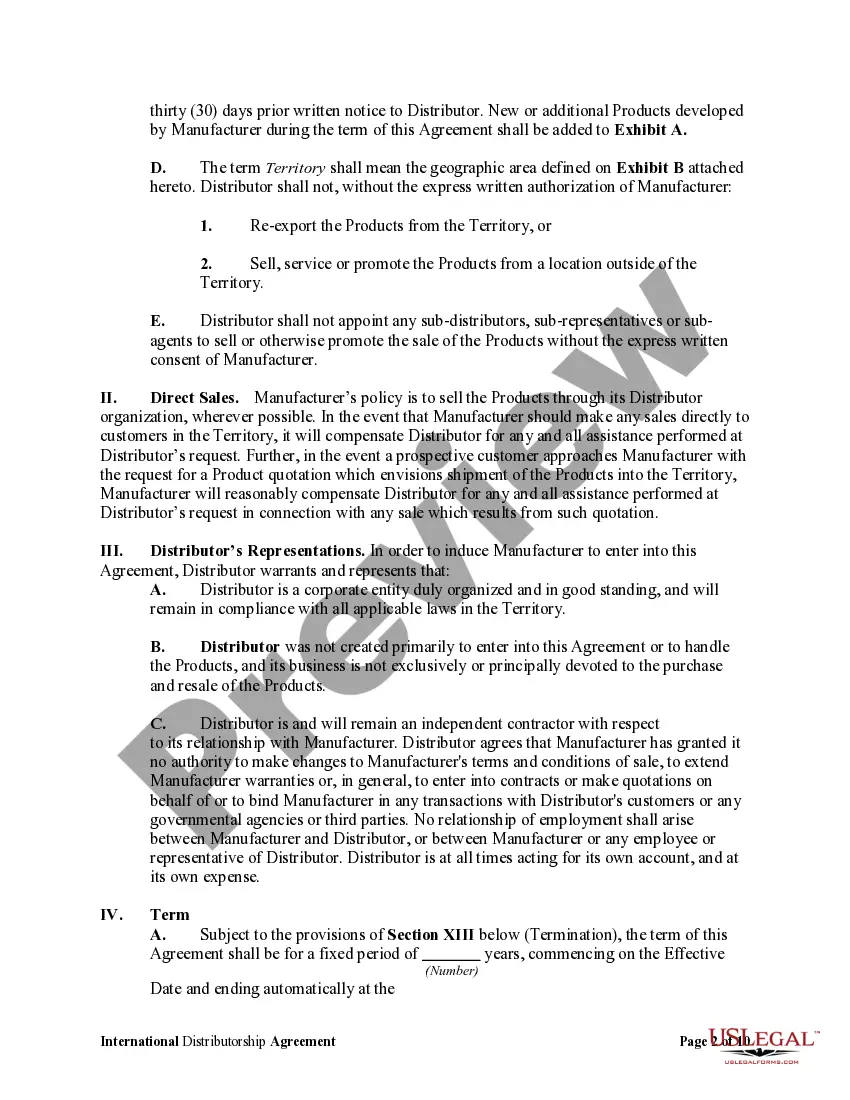
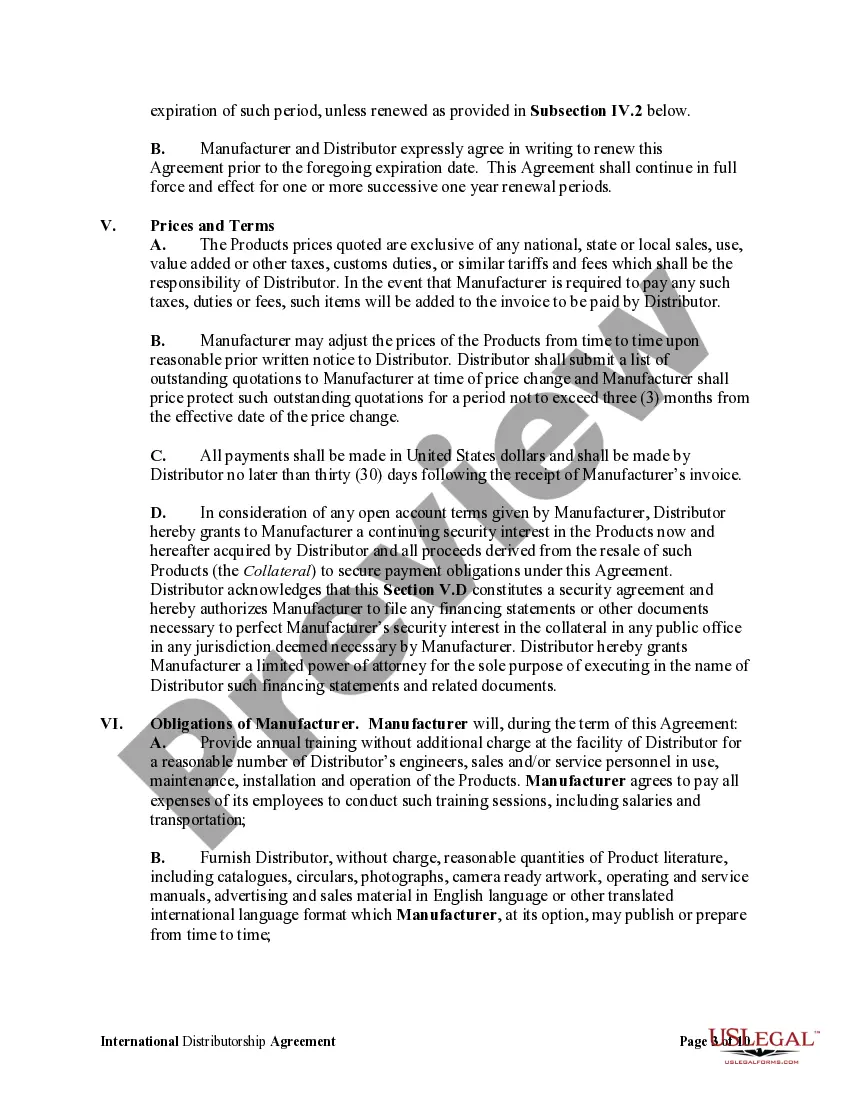
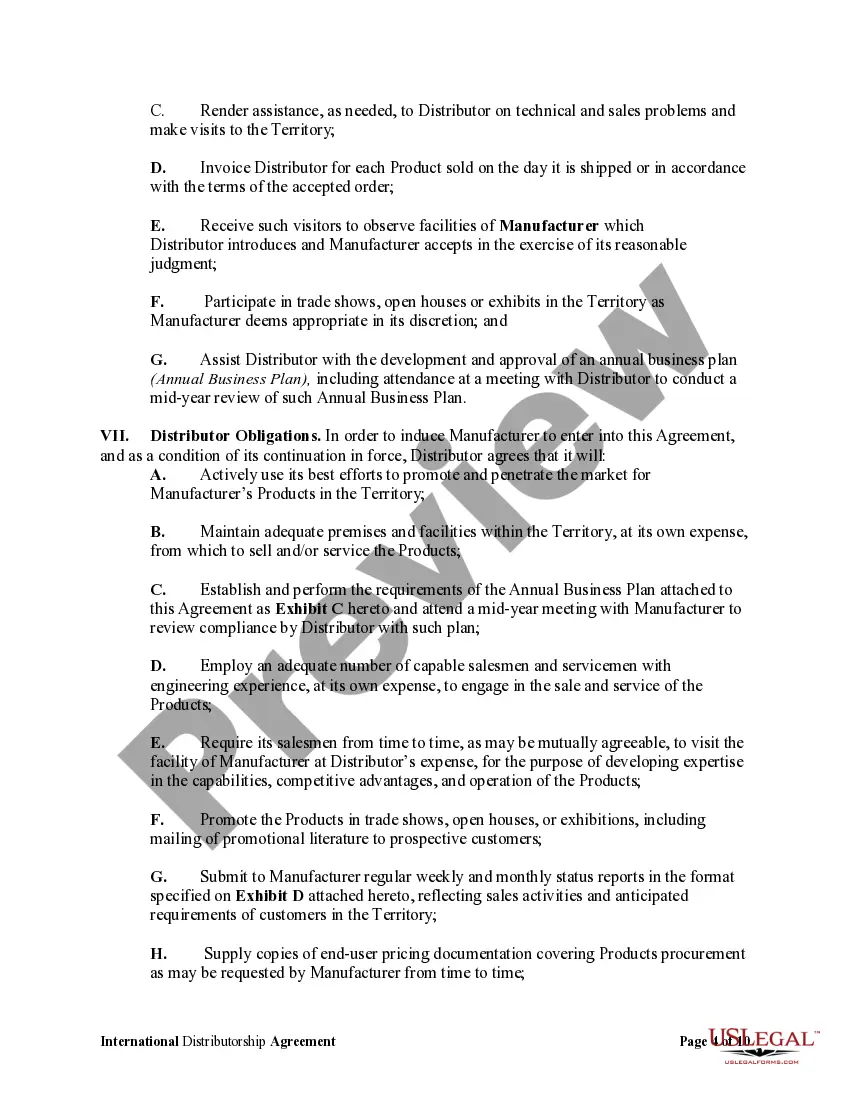
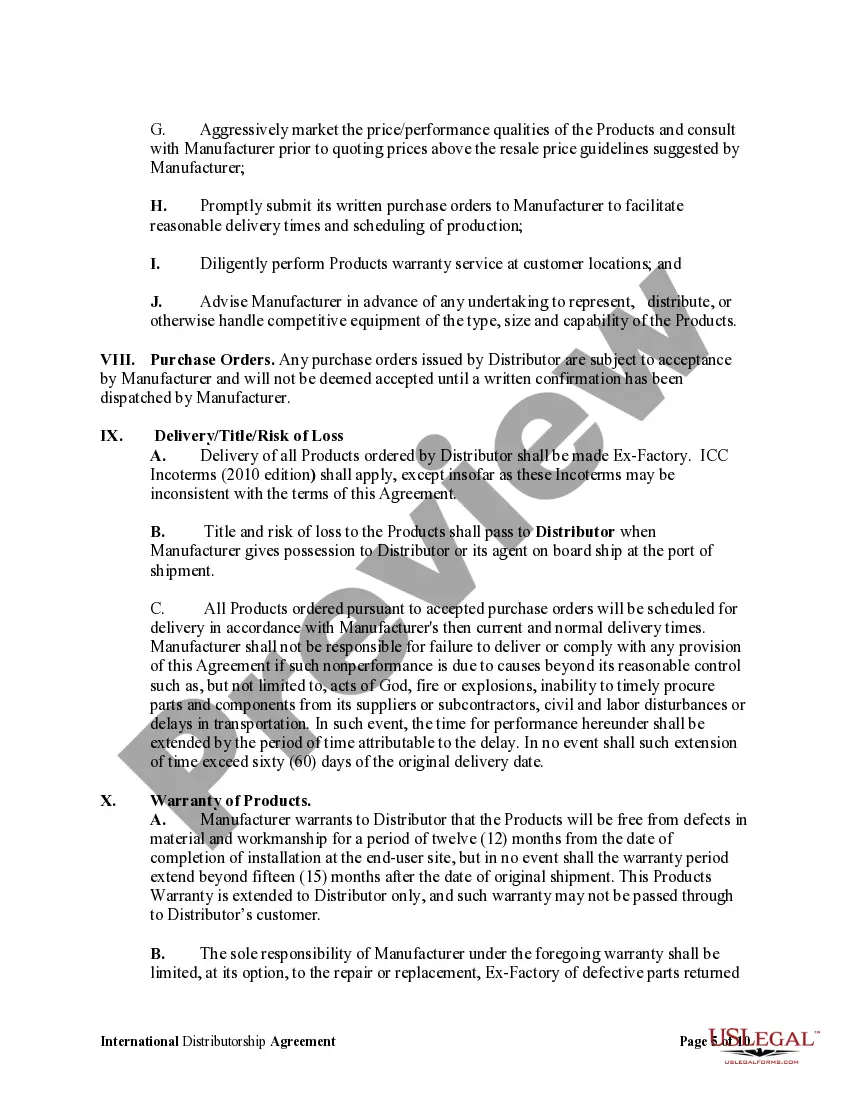
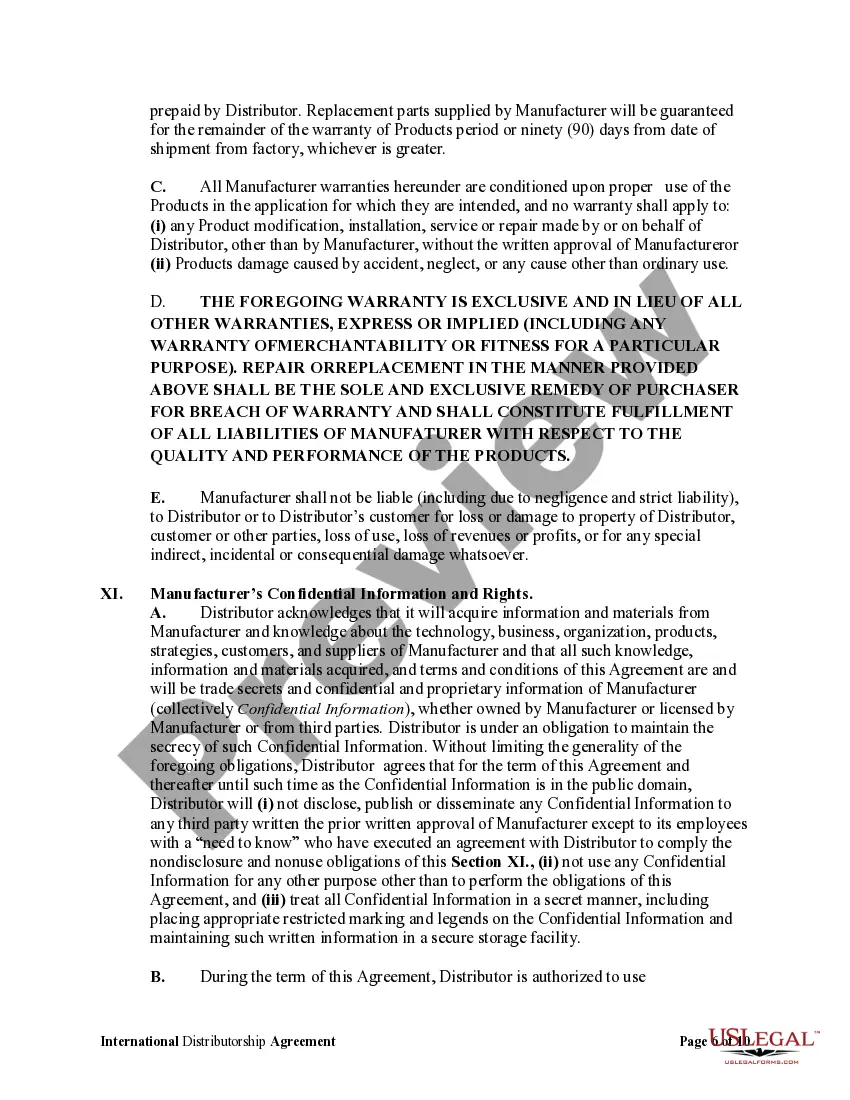
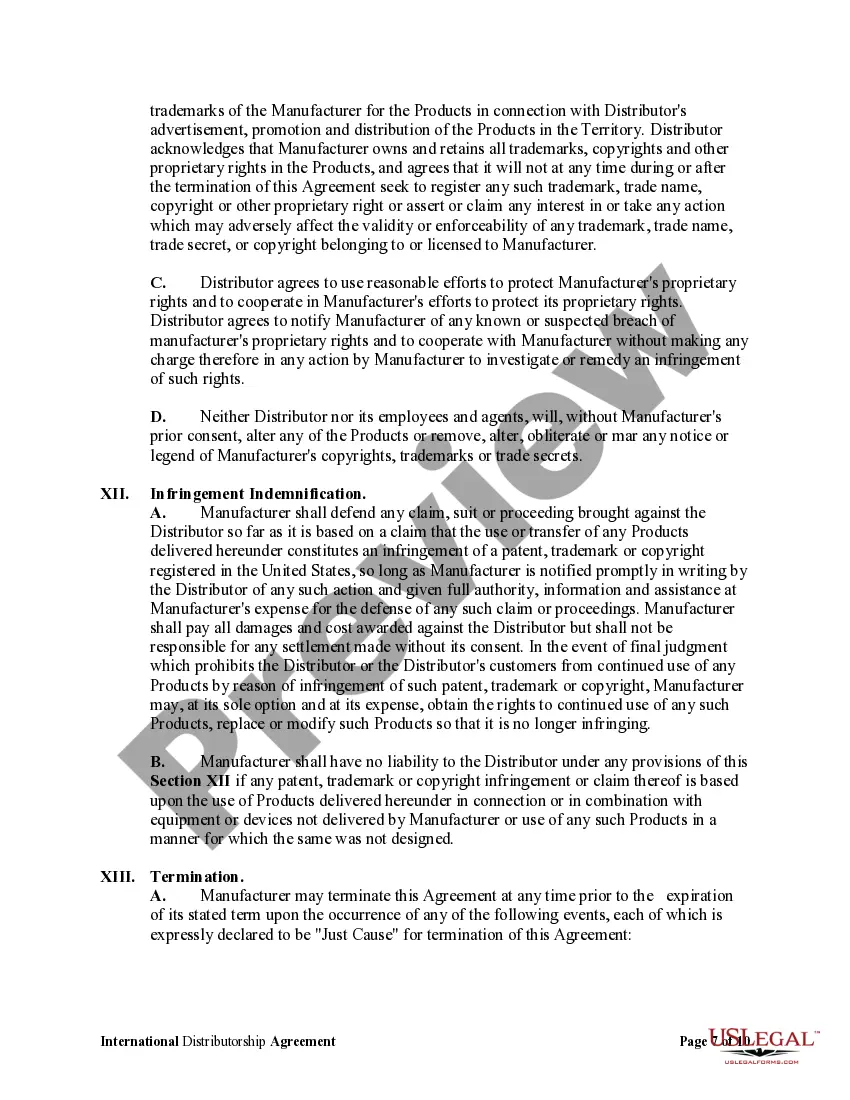
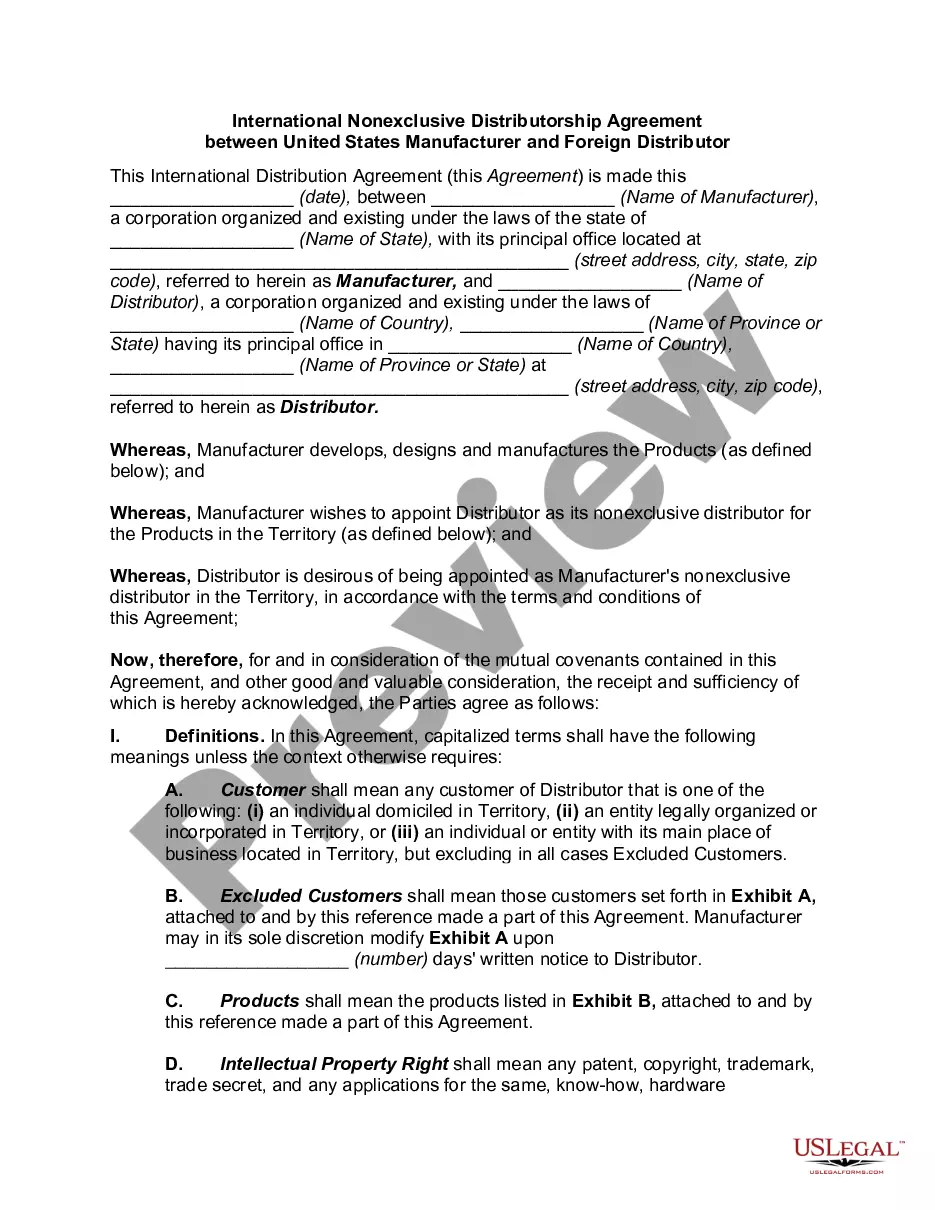
An international distribution agreement is a legal contract between two parties that authorizes one party to sell or distribute the other's products. This type of arrangement usually benefits both businesses because it makes the process more efficient and can help each company increase its customer base.
As discussed in the Fact Sheets on Dealings in the Supply Chain, exclusive contracts between manufacturers and suppliers, or between manufacturers and dealers, are generally lawful because they improve competition among the brands of different manufacturers (interbrand competition).
An international distributor is not a sales representative. Instead, the international distributor purchases products and services from the US company and then resells them to customers in one or more foreign countries.
An example of a treaty that does have provisions for further binding agreements is the UN Charter. By signing and ratifying the Charter, countries agreed to be legally bound by resolutions passed by UN bodies such as the General Assembly and the Security Council.