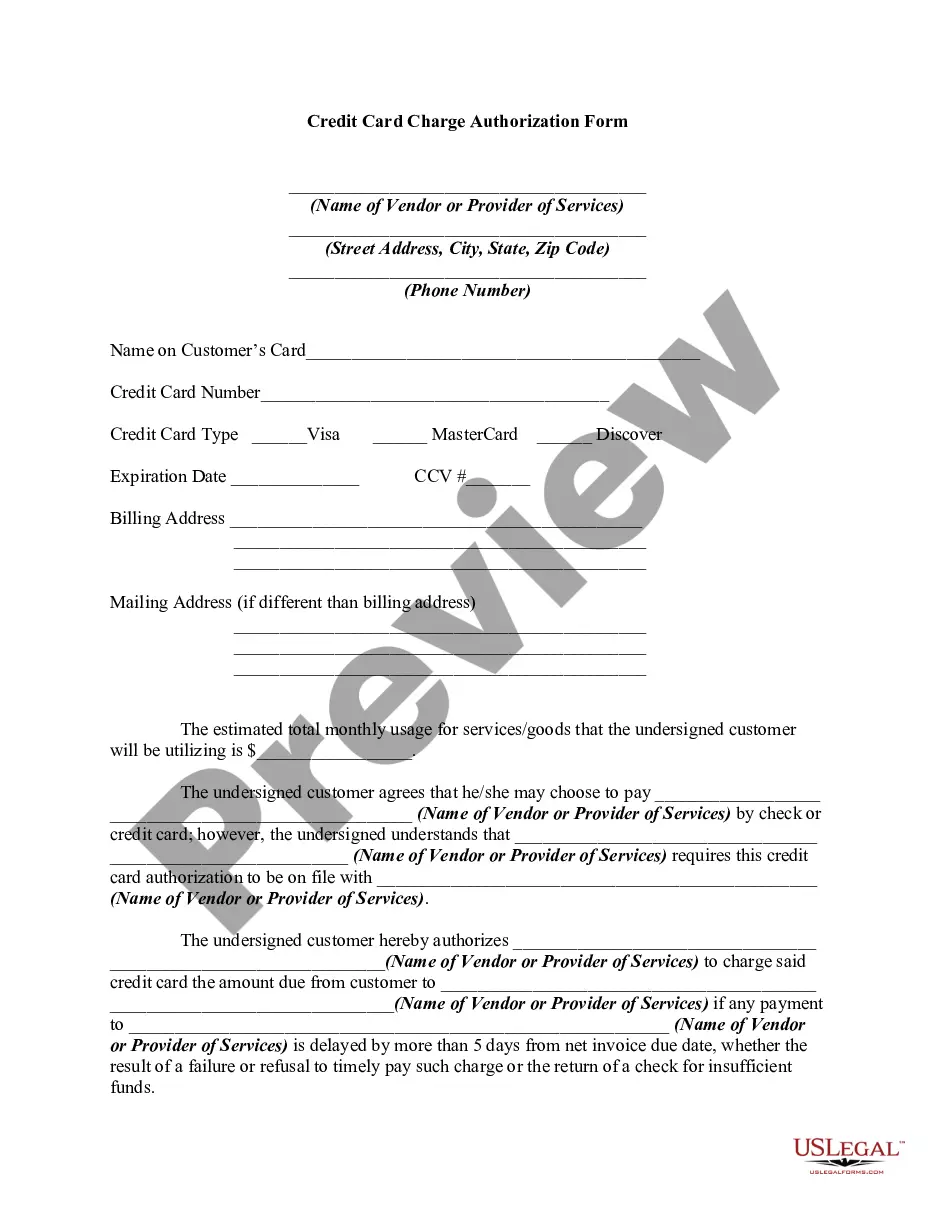
Distributorship Agreement Distributor With A In Florida
Description

Get your form ready online
Our built-in tools help you complete, sign, share, and store your documents in one place.
Make edits, fill in missing information, and update formatting in US Legal Forms—just like you would in MS Word.
Download a copy, print it, send it by email, or mail it via USPS—whatever works best for your next step.
Sign and collect signatures with our SignNow integration. Send to multiple recipients, set reminders, and more. Go Premium to unlock E-Sign.
If this form requires notarization, complete it online through a secure video call—no need to meet a notary in person or wait for an appointment.
We protect your documents and personal data by following strict security and privacy standards.

Make edits, fill in missing information, and update formatting in US Legal Forms—just like you would in MS Word.

Download a copy, print it, send it by email, or mail it via USPS—whatever works best for your next step.

Sign and collect signatures with our SignNow integration. Send to multiple recipients, set reminders, and more. Go Premium to unlock E-Sign.

If this form requires notarization, complete it online through a secure video call—no need to meet a notary in person or wait for an appointment.

We protect your documents and personal data by following strict security and privacy standards.
Looking for another form?








Form popularity
FAQ
There are two large categories of transactions where the UCC does not apply: services and real estate transactions. The idea is that services and real estate transactions have a lot more nuances than could be covered in the UCC and are better handled by the common law approach.
As discussed in the Fact Sheets on Dealings in the Supply Chain, exclusive contracts between manufacturers and suppliers, or between manufacturers and dealers, are generally lawful because they improve competition among the brands of different manufacturers (interbrand competition).
There are many business-related contracts that the UCC does not cover, including real estate contracts, service contracts, and employment contracts. The Uniform Commercial Code (UCC) contains rules applying to many types of commercial contracts, including those related to: the sale of goods. the lease of goods.
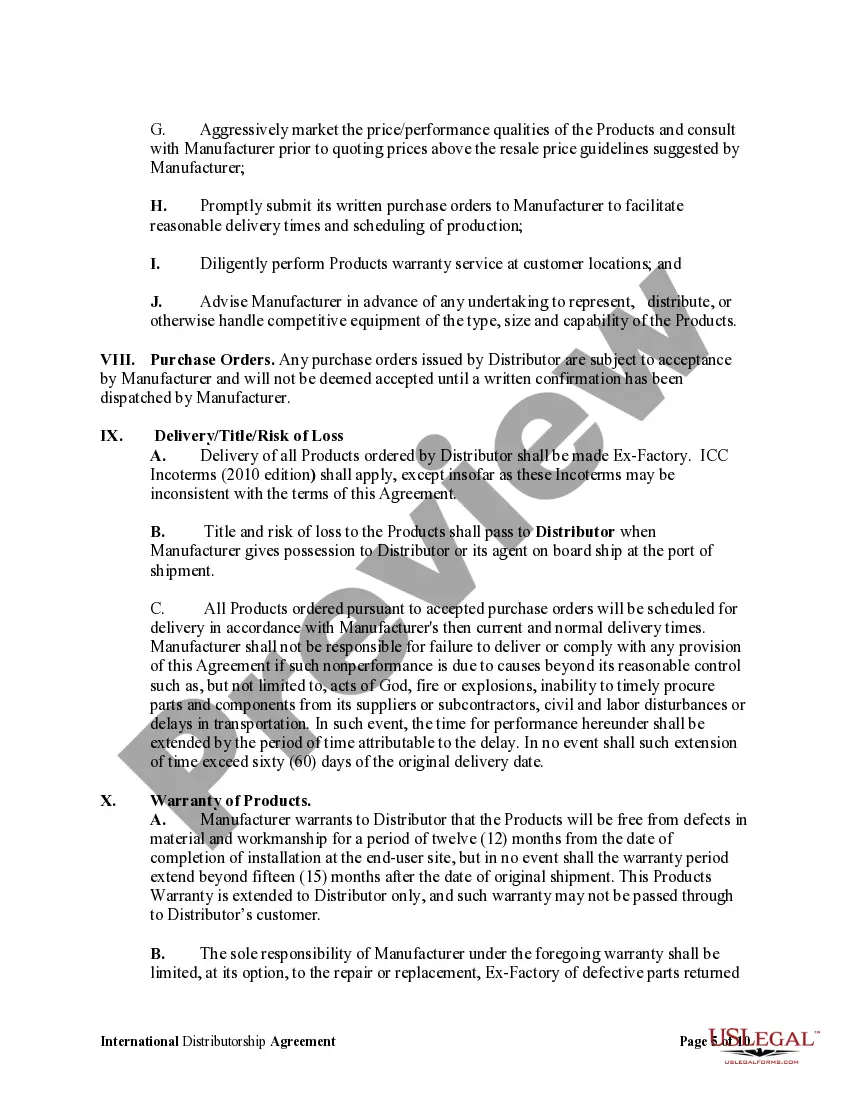
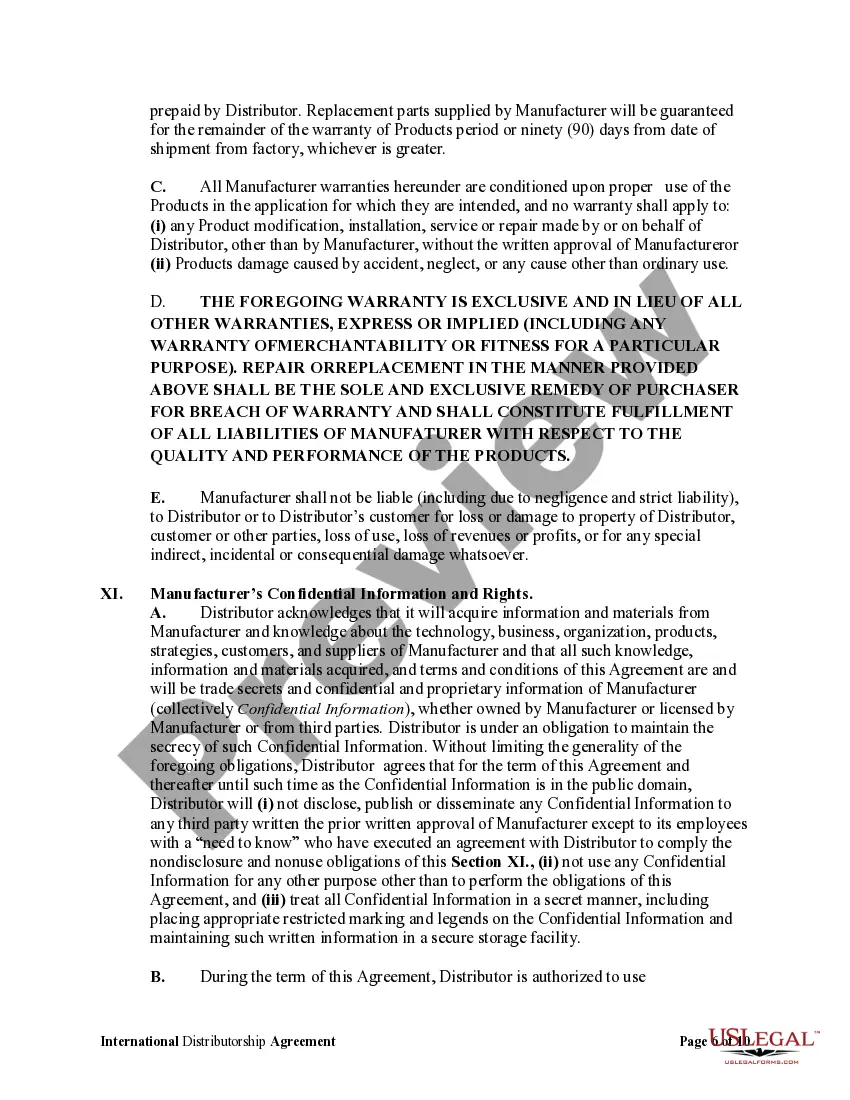
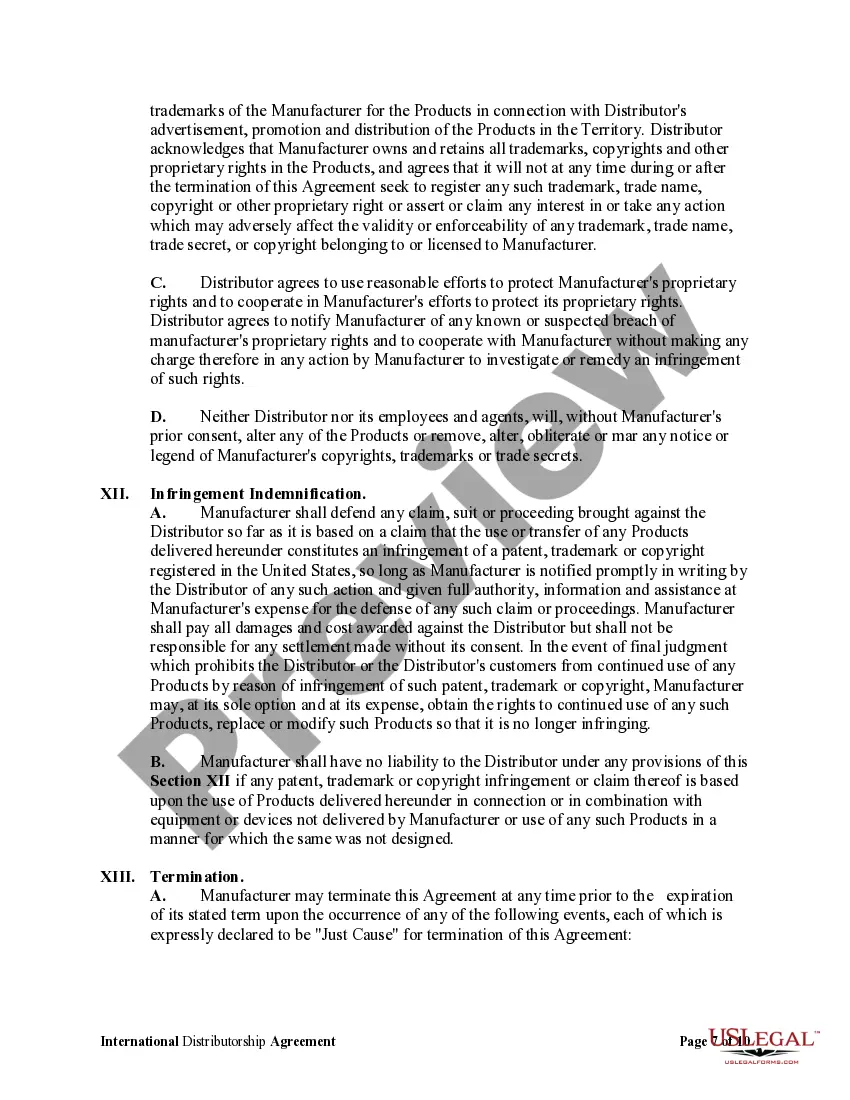
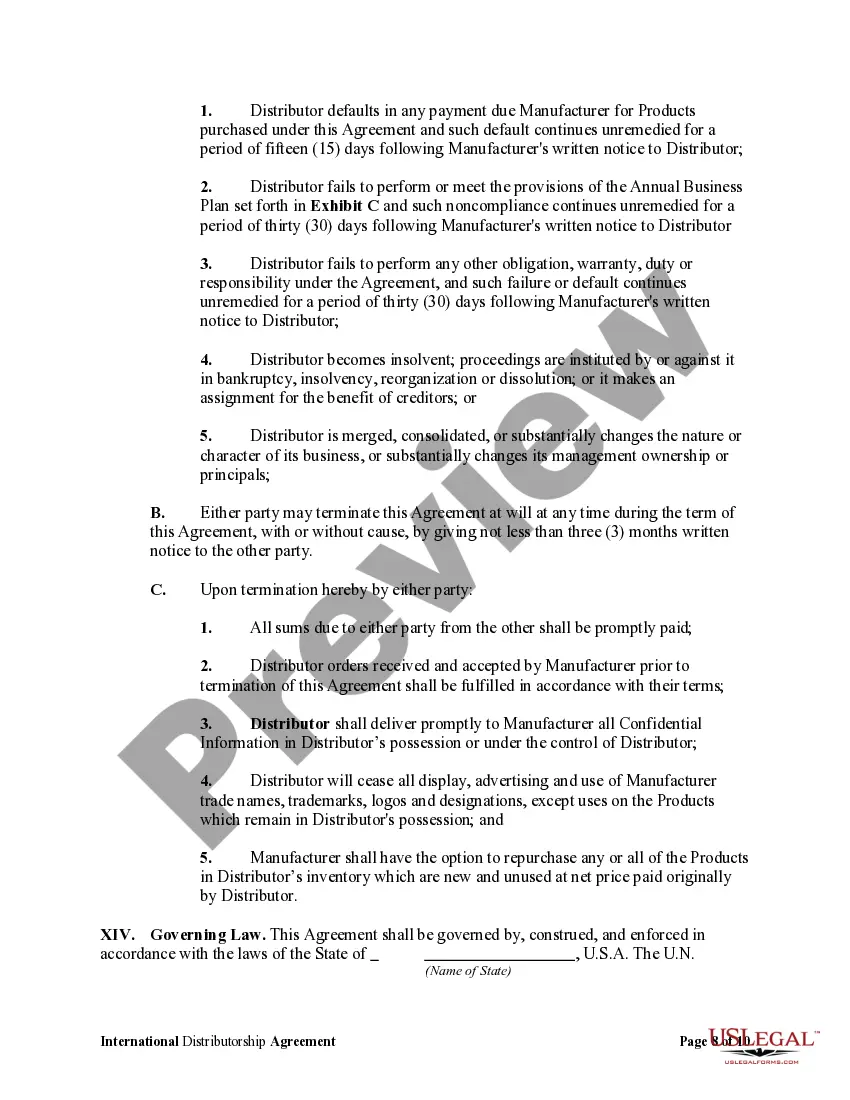
Thus, the question of whether a distributorship contract is governed by the UCC will depend on the exact nuances of the contract. To determine whether the UCC applies, “courts generally examine the transaction to determine whether the sale of goods predominates.” Princess Cruises v. GE, 143 F. 3d 828, 833 (4th Cir.
The UCC applies to the sale of goods and securities, whereas the common law of contracts generally applies to contracts for services, real estate, insurance, intangible assets, and employment. If the contract is for both the sale of goods and for services, the dominant element in the contract controls.
The term for Distribution Agreements varies, with terms being anywhere from 5 to 15 years. I try to limit the term as much as possible—especially when there is no advance, or a meager one.
A distribution agreement is a contract between a manufacturer and a distributor. The manufacturer grants the distributor the right to sell its products or services in a specified territory or market.
A digital distribution deal grants the distributor the right to distribute digital copies of the music. This includes streaming, downloads, and other internet-based methods for accessing music. A physical distribution deal, on the other hand, covers physical mediums such as CDs, vinyl, or cassettes.
The Distributor Agreement should clearly set forth the duties, responsibilities and expectations of each of the parties. The Distributor Agreement should also set forth provisions related to limitations and protections that each party can understand.
A distribution agreement, also known as a distributor agreement, is a contract between a supplying company with products to sell and another company that markets and sells the products. The distributor agrees to buy products from the supplier company and sell them to clients within certain geographical areas.