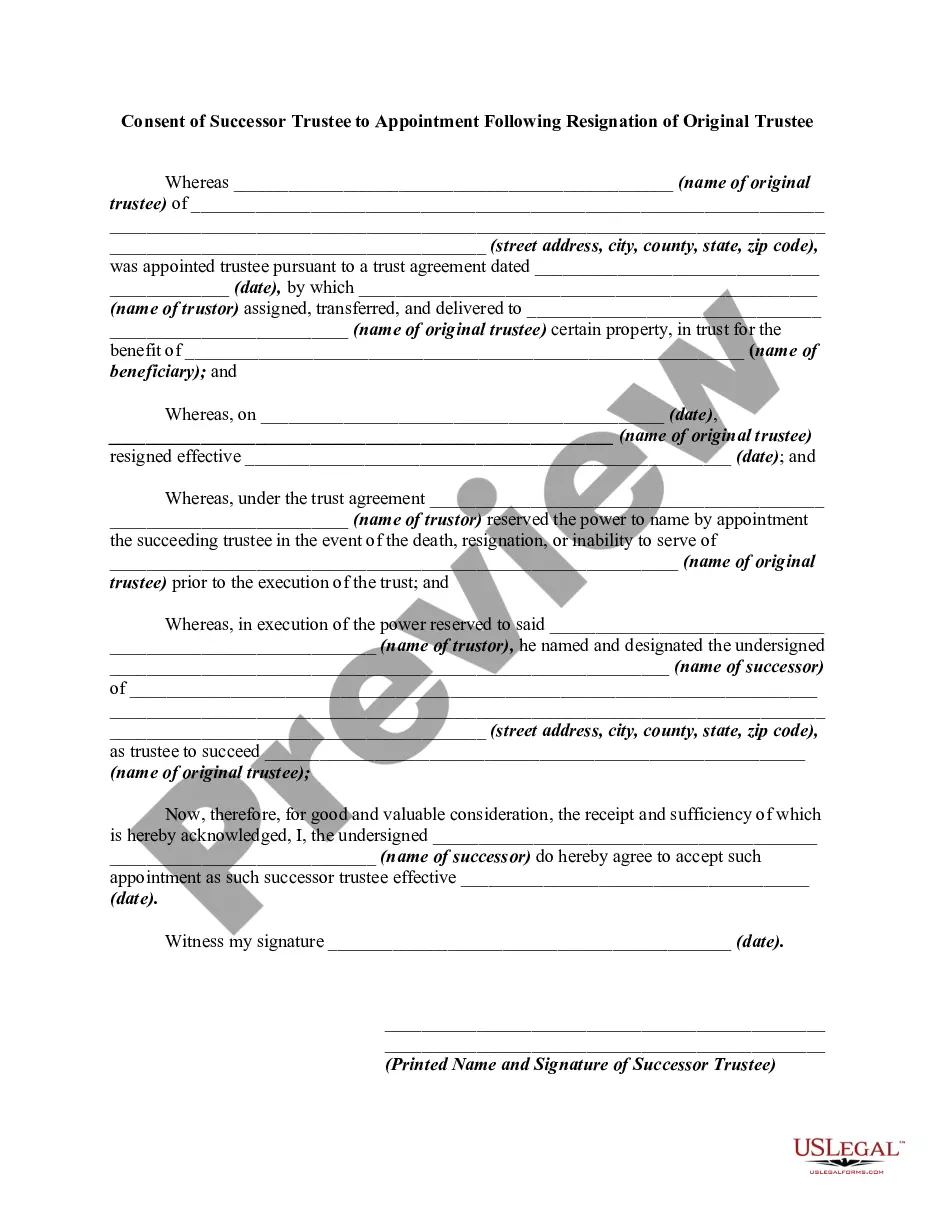
Real Estate Contract Clauses Examples In Maryland
Description

Get your form ready online
Our built-in tools help you complete, sign, share, and store your documents in one place.
Make edits, fill in missing information, and update formatting in US Legal Forms—just like you would in MS Word.
Download a copy, print it, send it by email, or mail it via USPS—whatever works best for your next step.
Sign and collect signatures with our SignNow integration. Send to multiple recipients, set reminders, and more. Go Premium to unlock E-Sign.
If this form requires notarization, complete it online through a secure video call—no need to meet a notary in person or wait for an appointment.
We protect your documents and personal data by following strict security and privacy standards.

Make edits, fill in missing information, and update formatting in US Legal Forms—just like you would in MS Word.

Download a copy, print it, send it by email, or mail it via USPS—whatever works best for your next step.

Sign and collect signatures with our SignNow integration. Send to multiple recipients, set reminders, and more. Go Premium to unlock E-Sign.

If this form requires notarization, complete it online through a secure video call—no need to meet a notary in person or wait for an appointment.

We protect your documents and personal data by following strict security and privacy standards.
Looking for another form?









Form popularity
FAQ
A contract is a legally binding agreement between two or more parties that outlines their rights and obligations for that business relationship or transaction. Now, a contract clause is a specific section or provision within that written contract.
A clause can be defined as an independent concept within the written contract. A clause may have any number of sub-clauses. A condition is a clause in a contract or agreement which has for an object to suspend or to alter the obligation principals.
Valid contracts consist of three key criteria: offer, acceptance, and consideration (the exchange of something of value from both sides). Once a contract is signed in Maryland, it is typically binding. Maryland has very few laws that allow a person to cancel an accepted contract.
Examples include confidentiality, liability, and termination clauses, all of which serve to protect parties' interests and provide a framework for resolving potential disputes.
(a) In addition to any other right under law to rescind a contract, the homeowner of a residence in default has the right to rescind a contract for the sale or transfer of the residence in default within 5 days after the execution of the contract.
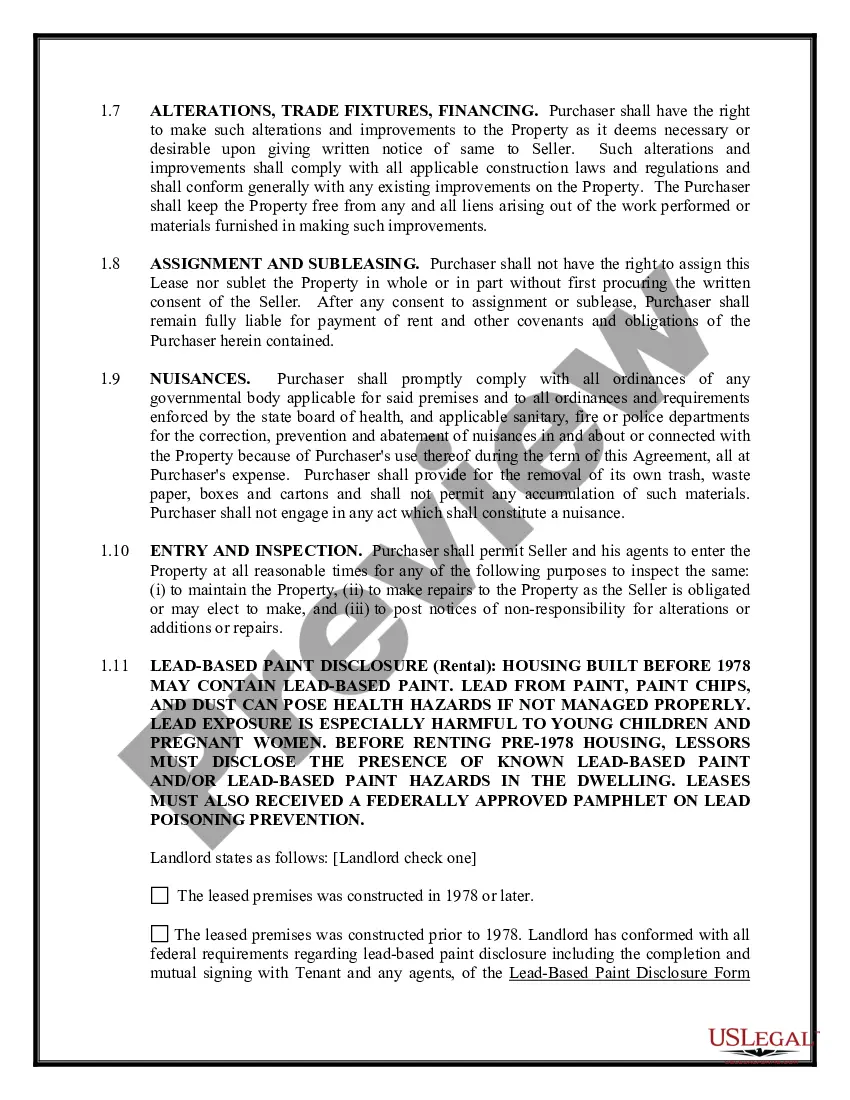
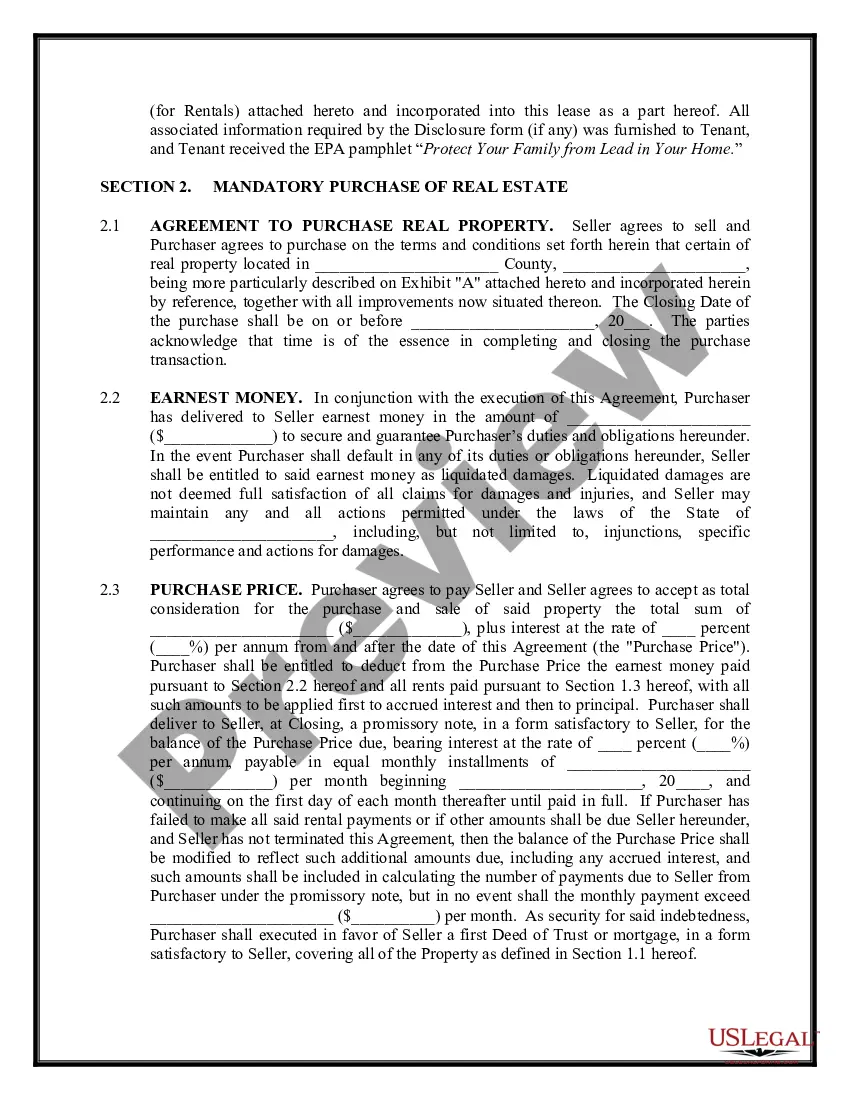
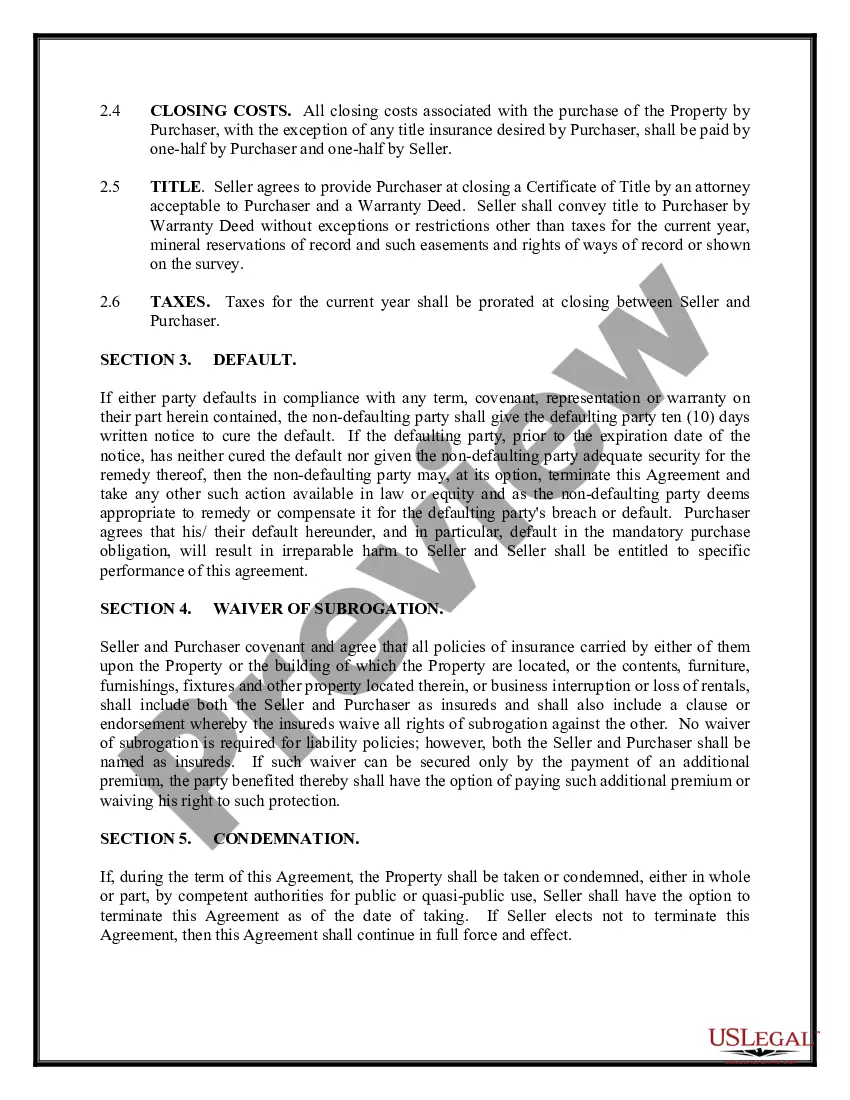
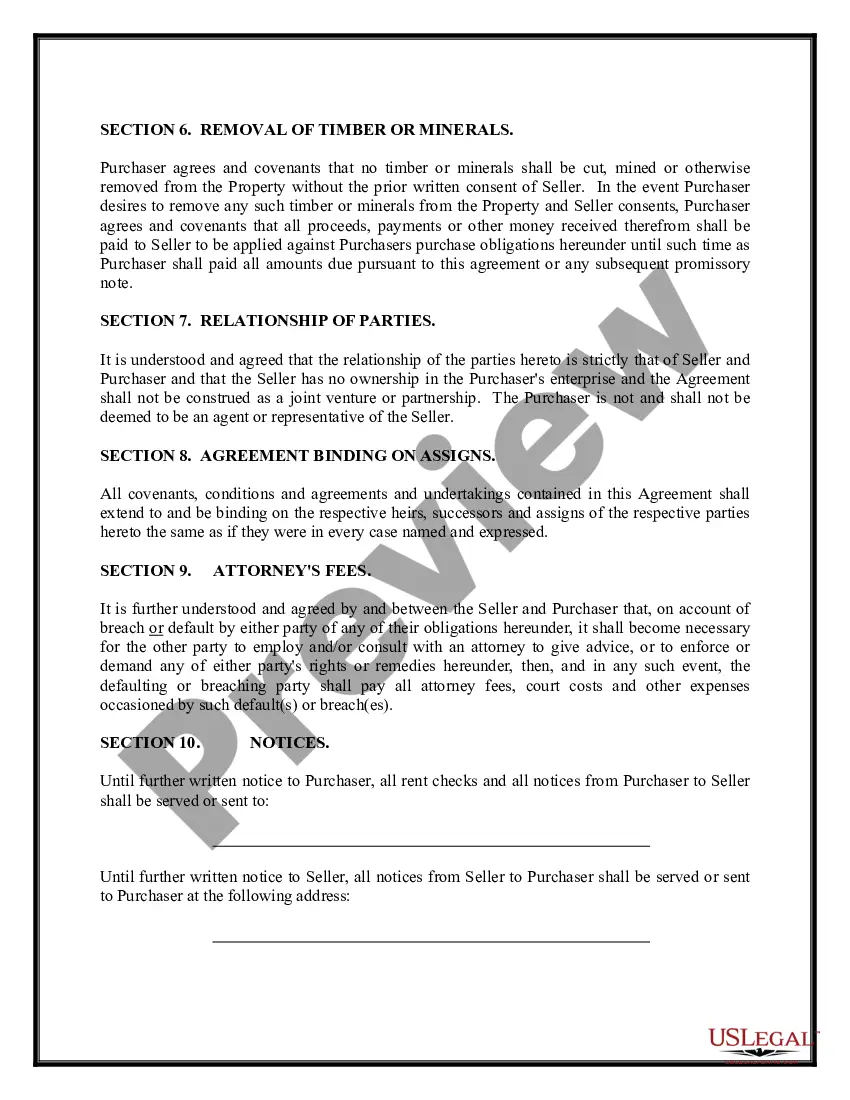
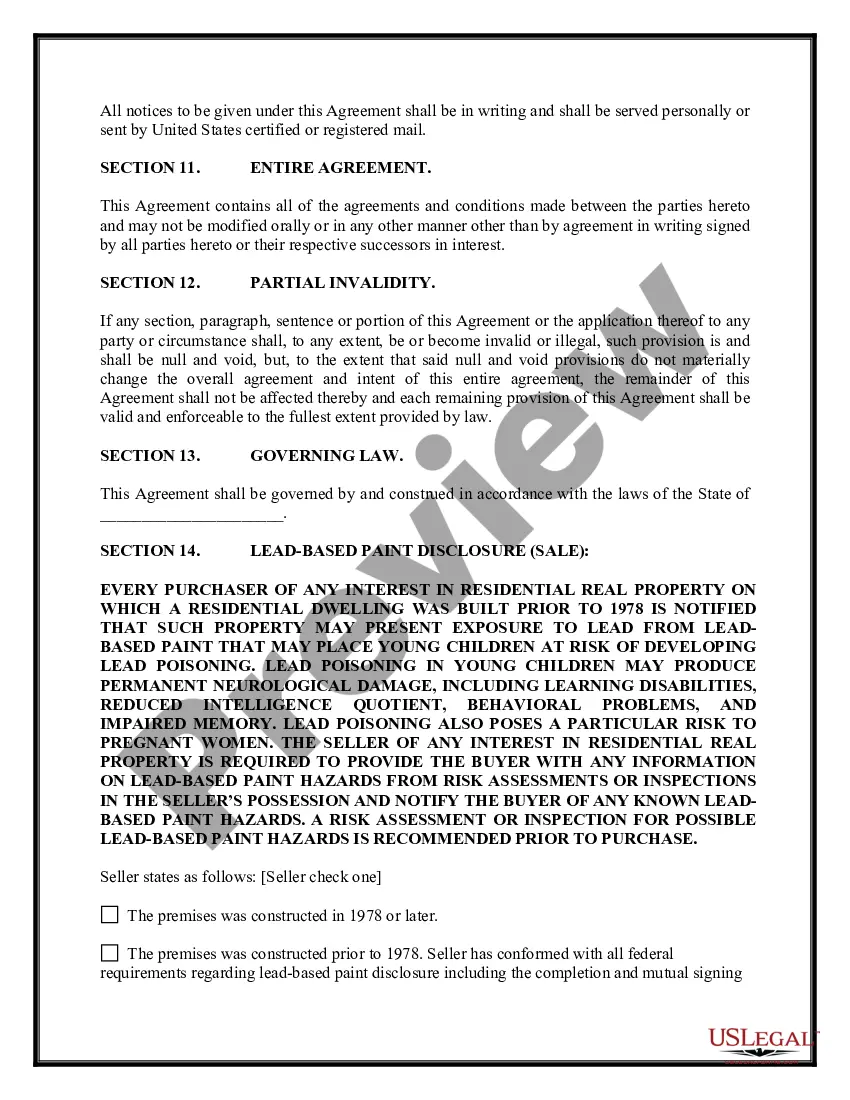
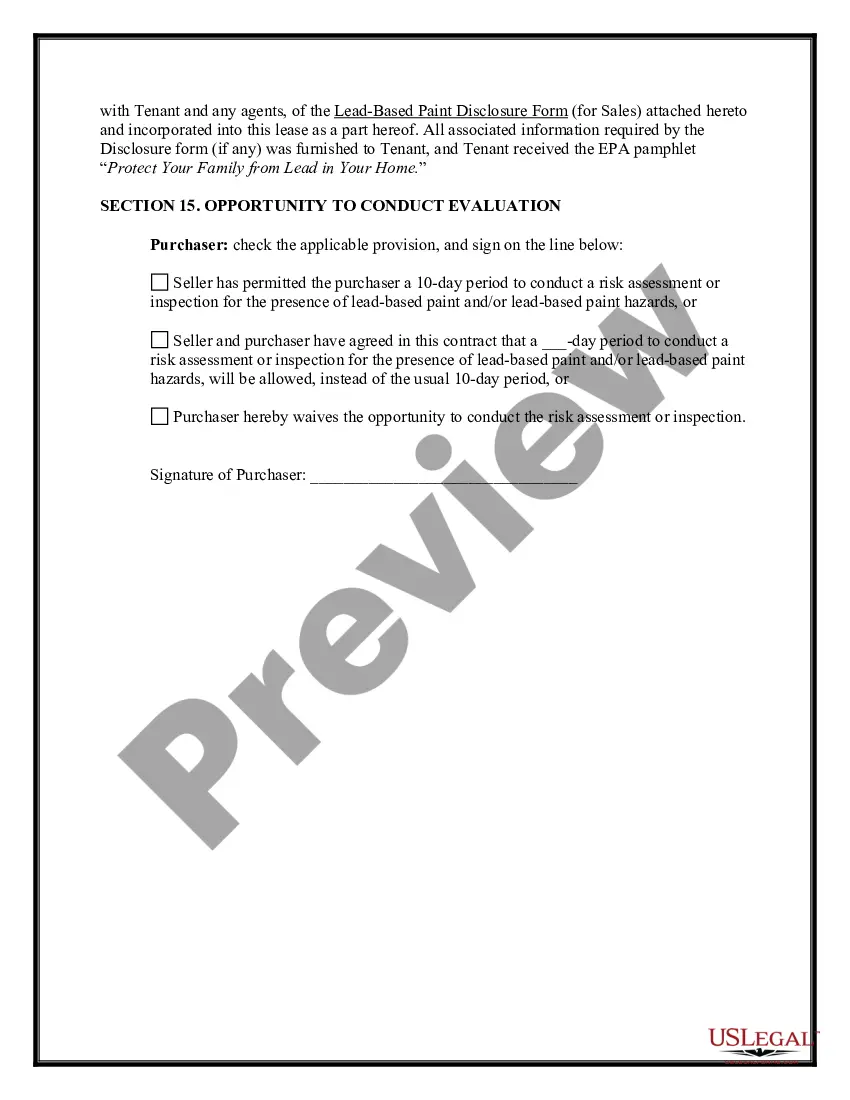
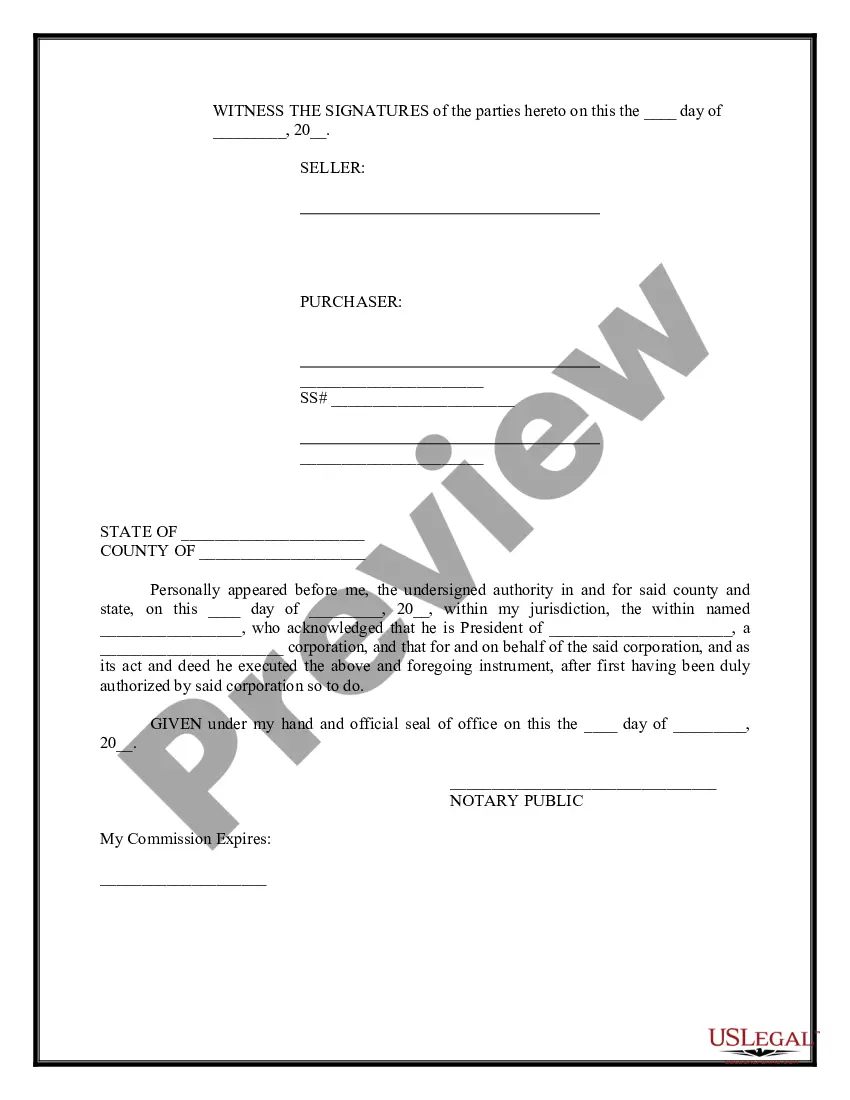
In real estate contracts, there are contract clauses that outline the terms of the agreement and responsibilities of each party. The contract clauses address all aspects of the sale terms and are legally binding once both parties sign the document.
Sample wording: “This agreement may be terminated by either party by providing 30 days written notice to the other party.” Change control clauses: Manage how changes to the contract or project scope are handled. Sample wording: “Any changes to the scope of work must be made in writing and agreed upon by both parties.”
Generally, there's no cooling-off period after you sign a contract. (In Maryland, only a few types of transactions, such as door-to-door sales contracts, allow you a certain number of days to cancel.)