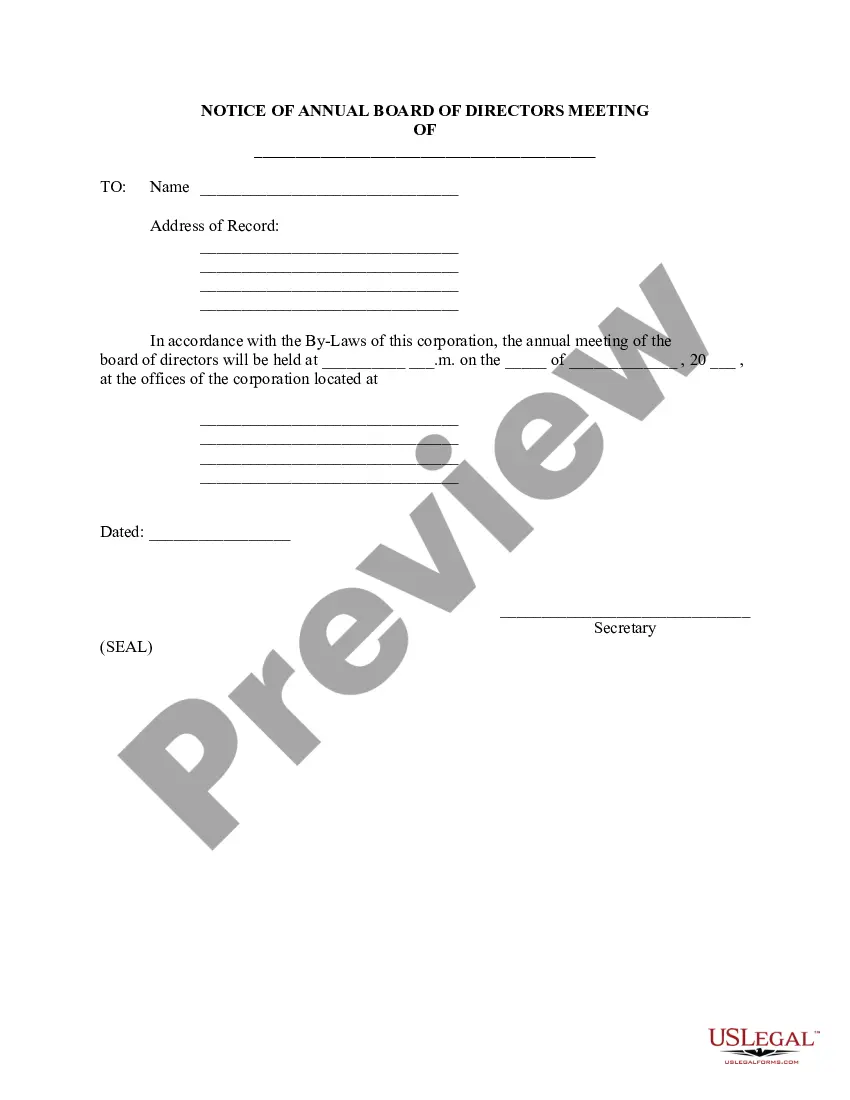
Annual Meeting Date Rules In Hennepin
Description




Get your form ready online
Our built-in tools help you complete, sign, share, and store your documents in one place.
Make edits, fill in missing information, and update formatting in US Legal Forms—just like you would in MS Word.
Download a copy, print it, send it by email, or mail it via USPS—whatever works best for your next step.
Sign and collect signatures with our SignNow integration. Send to multiple recipients, set reminders, and more. Go Premium to unlock E-Sign.
If this form requires notarization, complete it online through a secure video call—no need to meet a notary in person or wait for an appointment.
We protect your documents and personal data by following strict security and privacy standards.

Make edits, fill in missing information, and update formatting in US Legal Forms—just like you would in MS Word.

Download a copy, print it, send it by email, or mail it via USPS—whatever works best for your next step.

Sign and collect signatures with our SignNow integration. Send to multiple recipients, set reminders, and more. Go Premium to unlock E-Sign.

If this form requires notarization, complete it online through a secure video call—no need to meet a notary in person or wait for an appointment.

We protect your documents and personal data by following strict security and privacy standards.
Looking for another form?




Form popularity
FAQ
For an AGM to be valid and able to conduct business, a minimum number of voting members (a quorum) must be present. The required quorum is set out in the company's Articles. For public companies, a quorum is two qualifying persons present unless the Articles specify a higher number.
An annual meeting is a gathering of the shareholders of a company once a year to discuss financial performance, elect directors and approve important corporate decisions. It's often the case that certain things have to be done by law these can include: Elect the board of directors.
All companies except One Person Company (OPC) should hold an AGM after the end of each financial year. A company must hold its AGM within a period of six months from the end of the financial year, i.e. within 30 September every year.
The Open Meeting Law (Minnesota Statutes Chapter 13D) requires public bodies to meet in open session unless otherwise permitted and provide meeting notices to the public. This law applies to both state-level public bodies and local public bodies, such as county boards, city councils, and school boards.
The legal requirements for an AGM can vary by jurisdiction but will often include the following: Notice of meeting. Quorum. Voting. Filing requirements. Election of directors. Financial and auditor reports. Shareholder proposals.
All companies except One Person Company (OPC) should hold an AGM after the end of each financial year. A company must hold its AGM within a period of six months from the end of the financial year, i.e. within 30 September every year.
Record date should be about 50 calendar days prior to meeting date, but no less than 8 business days prior to mail date. If using the notice and access option, notices must be mailed no later than 40 calendar days prior to the meeting date.
Disclosure of Information: Companies must provide shareholders with adequate information about the topics to be discussed, including financial status, current strategy, and governance matters. Insufficient disclosure may render the AGM invalid.
Board of commissioners Hennepin County has seven commissioners who serve four-year terms. The board enacts and enforces local ordinances, approves budgets, oversees spending, and hires county employees. Their duties are defined by the state constitution and state statutes.
Call 612-348-3000, Monday through Friday, 8 a.m. to p.m.