Opposing Counsel In Court In Washington
Description


Get your form ready online
Our built-in tools help you complete, sign, share, and store your documents in one place.
Make edits, fill in missing information, and update formatting in US Legal Forms—just like you would in MS Word.
Download a copy, print it, send it by email, or mail it via USPS—whatever works best for your next step.
Sign and collect signatures with our SignNow integration. Send to multiple recipients, set reminders, and more. Go Premium to unlock E-Sign.
If this form requires notarization, complete it online through a secure video call—no need to meet a notary in person or wait for an appointment.
We protect your documents and personal data by following strict security and privacy standards.

Make edits, fill in missing information, and update formatting in US Legal Forms—just like you would in MS Word.

Download a copy, print it, send it by email, or mail it via USPS—whatever works best for your next step.

Sign and collect signatures with our SignNow integration. Send to multiple recipients, set reminders, and more. Go Premium to unlock E-Sign.

If this form requires notarization, complete it online through a secure video call—no need to meet a notary in person or wait for an appointment.

We protect your documents and personal data by following strict security and privacy standards.
Looking for another form?






Form popularity
FAQ
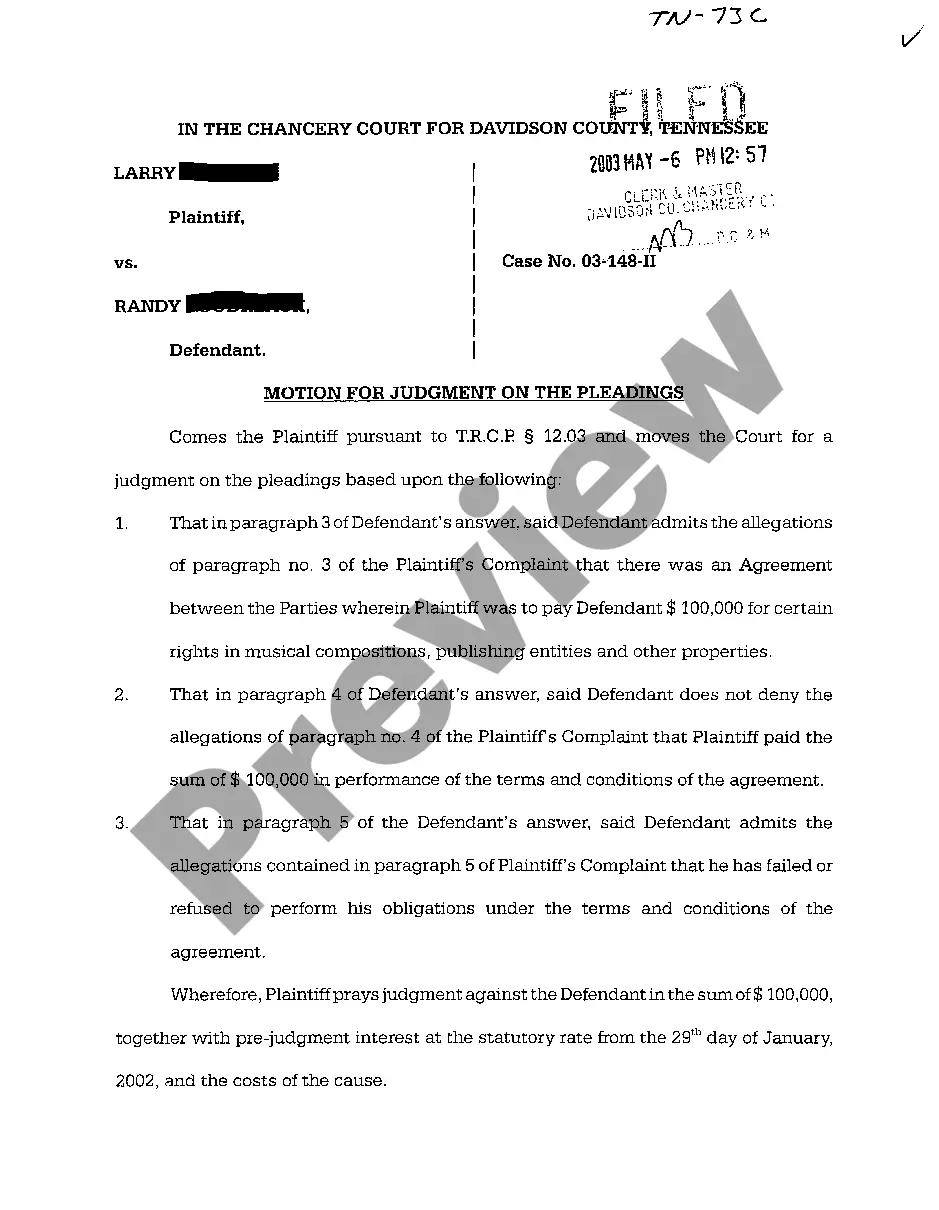
Write the Introductory Paragraph Start by identifying whether you are the defendant or plaintiff. Next, state whether you have an attorney or are making the motion pro se. State Any Applicable Facts Following your introduction, lay out the facts that you think are relevant to your motion.
(a) Computation. In computing any period of time prescribed or allowed by these rules, by the local rules of any district court, by order of court, or by any applicable statute, the day of the act, event, or default from which the designated period of time begins to run shall not be included.
Rule 7 – Pleadings allowed (b) Motions and Other Papers. (1) In General. A request for a court order must be made by motion. The motion must: (A) be in writing unless made during a hearing or trial; (B) state with particularity the grounds for seeking the order; and (C) state the relief sought.
An application to the court for an order shall be by motion which, unless made during a hearing or trial, shall be made in writing, shall state with particularity the grounds therefor, and shall set forth the relief or order sought.
Unless agreed by the parties and with the permission of the court, all discovery shall be completed within 60 days of the demand, or 90 days of service of the summons and complaint, or counterclaim, or cross complaint, whichever is longer.
Use Mr./Ms. last name for the initial email. When opposing counsel responds and signs off with a first name (e.g., "Nick"), use that going forward. ? To address a group of opposing counsel, go with "Counsel." If you find these tips helpful, please follow Nick Bullard and click the ? to get my next tip.
When a cause is set and called for trial, it shall be tried or dismissed, unless good cause is shown for a continuance. The court may in a proper case, and upon terms, reset the same. (e) Continuances.
8 Tips for Dealing with Difficult Opposing Counsel Point out Common Ground. Don't be Afraid to Ask Why. Separate the Person from the Problem. Focus on your Interests. Don't Fall for your Assumptions. Take a Calculated Approach. Control the Conversation by Reframing. Pick up the Phone.