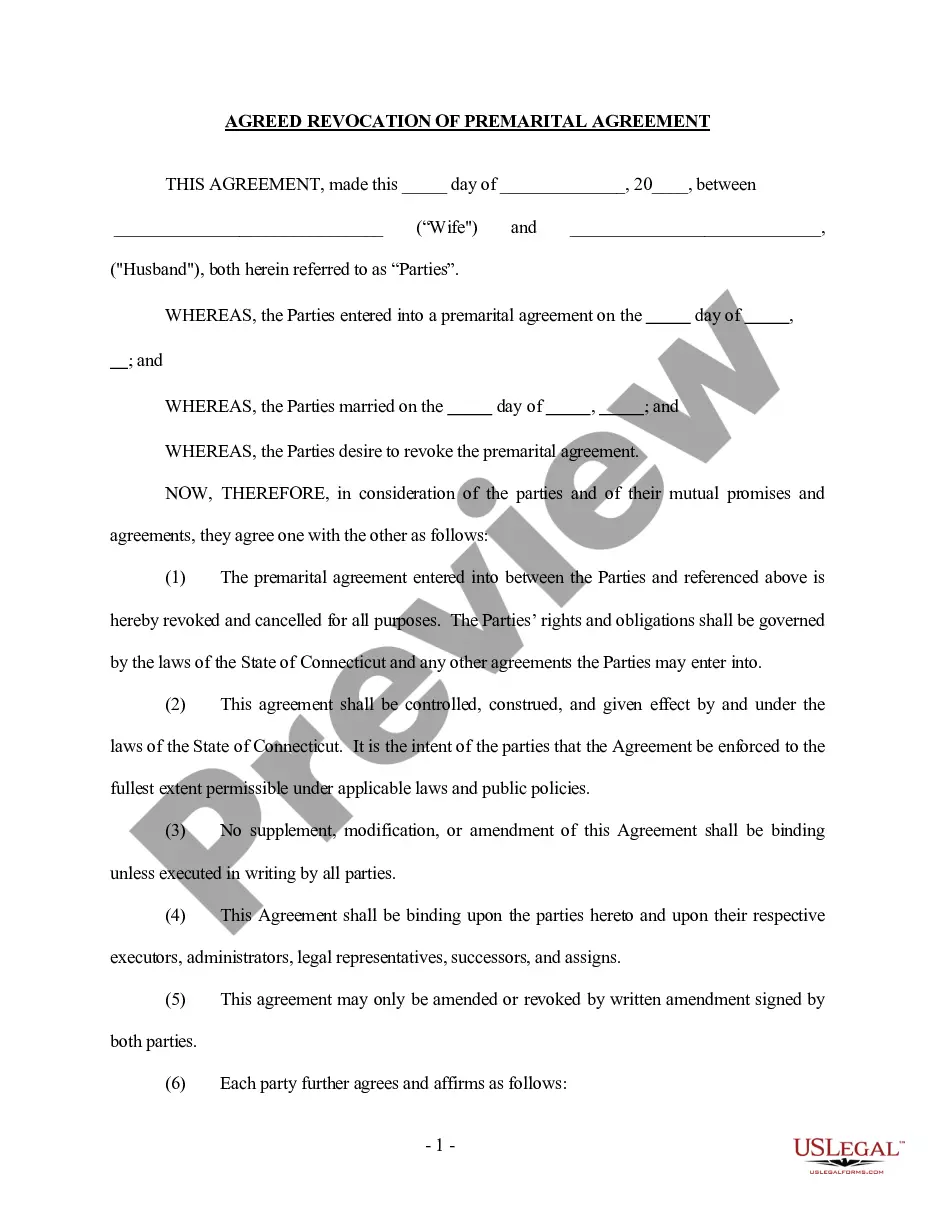
Suing Opposing Counsel For Malpractice In Virginia
Description

Get your form ready online
Our built-in tools help you complete, sign, share, and store your documents in one place.
Make edits, fill in missing information, and update formatting in US Legal Forms—just like you would in MS Word.
Download a copy, print it, send it by email, or mail it via USPS—whatever works best for your next step.
Sign and collect signatures with our SignNow integration. Send to multiple recipients, set reminders, and more. Go Premium to unlock E-Sign.
If this form requires notarization, complete it online through a secure video call—no need to meet a notary in person or wait for an appointment.
We protect your documents and personal data by following strict security and privacy standards.

Make edits, fill in missing information, and update formatting in US Legal Forms—just like you would in MS Word.

Download a copy, print it, send it by email, or mail it via USPS—whatever works best for your next step.

Sign and collect signatures with our SignNow integration. Send to multiple recipients, set reminders, and more. Go Premium to unlock E-Sign.

If this form requires notarization, complete it online through a secure video call—no need to meet a notary in person or wait for an appointment.

We protect your documents and personal data by following strict security and privacy standards.
Looking for another form?










Form popularity
FAQ
The general rule is simple: Non-clients generally cannot sue lawyers who did not represent them. This standard, called the privity rule, finds its footing in the definition of legal malpractice.
Conclusion. Proving causation is often the most difficult element of a medical malpractice case. However, it is not impossible.
Suing the VA for medical malpractice requires experienced lawyers who have sued the Department of Veterans Affairs before. There are a number of steps to undertaking such a law suit that are different from the things required to bring an ordinary medical malpractice case against a civilian doctor.
Ing to a study from the National Library of Medicine, the defendant tends to win 80% to 90% of jury trials that have weak evidence of medical negligence, 70% of jury trials in borderline cases, and 50% of cases with strong evidence of medical negligence.
Winning a medical malpractice claim can prove very difficult. However, that does not mean that you cannot win. If you suffered a serious injury due to the negligence of a medical care provider, you deserve compensation for those losses.
Physicians win approximately 80% to 90% of the cases reviewers believe they should win, approximately 70% to 80% of the cases rated as toss-ups, and roughly 50% of the cases deemed by peer reviewers to have strong evidence of negligence 18.
Cons of Going to Trial in a Medical Malpractice Case: Uncertainty and Lengthy Process: Trials can be unpredictable, and there's no guarantee of a favorable outcome. Higher Costs: Trials involve substantial expenses, including legal fees, expert witness fees, and court costs. Public Exposure:
Medical malpractice cases are some of the most expensive and difficult cases to pursue in litigation. Statistically speaking, of those cases that do go to trial each year in this country, almost two-thirds of them result in a verdict in favor of the health care provider.
To do so, four legal elements must be proven: (1) a professional duty owed to the patient; (2) breach of such duty; (3) injury caused by the breach; and (4) resulting damages.