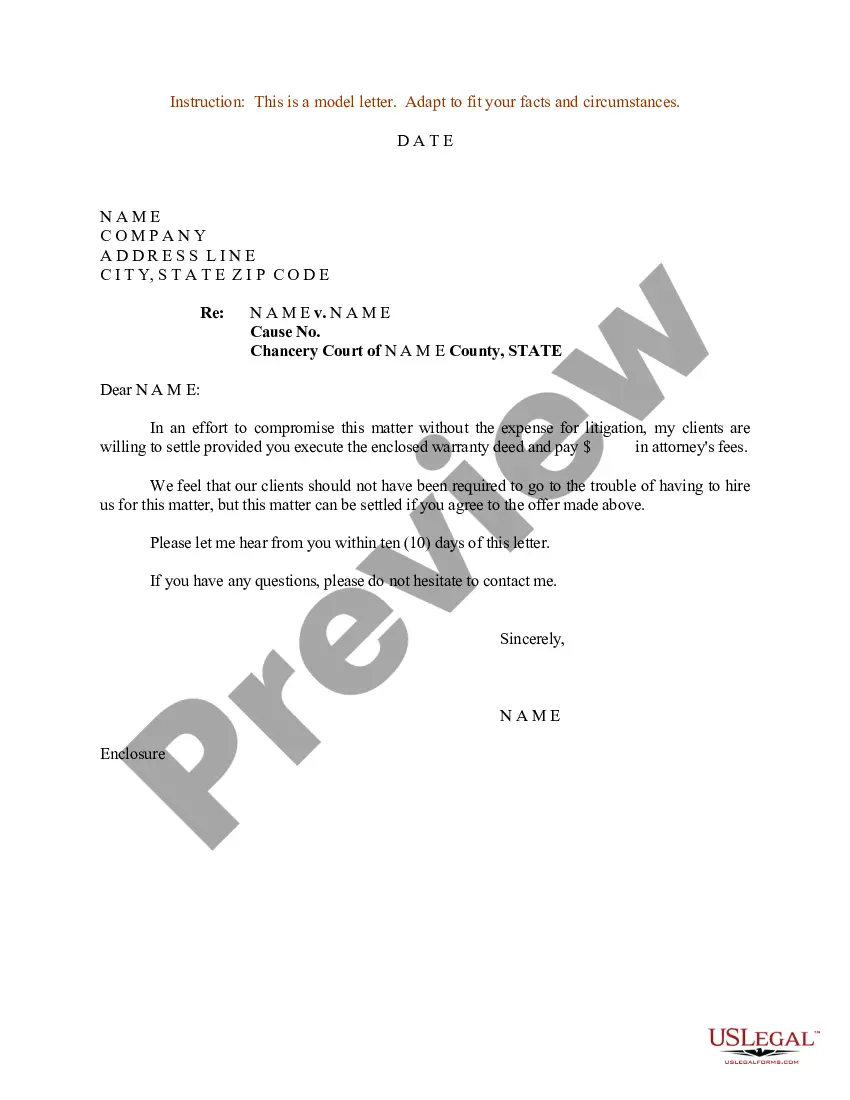
Letters To Lawyers Examples In Nassau
Description


Get your form ready online
Our built-in tools help you complete, sign, share, and store your documents in one place.
Make edits, fill in missing information, and update formatting in US Legal Forms—just like you would in MS Word.
Download a copy, print it, send it by email, or mail it via USPS—whatever works best for your next step.
Sign and collect signatures with our SignNow integration. Send to multiple recipients, set reminders, and more. Go Premium to unlock E-Sign.
If this form requires notarization, complete it online through a secure video call—no need to meet a notary in person or wait for an appointment.
We protect your documents and personal data by following strict security and privacy standards.

Make edits, fill in missing information, and update formatting in US Legal Forms—just like you would in MS Word.

Download a copy, print it, send it by email, or mail it via USPS—whatever works best for your next step.

Sign and collect signatures with our SignNow integration. Send to multiple recipients, set reminders, and more. Go Premium to unlock E-Sign.

If this form requires notarization, complete it online through a secure video call—no need to meet a notary in person or wait for an appointment.

We protect your documents and personal data by following strict security and privacy standards.
Looking for another form?









Form popularity
FAQ
Here is how to write a request letter in 7 steps: Collect information relating to your request. Create an outline. Introduce yourself. 4. Make your request. Explain the reason for the request. Offer to provide additional information. Show your gratitude and conclude the letter.
Address the outside of your letter's envelope with the name of your main recipient in the middle address block. On the second line, underneath their name, add "c/o" and the name of the person connected with the address you're sending the letter to. You'd then add the street address, state, city, and zip code.
Avoid using slang or overly casual language. Specificity: Clearly state the purpose of your email. Whether you need advice, representation, or a consultation, make sure this is clear from the outset. Documentation: Attach any relevant documents or evidence that might help the lawyer understand your case better.
Avoid using slang or overly casual language. Specificity: Clearly state the purpose of your email. Whether you need advice, representation, or a consultation, make sure this is clear from the outset. Documentation: Attach any relevant documents or evidence that might help the lawyer understand your case better.
Explain your case briefly but provide enough detail to give a clear picture of your legal issue. Be Honest: Full disclosure is crucial. Be honest about all aspects of your case, including any actions you've taken and any communication with other parties involved.
Letters in legal disputes and lawsuits often serve two purposes: first, to communicate in a clear, professional manner, and second, to document what was said or done for later use in court.
Lead with the main purpose of your letter and then explain the reasons for your question or request. Be specific when referencing relevant information including names, dates and places. The more information you include, the better your attorney will be able to assist you.
Asking for a Lawyer: You can indeed ask for a lawyer by clearly stating, ``I want to speak to a lawyer.'' This statement should make it clear to the officer that you are invoking your right to legal counsel. After you've asked for a lawyer, officers should cease questioning you until your lawyer is present.
Introduce yourself and explain the reason for your request. Provide details about your legal situation and specify the type of legal assistance you need. Include any relevant deadlines or court dates. Conclude the letter by expressing your hope to work together and provide your contact information for follow-up.
While framing a salutation or writing to a lawyer, the full name followed by 'Esq. ' is generally used. For instance, if one were addressing John Doe, who is an attorney, it should be written as 'John Doe, Esq. '.