Letters To Lawyers Examples In Mecklenburg
Description


Get your form ready online
Our built-in tools help you complete, sign, share, and store your documents in one place.
Make edits, fill in missing information, and update formatting in US Legal Forms—just like you would in MS Word.
Download a copy, print it, send it by email, or mail it via USPS—whatever works best for your next step.
Sign and collect signatures with our SignNow integration. Send to multiple recipients, set reminders, and more. Go Premium to unlock E-Sign.
If this form requires notarization, complete it online through a secure video call—no need to meet a notary in person or wait for an appointment.
We protect your documents and personal data by following strict security and privacy standards.

Make edits, fill in missing information, and update formatting in US Legal Forms—just like you would in MS Word.

Download a copy, print it, send it by email, or mail it via USPS—whatever works best for your next step.

Sign and collect signatures with our SignNow integration. Send to multiple recipients, set reminders, and more. Go Premium to unlock E-Sign.

If this form requires notarization, complete it online through a secure video call—no need to meet a notary in person or wait for an appointment.

We protect your documents and personal data by following strict security and privacy standards.
Looking for another form?







Form popularity
FAQ
Formal Address: If you are writing a letter or email, start with ``Dear (Mr./Ms./Mrs.) Using Their Title: If the lawyer has a specific title, such as ``Attorney at Law,'' you can use ``Attorney (Last Name)'' or simply ``Counselor.'' In Person: When speaking directly, you can address them as ``Mr./Ms./Mrs.
For each numbered paragraph in the complaint, type "Admitted" if you admit the allegation or "Denied" if you deny the allegation. If you don't have enough information to know whether the fact is true or false, respond with "Lack enough information to respond to Plaintiff's allegations."
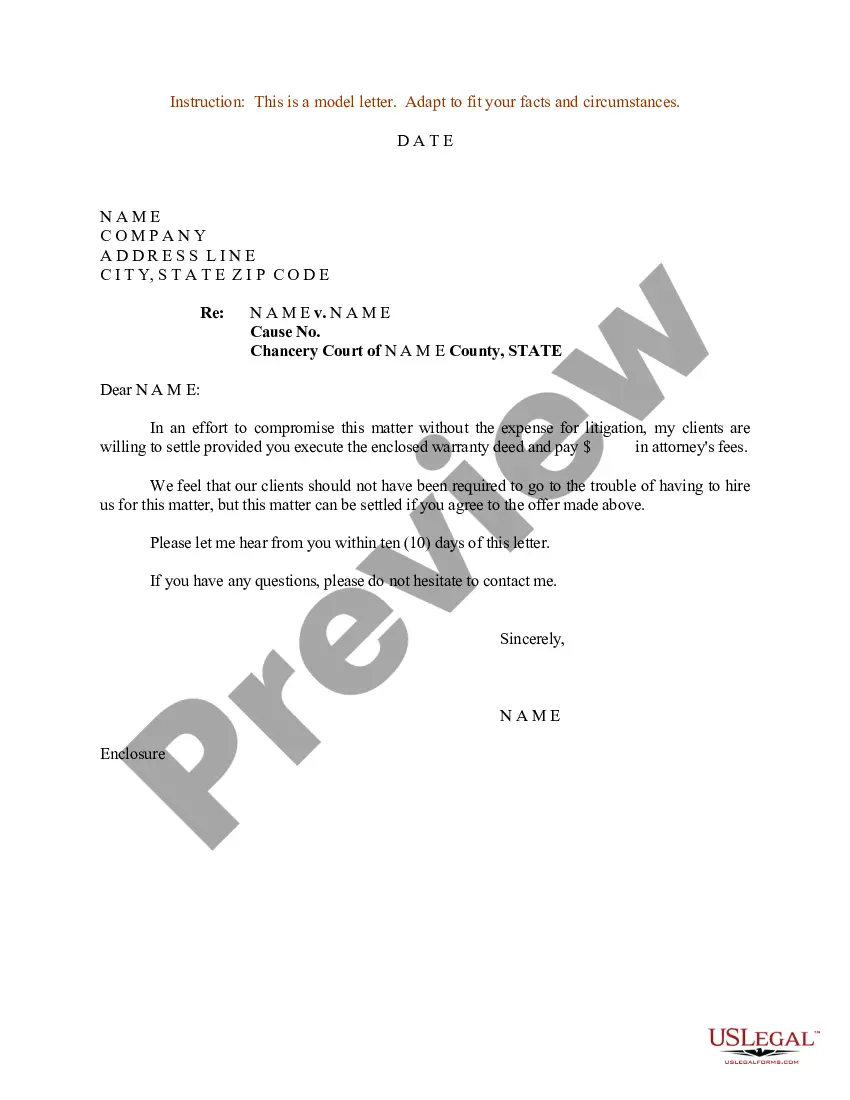
Lead with the main purpose of your letter and then explain the reasons for your question or request. Be specific when referencing relevant information including names, dates and places. The more information you include, the better your attorney will be able to assist you.
A clear statement of your complaint. This should be towards the top of your letter and should lay out exactly why you are dissatisfied. For example, if you believe the lawyer has lied to you, clearly state that you believe they have been dishonest. An easily understood statement of facts that back up your complaint.
Drafting Legal Letters Start with a clear opening statement, outlining the letter's purpose. Organize the body into logical sections, using headings and bullet points for ease of reading. Conclude with a succinct summary and a call to action.
While it's technically possible to write a demand letter yourself, there are significant advantages to seeking the guidance of a legal professional. Here's why. Professional expertise. An attorney specialized in personal injury law understands the nuances of relevant statutes, case law, and procedural requirements.
When drafting an answer, one must: (1) follow the local, state, and federal court rules; (2) research the legal claims in the adversary's complaint; (3) respond to the adversary's factual allegations; and (4) assert affirmative defenses, counterclaims, cross-claims, or third-party claims, if applicable.
Addressing a lawyer professionally is essential. Using their formal title, ``Attorney (Last Name),'' is universally appropriate. If unsure of their specific title, opt for the generic but respectful ``Mr./Ms. (Last Name).'' This maintains a level of formality and acknowledges their professional standing.
You are required to file your Answer with the Clerk of Court and send a copy to the Plaintiff. You may serve your Answer by delivering a copy to the Plaintiff or by mailing it to the Plaintiff's last known address.
Write your legal argument by stating the rule and explaining how your facts apply to it. Then, add your signature, a Certificate of Service, and a Notice of Hearing. File your motion with the clerk of court overseeing your case. Then, give copies to each defendant.
