Letters To Lawyers Examples In Collin
Description


Get your form ready online
Our built-in tools help you complete, sign, share, and store your documents in one place.
Make edits, fill in missing information, and update formatting in US Legal Forms—just like you would in MS Word.
Download a copy, print it, send it by email, or mail it via USPS—whatever works best for your next step.
Sign and collect signatures with our SignNow integration. Send to multiple recipients, set reminders, and more. Go Premium to unlock E-Sign.
If this form requires notarization, complete it online through a secure video call—no need to meet a notary in person or wait for an appointment.
We protect your documents and personal data by following strict security and privacy standards.

Make edits, fill in missing information, and update formatting in US Legal Forms—just like you would in MS Word.

Download a copy, print it, send it by email, or mail it via USPS—whatever works best for your next step.

Sign and collect signatures with our SignNow integration. Send to multiple recipients, set reminders, and more. Go Premium to unlock E-Sign.

If this form requires notarization, complete it online through a secure video call—no need to meet a notary in person or wait for an appointment.

We protect your documents and personal data by following strict security and privacy standards.
Looking for another form?










Form popularity
FAQ
While it's technically possible to write a demand letter yourself, there are significant advantages to seeking the guidance of a legal professional. Here's why. Professional expertise. An attorney specialized in personal injury law understands the nuances of relevant statutes, case law, and procedural requirements.
The greeting, or salutation, is the opening of a legal letter and is located two lines below the reference or subject line. Because legal letters are professional documents, the greetings you write should be professional. If you don't know the name of person to whom you're writing, make an ef- fort to find it.
Addressing a lawyer professionally is essential. Using their formal title, ``Attorney (Last Name),'' is universally appropriate. If unsure of their specific title, opt for the generic but respectful ``Mr./Ms. (Last Name).'' This maintains a level of formality and acknowledges their professional standing.
The document must clearly outline the scope of the agent's authority, including any limitations or restrictions. It should also specify when a power of attorney takes effect and how long it remains valid. The principal must sign the document in the presence of witnesses or a notary public to ensure its legality.
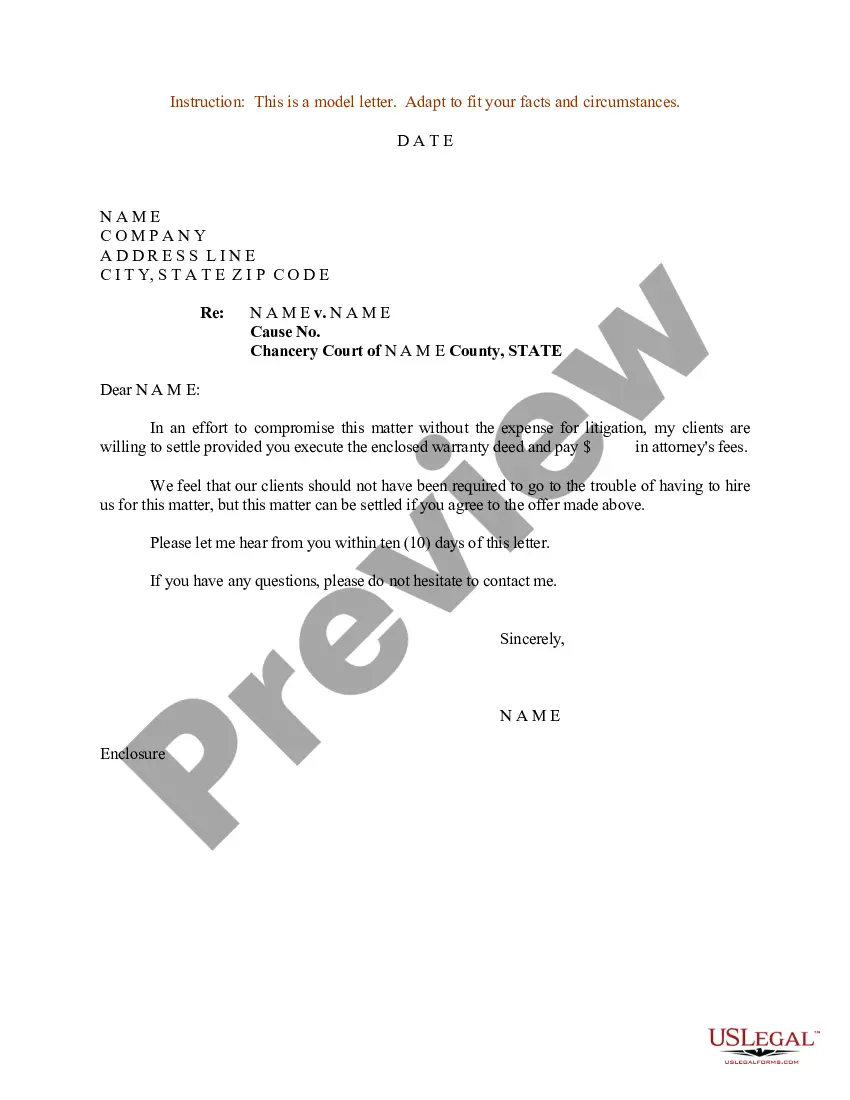
Formatting the Letter Decide whether to follow "full block" or "modified block" format. Write your address. Write the date. Insert your attorney's name and address. Reference your case number. Greet your attorney. Write out the body of the letter. Close the letter.
Drafting Legal Letters Start with a clear opening statement, outlining the letter's purpose. Organize the body into logical sections, using headings and bullet points for ease of reading. Conclude with a succinct summary and a call to action.
Drafting Legal Letters Start with a clear opening statement, outlining the letter's purpose. Organize the body into logical sections, using headings and bullet points for ease of reading. Conclude with a succinct summary and a call to action.
You'll want to start with a standard page size (8.5 x 11 inches) with 1-inch margins. Keep the font simple, such as Times New Roman, and avoid the use of color. Remember to break up text with headers and paragraphs for readability.
The term esquire, or the abbreviation Esq., gets used most frequently in written legal communications. It offers a sign that you have communicated directly with an attorney rather than a legal assistant, paralegal, or someone else within the office. Most often, Esq.
The Scales of Justice are perhaps the most familiar symbol associated with the law, symbolizing the impartial deliberation, or "weighing" of two sides in a legal dispute.