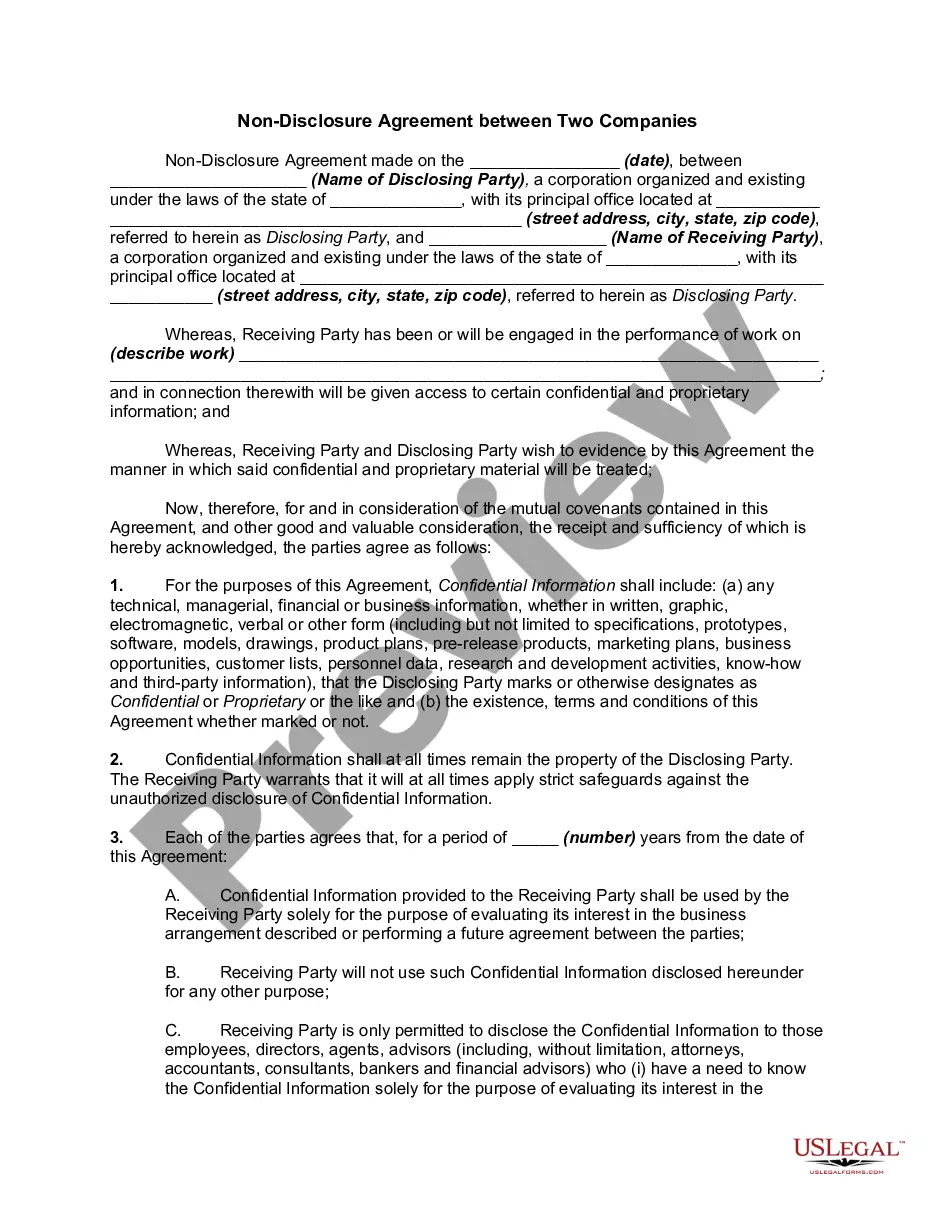
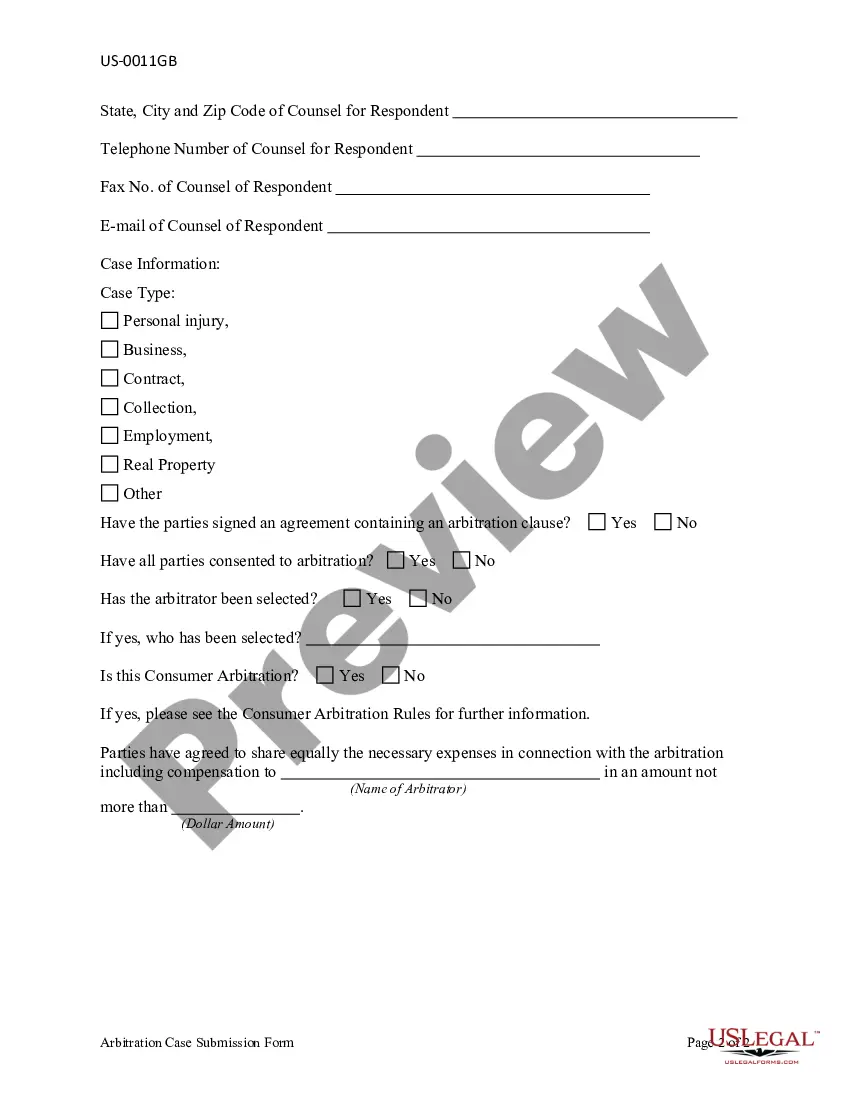
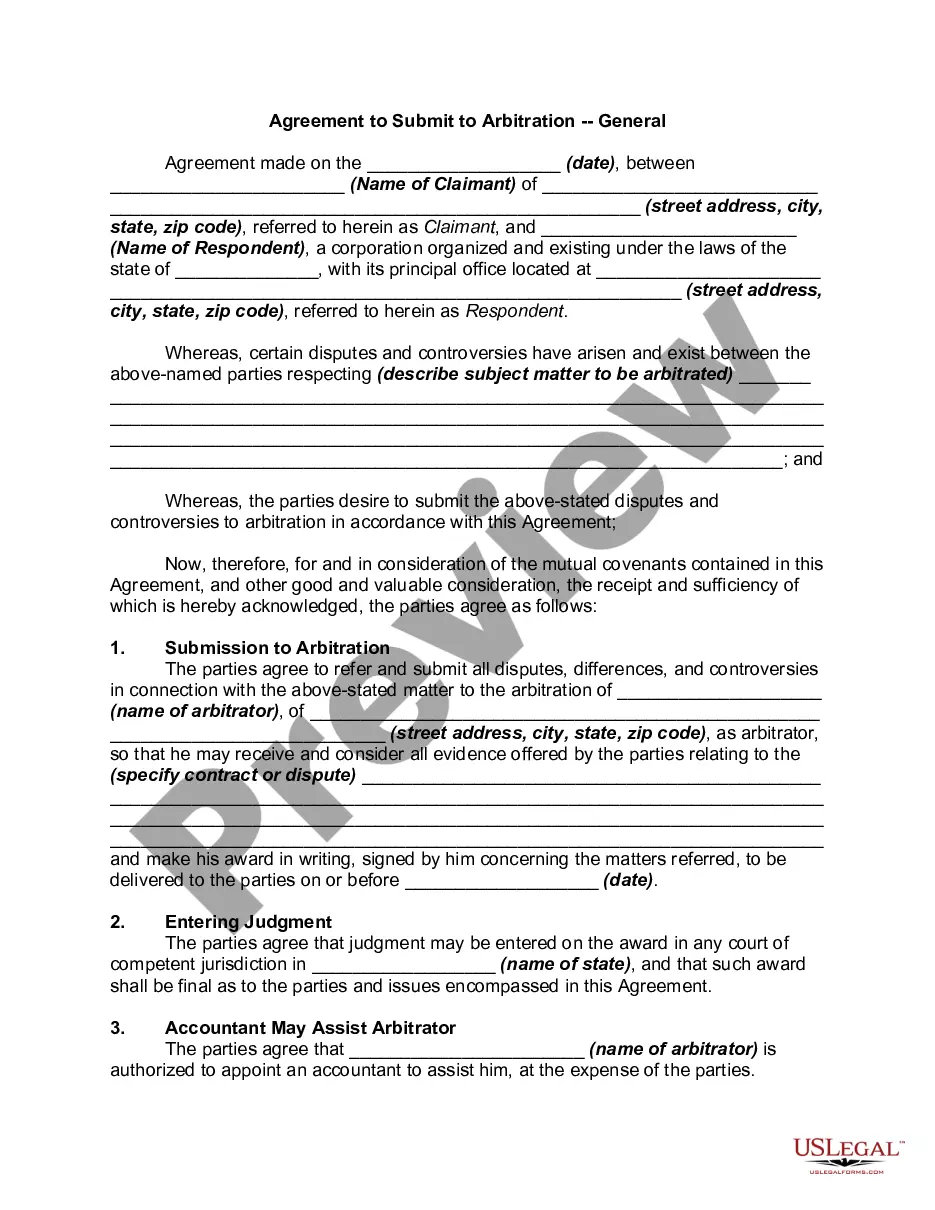
Arbitration Case Statement With Select In Wayne
Description



Get your form ready online
Our built-in tools help you complete, sign, share, and store your documents in one place.
Make edits, fill in missing information, and update formatting in US Legal Forms—just like you would in MS Word.
Download a copy, print it, send it by email, or mail it via USPS—whatever works best for your next step.
Sign and collect signatures with our SignNow integration. Send to multiple recipients, set reminders, and more. Go Premium to unlock E-Sign.
If this form requires notarization, complete it online through a secure video call—no need to meet a notary in person or wait for an appointment.
We protect your documents and personal data by following strict security and privacy standards.

Make edits, fill in missing information, and update formatting in US Legal Forms—just like you would in MS Word.

Download a copy, print it, send it by email, or mail it via USPS—whatever works best for your next step.

Sign and collect signatures with our SignNow integration. Send to multiple recipients, set reminders, and more. Go Premium to unlock E-Sign.

If this form requires notarization, complete it online through a secure video call—no need to meet a notary in person or wait for an appointment.

We protect your documents and personal data by following strict security and privacy standards.
Looking for another form?
Form popularity
FAQ
In SQL, CASE statements allow you to evaluate conditions and return a value once a condition is true. CASE statements always begin with the CASE keyword and end with the END keyword. If no conditions are true, you can use the ELSE clause to return a final value.
There are two types of CASE statements: Simple case statement: used to enter into some logic based on a literal value. Searched case statement: used to enter into some logic based on the value of an expression.
In SQL, CASE statements allow you to evaluate conditions and return a value once a condition is true. CASE statements always begin with the CASE keyword and end with the END keyword. If no conditions are true, you can use the ELSE clause to return a final value.
SELECT Name, CASE Name WHEN 'Amir' THEN Age WHEN 'Aya' THEN Age ELSE -1 END AS Age FROM Person; Finally, you could use OR in the WHEN statement, which is useful only when you want to do complex logic or arithmetic in each part of the OR statement.
Here is the basic syntax of a Multiple CASE WHEN statement: SELECT column1, column2, CASE WHEN condition1 THEN result1 WHEN condition2 THEN result2 ... ELSE default_result END AS new_column FROM your_table; This construct proves invaluable in handling scenarios where more than one condition needs consideration.
Parties are encouraged to file their Requests electronically using ICC Case Connect. Via the Request form, claimant(s) will be invited to supply key information in relation to their Request, and to upload their Request and any relevant annexes.
Much like the opening statement in a trial, your arbitration statement should lay out what the “evidence” – the written material – will show regarding the proper credit on the project. The Arbitration Statement is not established fact, just your assessment of the material.
Parties will need to provide material evidence during the arbitration process. Some arbitrators may require that some types of evidence (such as invoices, pictures, and party correspondence) be presented in a specific format, such as in a binder and labeled in a certain order.
Always get straight to the merits without berating the other side or whining about how badly it has treated you. Another threat to your credibility is the “kitchen sink” arbitration demand or a response that includes numerous claims or defenses that have little chance of succeeding.
An orderly presentation of one's own witnesses, with an outline of the case at hand to make certain that every point is made in the right order, and perhaps a summary of the case presented to the arbitrator in typewritten form to make doubly certain that nothing is forgotten when the time comes to write the decision, ...