Federal Arbitration Act Grounds For Appeal Of Award In Harris
Description


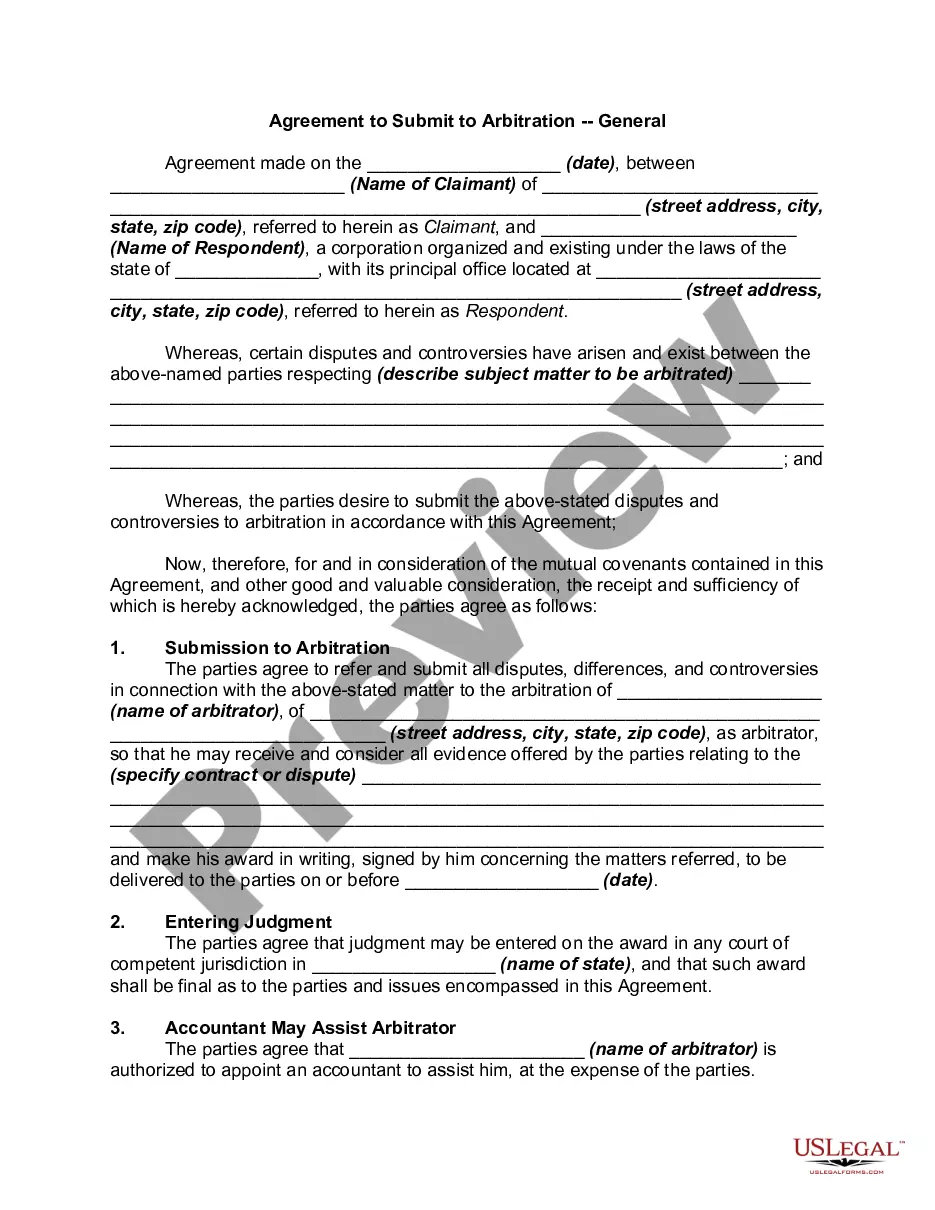

Get your form ready online
Our built-in tools help you complete, sign, share, and store your documents in one place.
Make edits, fill in missing information, and update formatting in US Legal Forms—just like you would in MS Word.
Download a copy, print it, send it by email, or mail it via USPS—whatever works best for your next step.
Sign and collect signatures with our SignNow integration. Send to multiple recipients, set reminders, and more. Go Premium to unlock E-Sign.
If this form requires notarization, complete it online through a secure video call—no need to meet a notary in person or wait for an appointment.
We protect your documents and personal data by following strict security and privacy standards.

Make edits, fill in missing information, and update formatting in US Legal Forms—just like you would in MS Word.

Download a copy, print it, send it by email, or mail it via USPS—whatever works best for your next step.

Sign and collect signatures with our SignNow integration. Send to multiple recipients, set reminders, and more. Go Premium to unlock E-Sign.

If this form requires notarization, complete it online through a secure video call—no need to meet a notary in person or wait for an appointment.

We protect your documents and personal data by following strict security and privacy standards.
Looking for another form?
Form popularity
FAQ
The appeal must be commenced within thirty (30) days of the date on which the original award is submitted to the parties and only on the grounds that the original award is based upon “(1) an error of law that is material and prejudicial; or (2) determinations of fact that are clearly erroneous.”11 AAA will then arrange ...
The merits of the dispute are not considered and the award can only be vacated where: (1) the award was procured by fraud or corruption; (2) there was corruption in the arbitrator; (3) the arbitrator committed misconduct resulting in substantial prejudice; (4) the arbitrators exceeded their powers; (5) the arbitrator ...
(1) Recourse to a Court against an arbitral award may be made only by an application for setting aside such award in ance with sub-section (2) and sub-section (3). (ii) the arbitral award is in conflict with the public policy of India. (iii) it is in conflict with the most basic notions of morality or justice.
The merits of the dispute are not considered and the award can only be vacated where: (1) the award was procured by fraud or corruption; (2) there was corruption in the arbitrator; (3) the arbitrator committed misconduct resulting in substantial prejudice; (4) the arbitrators exceeded their powers; (5) the arbitrator ...
Your letter of arbitration should be concise, professional, and factual. Follow the standard business letter format, including your name and contact information at the top. Ensure that your writing is clear, and avoid using jargon or technical terms that may not be familiar to the reader.
There are generally five parts to an award, which appear in the following order: 1. Caption - states the parties' names and the case number; 2. Preamble - contains basic introductory language; 3. Body - addressing all issues raised, as well as the allocation of the expenses and the arbitrators' compensation, if any; 4.
I) the names and addresses of the arbitrators, the parties and their legal representatives; ii) the terms of the arbitration agreement between the parties; iii) a summary of the facts and procedure including how the dispute arose; iv) a summary of the issues and the respective positions of the parties; v) an analysis ...
A typical reasoned award will contain five elements: (1) an opening, (2) a summary of issues, questions, claims and defenses, (3) a statement of facts, (4) a discussion, analysis and application of relevant facts and law if necessary, and (5) a disposition of the issues, questions, claims and defenses.
Your letter of arbitration should be concise, professional, and factual. Follow the standard business letter format, including your name and contact information at the top. Ensure that your writing is clear, and avoid using jargon or technical terms that may not be familiar to the reader.
Outline a concise factual background and then move on to a discussion of the issues at the heart of the case. Your arguments should flow easily from the relevant facts and applicable law. And, by all means, avoid exaggeration of the strengths of your case as well as disparagement of the opposing side.