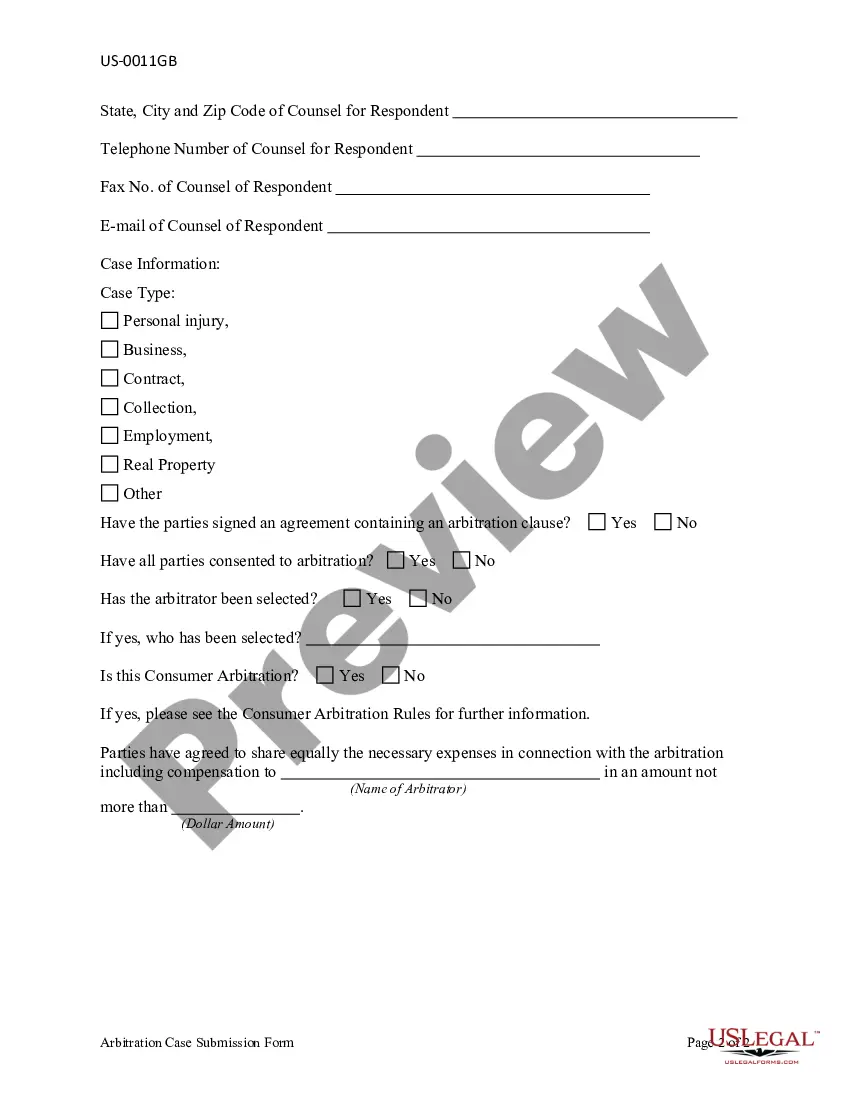
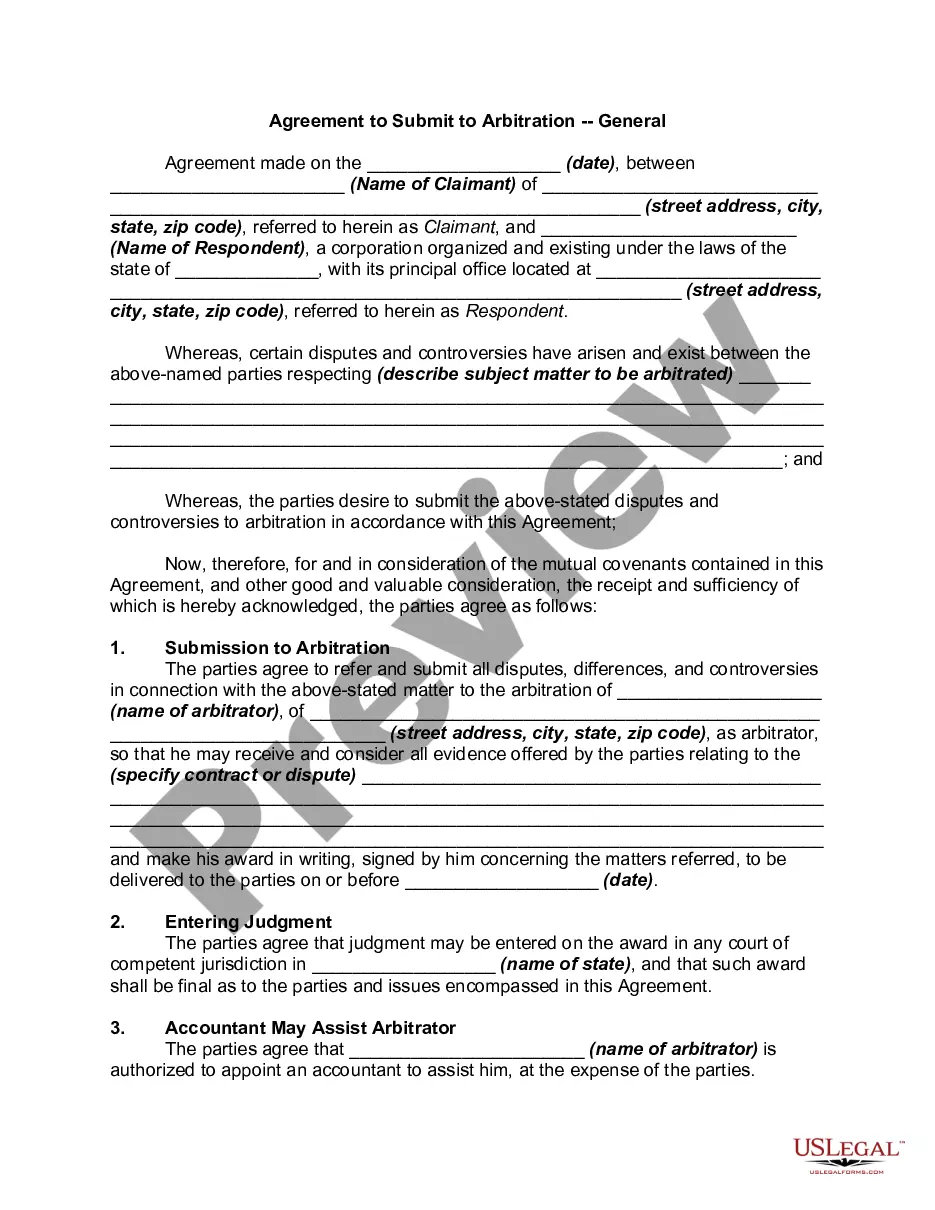
Arbitration Case File With Court In Cook
Description



Get your form ready online
Our built-in tools help you complete, sign, share, and store your documents in one place.
Make edits, fill in missing information, and update formatting in US Legal Forms—just like you would in MS Word.
Download a copy, print it, send it by email, or mail it via USPS—whatever works best for your next step.
Sign and collect signatures with our SignNow integration. Send to multiple recipients, set reminders, and more. Go Premium to unlock E-Sign.
If this form requires notarization, complete it online through a secure video call—no need to meet a notary in person or wait for an appointment.
We protect your documents and personal data by following strict security and privacy standards.

Make edits, fill in missing information, and update formatting in US Legal Forms—just like you would in MS Word.

Download a copy, print it, send it by email, or mail it via USPS—whatever works best for your next step.

Sign and collect signatures with our SignNow integration. Send to multiple recipients, set reminders, and more. Go Premium to unlock E-Sign.

If this form requires notarization, complete it online through a secure video call—no need to meet a notary in person or wait for an appointment.

We protect your documents and personal data by following strict security and privacy standards.
Looking for another form?
Form popularity
FAQ
Under Rule 25, commercial and personal injury cases with damages valued at less than $50,000 and that do not involve claims of medical malpractice, asbestos, construction, nursing home, and product liability are automatically referred to mandatory arbitration.
Arbitration is performed out of court and the dispute is resolved by an impartial third party known as an arbitrator.
Unlike court cases, where decisions can be appealed to higher courts, arbitration awards are typically final and binding. This means that if the arbitrator makes a legal error or misinterprets the evidence, it can be challenging to have the decision overturned.
However, because arbitration is an adversarial process, it is commonly viewed as being like litigation in the courts. The purpose of this article is to discuss five key areas in which arbitration is quite different from litigation. There are no pleading requirements in arbitration.
Arbitration is performed out of court and the dispute is resolved by an impartial third party known as an arbitrator.
This law provides that arbitration agreements are generally valid and enforceable. The major exception to this provision is that the arbitration agreement is not enforceable if it violates the general law of contracts – which applies to all contracts under the law of the state that governs the agreement.
FINRA requires investors and other parties to file their arbitration claims via the DR Portal—except for investors representing themselves, who have the option to file by mail. If you are new to the DR Portal, please create an account. Login to the DR Portal and select “File a New Arbitration Claim” in the left column.
Arbitration is similar to going to court, but faster, cheaper and less complex than litigation. If the case settles, an arbitration will last around one year. If the case goes to hearing, an arbitration typically takes 16 months.
A claimant will typically start arbitration by sending a document known as a “request for arbitration” or a “notice to arbitrate” to its opponent.
What notice must be given of the arbitration hearing? The Commission must notify the parties in writing of an arbitration hearing at least twenty one (21) days prior to the scheduled date, unless the parties agree to a shorter period or reasonable circumstances require a shorter period.