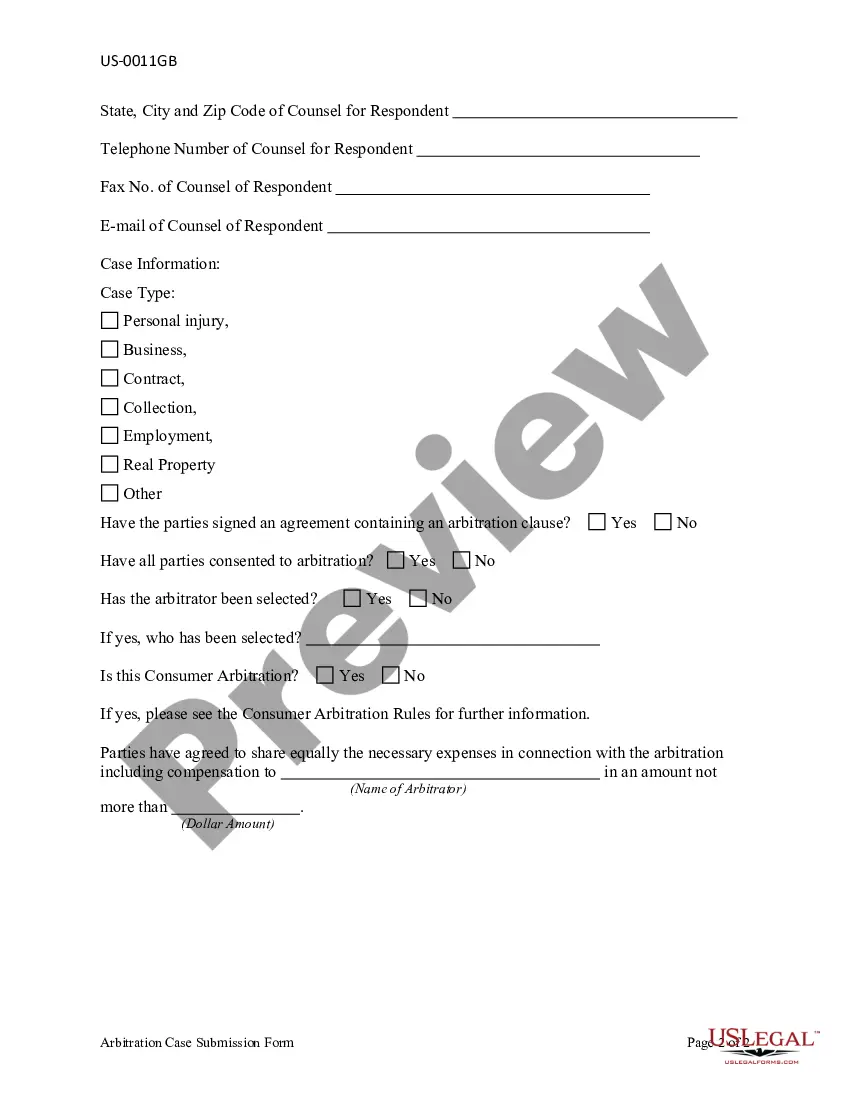
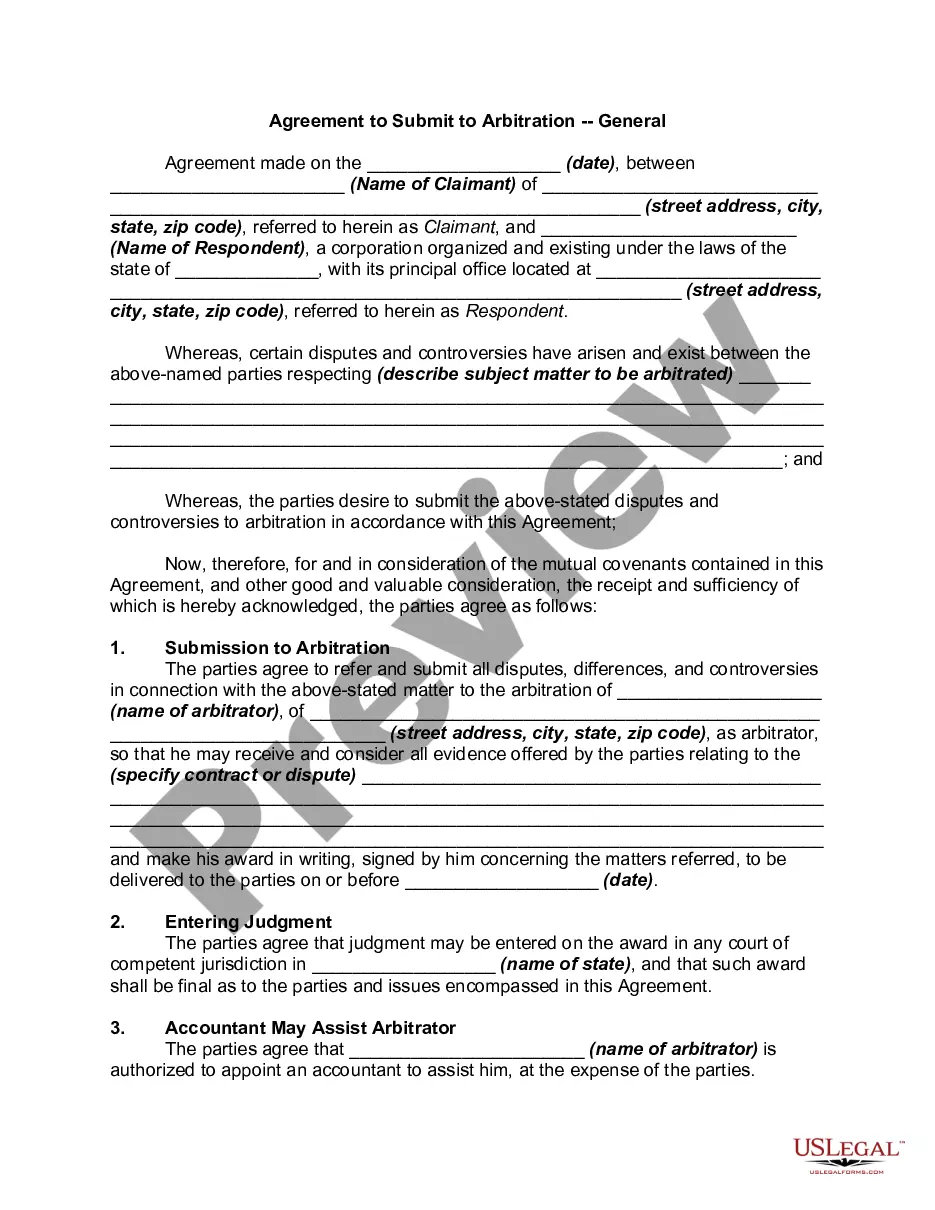
Arbitration Case File Without A Lawyer In Bronx
Description



Get your form ready online
Our built-in tools help you complete, sign, share, and store your documents in one place.
Make edits, fill in missing information, and update formatting in US Legal Forms—just like you would in MS Word.
Download a copy, print it, send it by email, or mail it via USPS—whatever works best for your next step.
Sign and collect signatures with our SignNow integration. Send to multiple recipients, set reminders, and more. Go Premium to unlock E-Sign.
If this form requires notarization, complete it online through a secure video call—no need to meet a notary in person or wait for an appointment.
We protect your documents and personal data by following strict security and privacy standards.

Make edits, fill in missing information, and update formatting in US Legal Forms—just like you would in MS Word.

Download a copy, print it, send it by email, or mail it via USPS—whatever works best for your next step.

Sign and collect signatures with our SignNow integration. Send to multiple recipients, set reminders, and more. Go Premium to unlock E-Sign.

If this form requires notarization, complete it online through a secure video call—no need to meet a notary in person or wait for an appointment.

We protect your documents and personal data by following strict security and privacy standards.
Looking for another form?








Form popularity
FAQ
You start a lawsuit by filing a complaint. In some circumstances, you file a petition or a motion. The court has several complaint forms that you may use in drafting your complaint. The forms are available online and at the Pro Se Intake Unit.
You start a lawsuit by filing a complaint. In some circumstances, you file a petition or a motion. The court has several complaint forms that you may use in drafting your complaint. The forms are available online and at the Pro Se Intake Unit.
Timeline of How to File a Lawsuit Step 1: File a Complaint. Plaintiff files a complaint and summons with the local county court. Step 2: Answer Complaint. Step 3: Discovery. Step 4: Failing to Respond to Discovery. Step 5: Conclusion of Lawsuit.
In New York City the Small Claims Court is a part of the Civil Court of the City of New York. It is an informal civil court where a person can sue another person or business for up to $5000 without needing to hire a lawyer.
Statute of Limitations CaseTime SinceThe Law New York City & New York State 90 days to give notice; 1 year and 90 days CPLR 217-A Other felonies 5 years Crim. Proc. 30.10(2)(b) Other negligence resulting in personal injury 3 years from date of accident CPLR 214(5) Petty offense 1 year Crim. Proc. 30.10(2)(d)32 more rows •
Litigation expenses are often borne by the individuals involved. Unless a statute or contract specifies otherwise, each party pays their attorney's fees. The prevailing party may sometimes seek to recover legal fees as part of the judgment.
You start a lawsuit by filing a complaint. In some circumstances, you file a petition or a motion. The court has several complaint forms that you may use in drafting your complaint. The forms are available online and at the Pro Se Intake Unit.
In simple terms, arbitration is the out-of-court resolution of a disagreement between two commercial parties decided by an impartial third party, the arbitrator.
Arbitration is less formal than going to court, and you may represent yourself. However, you should keep in mind that arbitration is a legal proceeding that results in an award that is generally final and binding. Because your legal rights are involved, you may choose to consult with and be represented by an attorney.