Acceptance Without Resignation Meaning In San Antonio
Description

Get your form ready online
Our built-in tools help you complete, sign, share, and store your documents in one place.
Make edits, fill in missing information, and update formatting in US Legal Forms—just like you would in MS Word.
Download a copy, print it, send it by email, or mail it via USPS—whatever works best for your next step.
Sign and collect signatures with our SignNow integration. Send to multiple recipients, set reminders, and more. Go Premium to unlock E-Sign.
If this form requires notarization, complete it online through a secure video call—no need to meet a notary in person or wait for an appointment.
We protect your documents and personal data by following strict security and privacy standards.

Make edits, fill in missing information, and update formatting in US Legal Forms—just like you would in MS Word.

Download a copy, print it, send it by email, or mail it via USPS—whatever works best for your next step.

Sign and collect signatures with our SignNow integration. Send to multiple recipients, set reminders, and more. Go Premium to unlock E-Sign.

If this form requires notarization, complete it online through a secure video call—no need to meet a notary in person or wait for an appointment.

We protect your documents and personal data by following strict security and privacy standards.
Looking for another form?






Form popularity
FAQ
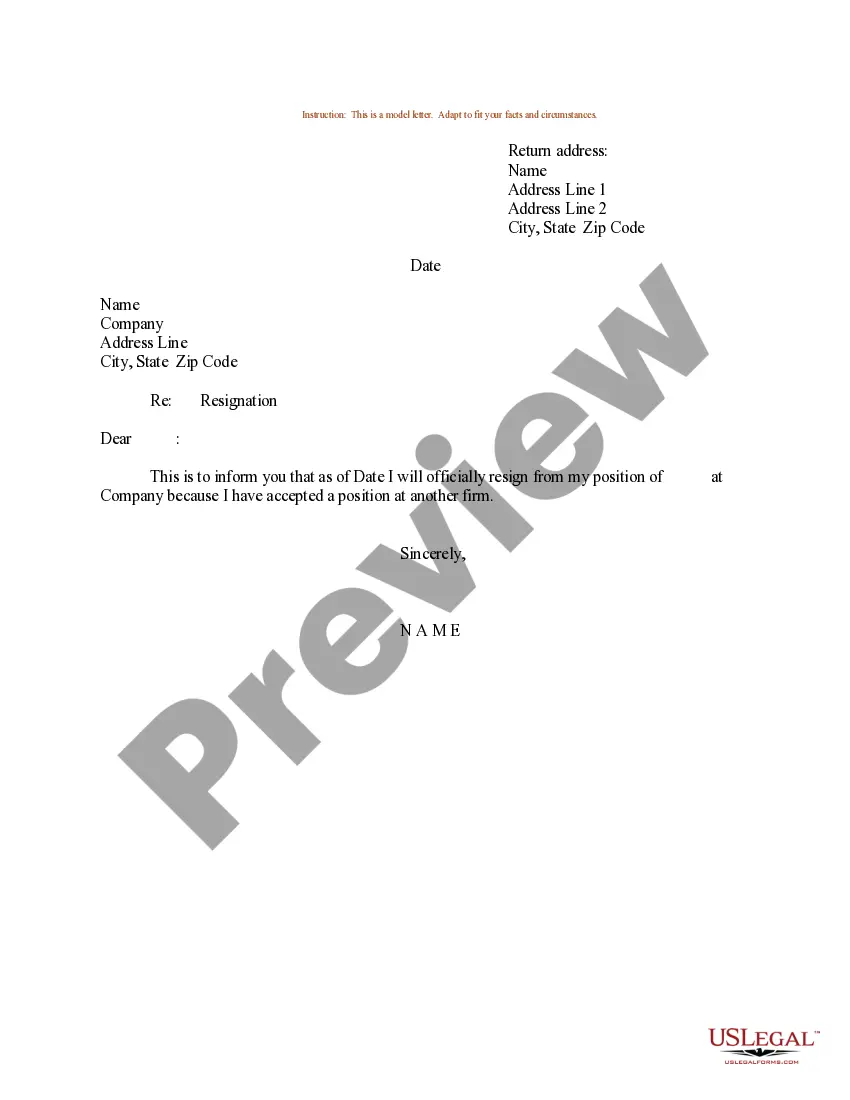
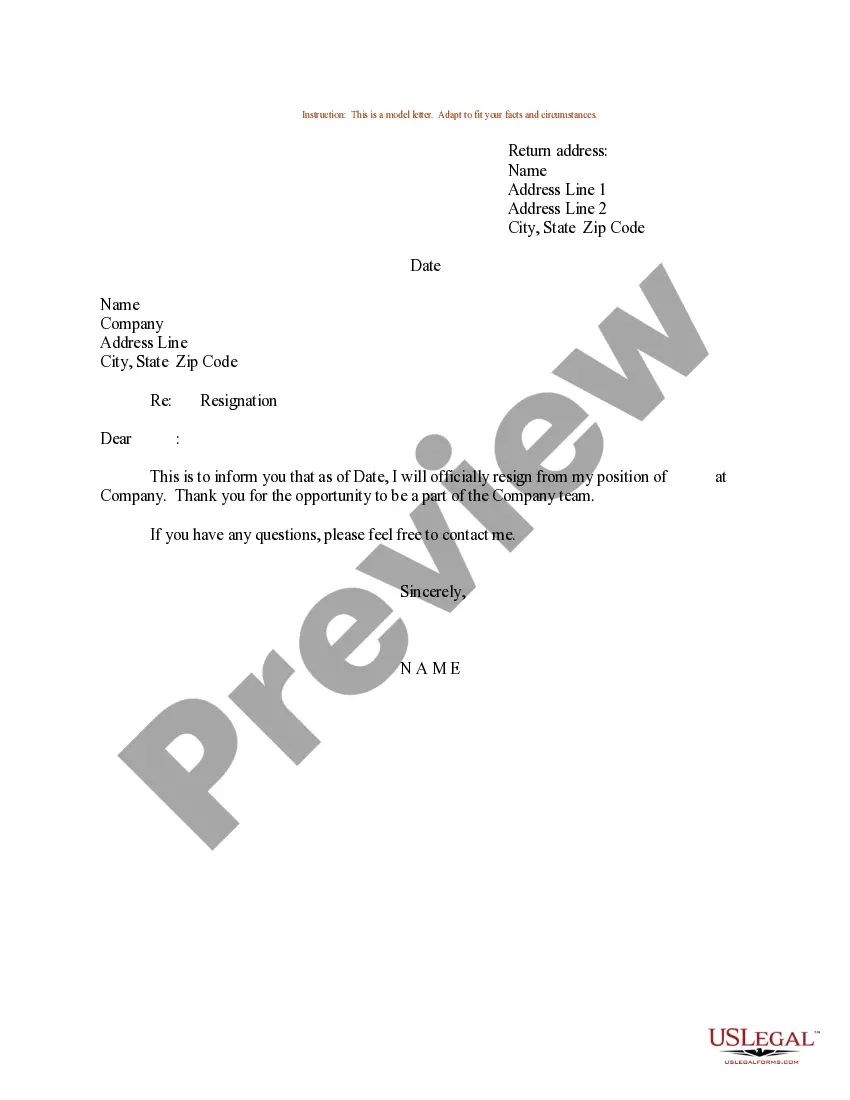
An employer doesn't have the choice to accept or reject an employee's resignation. Usually employers will acknowledge an employee's resignation and then the employee works as usual until the end of the notice period, when their employment ends.
Acceptance of a resignation tendered by an employee is necessary to make the resignation effective.
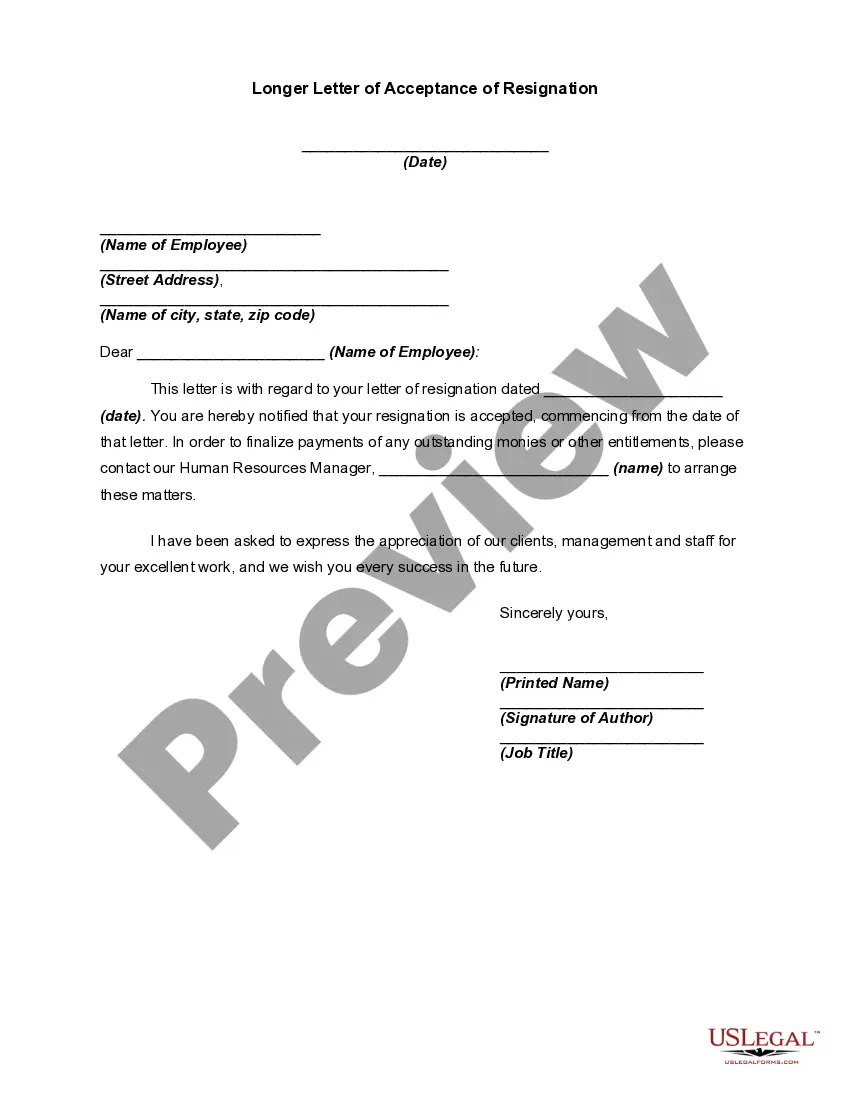
A resignation acceptance letter is a formal way to acknowledge that you accept your employee's request to resign. The resignation acceptance letter allows the employer to acknowledge the contributions that the employee has made to the company and wish them luck in their future endeavors.
Yes, a resignation acceptance letter is necessary to ensure legal and administrative compliance, smooth transition, clarity, and professionalism.
You cannot reject an employee's resignation. However, a conversation might help you find out if there are problems that can be resolved. This might be enough for the employee to choose to stay.
Employer's Obligation to Accept Resignation: The refusal to "allow" the resignation does not invalidate the employee's right to terminate the employment relationship. The resignation becomes effective after the 30-day notice period, regardless of whether the employer has accepted it.
A resignation acceptance letter is a formal document sent by an employer to acknowledge an employee's resignation. It confirms that the employer has received and accepted the employee's decision to leave the company, creating a clear record of the resignation and helping to avoid any misunderstandings down the line.
Resignation means giving up because you've decided that there's nothing you can do about your situation. Acceptance, on the other hand, simply means accepting that the situation happened or exists. Resignation is followed by helplessness; whereas acceptance opens up choices.
Ever wondered if it's okay to change your mind after accepting a job offer? The answer is YES! ? Just because you accept an offer doesn't mean you're legally bound to join the company. You can inform them before or on your start date that you've received a better offer. It works both ways—companies can also change thei.

