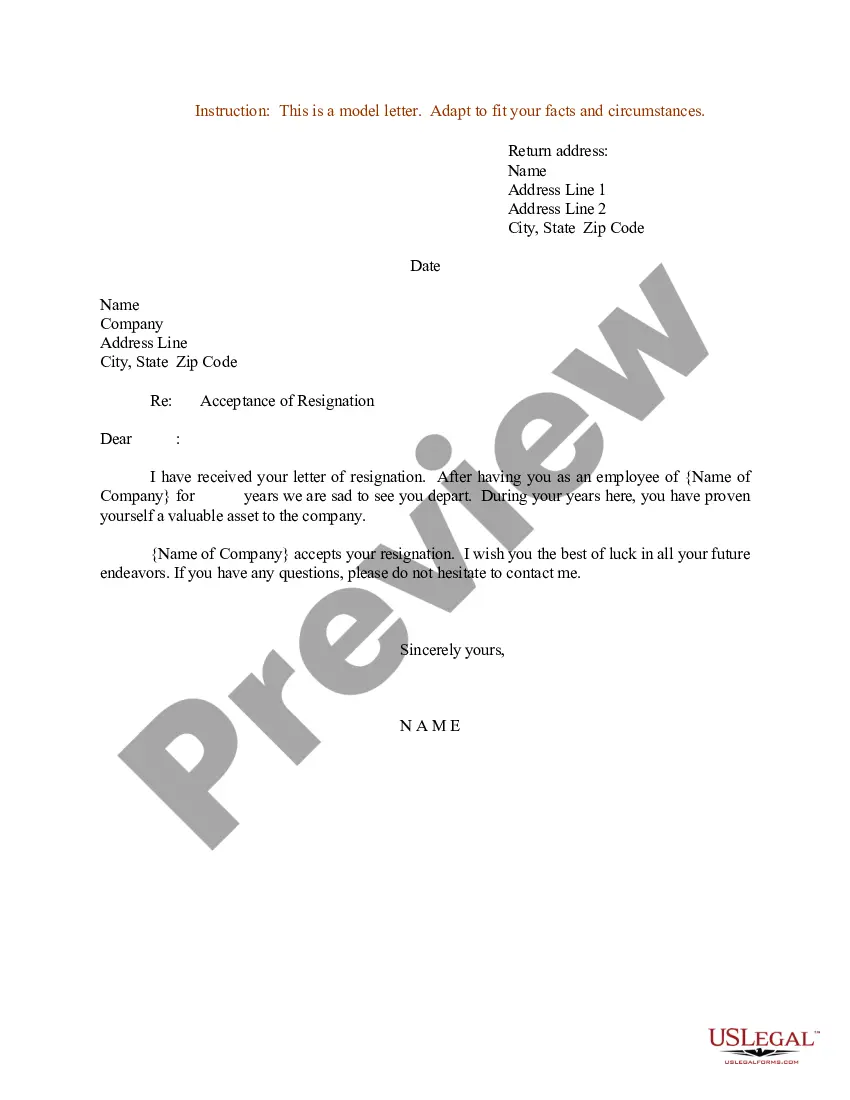
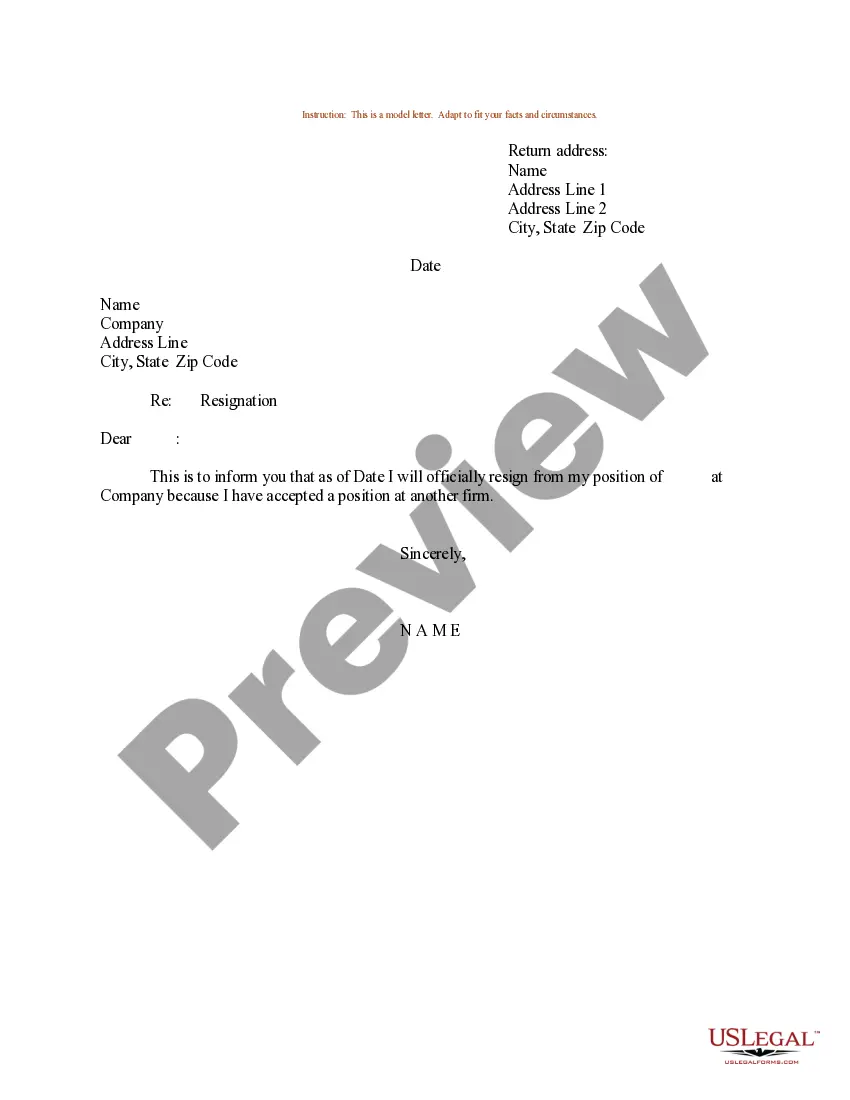
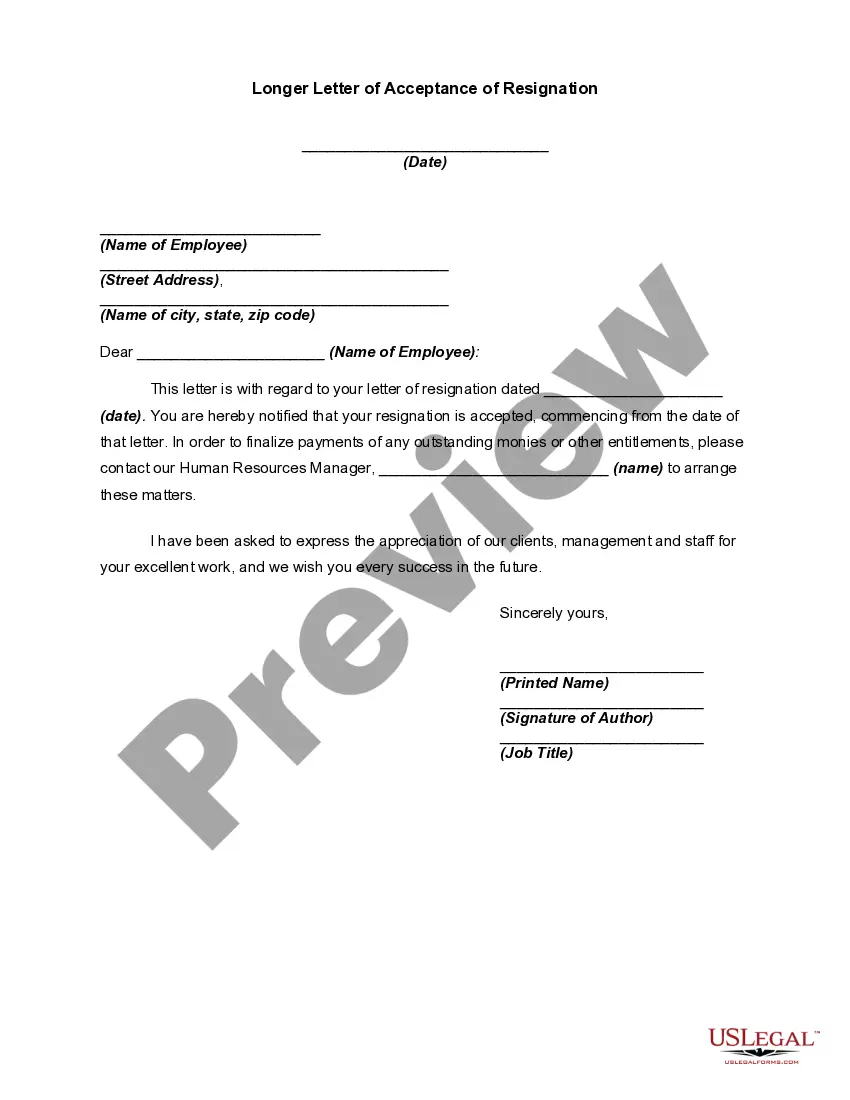
Resignation Letter Examples With Reason
Description
Get your form ready online
Our built-in tools help you complete, sign, share, and store your documents in one place.
Make edits, fill in missing information, and update formatting in US Legal Forms—just like you would in MS Word.
Download a copy, print it, send it by email, or mail it via USPS—whatever works best for your next step.
Sign and collect signatures with our SignNow integration. Send to multiple recipients, set reminders, and more. Go Premium to unlock E-Sign.
If this form requires notarization, complete it online through a secure video call—no need to meet a notary in person or wait for an appointment.
We protect your documents and personal data by following strict security and privacy standards.

Make edits, fill in missing information, and update formatting in US Legal Forms—just like you would in MS Word.

Download a copy, print it, send it by email, or mail it via USPS—whatever works best for your next step.

Sign and collect signatures with our SignNow integration. Send to multiple recipients, set reminders, and more. Go Premium to unlock E-Sign.

If this form requires notarization, complete it online through a secure video call—no need to meet a notary in person or wait for an appointment.

We protect your documents and personal data by following strict security and privacy standards.
Looking for another form?
How to fill out Sample Letter For Acceptance Of Resignation - Expression Of Sadness By Employer Because Of Departure?
Regardless of whether it pertains to professional objectives or personal matters, everyone eventually encounters the need to handle legal issues at some stage in their lives.
Filling out legal paperwork demands meticulous care, beginning with selecting the appropriate form template. For example, if you pick an incorrect version of the Resignation Letter Examples With Reason, it will be rejected when you submit it. Consequently, it is crucial to have a trustworthy source for legal documents such as US Legal Forms.
With an extensive catalog of US Legal Forms available, you don’t have to waste time searching the internet for the right template. Use the library’s user-friendly navigation to find the correct form for any situation.
- Acquire the form you require by using the search box or browsing the catalog.
- Review the form’s description to ensure it aligns with your situation, state, and area.
- Click on the form’s preview to view it.
- If it is the incorrect form, return to the search feature to find the Resignation Letter Examples With Reason sample you need.
- Obtain the document if it suits your requirements.
- If you already possess a US Legal Forms account, simply click Log in to access saved documents in My documents.
- If you do not yet have an account, you can download the form by clicking Buy now.
- Select the appropriate payment option.
- Complete the profile registration form.
- Choose your payment method: you can use a debit/credit card or PayPal account.
- Select the document format you prefer and download the Resignation Letter Examples With Reason.
- After downloading, you can complete the form using editing software or print it and finalize it by hand.
Form popularity
FAQ
You do not have to give a reason for leaving in a resignation letter, though it can be a courteous gesture. Providing a simple rationale can help smooth the transition and keep future opportunities open. If you choose to share your reason, make sure to phrase it positively. For assistance, consider reviewing resignation letter examples with reason for guidance.
While it's not mandatory to mention reasons in a resignation letter, doing so can enhance the clarity of your departure. Briefly stating your reason can foster goodwill and understanding. However, it’s perfectly acceptable to keep it general. If you need inspiration, look at resignation letter examples with reason to help you decide how much detail to include.
Writing a resignation letter due to personal reasons requires a delicate touch. Start by stating your decision to resign, and briefly mention that personal matters necessitate this choice. Maintain a gracious and professional tone throughout the letter. Utilizing resignation letter examples with reason can provide you with a solid structure and wording for your letter.
Explaining the reason for leaving in your resignation letter can be beneficial, especially if you have enjoyed your time with the company. It allows you to express gratitude and clarify your decision respectfully. A brief, clear explanation can help ensure the door remains open for future opportunities. Check out resignation letter examples with reason to tailor your approach.
You are not legally required to disclose a reason for your resignation. However, providing a brief explanation can help maintain a positive relationship with your employer. Think of it as an opportunity to leave on good terms. Explore resignation letter examples with reason if you're unsure about how to phrase this part.
To write a reason in a resignation letter, start with a direct statement of your decision to resign. Then, succinctly explain your reason, whether it's due to personal growth, relocation, or other factors. Use positive language to maintain a good relationship. For reference, consider using resignation letter examples with reason to guide your writing.
A polite reason for resignation usually centers around personal growth or change. You might mention pursuing new opportunities, seeking a better work-life balance, or needing time for family commitments. It's essential to keep the tone respectful and express gratitude for the experiences gained. Utilizing resignation letter examples with reason can help you articulate this effectively.
The most polite way to resign is to draft a letter that expresses your gratitude for the opportunities you’ve had. Clearly state your intention to resign and your last working day, while also mentioning any reasons you feel comfortable sharing. It’s also thoughtful to offer assistance during the transition process. For detailed guidance, check out various resignation letter examples with reason on resources like US Legal Forms.
A good resignation letter is concise and professional. It should announce your resignation, state the last day of work, and include a brief, positive reason for your decision. Furthermore, closing with an offer to help during the transition can make your letter stand out. You can find good examples that fit different situations in resignation letter examples with reason on websites like US Legal Forms.
To resign with a reason, address your letter to your supervisor and clearly state your resignation along with your intended last working day. Follow this with a brief explanation of your reason for leaving, whether it’s related to personal matters, a new job opportunity, or any other valid cause. Keeping the tone positive and offering thanks will create a favorable record, making it easier to refer to effective resignation letter examples with reason.