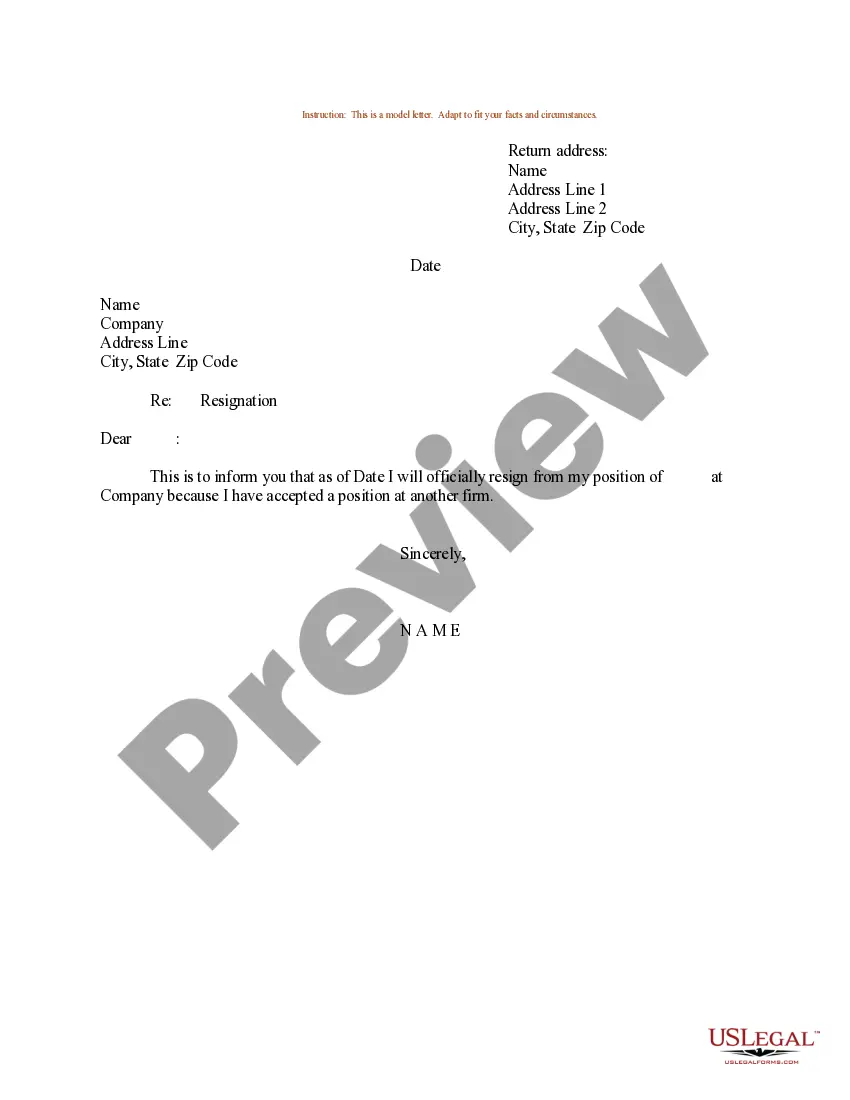
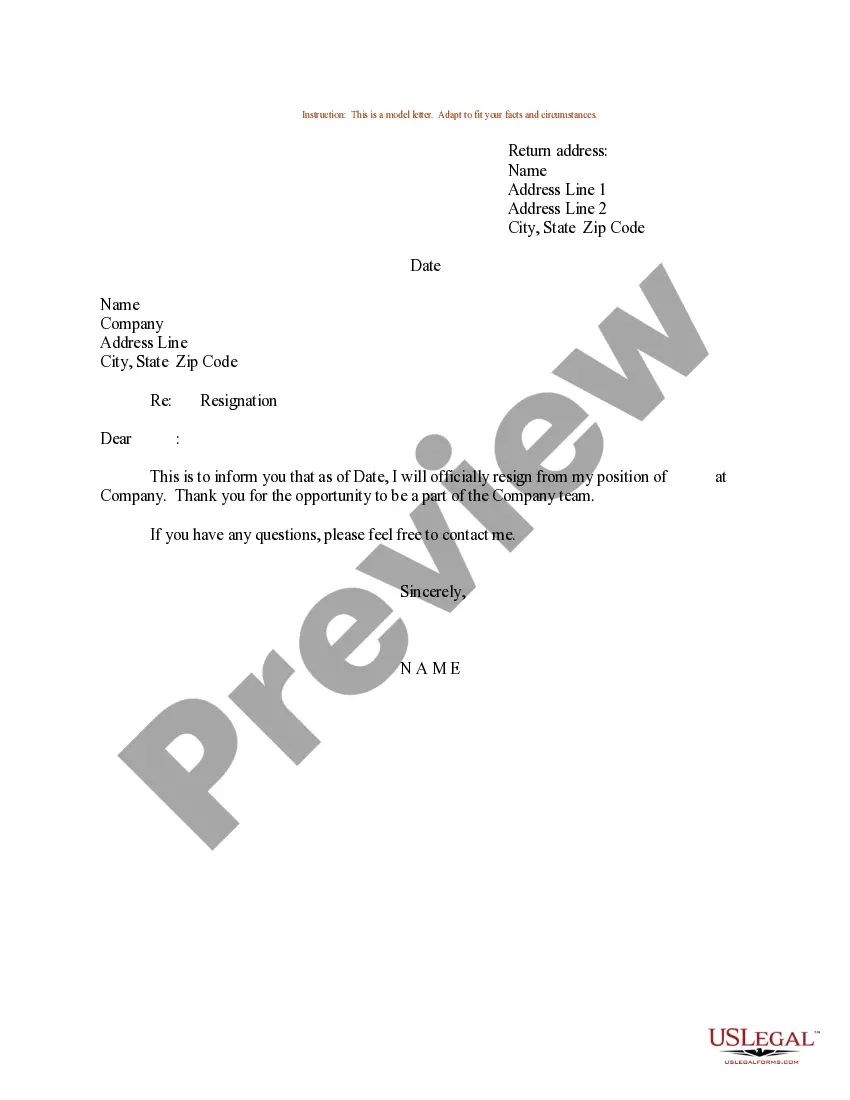
Letter Resignation Form With Reason In Minnesota
Description

Get your form ready online
Our built-in tools help you complete, sign, share, and store your documents in one place.
Make edits, fill in missing information, and update formatting in US Legal Forms—just like you would in MS Word.
Download a copy, print it, send it by email, or mail it via USPS—whatever works best for your next step.
Sign and collect signatures with our SignNow integration. Send to multiple recipients, set reminders, and more. Go Premium to unlock E-Sign.
If this form requires notarization, complete it online through a secure video call—no need to meet a notary in person or wait for an appointment.
We protect your documents and personal data by following strict security and privacy standards.

Make edits, fill in missing information, and update formatting in US Legal Forms—just like you would in MS Word.

Download a copy, print it, send it by email, or mail it via USPS—whatever works best for your next step.

Sign and collect signatures with our SignNow integration. Send to multiple recipients, set reminders, and more. Go Premium to unlock E-Sign.

If this form requires notarization, complete it online through a secure video call—no need to meet a notary in person or wait for an appointment.

We protect your documents and personal data by following strict security and privacy standards.
Looking for another form?








Form popularity
FAQ
For example, “I am writing to inform you of my decision to resign from my position as Job Title at Company, effective Date, due to personal reasons.” Afterward, highlight the positives of your experiences and show appreciation. When mentioning your reason, keep it broad. No need to get into the specifics.
No, you are not legally required to provide a reason for your resignation in most situations. However, it is often considered professional and courteous to do so, especially if you have a good relationship with your employer.
Many people leave their jobs when they're faced with personal reasons like health issues or family emergencies. You don't need to disclose personal or family matters. Sometimes, saying, “I had to leave for personal and family reasons,” is enough as long as you explain why you're ready to reenter the workforce.
No, you are not legally required to provide a reason for your resignation in most situations. However, it is often considered professional and courteous to do so, especially if you have a good relationship with your employer.
In most cases, you are not legally required to provide a reason for leaving your job if your employer asks. However, it's generally considered courteous to offer an explanation, especially if you're leaving on good terms.
If you're leaving a job that doesn't suit you or because of issues you've had with the firm, keep your explanation vague rather than going negative. It's acceptable to say you're resigning “for personal reasons.” A few words of thanks — Even the most trying jobs have their bright spots.
Your employer has no right to know the reason for your resignation. However, it is customary and a professional courtesy to let an employer know, particularly if there was some problem you experienced with the company that caused your desire to leave. You don't need a polite excuse.
I have decided to resign due to personal reasons that require my immediate attention. I appreciate the opportunities and experiences that I have gained while working at Company Name, and I am grateful for the support and guidance provided by my colleagues and superiors.
Draft a clear statement of the grounds for termination. The goal of providing a clear reason for termination to the employee is to eliminate any debate over whether termination is a sound business decision. Doing so may reduce the employee's concern that he or she was treated unfairly.
California Is an “At-Will” State This means that all employers have the right to terminate employees at will, for almost any reason, or for no reason at all.
