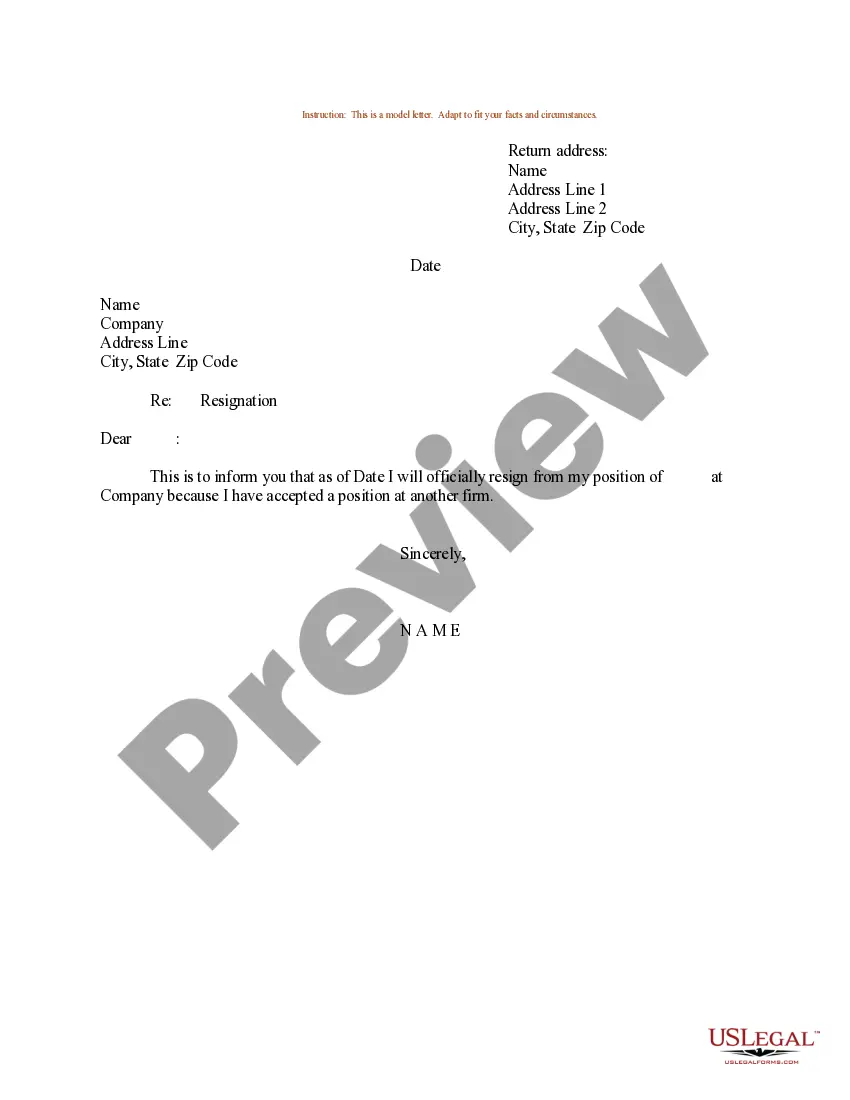
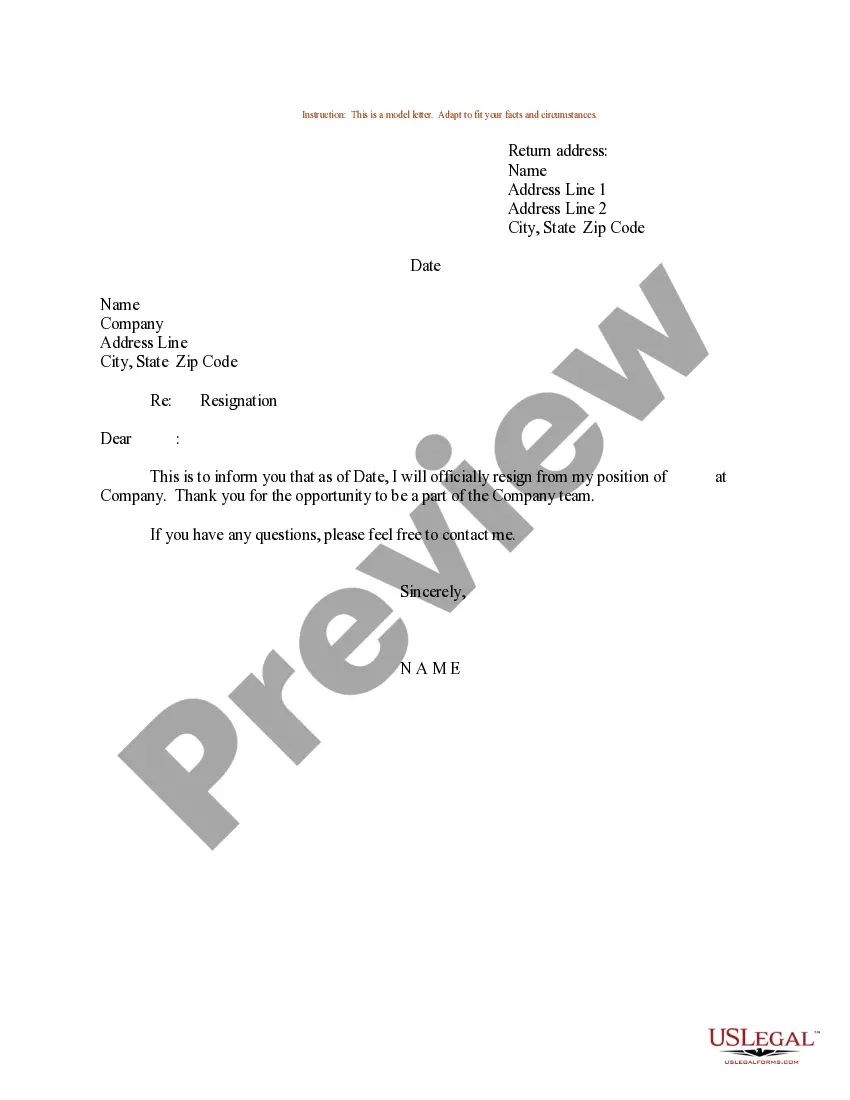
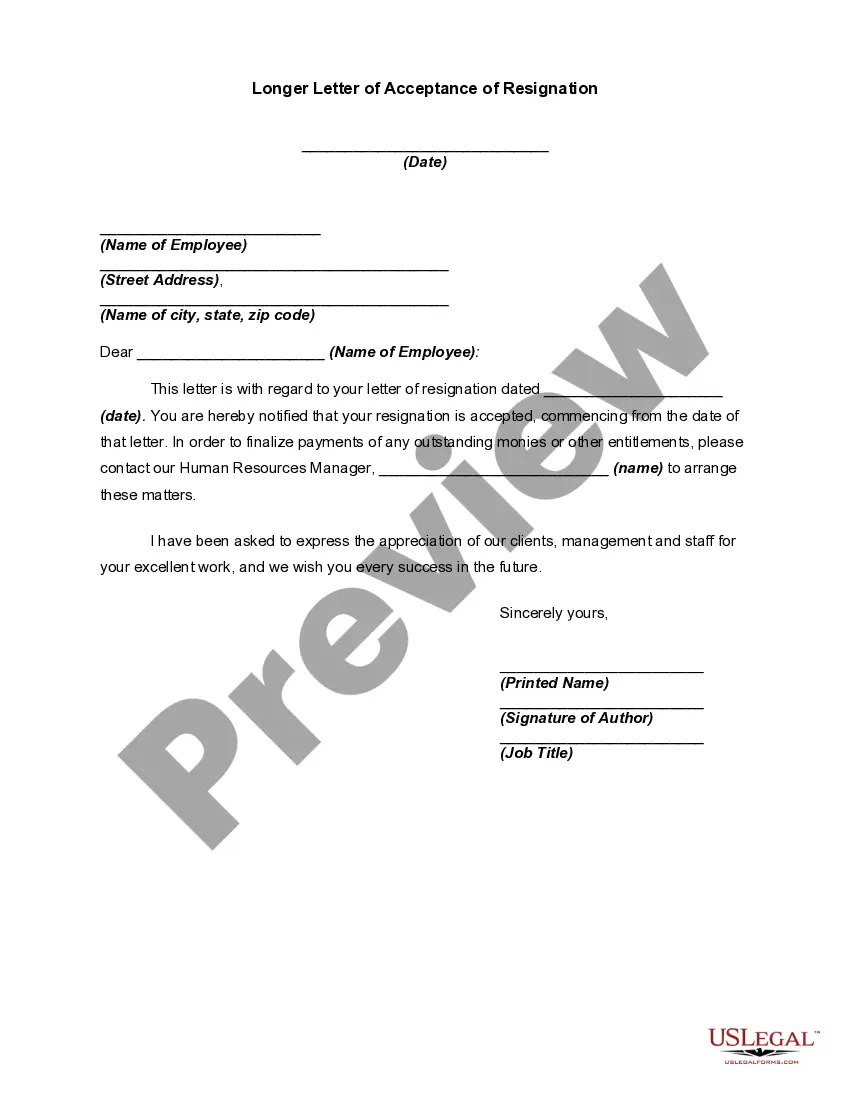
Resignation Letter Format For Personal Reason In Maricopa
Description

Get your form ready online
Our built-in tools help you complete, sign, share, and store your documents in one place.
Make edits, fill in missing information, and update formatting in US Legal Forms—just like you would in MS Word.
Download a copy, print it, send it by email, or mail it via USPS—whatever works best for your next step.
Sign and collect signatures with our SignNow integration. Send to multiple recipients, set reminders, and more. Go Premium to unlock E-Sign.
If this form requires notarization, complete it online through a secure video call—no need to meet a notary in person or wait for an appointment.
We protect your documents and personal data by following strict security and privacy standards.

Make edits, fill in missing information, and update formatting in US Legal Forms—just like you would in MS Word.

Download a copy, print it, send it by email, or mail it via USPS—whatever works best for your next step.

Sign and collect signatures with our SignNow integration. Send to multiple recipients, set reminders, and more. Go Premium to unlock E-Sign.

If this form requires notarization, complete it online through a secure video call—no need to meet a notary in person or wait for an appointment.

We protect your documents and personal data by following strict security and privacy standards.
Looking for another form?






Form popularity
FAQ
Yes, it is generally acceptable to resign without providing specific reasons. Many employees choose to resign for personal or professional reasons that they may not wish to disclose. Here are a few points to consider:
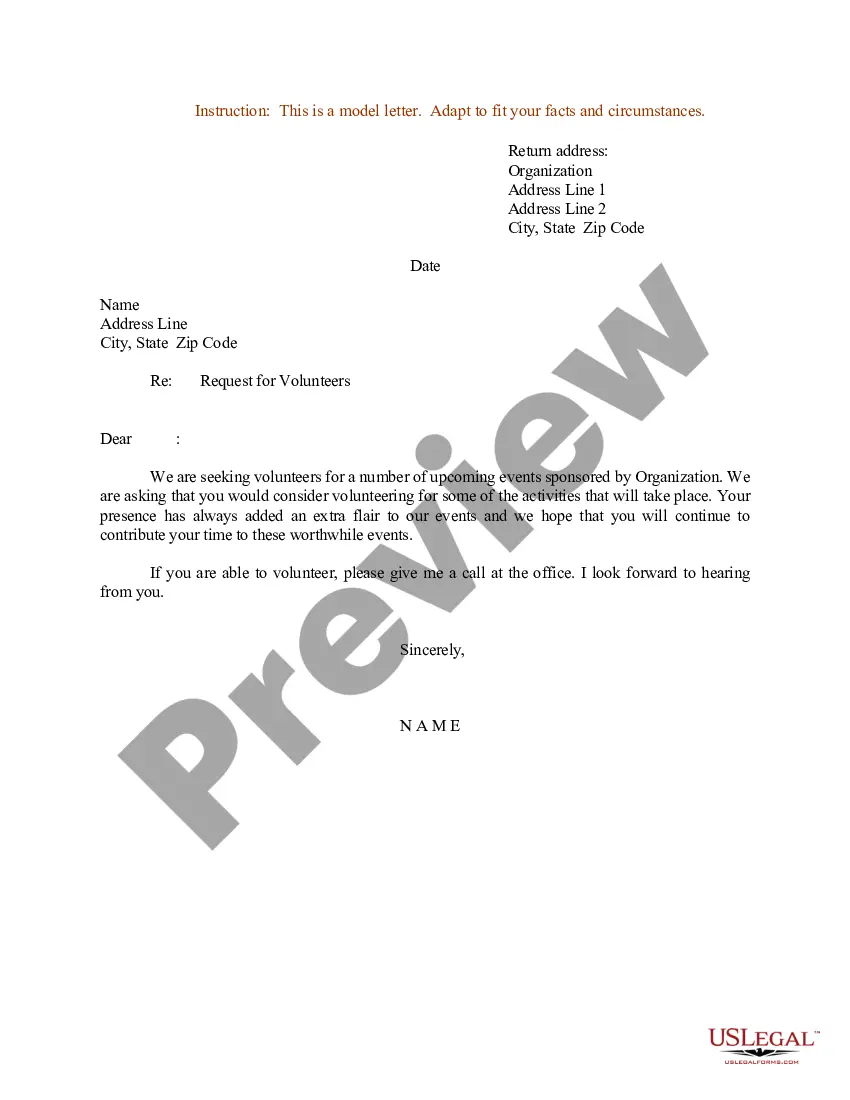
How to write a resignation letter for personal reasons Use proper formatting. Include your contact information and the date of the letter. Include the recipient's contact information and a greeting. Make a clear statement of resignation. Express your appreciation. Offer to help. Include an appropriate closing and signature.
Complete the Heading. Write a Formal Salutation. Make a Statement of Resignation. State Your Last Day of Employment. Mention You're Resigning Due to Personal Reasons. Show Your Gratitude to the Company. Personalize Your Letter. Highlight the Next Steps.
You don't need to disclose personal or family matters. Sometimes, saying, “I had to leave for personal and family reasons,” is enough as long as you explain why you're ready to reenter the workforce.
Leaving a job for personal reasons can encompass any non-work rationale that takes you away from your workplace, such as caring for a family member, coping with an illness, or moving. You are never obligated to share your personal reasons for leaving a job.
You can resign for any reason you like, and you are under no obligation to disclose the reason.
Sample answers to the interview question "Why did you leave your job? ➢ I found myself bored with the work and looking for more challenges. I am an excellent employee and I didn't want my unhappiness to have any impact on the job I was doing for my employer.
I am writing to inform you of my decision to resign from my position at Company Name, effective Last Working Day, due to personal reasons that require my immediate attention. While my time at Company Name has been truly rewarding and enjoyable, I must step back to focus on personal matters at this time.
How to write a resignation letter for personal reasons Use proper formatting. Include your contact information and the date of the letter. Include the recipient's contact information and a greeting. Make a clear statement of resignation. Express your appreciation. Offer to help. Include an appropriate closing and signature.
I am writing to formally notify you of my resignation from the position of job title with company name. Per my notice period, my final day will be date of last day. I have been offered another role that will halve my daily commute and allow me to spend more time with my family outside of working hours.

