Submission Agreement Sample With Whereas Clauses In Pennsylvania
Description

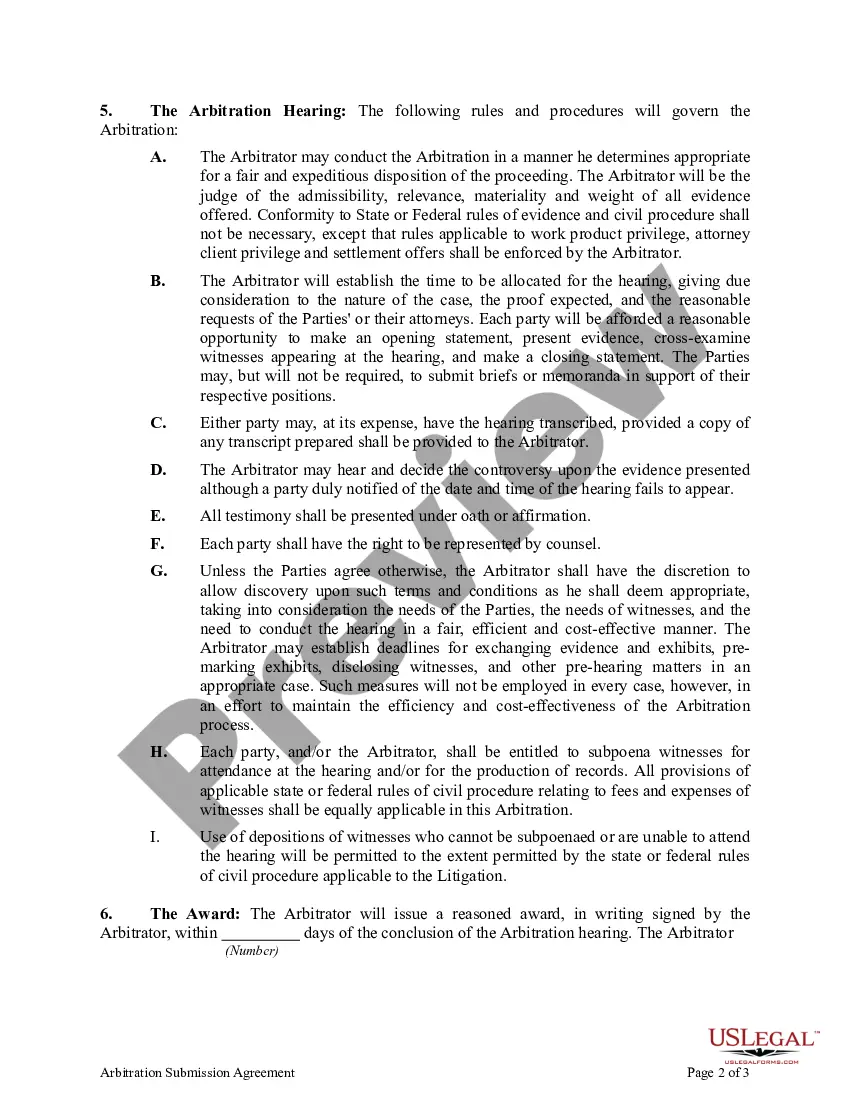
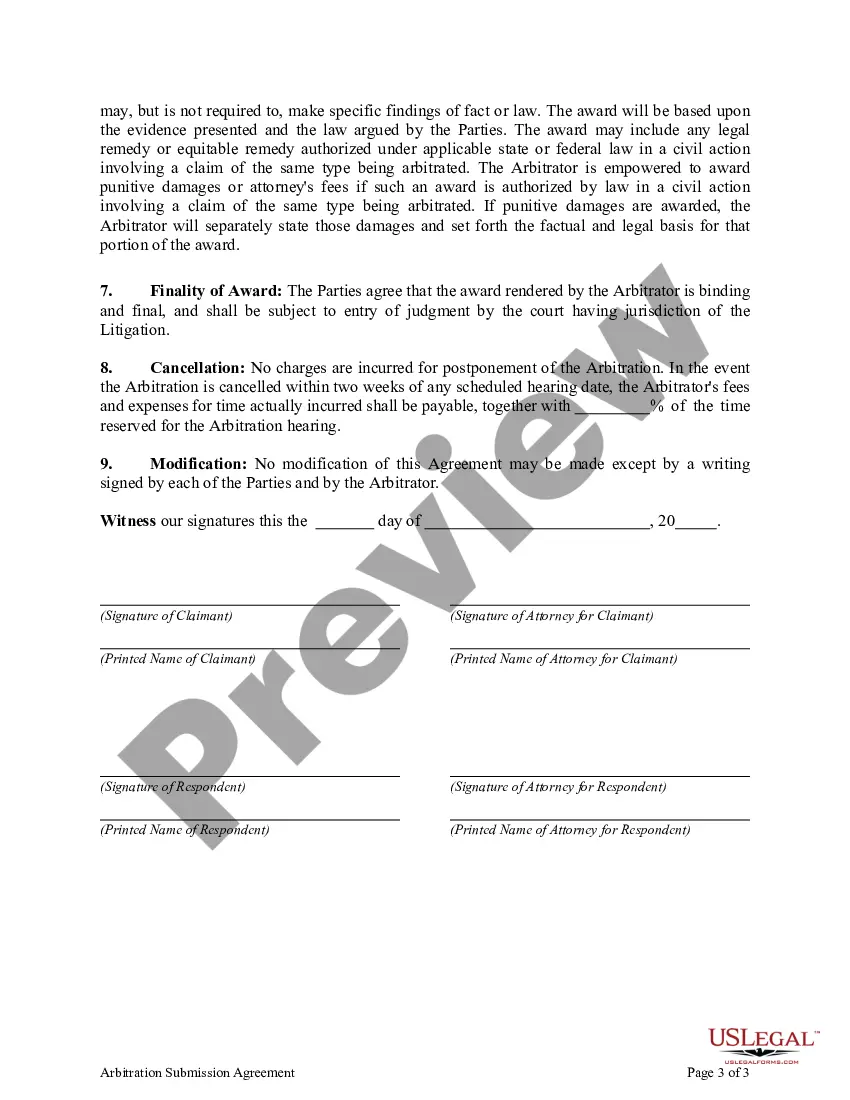

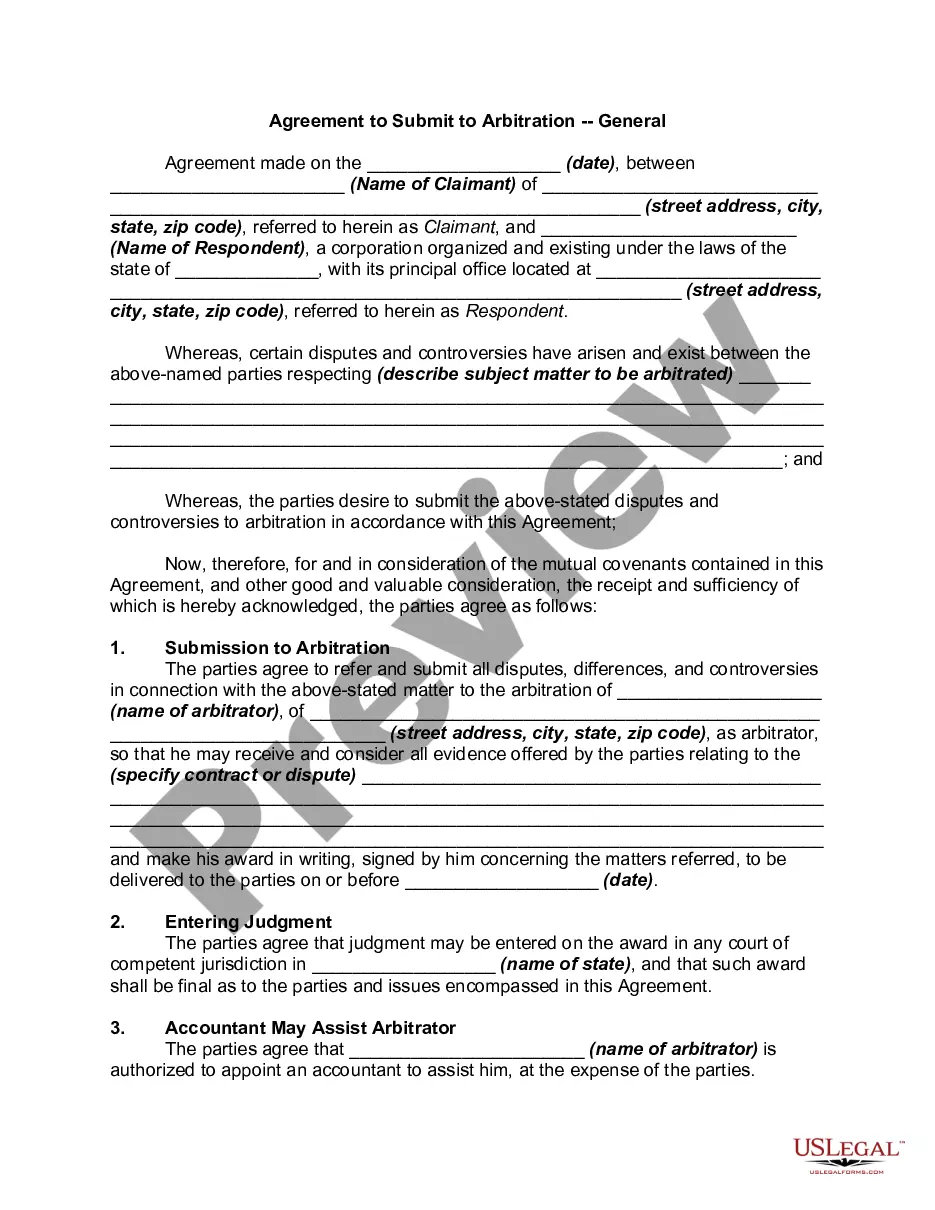

Get your form ready online
Our built-in tools help you complete, sign, share, and store your documents in one place.
Make edits, fill in missing information, and update formatting in US Legal Forms—just like you would in MS Word.
Download a copy, print it, send it by email, or mail it via USPS—whatever works best for your next step.
Sign and collect signatures with our SignNow integration. Send to multiple recipients, set reminders, and more. Go Premium to unlock E-Sign.
If this form requires notarization, complete it online through a secure video call—no need to meet a notary in person or wait for an appointment.
We protect your documents and personal data by following strict security and privacy standards.

Make edits, fill in missing information, and update formatting in US Legal Forms—just like you would in MS Word.

Download a copy, print it, send it by email, or mail it via USPS—whatever works best for your next step.

Sign and collect signatures with our SignNow integration. Send to multiple recipients, set reminders, and more. Go Premium to unlock E-Sign.

If this form requires notarization, complete it online through a secure video call—no need to meet a notary in person or wait for an appointment.

We protect your documents and personal data by following strict security and privacy standards.
Looking for another form?




Form popularity
FAQ
It established the Advisory Council on Historic Preservation (ACHP), which developed the regulations for implementing Section 106. Section 106 is triggered when a Federal agency determines that it has a type of undertaking that has the potential to affect historic properties.
A section 106 (S106) agreement is a legally binding agreement or “planning obligation” between a local planning authority, like us, and a property owner. The purpose of a S106 agreement is to mitigate the impact of the development on the local community and infrastructure.
Confirmation of compliance (S106) Requests for confirmation of compliance with planning obligations must be submitted in writing and provide the following details: the planning application number. the date(s) of the legal agreement(s) details of the relevant clauses within the agreement.
Parts of a Section 106 Agreement This includes the division of the document into a title, preamble, stipulations, and signatures. Each one of these parts has a specific function to perform and should be clear, complete, and distinct. The title identifies the undertaking and the signatories to the agreement.
Section 106 of the NHPA requires that each federal agency identify and assess the effects its actions may have on historic buildings. Under Section 106, each federal agency must consider public views and concerns about historic preservation issues when making final project decisions.
Under the Federal regulations governing compliance with Section 106 of the National Historic Preservation Act (36 CFR 800), Federal agencies and others negotiate, draft, finalize, execute, and implement "Memoranda of Agreement" (MOA) stipulating how the adverse effects of Federal actions on historic properties will be ...
An arbitration agreement is valid, enforceable, and irrevocable if it is in writing and provides that the parties agree to arbitrate either: ∎ An existing controversy. ∎ Prospective controversies that may arise between the parties. (42 Pa.
So do you want an arbitration clause in your contract? If you're a large corporation, you do. If you're contracting with someone around your own size, it's probably a good idea to have an arbitration clause because of the decreased attorney fees usually associated with arbitrations as compared to court cases.
The seat and venue of arbitration should be specifically mentioned. Language of Arbitration: The clause should specify the language in which the arbitration will be conducted if parties speak different languages. This is crucial for ensuring that all parties can effectively participate in the process.
We noted that arbitration clauses are made before any dispute arises. Submission agreements, however, are agreements to arbitrate made after the dispute has arisen.
