Submission Agreement In Arbitration In Fairfax
Description

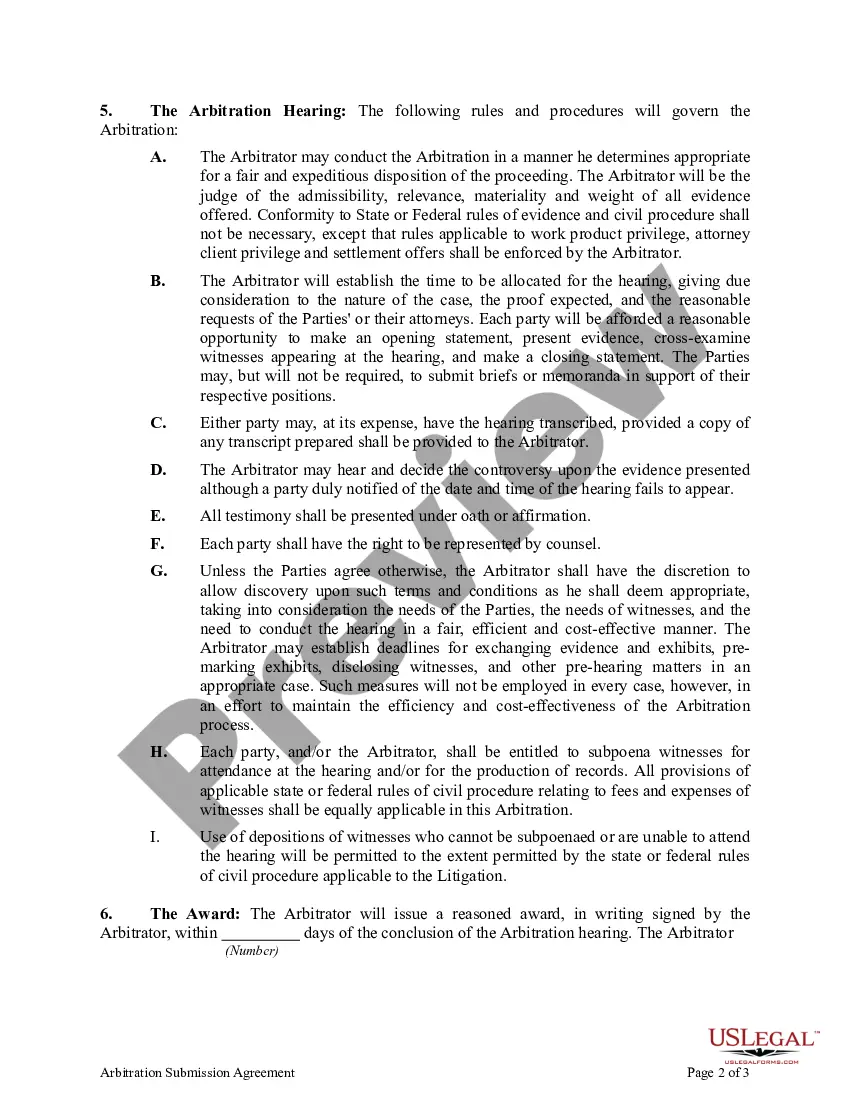
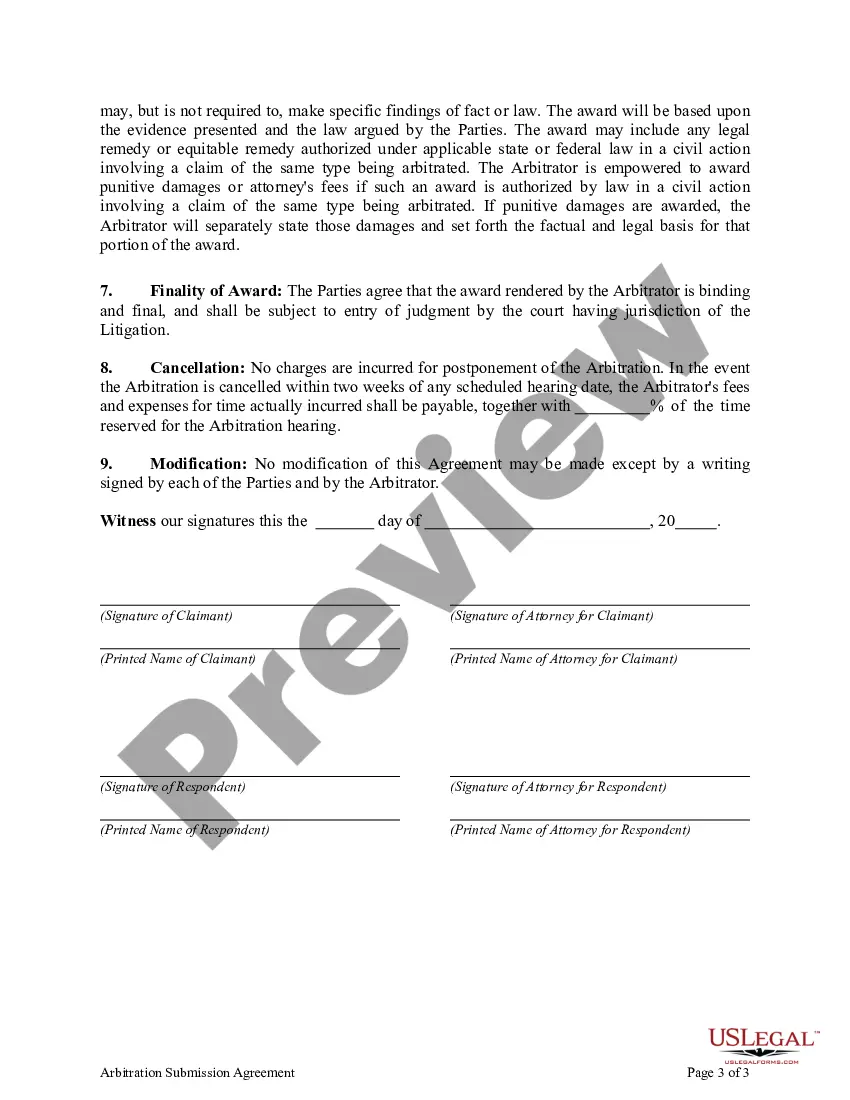

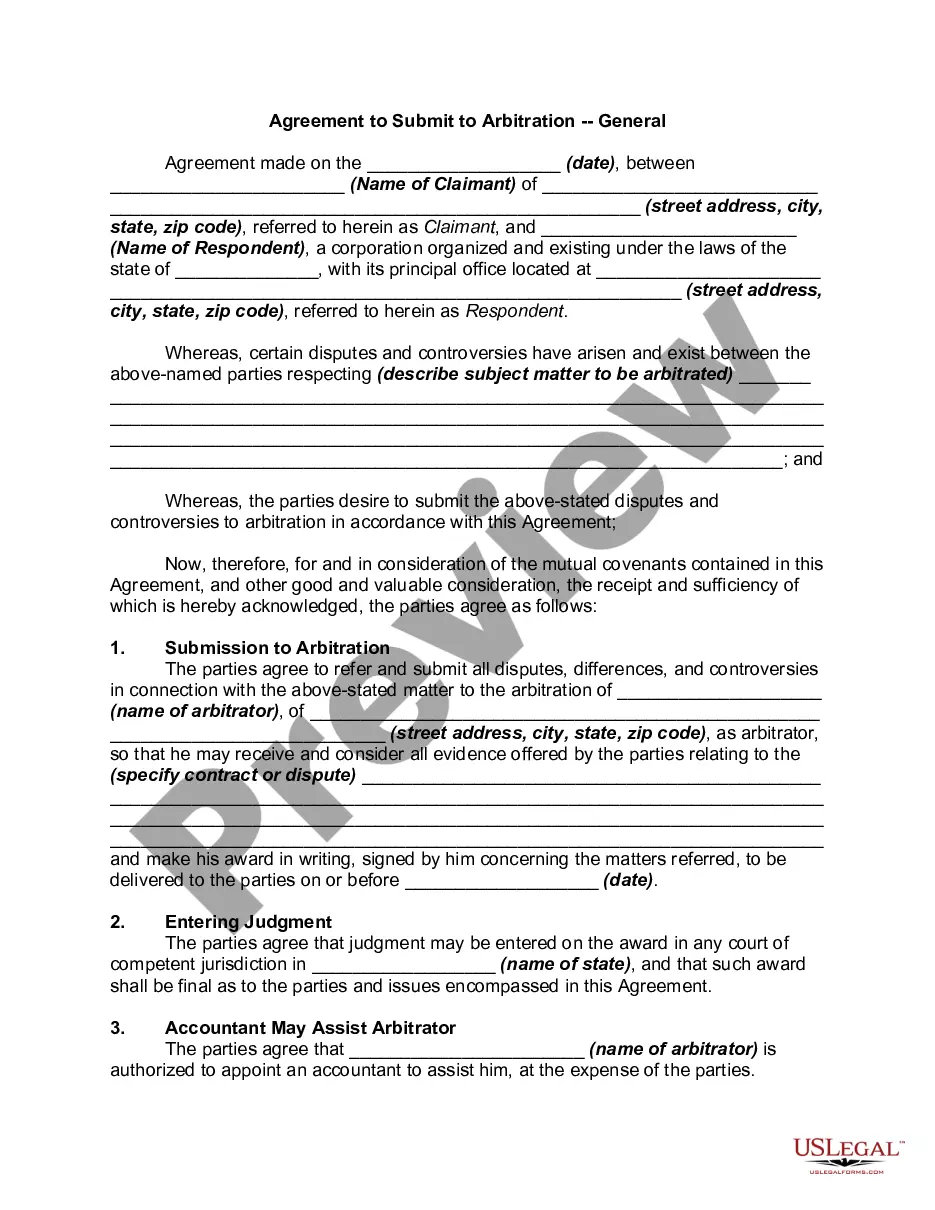

Get your form ready online
Our built-in tools help you complete, sign, share, and store your documents in one place.
Make edits, fill in missing information, and update formatting in US Legal Forms—just like you would in MS Word.
Download a copy, print it, send it by email, or mail it via USPS—whatever works best for your next step.
Sign and collect signatures with our SignNow integration. Send to multiple recipients, set reminders, and more. Go Premium to unlock E-Sign.
If this form requires notarization, complete it online through a secure video call—no need to meet a notary in person or wait for an appointment.
We protect your documents and personal data by following strict security and privacy standards.

Make edits, fill in missing information, and update formatting in US Legal Forms—just like you would in MS Word.

Download a copy, print it, send it by email, or mail it via USPS—whatever works best for your next step.

Sign and collect signatures with our SignNow integration. Send to multiple recipients, set reminders, and more. Go Premium to unlock E-Sign.

If this form requires notarization, complete it online through a secure video call—no need to meet a notary in person or wait for an appointment.

We protect your documents and personal data by following strict security and privacy standards.
Looking for another form?









Form popularity
FAQ
“While arbitration clause is included within a written agreement between the parties, an arbitration agreement is an agreement made after a dispute has arisen between the parties.
In entering into an arbitration agreement, the parties agree to refer their dispute to a neutral tribunal to decide their rights and obligations. Although sometimes described as a form of alternative dispute resolution, arbitration is not the same as mediation or conciliation.
TYPICALLY, THE PARTIES ENTER INTO A 'SUBMISSION AGREEMENT' THAT IDENTIFIES THE PARTIES, DESCRIBES THE DISPUTE TO BE SETTLED, INDICATES THE RELIEF SOUGHT BY EACH OF THE PARTIES, AND PROVIDES FOR ADMINISTRATION, AS UNDER THE RULES OF THE AMERICAN ARBITRATION ASSOCIATION (AAA).
We noted that arbitration clauses are made before any dispute arises. Submission agreements, however, are agreements to arbitrate made after the dispute has arisen.
Arbitration agreements require that persons who signed them resolve any disputes by binding arbitration, rather than in court before a judge and/or jury. What is binding arbitration? Binding arbitration involves the submission of a dispute to a neutral party who hears the case and makes a decision.
A “submission agreement” (also called an “agreement to arbitrate”) is a written agreement between two parties that establishes the use of arbitration to settle a dispute (or any and all disputes) that may arise between them.
Top 10 tips for drafting arbitration agreements Introduction. Scope of the arbitration agreement. Seat of the arbitration. Governing law of the arbitration agreement. Choice of rules. Language. Number and appointment of arbitrators. Specifying arbitrator characteristics.
A submission agreement, on the other hand, is an agreement entered into between the parties to submit existing disputes to arbitration. The terms 'arbitration clause' and 'submission agreement' are used throughout this Guide in ance with these descriptions.
Include Arbitrator's Jurisdiction Clause. Define Arbitration Scope Precisely. Specify Confidentiality Rules Clearly. Determine Applicable Law and Jurisdiction. Specify Arbitrator Selection Process. Set Clear Arbitration Timelines.