Submission Agreement Sample For Business In Cuyahoga
Description



Get your form ready online
Our built-in tools help you complete, sign, share, and store your documents in one place.
Make edits, fill in missing information, and update formatting in US Legal Forms—just like you would in MS Word.
Download a copy, print it, send it by email, or mail it via USPS—whatever works best for your next step.
Sign and collect signatures with our SignNow integration. Send to multiple recipients, set reminders, and more. Go Premium to unlock E-Sign.
If this form requires notarization, complete it online through a secure video call—no need to meet a notary in person or wait for an appointment.
We protect your documents and personal data by following strict security and privacy standards.

Make edits, fill in missing information, and update formatting in US Legal Forms—just like you would in MS Word.

Download a copy, print it, send it by email, or mail it via USPS—whatever works best for your next step.

Sign and collect signatures with our SignNow integration. Send to multiple recipients, set reminders, and more. Go Premium to unlock E-Sign.

If this form requires notarization, complete it online through a secure video call—no need to meet a notary in person or wait for an appointment.

We protect your documents and personal data by following strict security and privacy standards.
Looking for another form?








Form popularity
FAQ
Always get straight to the merits without berating the other side or whining about how badly it has treated you. Another threat to your credibility is the “kitchen sink” arbitration demand or a response that includes numerous claims or defenses that have little chance of succeeding.
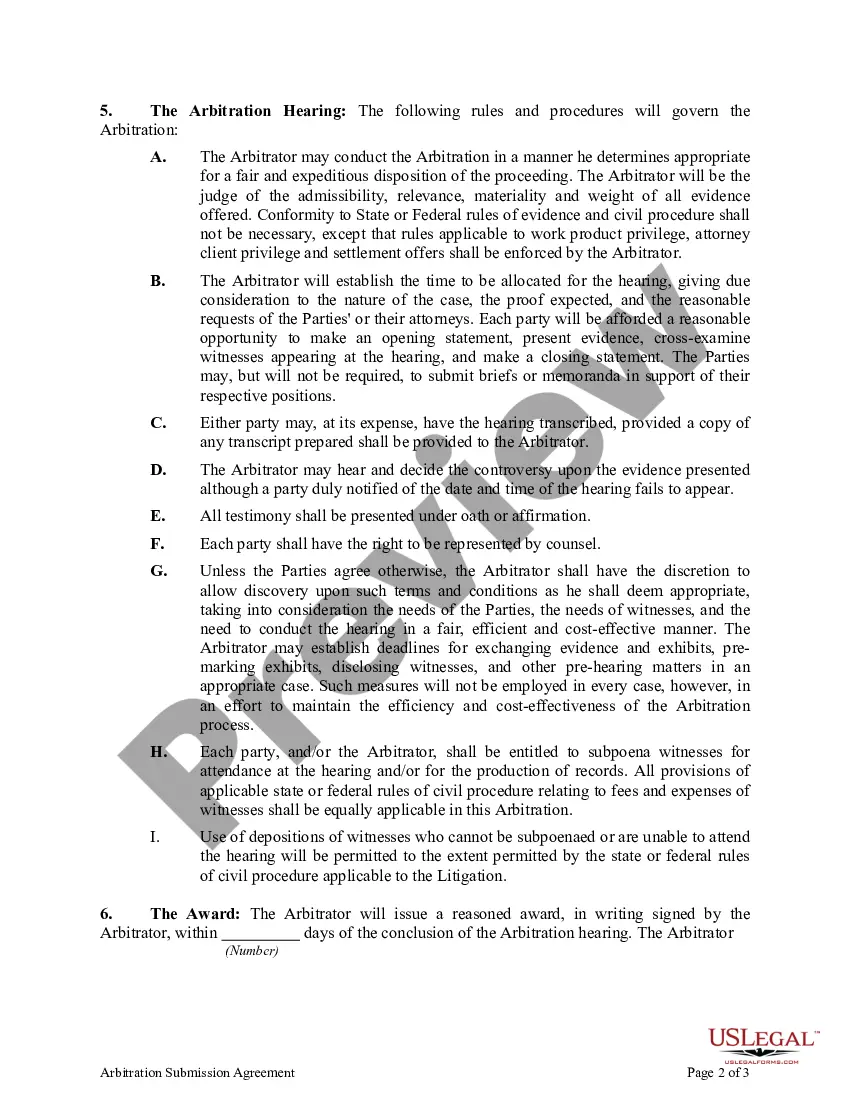
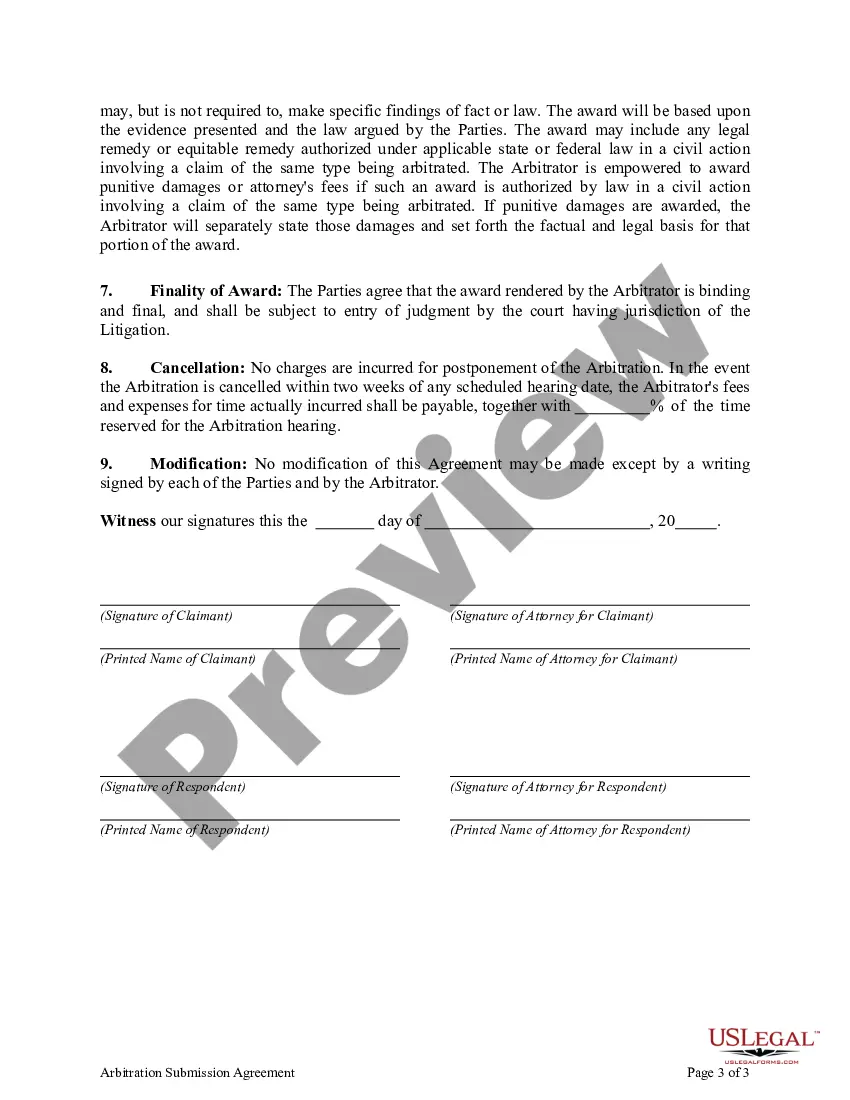
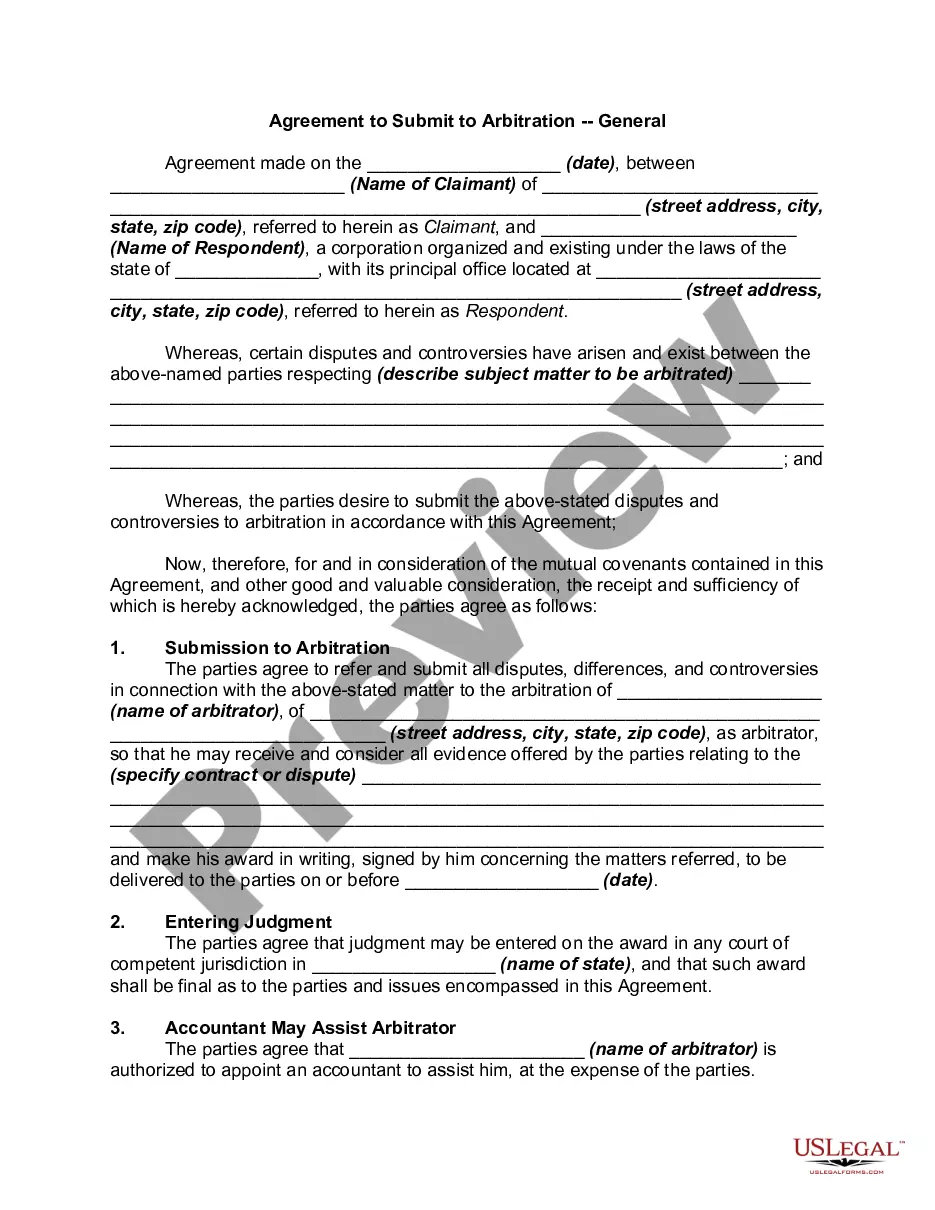
A “submission agreement” (also called an “agreement to arbitrate”) is a written agreement between two parties that establishes the use of arbitration to settle a dispute (or any and all disputes) that may arise between them.
Arbitration is a form of alternative dispute resolution. It allows both sides to present their case in an expedited fashion to a panel of three attorneys who render a decision that same day.
We noted that arbitration clauses are made before any dispute arises. Submission agreements, however, are agreements to arbitrate made after the dispute has arisen.
The Statement of Claim is a document you compose that provides the following: Name(s) of the claimant(s) — who is filing the claim. Name(s) of the respondent(s) — whom the claim is against. Details of the dispute.
The statement to the Arbitration Committee is the only opportunity you have to make your case for the credit you are seeking. Much like the opening statement in a trial, your arbitration statement should lay out what the “evidence” – the written material – will show regarding the proper credit on the project.
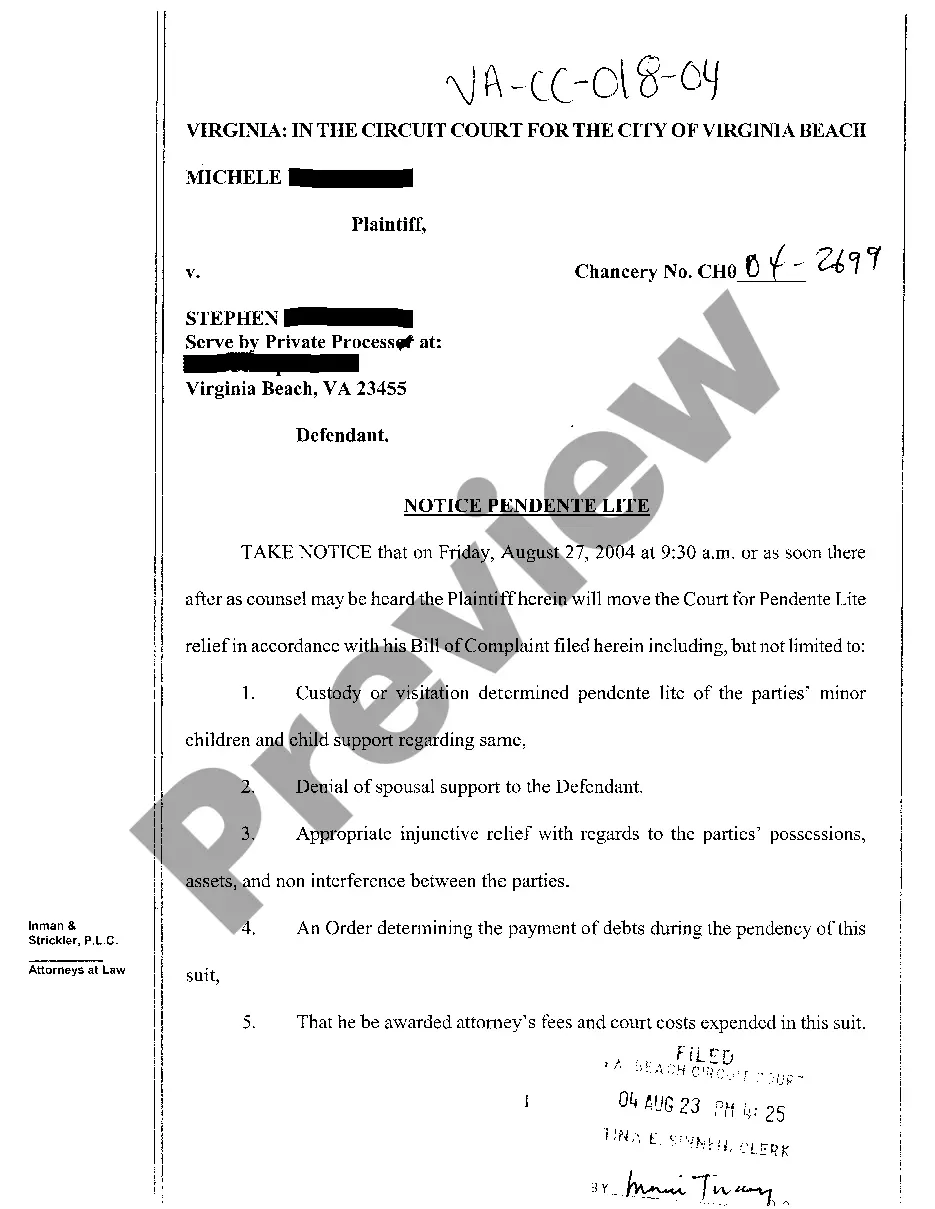
(A) Ex Parte Orders. No ex parte orders of parenting or visitation shall be granted except where appropriate under the provisions of D.D.R.
Rule 11 - Pleas, Rights Upon Plea (A) Pleas. A defendant may plead not guilty, not guilty by reason of insanity, guilty or, with the consent of the court, no contest. A plea of not guilty by reason of insanity shall be made in writing by either the defendant or the defendant's attorney.
The arraignment judge checks that the defendant knows the charges they face. The court assigns the defendant an attorney if they don't have one. Defendants enter a plea to the charges.
Rule 13 - MOTIONS AND MEMORANDA (A)Content. All motions must be in writing. All motions must be served upon opposing counsel, or upon the opposing party if not represented by counsel, and filed with proof of service with the clerk of the court of appeals.
