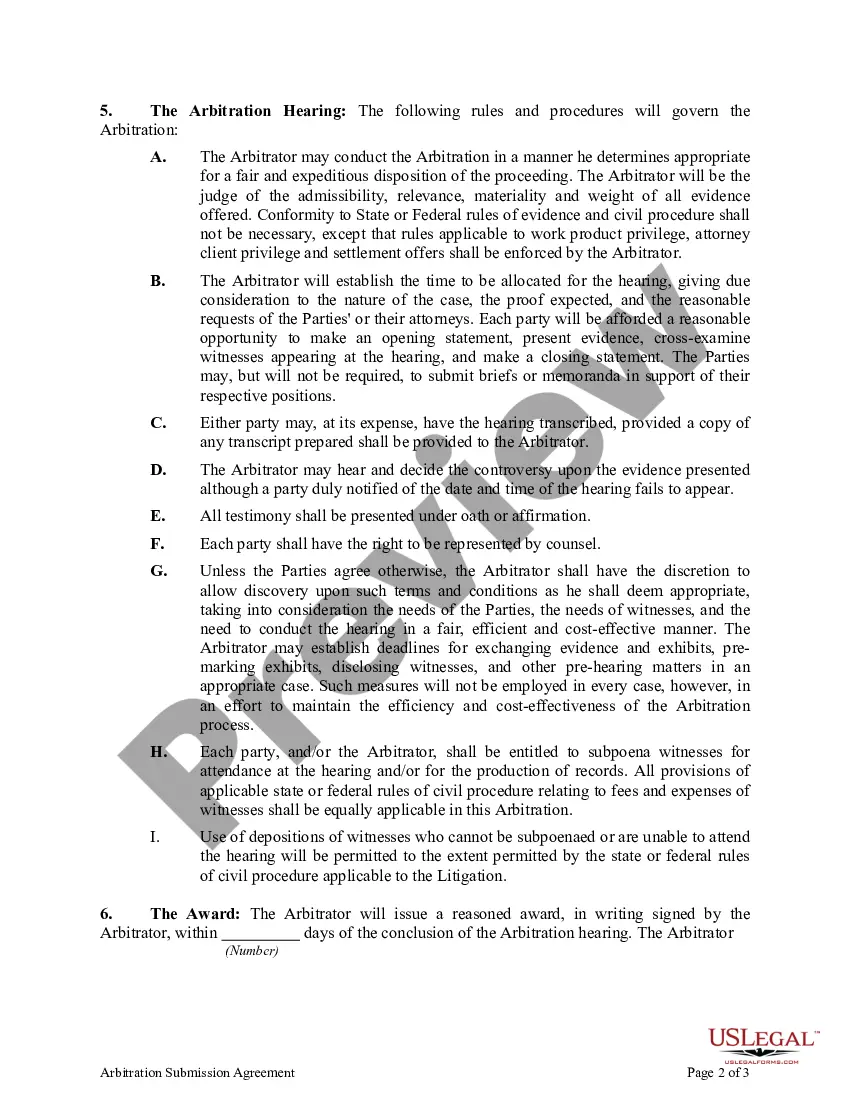
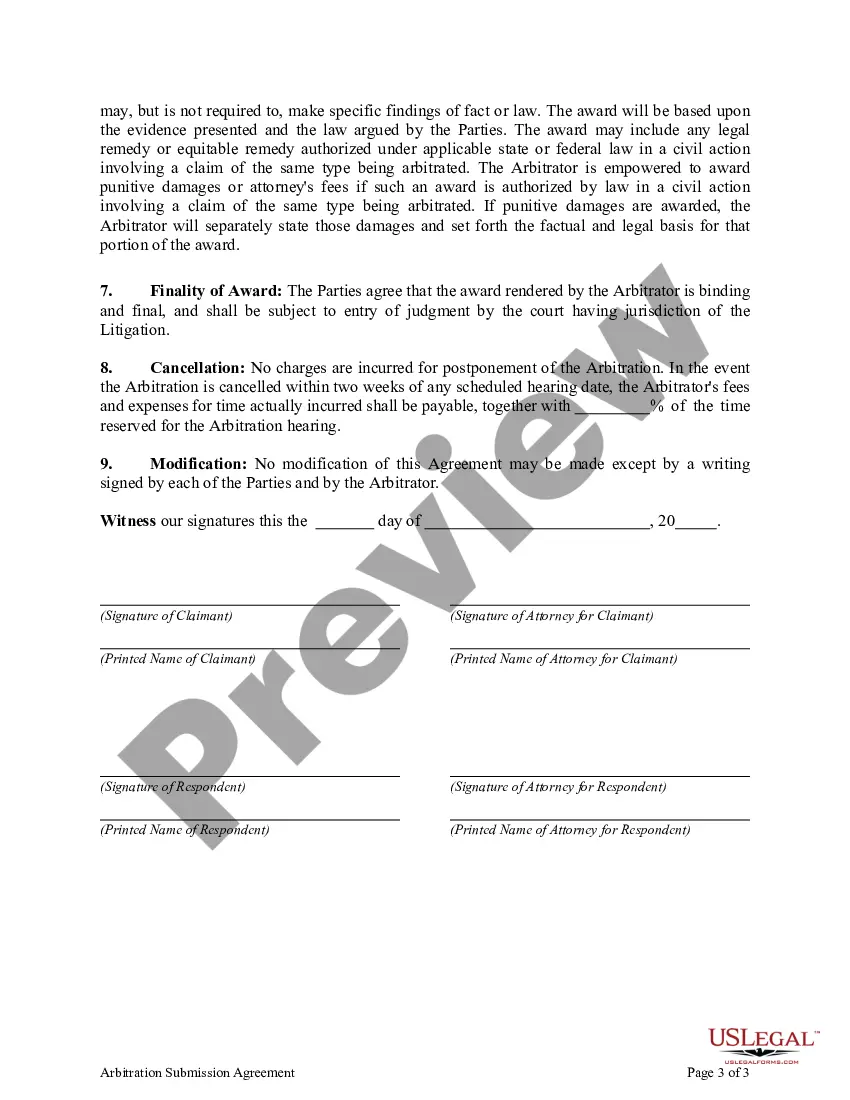
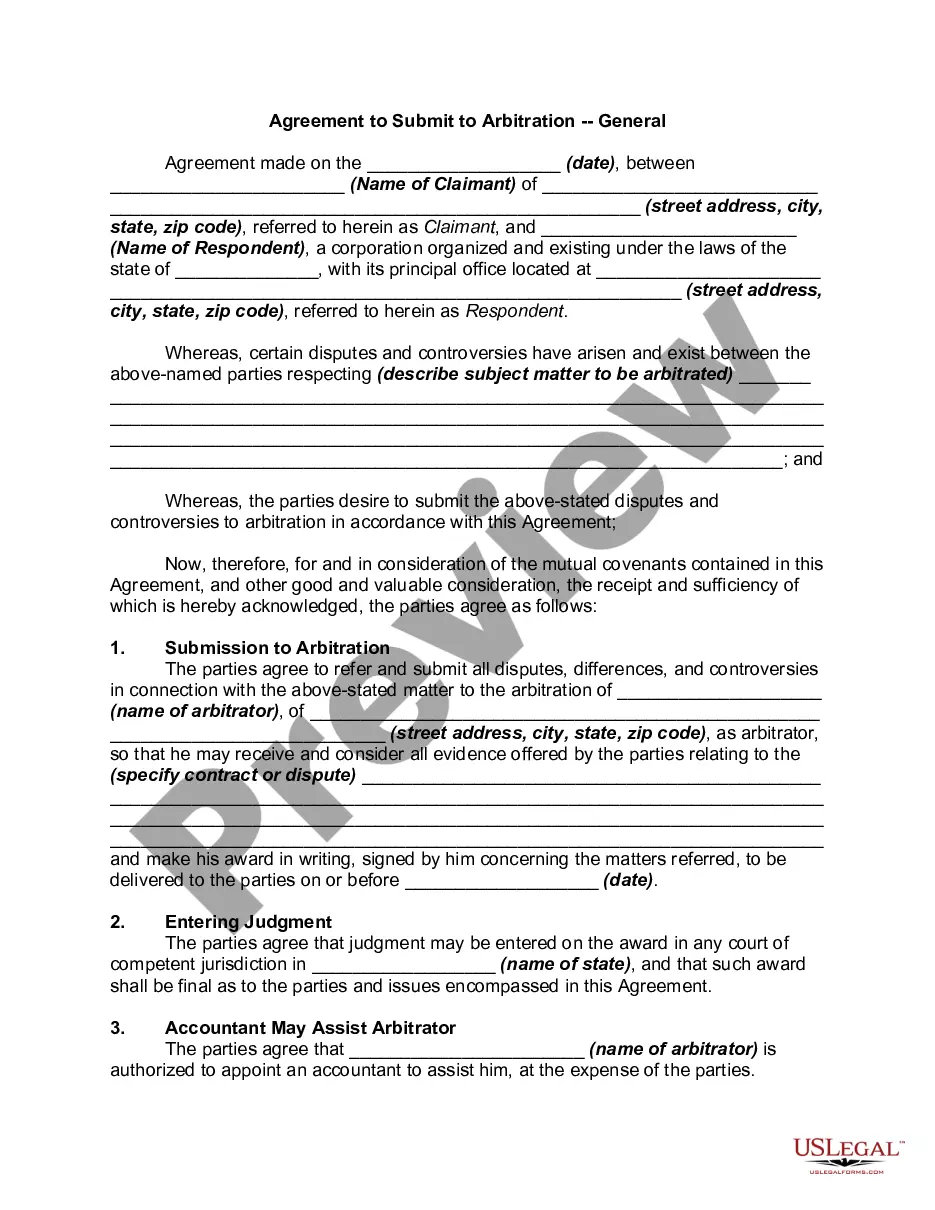
Submission Agreement Sample With Service Provider In Alameda
Description



Get your form ready online
Our built-in tools help you complete, sign, share, and store your documents in one place.
Make edits, fill in missing information, and update formatting in US Legal Forms—just like you would in MS Word.
Download a copy, print it, send it by email, or mail it via USPS—whatever works best for your next step.
Sign and collect signatures with our SignNow integration. Send to multiple recipients, set reminders, and more. Go Premium to unlock E-Sign.
If this form requires notarization, complete it online through a secure video call—no need to meet a notary in person or wait for an appointment.
We protect your documents and personal data by following strict security and privacy standards.

Make edits, fill in missing information, and update formatting in US Legal Forms—just like you would in MS Word.

Download a copy, print it, send it by email, or mail it via USPS—whatever works best for your next step.

Sign and collect signatures with our SignNow integration. Send to multiple recipients, set reminders, and more. Go Premium to unlock E-Sign.

If this form requires notarization, complete it online through a secure video call—no need to meet a notary in person or wait for an appointment.

We protect your documents and personal data by following strict security and privacy standards.
Looking for another form?








Form popularity
FAQ
It can be customized to a business' unique needs, but typically includes party names, date, the scope of service, performance standards and warranties, nature of services , company name, fees, expenses, payments, overdue payments, disputed charges, termination, taxes, confidentiality to cover any scenario that may ...
What are the essential elements of a contract? There are seven essential elements an agreement must have to be considered a valid contract. The elements of a contract include identification, offer, acceptance, consideration, meeting of the minds, competency and capacity, and contract legality.
Whether a contract is 200 pages or 10 pages, to be a legally binding agreement they must contain six basic elements: Offer, Acceptance, Awareness, Consideration, Capacity, Legality.
A service provider agreement, also known as a provision of services agreement, is a contract between at least two parties in which one party agrees to provide services in exchange for compensation. For example, a homeowner may execute a service provider agreement with a contractor for home repairs.
How do I write a Service Agreement? State how long the services are needed. Include the state where the work is taking place. Provide the contractor's and client's information. Describe the service being provided. Outline the compensation. State the agreement's terms. Include any additional clauses.
How to write a service level agreement in 5 steps Define the service. Your SLA will need to define and outline the service clearly. Verify service levels. Determine performance metrics. Prepare the service level agreement document. Review the SLA with all stakeholders.
A SLA is not a contract. The SLA document should be seen as a list of targets, rather than a legal binding agreement. The parties should be aware that the SLA itself does not guarantee that the expected service levels will always be met or that penalties will be imposed if they are not met.
A service provider agreement, also known as a provision of services agreement, is a contract between at least two parties in which one party agrees to provide services in exchange for compensation. For example, a homeowner may execute a service provider agreement with a contractor for home repairs.
