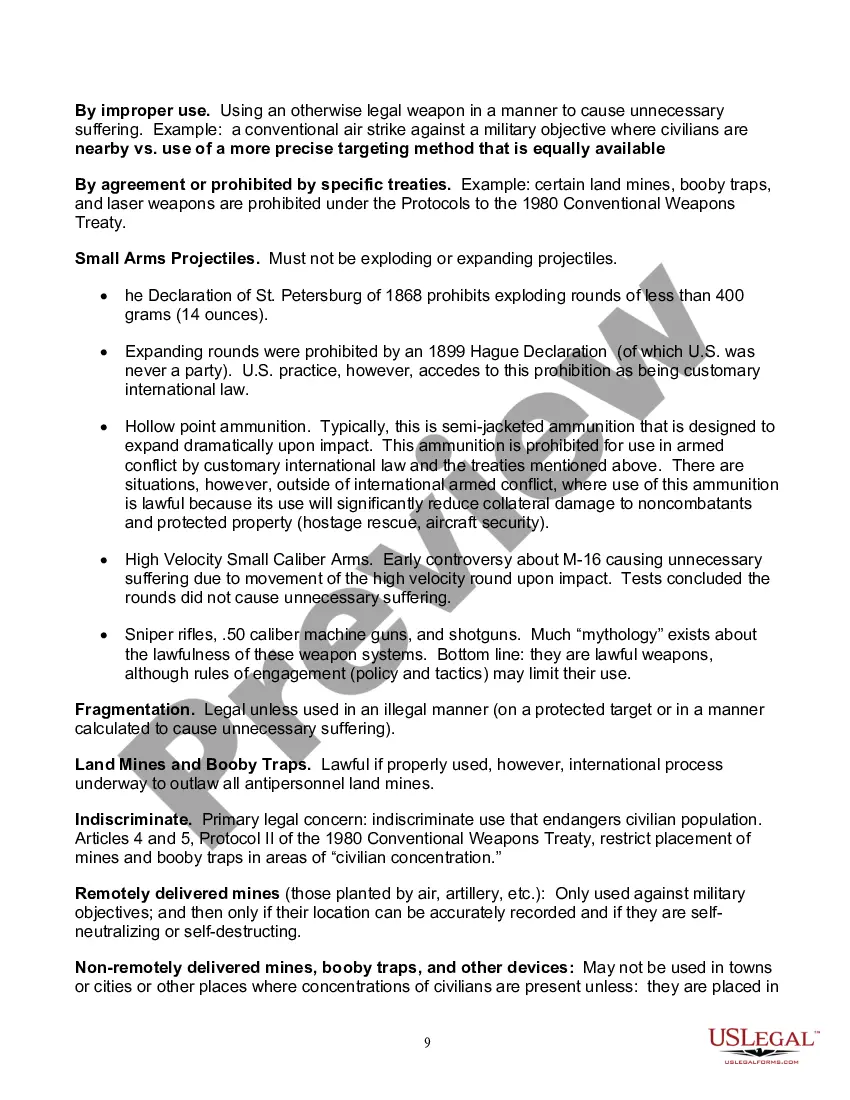
Principles Law Of Armed Conflict In Orange
Description

Get your form ready online
Our built-in tools help you complete, sign, share, and store your documents in one place.
Make edits, fill in missing information, and update formatting in US Legal Forms—just like you would in MS Word.
Download a copy, print it, send it by email, or mail it via USPS—whatever works best for your next step.
Sign and collect signatures with our SignNow integration. Send to multiple recipients, set reminders, and more. Go Premium to unlock E-Sign.
If this form requires notarization, complete it online through a secure video call—no need to meet a notary in person or wait for an appointment.
We protect your documents and personal data by following strict security and privacy standards.

Make edits, fill in missing information, and update formatting in US Legal Forms—just like you would in MS Word.

Download a copy, print it, send it by email, or mail it via USPS—whatever works best for your next step.

Sign and collect signatures with our SignNow integration. Send to multiple recipients, set reminders, and more. Go Premium to unlock E-Sign.

If this form requires notarization, complete it online through a secure video call—no need to meet a notary in person or wait for an appointment.

We protect your documents and personal data by following strict security and privacy standards.
Looking for another form?





Form popularity
FAQ
IHL is universal: all parties fighting in a conflict are obliged to respect IHL, be they governmental forces or non-State armed groups. The Geneva Conventions, which are central to IHL, have been ratified by all 196 States, making IHL a universal body of law.
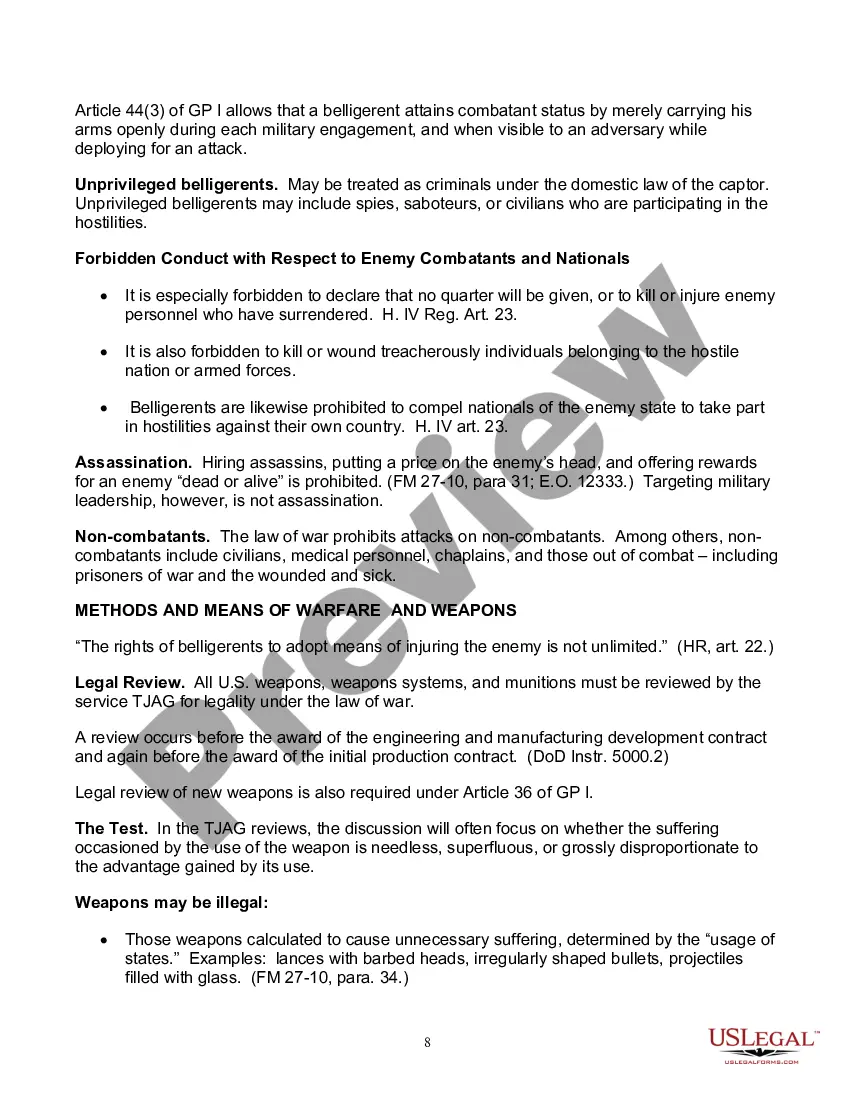
Protected persons These protections cover both civilians and combatants. There are four categories of protected persons: wounded and sick; wounded, sick and shipwrecked; prisoners of war; civilians in occupied territory or in territory of the enemy.
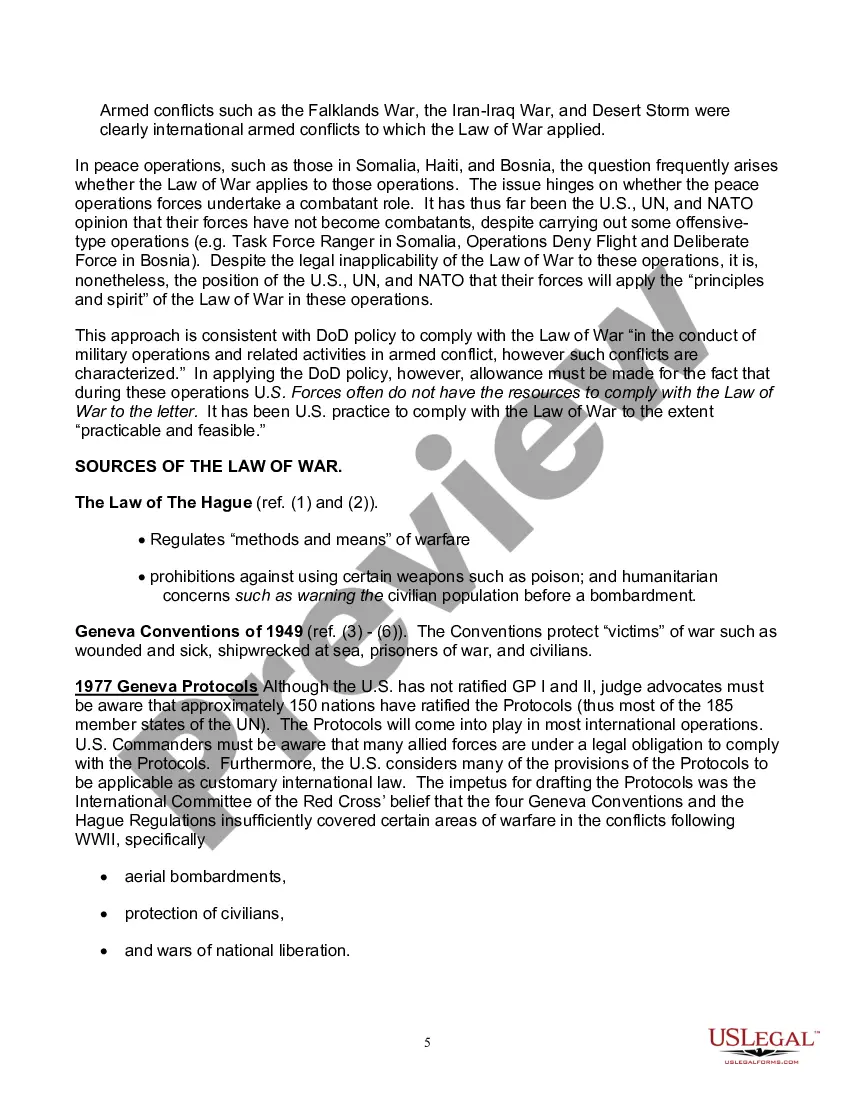
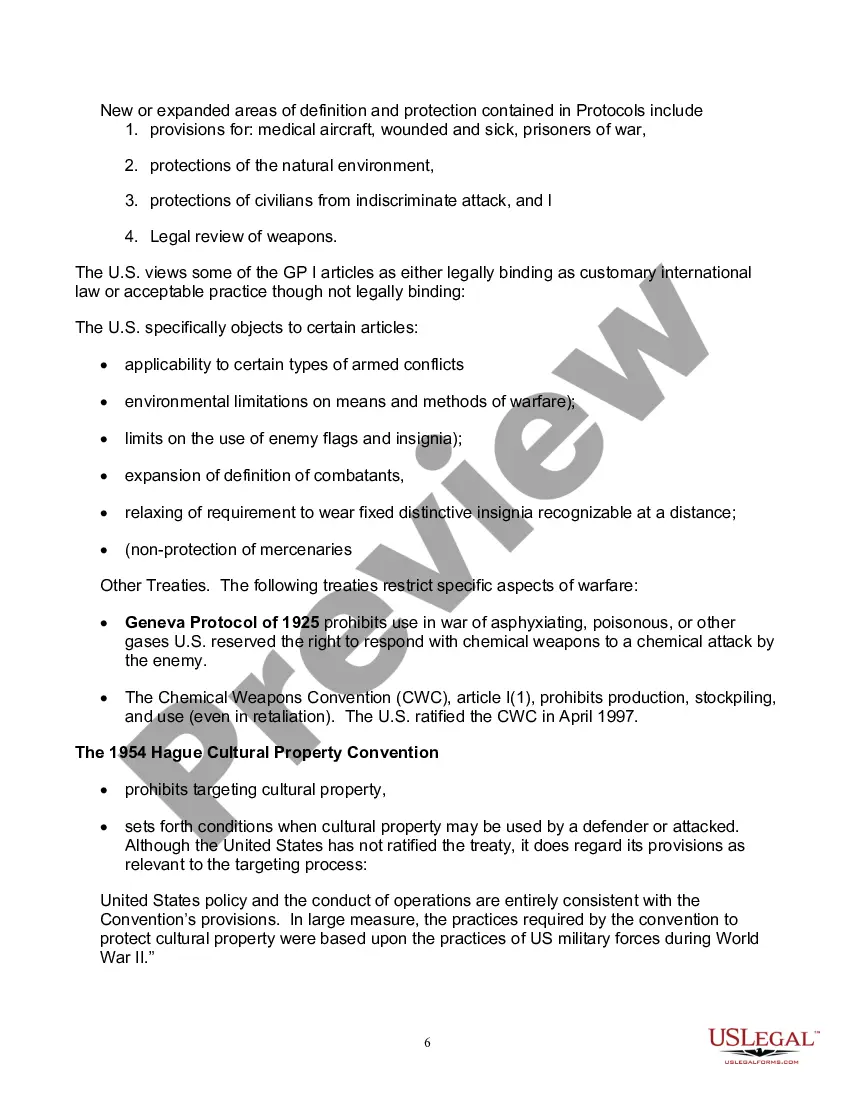
Any nation that has ratified the Geneva Conventions but not the Protocols is still bound by all provisions of the Conventions. Protocol I expands protection for the civilian population as well as military and civilian medical workers in international armed conflicts.
The law of armed conflict is a branch of international law, the law that States have agreed to accept as binding upon them in their dealings with other States. As well as governing relationships between States, international law applies to the conduct of hostilities within a State.
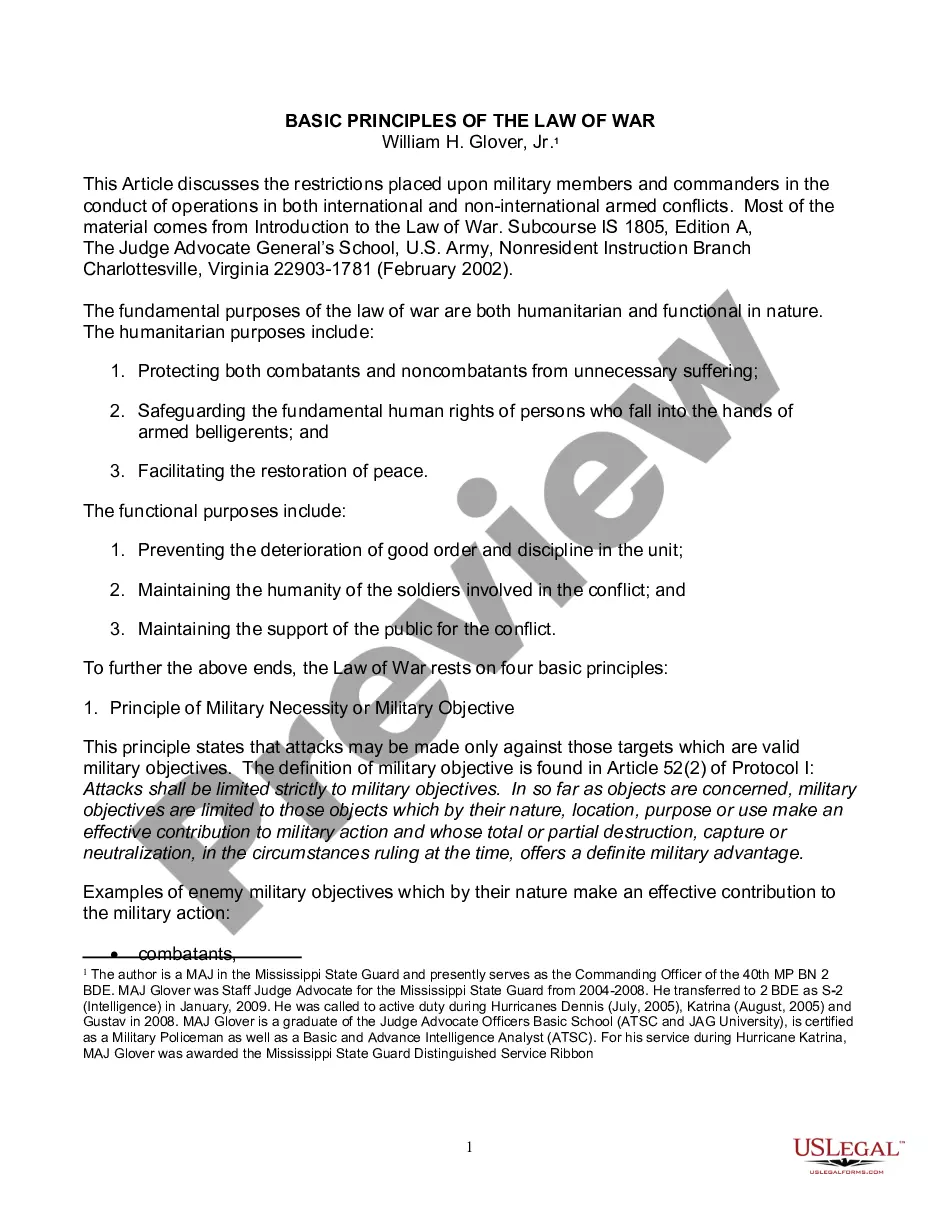
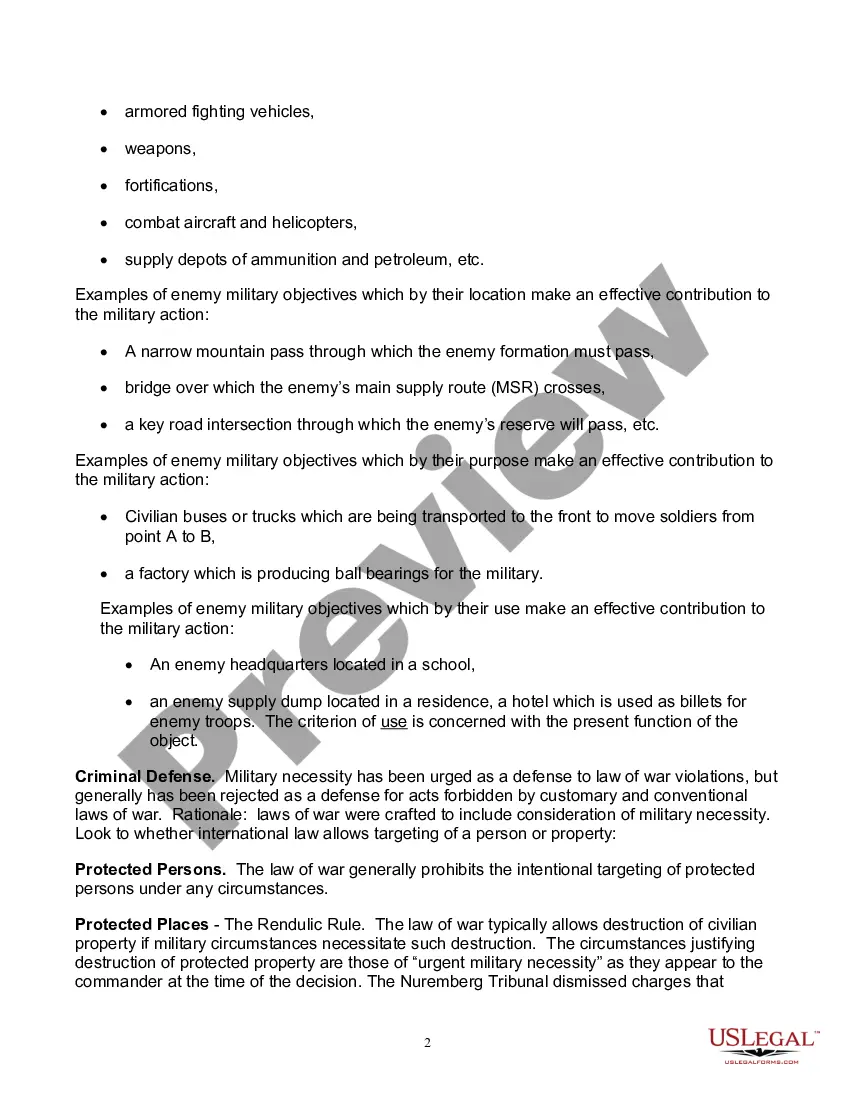
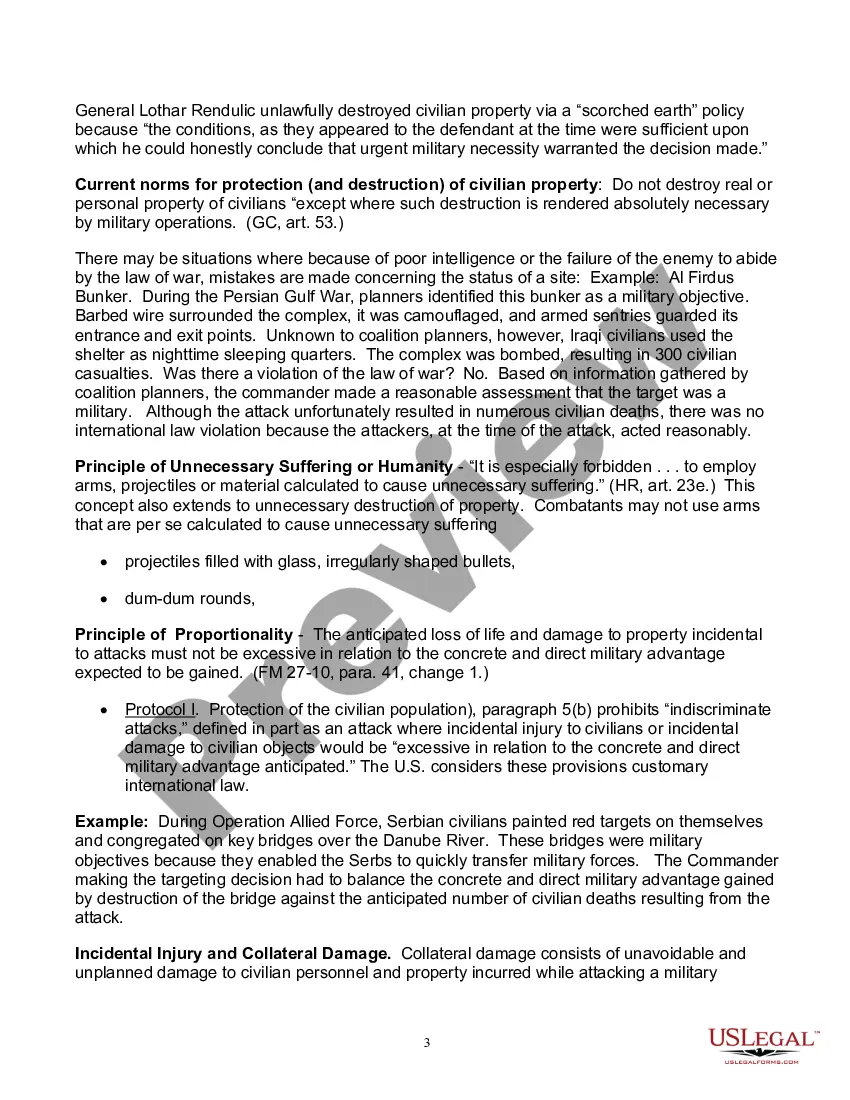
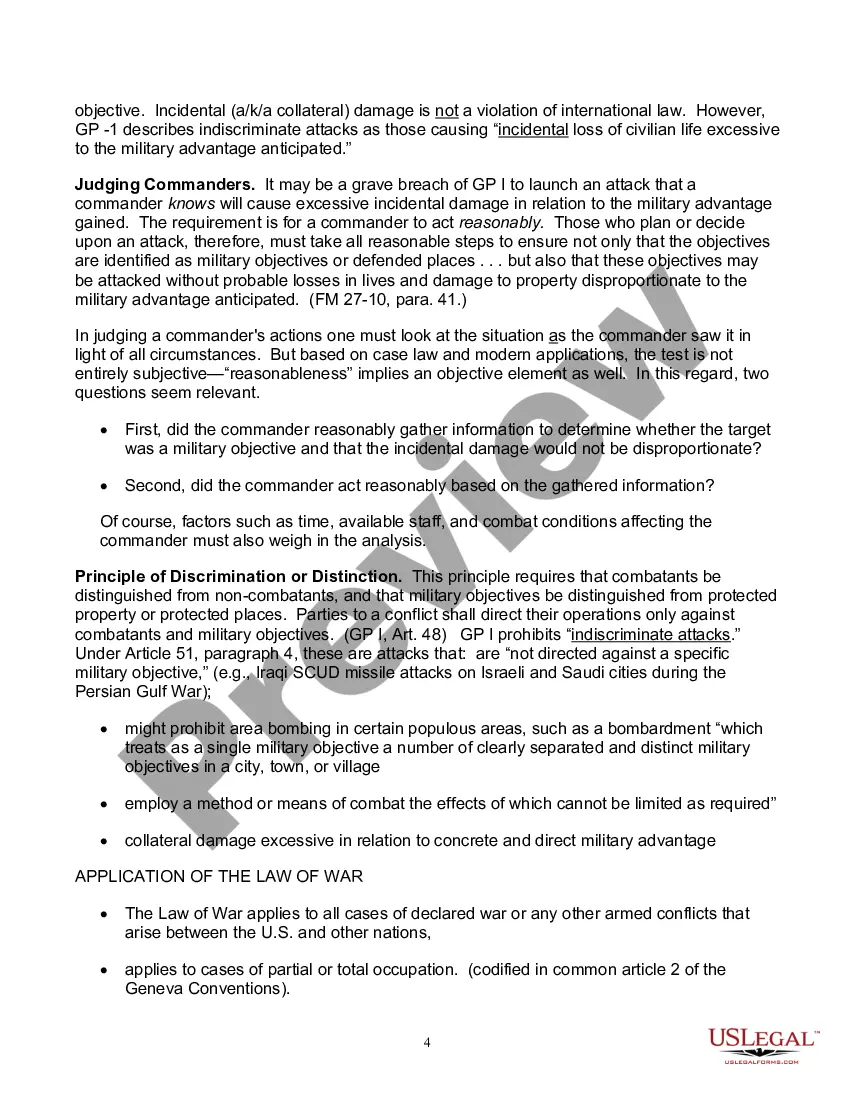
All personnel must be aware of the basic rules of the law of armed conflict, including the practical application of the principles of military necessity, proportionality, distinction and humanity.
This branch of the law is aimed at protecting the victims of a conflict who are in the power of the adversary – civilians, or you, too, if you have been wounded or taken prisoner of war (POW).
» LOAC requires an attacking commander to take all operationally feasible precautions to mitigate risk to civilians and civilian property inherent in the attack. A precaution is not feasible if it cannot be implemented, or if it will degrade the anticipated military advantage of the attack.
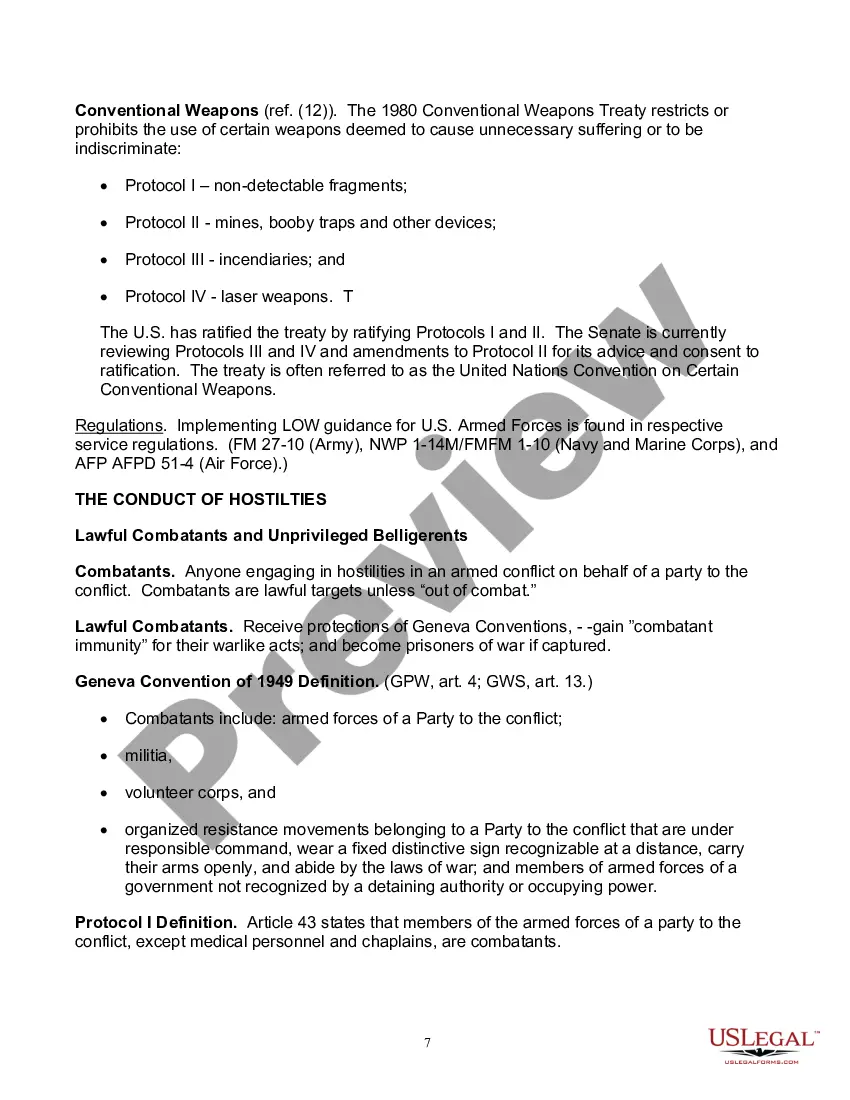
Principles of the laws of war Military necessity, along with distinction, proportionality, humanity (sometimes called unnecessary suffering), and honor (sometimes called chivalry) are the five most commonly cited principles of international humanitarian law governing the legal use of force in an armed conflict.
Treat all persons who fall into your hands humanely and protect them from the dangers of war. Care for the wounded, including enemy wounded, on the basis of medical priority. Obey all combat rules (see below). Use no more force than is necessary to achieve your operational task.
Principles of the laws of war Military necessity, along with distinction, proportionality, humanity (sometimes called unnecessary suffering), and honor (sometimes called chivalry) are the five most commonly cited principles of international humanitarian law governing the legal use of force in an armed conflict.
