Contract Law With Good Faith In Houston
Description

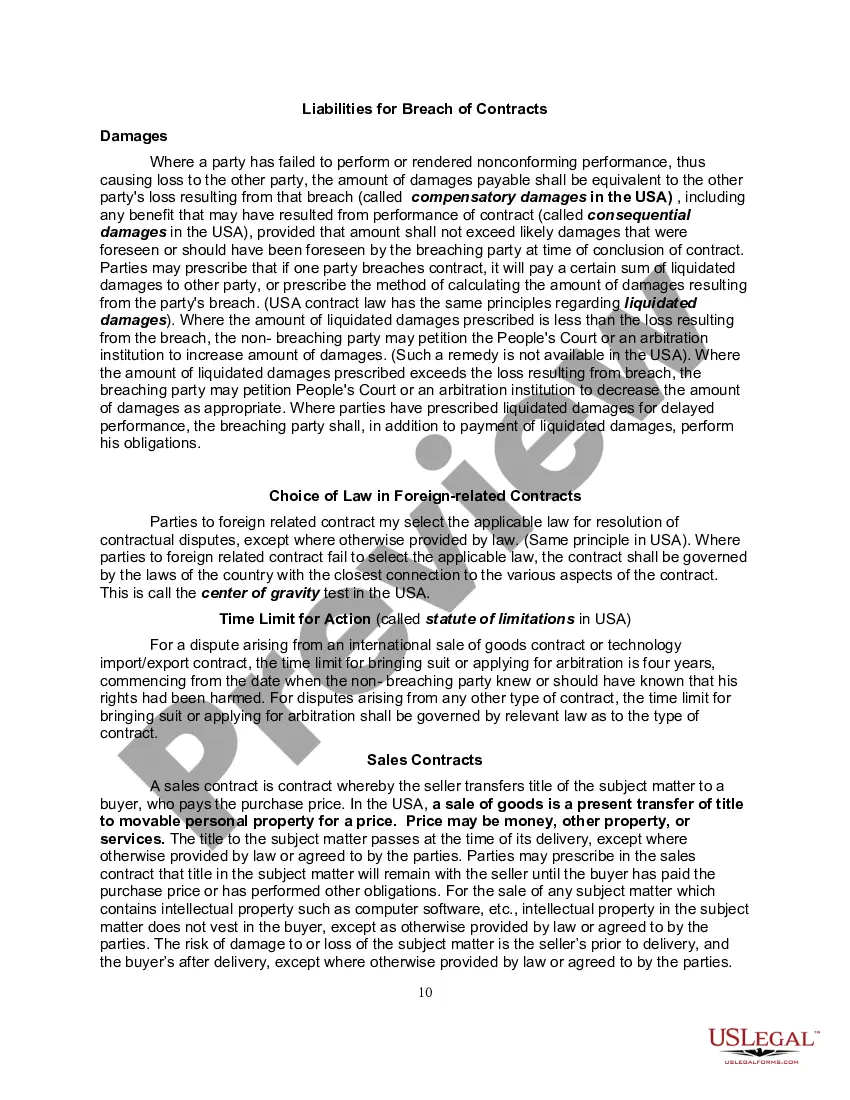


Get your form ready online
Our built-in tools help you complete, sign, share, and store your documents in one place.
Make edits, fill in missing information, and update formatting in US Legal Forms—just like you would in MS Word.
Download a copy, print it, send it by email, or mail it via USPS—whatever works best for your next step.
Sign and collect signatures with our SignNow integration. Send to multiple recipients, set reminders, and more. Go Premium to unlock E-Sign.
If this form requires notarization, complete it online through a secure video call—no need to meet a notary in person or wait for an appointment.
We protect your documents and personal data by following strict security and privacy standards.

Make edits, fill in missing information, and update formatting in US Legal Forms—just like you would in MS Word.

Download a copy, print it, send it by email, or mail it via USPS—whatever works best for your next step.

Sign and collect signatures with our SignNow integration. Send to multiple recipients, set reminders, and more. Go Premium to unlock E-Sign.

If this form requires notarization, complete it online through a secure video call—no need to meet a notary in person or wait for an appointment.

We protect your documents and personal data by following strict security and privacy standards.
Looking for another form?







Form popularity
FAQ
Sir Anthony suggested that the concept of good faith includes the following elements: (1) An obligation on the parties to co-operate in achieving the contractual objects (loyalty to the promise itself). (2) Compliance with honest standards of conduct.
Parties cannot rely on the strict terms of a contract to justify dishonest conduct – the duty of honest performance imposes an obligation to act honestly and in good faith when performing contractual obligations, even if the terms of the contract allow for termination or other actions.
Courts also invoke good faith when officers rely on law that later changes. For example, if officers attach a GPS to a car without a warrant because existing law allows them to, but a later Supreme Court decision holds that warrants are required, evidence found pursuant to the GPS search will probably be admitted.
In contract law, the implied covenant of good faith and fair dealing is a general presumption that the parties to a contract will deal with each other honestly, fairly, and in good faith, so as to not destroy the right of the other party or parties to receive the benefits of the contract.
In contract law, the implied covenant of good faith and fair dealing is a general presumption that the parties to a contract will deal with each other honestly, fairly, and in good faith, so as to not destroy the right of the other party or parties to receive the benefits of the contract.
Implied covenant of good faith and fair dealing (often simplified to good faith) is a rule used by most courts in the United States that requires every party in a contract to implement the agreement as intended, not using means to undercut the purpose of the transaction.
In Texas, the common law duty of good faith and fair dealing applies only in contracts that give rise to a special relationship between the parties. It does not apply to ordinary, arms-length commercial transactions.
At a bare minimum, it imposes a duty not to lie in the performance of the contract itself and an obligation to exercise any contractual discretion reasonably. In the commercial context, reasonableness and good faith are measured in ance with industry practice and custom.
If an obligation to negotiate in good faith is expressly provided for in an agreement and includes objective standards by which the obligation may be measured (such that the obligation may be enforceable), it means, in practical terms, that parties must act reasonably and must refrain from adopting a negotiating ...
