Contract Law For Promise In Fulton
Description












Get your form ready online
Our built-in tools help you complete, sign, share, and store your documents in one place.
Make edits, fill in missing information, and update formatting in US Legal Forms—just like you would in MS Word.
Download a copy, print it, send it by email, or mail it via USPS—whatever works best for your next step.
Sign and collect signatures with our SignNow integration. Send to multiple recipients, set reminders, and more. Go Premium to unlock E-Sign.
If this form requires notarization, complete it online through a secure video call—no need to meet a notary in person or wait for an appointment.
We protect your documents and personal data by following strict security and privacy standards.
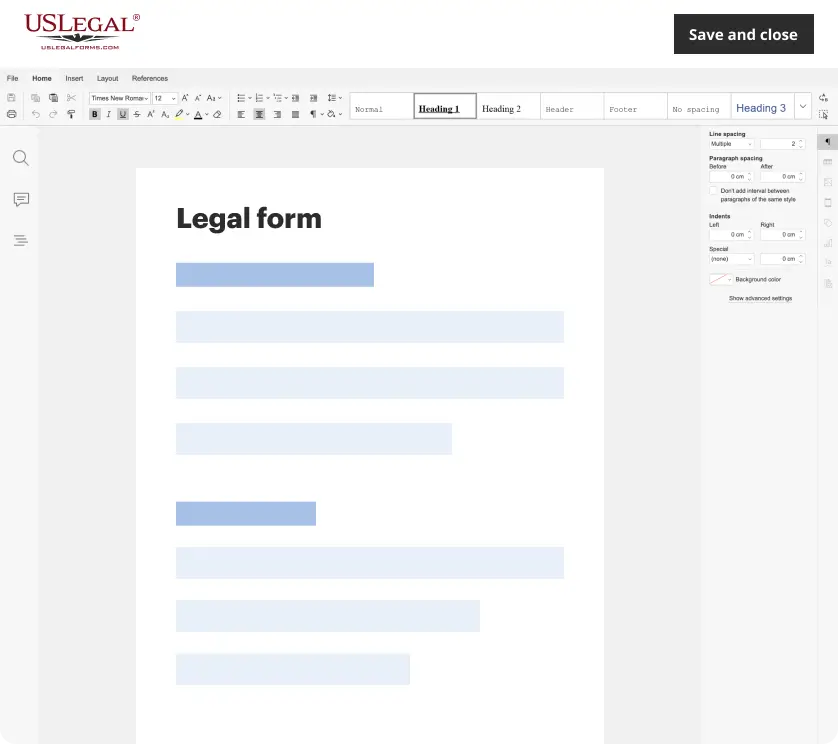
Make edits, fill in missing information, and update formatting in US Legal Forms—just like you would in MS Word.
Download a copy, print it, send it by email, or mail it via USPS—whatever works best for your next step.
Sign and collect signatures with our SignNow integration. Send to multiple recipients, set reminders, and more. Go Premium to unlock E-Sign.

If this form requires notarization, complete it online through a secure video call—no need to meet a notary in person or wait for an appointment.

We protect your documents and personal data by following strict security and privacy standards.
Looking for another form?









Form popularity
FAQ
Contracts are promises that the law will enforce. Contract law is generally governed by state common law, and while general overall contract law is common throughout the country, some specific court interpretations of a particular element of the contract may vary between the states.
Contracts. Chapter 301. Contracts—Formation, Interpretation, and Enforceability. WPI 301.02 Promise Defined. A promise is an expression that justifies the person to whom it is made in reasonably believing that a commitment has been made that something specific will happen or not happen in the future.
An express contract is an exchange of promises where terms by which the parties agree to be bound are declared either orally or in writing, or a combination of both, at the time it is made.
Suppose one party, the offeror, makes a statement or a promise that causes another party to rely on that statement in such a way that they are financially injured by that reliance. In that case, a court will enforce the statement or promise as if it were a valid contract.
Grody is the promisor because he promised to send Mongo to dance at the party. Misty is the promisee because she is on the benefiting end of the promise. That is the simplified explanation of how two parties become obligated to one another.
A promise is a claim of intent to act in a certain manner or to refrain from acting in a certain manner. A promise is made by a promisor to the promisee. The one who claims intent is the promisor, and the one to whom the claim of intent is made is the promisee.
In a private promise, the promisor undertakes to give the promisee's relevant interests weight equal to or greater than her own. Contract, by contrast, turns on the separateness of these interests.
Acceptance is judged objectively, but can either be expressly stated or implied by the offeree's conduct. To form a binding contract, acceptance should be relayed in a manner authorized, requested, or at least reasonably expected by the offeror.
Someone must make a promise. Someone else must genuinely and justifiably rely on the promise. The actions that are taken in reliance on the promise must be reasonably foreseeable to the person who makes the promise. Injustice will occur if the promise isn't enforced.
A representation or assurance is made to the claimant (a promise), on the basis of which the claimant expects that she will enjoy some right or benefit over a property. For example, it could be that the owner of the land (let's call him “Landowner”) promises to give you the property on his death through his will.