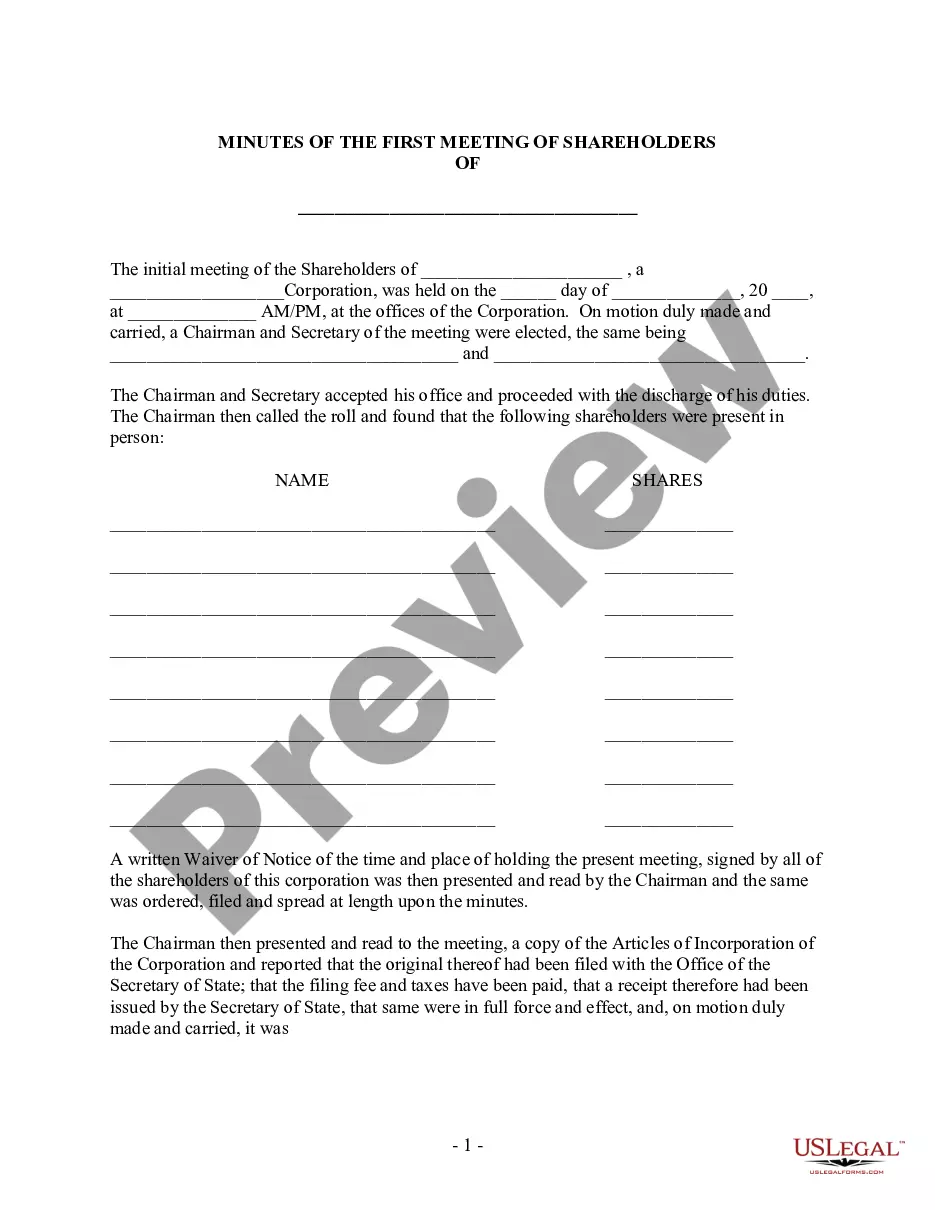
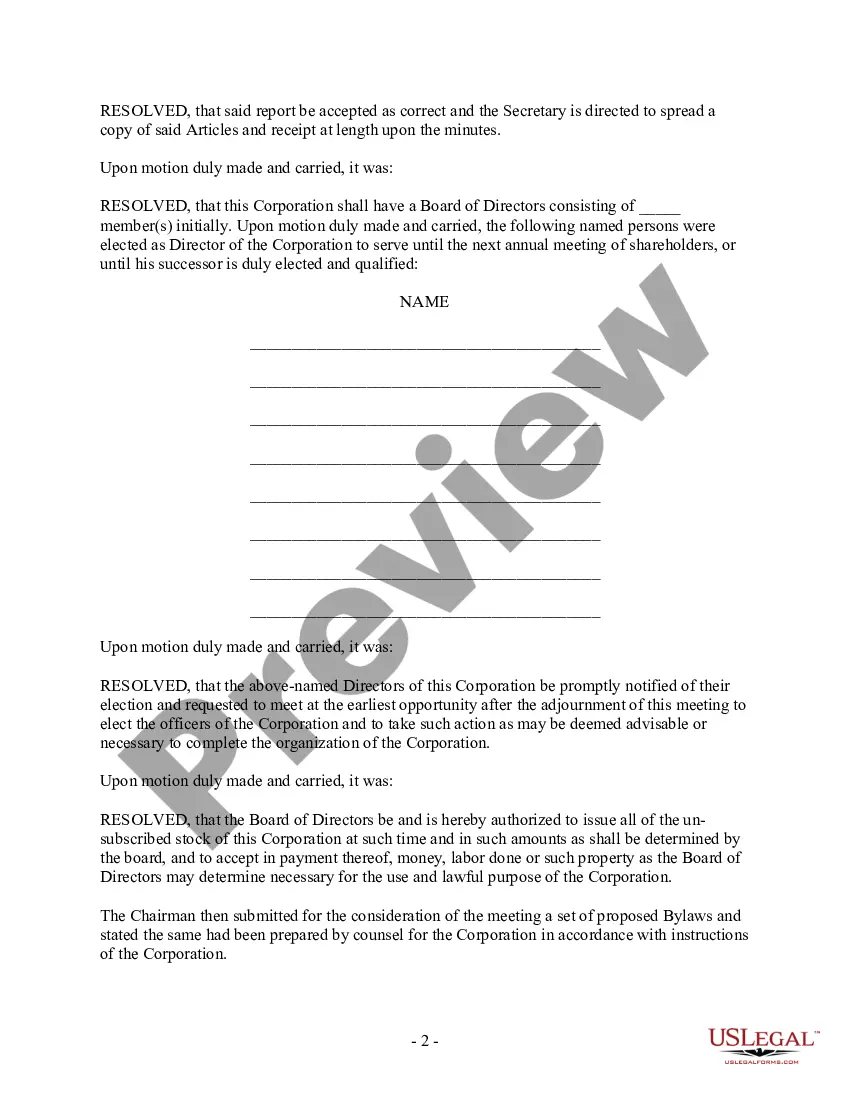
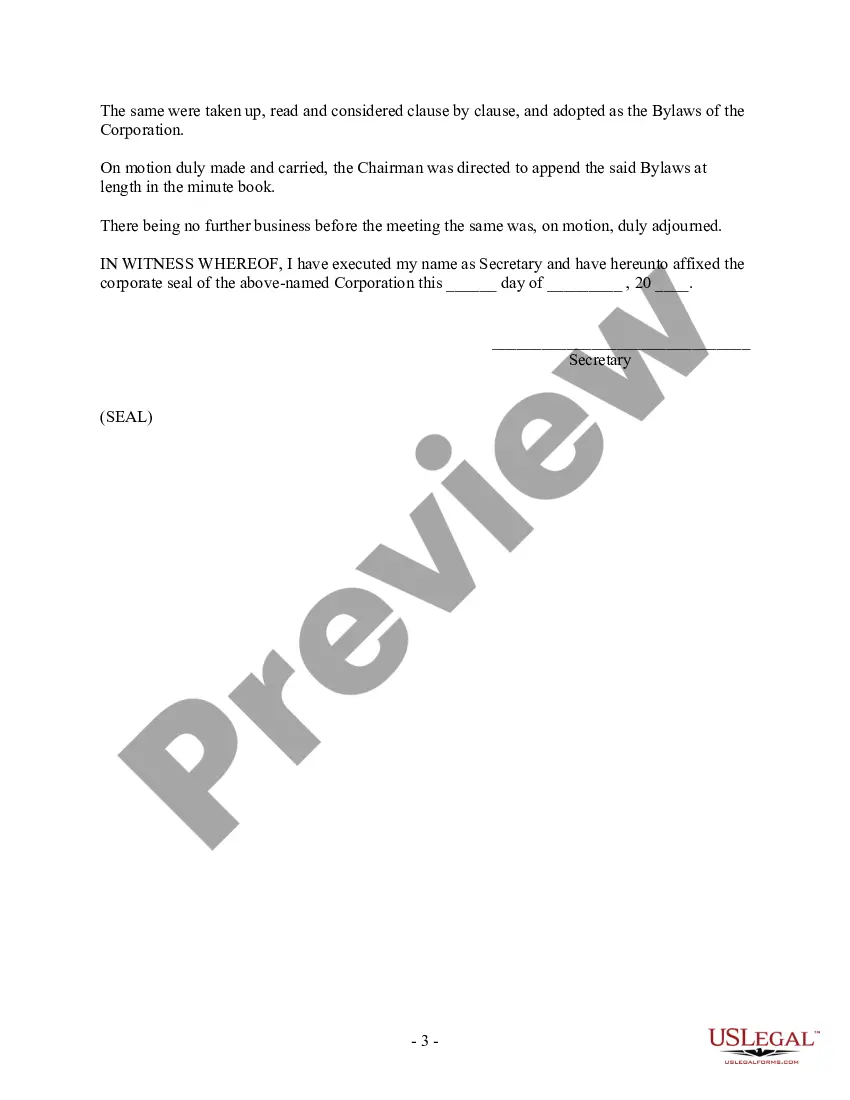
Meeting Minutes For Business Example In Utah
Description



Get your form ready online
Our built-in tools help you complete, sign, share, and store your documents in one place.
Make edits, fill in missing information, and update formatting in US Legal Forms—just like you would in MS Word.
Download a copy, print it, send it by email, or mail it via USPS—whatever works best for your next step.
Sign and collect signatures with our SignNow integration. Send to multiple recipients, set reminders, and more. Go Premium to unlock E-Sign.
If this form requires notarization, complete it online through a secure video call—no need to meet a notary in person or wait for an appointment.
We protect your documents and personal data by following strict security and privacy standards.

Make edits, fill in missing information, and update formatting in US Legal Forms—just like you would in MS Word.

Download a copy, print it, send it by email, or mail it via USPS—whatever works best for your next step.

Sign and collect signatures with our SignNow integration. Send to multiple recipients, set reminders, and more. Go Premium to unlock E-Sign.

If this form requires notarization, complete it online through a secure video call—no need to meet a notary in person or wait for an appointment.

We protect your documents and personal data by following strict security and privacy standards.
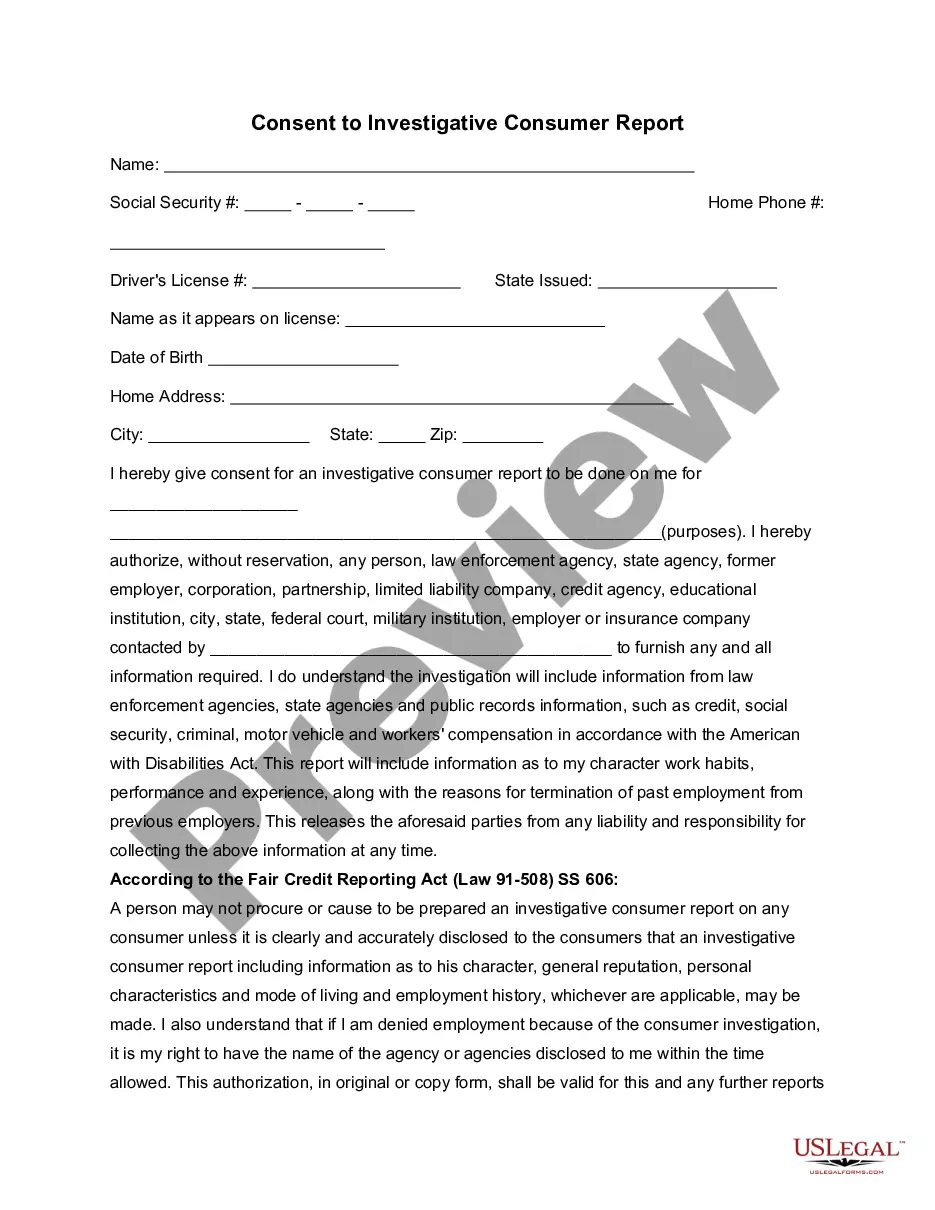
Looking for another form?








Form popularity
FAQ
What Should Be Included in Meeting Minutes? Date and time of the meeting. Names of the meeting participants and those unable to attend (e.g., “regrets”) Acceptance or corrections/amendments to previous meeting minutes. Decisions made about each agenda item, for example: Actions taken or agreed to be taken. Next steps.
The format of the minutes should closely follow the format of the agenda. It's easier to record the minutes if the meeting follows the agenda. The minutes are generally taken down at the meeting in a rough format then later written or typed properly and fully, unless the meeting has been recorded.
What to include Meeting date, time and location. Names of the committee or other group holding the meeting, the Chair and Secretary. List of those present, including guests in attendance, and any recorded regrets/absences. A record of formal motions and outcomes.
Meeting minutes are a written record of meeting details, such as discussion topics, decisions, and next steps. They include key details, like the time and attendees, so employees can quickly gain context on each session.
The style and content of meeting minutes will vary depending on the organization and how it's structured. Regardless, you should always include the basics, like date, time, and participants. But many organizations will also benefit from having other, optional items like supplementary documents and action items.
What Should Be Included in Meeting Minutes? Date and time of the meeting. Names of the meeting participants and those unable to attend (e.g., “regrets”) Acceptance or corrections/amendments to previous meeting minutes. Decisions made about each agenda item, for example: Actions taken or agreed to be taken. Next steps.
9 proven tips for taking better meeting notes Choose a note-taking method that works you. Ditch the laptop—use pen and paper instead. Don't transcribe everything verbatim. Use a meeting notes template. Assign a specific note-taker for the meeting. Transcribe conversations with recording software.
