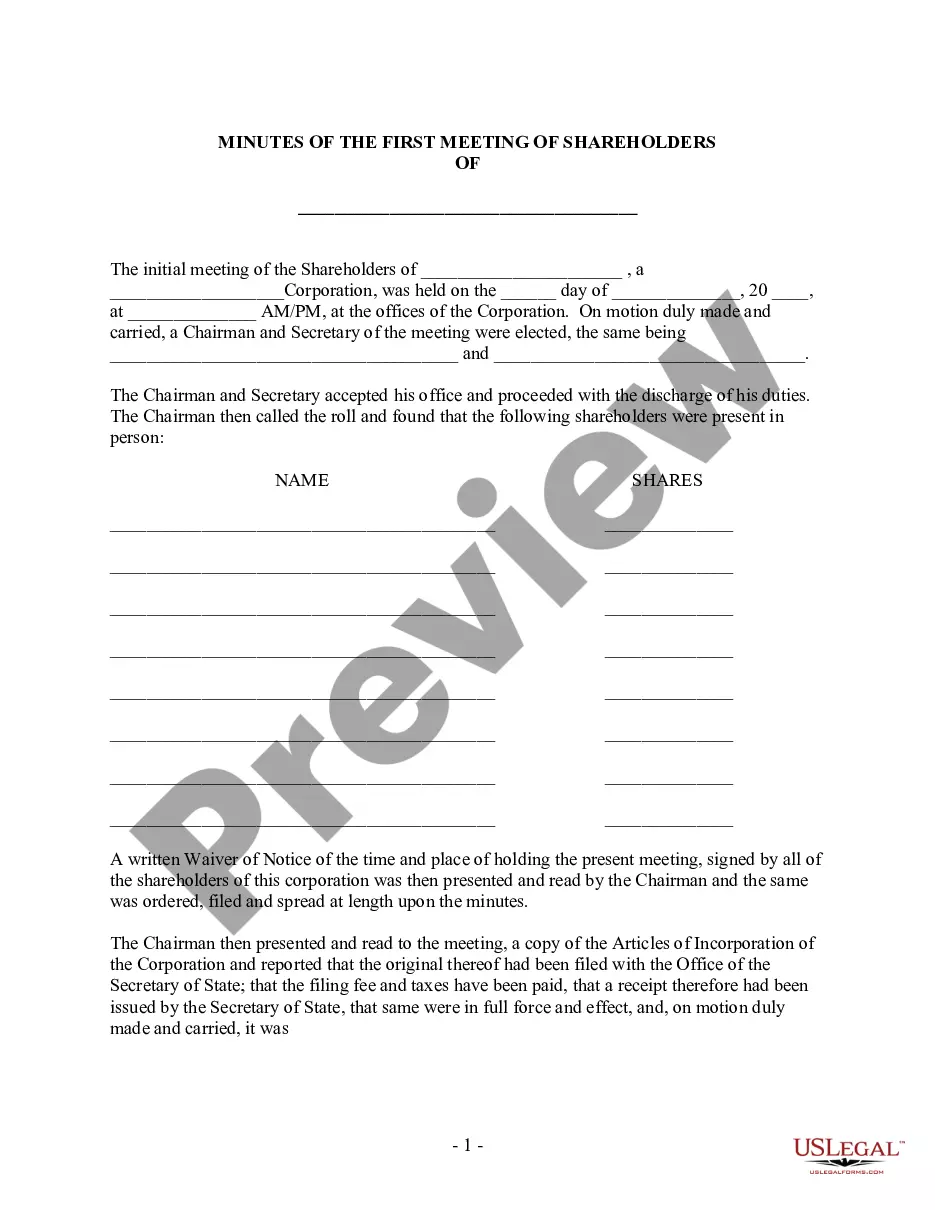
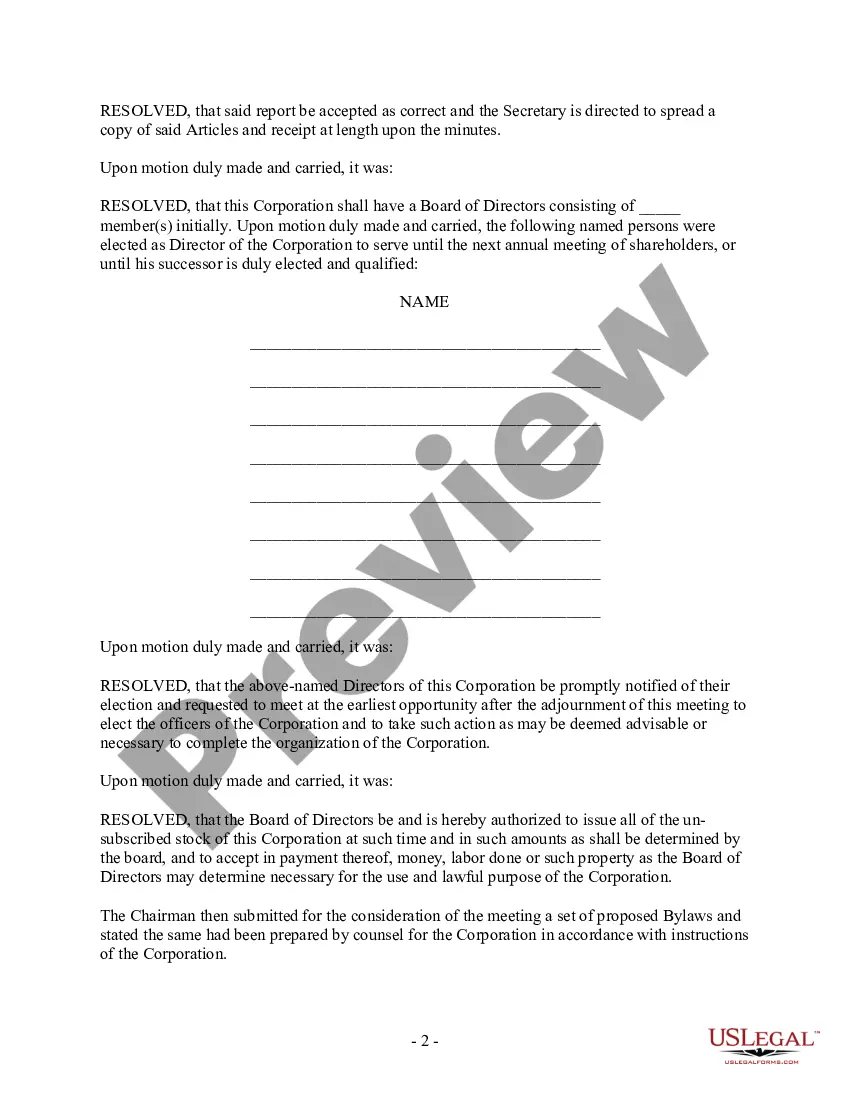
Sample Meeting Minutes For Corporations In Oakland
Description



Get your form ready online
Our built-in tools help you complete, sign, share, and store your documents in one place.
Make edits, fill in missing information, and update formatting in US Legal Forms—just like you would in MS Word.
Download a copy, print it, send it by email, or mail it via USPS—whatever works best for your next step.
Sign and collect signatures with our SignNow integration. Send to multiple recipients, set reminders, and more. Go Premium to unlock E-Sign.
If this form requires notarization, complete it online through a secure video call—no need to meet a notary in person or wait for an appointment.
We protect your documents and personal data by following strict security and privacy standards.

Make edits, fill in missing information, and update formatting in US Legal Forms—just like you would in MS Word.

Download a copy, print it, send it by email, or mail it via USPS—whatever works best for your next step.

Sign and collect signatures with our SignNow integration. Send to multiple recipients, set reminders, and more. Go Premium to unlock E-Sign.

If this form requires notarization, complete it online through a secure video call—no need to meet a notary in person or wait for an appointment.

We protect your documents and personal data by following strict security and privacy standards.
Looking for another form?




Form popularity
FAQ
This document needs to be signed by: or another person who is authorized to take minutes and/or record official corporate action. There is no requirement that the signature be witnessed or notarized.
The minutes must include the name of the attendees at the meeting, the time and day of the meeting, as well as the focus and decisions made at the meeting. The minutes must record what happened at the meeting, even if nothing of importance occurred.
Board minutes often contain information that is subject to the attorney-client privilege and that directors may prefer to keep confidential. However, most jurisdictions allow stockholders to inspect corporate books and records, including board minutes.
Corporate meeting minutes typically include: The meeting's date, time and location. A list of attendees and absentees, including any present board members or officers. Agenda items. Summaries of all discussion points. Details of all activities completed or agreed upon. Results of any votes or motions.
Are board meeting minutes confidential? Yes. The board should assume the minutes are confidential and, in most cases, they will remain so.
Minutes, papers, agendas should be public and meetings should have a portion of the session for confidential matters e.g. financial, HR, crisis management etc., to be discussed in private, either before or after the open session. Confidential matters and papers are still confidential.
Understand who can access minutes: In many cases, meeting minutes are considered public records, which means others can view them. Make sure you understand who can view the meeting notes, and keep that audience in mind when deciding what information to include.
There are three standard styles of minutes: action, discussion, and verbatim. Each style has a specific use. Action minutes record the decisions reached and the actions to be taken, though not recording the discussion that went into making the decisions. This is the most common form of minutes used.
Meeting Minutes Template: Organization Name. Meeting Minutes. Date: Opening: The meeting was called to order at Time by Name at Location. Present: List of all present members Absent: List of any members who were not present Approval of Agenda: The agenda was reviewed and approved. Approval of Minutes:
The minutes must include the name of the attendees at the meeting, the time and day of the meeting, as well as the focus and decisions made at the meeting. The minutes must record what happened at the meeting, even if nothing of importance occurred.
