Requesting Discovery Form With Attorney In Sacramento
Description
Get your form ready online
Our built-in tools help you complete, sign, share, and store your documents in one place.
Make edits, fill in missing information, and update formatting in US Legal Forms—just like you would in MS Word.
Download a copy, print it, send it by email, or mail it via USPS—whatever works best for your next step.
Sign and collect signatures with our SignNow integration. Send to multiple recipients, set reminders, and more. Go Premium to unlock E-Sign.
If this form requires notarization, complete it online through a secure video call—no need to meet a notary in person or wait for an appointment.
We protect your documents and personal data by following strict security and privacy standards.

Make edits, fill in missing information, and update formatting in US Legal Forms—just like you would in MS Word.

Download a copy, print it, send it by email, or mail it via USPS—whatever works best for your next step.

Sign and collect signatures with our SignNow integration. Send to multiple recipients, set reminders, and more. Go Premium to unlock E-Sign.

If this form requires notarization, complete it online through a secure video call—no need to meet a notary in person or wait for an appointment.

We protect your documents and personal data by following strict security and privacy standards.
Looking for another form?









Form popularity
FAQ
In certain cases, you might be able to write a letter to the other side and request the documents that you need. However, in more formal cases, you will likely have to draft more formal discovery demands. There are usually forms available for this in local law libraries, from the court clerk's office, or online.
Disclosure is accomplished through a methodical process called "discovery." Discovery takes three basic forms: written discovery, document production, and depositions.
The length of the discovery process depends on the facts of the case and the amount of evidence that has to be reviewed. Since both sides are required to submit their evidence to their opponents for review, it could take weeks or months for the lawyers on both sides to go over all of the documentation.
You can use Proof of Service by First Class Mail (form POS-030). It helps if you fill in the top part of the form with the case and court information. Your server can then fill in the information about how, when, and where they served the papers. Your server must then sign the form.
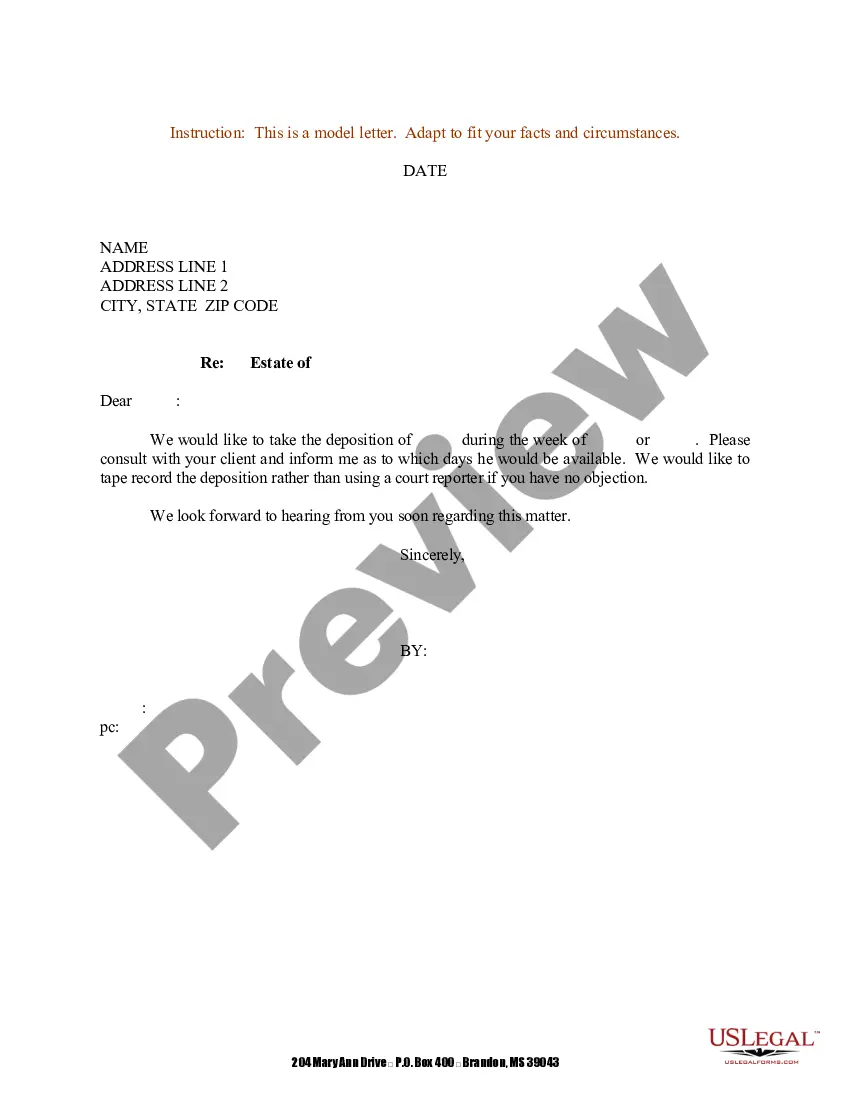
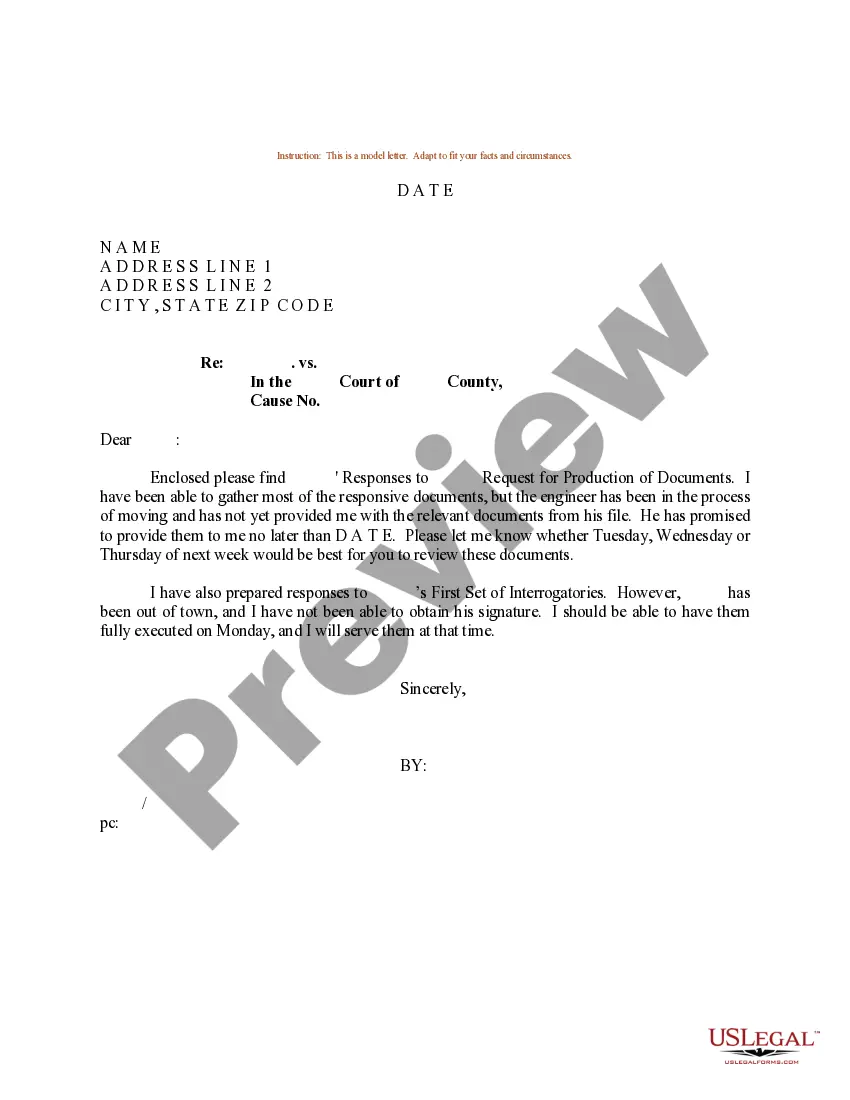
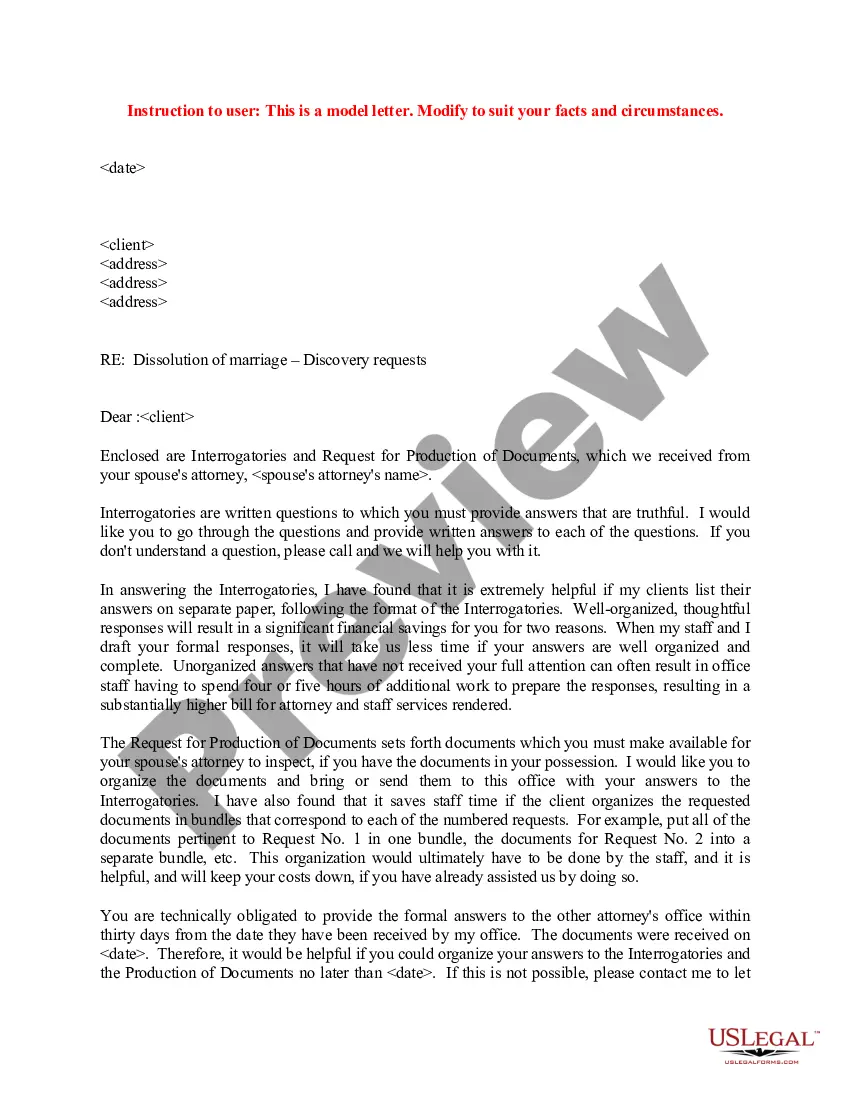
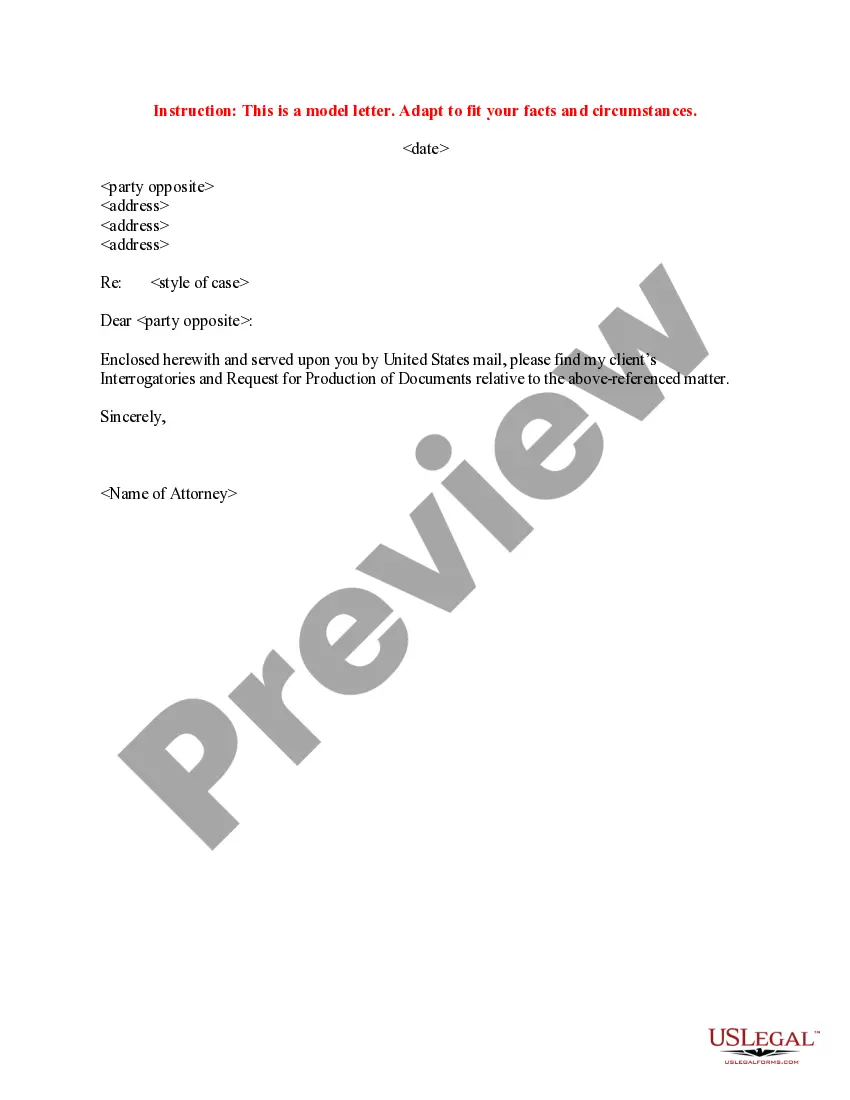
A discovery demand is a written request for specific documents that the other party has in his/her possession. In certain cases, you might be able to write a letter to the other side and request the documents that you need. However, in more formal cases, you will likely have to draft more formal discovery demands.
How to Request Production of Documents and Things Download the template for Request for Production. Fill out basic information at the top. Choose a location for the other side to bring the documents. Add your own definitions (if useful) ... Write your requests for production. Sign and date the document. Make copies.
What to include in your document request email or letter Introduce yourself. State who you are using full name, position and company name. Purpose for written request. Then, explain why you are writing. Call to action. Benefit to the client. Closing. Contact Information.
Rule 34(a): Issuing requests Rule 34(a) enables a party to produce and permit the requesting party or its representative to inspect, copy, sample, or test any designated documents or ESI—including drawings, writings, graphs, charts, sound recordings, photographs, images, and other data or data compilations.
You or your lawyer may file a motion for discovery to request that the state produce evidence it plans to introduce at trial. Your lawyer needs to know the type of evidence the state will use against you at trial so that they can properly prepare for your case.
In certain cases, you might be able to write a letter to the other side and request the documents that you need. However, in more formal cases, you will likely have to draft more formal discovery demands. There are usually forms available for this in local law libraries, from the court clerk's office, or online.

