Requesting Discovery Form For Court
Description
Get your form ready online
Our built-in tools help you complete, sign, share, and store your documents in one place.
Make edits, fill in missing information, and update formatting in US Legal Forms—just like you would in MS Word.
Download a copy, print it, send it by email, or mail it via USPS—whatever works best for your next step.
Sign and collect signatures with our SignNow integration. Send to multiple recipients, set reminders, and more. Go Premium to unlock E-Sign.
If this form requires notarization, complete it online through a secure video call—no need to meet a notary in person or wait for an appointment.
We protect your documents and personal data by following strict security and privacy standards.

Make edits, fill in missing information, and update formatting in US Legal Forms—just like you would in MS Word.

Download a copy, print it, send it by email, or mail it via USPS—whatever works best for your next step.

Sign and collect signatures with our SignNow integration. Send to multiple recipients, set reminders, and more. Go Premium to unlock E-Sign.

If this form requires notarization, complete it online through a secure video call—no need to meet a notary in person or wait for an appointment.

We protect your documents and personal data by following strict security and privacy standards.
Looking for another form?
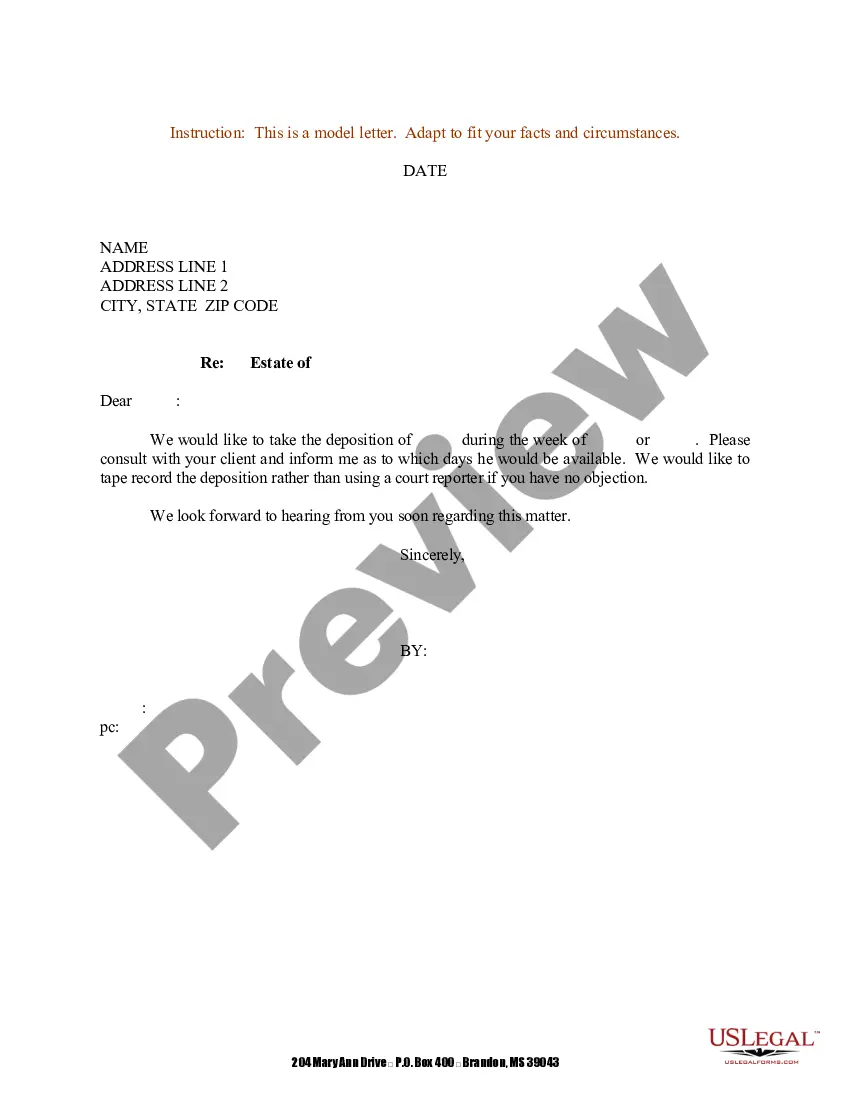
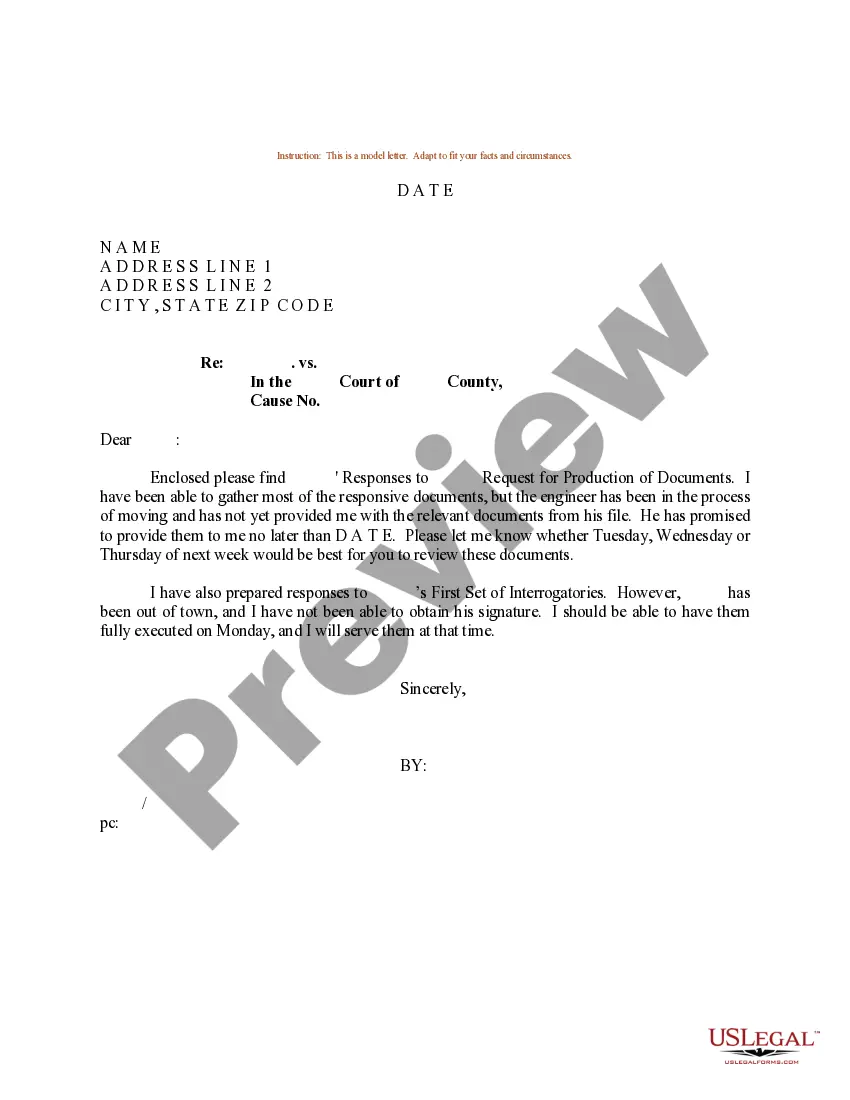
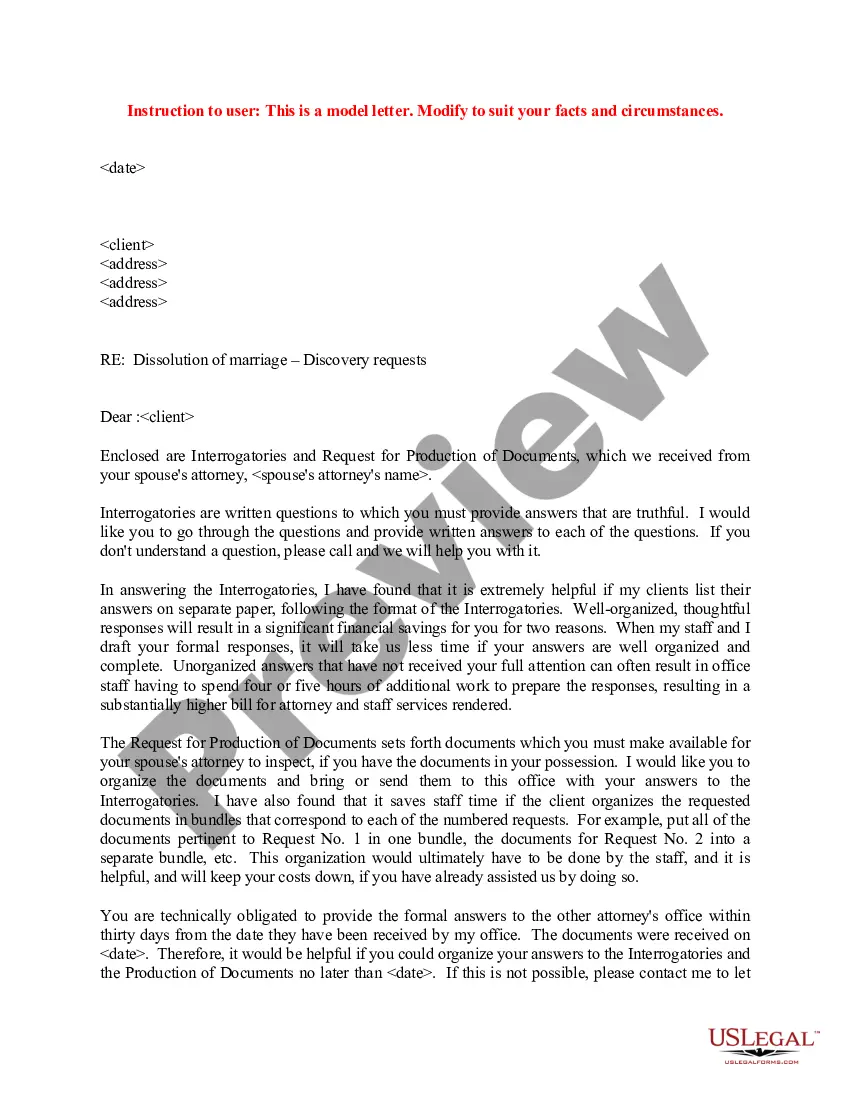
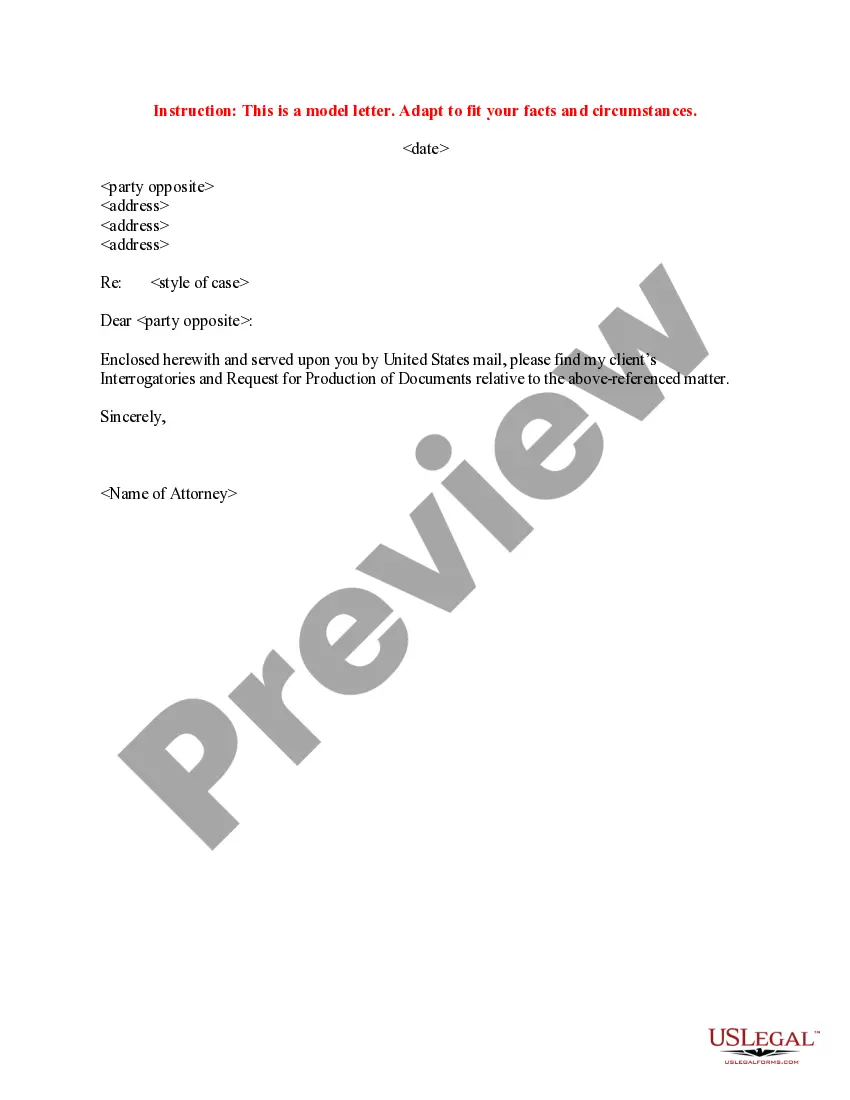
How to fill out Sample Letter Requesting Answers To Discovery Material?
It’s well-known that you cannot transform into a legal expert instantly, nor can you understand how to swiftly generate a Requesting Discovery Form For Court without possessing a specialized education.
Drafting legal documents is an extensive process that demands specific knowledge and skill sets. So why not entrust the development of the Requesting Discovery Form For Court to the professionals.
With US Legal Forms, which boasts one of the largest legal document libraries, you can discover anything from court forms to templates for internal business correspondence.
If you require another form, begin your search again.
Create a free account and choose a subscription plan to purchase the form. Select Buy now. Once the purchase is finalized, you can access the Requesting Discovery Form For Court, fill it out, print it, and send it via postal service to the relevant parties or organizations. You can retrieve your documents from the My documents tab at any time. If you are a current client, you can simply Log In and locate and download the template from the same tab. Regardless of the reason for your documents—whether financial, legal, or personal—our platform has you covered. Experience US Legal Forms today!
- We recognize the importance of compliance and observance of federal and state laws and guidelines.
- That’s why, on our website, all templates are tailored for specific locations and are current.
- Here’s how you can initiate your journey with our platform and obtain the document you require in just a few minutes.
- Locate the form you need using the search bar at the top of the page.
- Preview it (if this option is available) and review the accompanying description to determine if the Requesting Discovery Form For Court meets your requirements.
Form popularity
FAQ
You must answer the questions or file objections to certain questions or the entire set of interrogatories. For example, you might not want to answer a question because it contains incorrect information like asking you to state who treated your broken leg, but you did not break your leg.
You use discovery to find out things like: What the other side plans to say about an issue in your case. What facts or witnesses support their side. What facts or witnesses support your side. What information or documents could be used as evidence.
Read each question (interrogatory) very carefully. Answer only the question that is asked, and avoid the temptation to over-explain your answer. If the question contains several parts, you may break your answer into parts as well. It is also possible that you might object to the question.
Discovery may be carried out by directly asking a person questions (oral depositions), by sending a person written questions (interrogatories and depositions on written questions), and by requesting that the person provide documents (motions for production, subpoenas duces tecum).
Write out each fact you wish the other party to admit is true. When writing these facts, be as clear and concise as possible. Each request must be for a single fact; do not include multiple facts, compound questions, or subparts.
