Requesting Discovery Form With Decimals In Florida
Description
Get your form ready online
Our built-in tools help you complete, sign, share, and store your documents in one place.
Make edits, fill in missing information, and update formatting in US Legal Forms—just like you would in MS Word.
Download a copy, print it, send it by email, or mail it via USPS—whatever works best for your next step.
Sign and collect signatures with our SignNow integration. Send to multiple recipients, set reminders, and more. Go Premium to unlock E-Sign.
If this form requires notarization, complete it online through a secure video call—no need to meet a notary in person or wait for an appointment.
We protect your documents and personal data by following strict security and privacy standards.

Make edits, fill in missing information, and update formatting in US Legal Forms—just like you would in MS Word.

Download a copy, print it, send it by email, or mail it via USPS—whatever works best for your next step.

Sign and collect signatures with our SignNow integration. Send to multiple recipients, set reminders, and more. Go Premium to unlock E-Sign.

If this form requires notarization, complete it online through a secure video call—no need to meet a notary in person or wait for an appointment.

We protect your documents and personal data by following strict security and privacy standards.
Looking for another form?

Form popularity
FAQ
No Early Discovery. Under the new rules, you can't conduct additional discovery until you've served your initial disclosures. That means no depositions, interrogatories, or document requests will fly until you've handed over your required info. Waiting could stall your defense strategy.
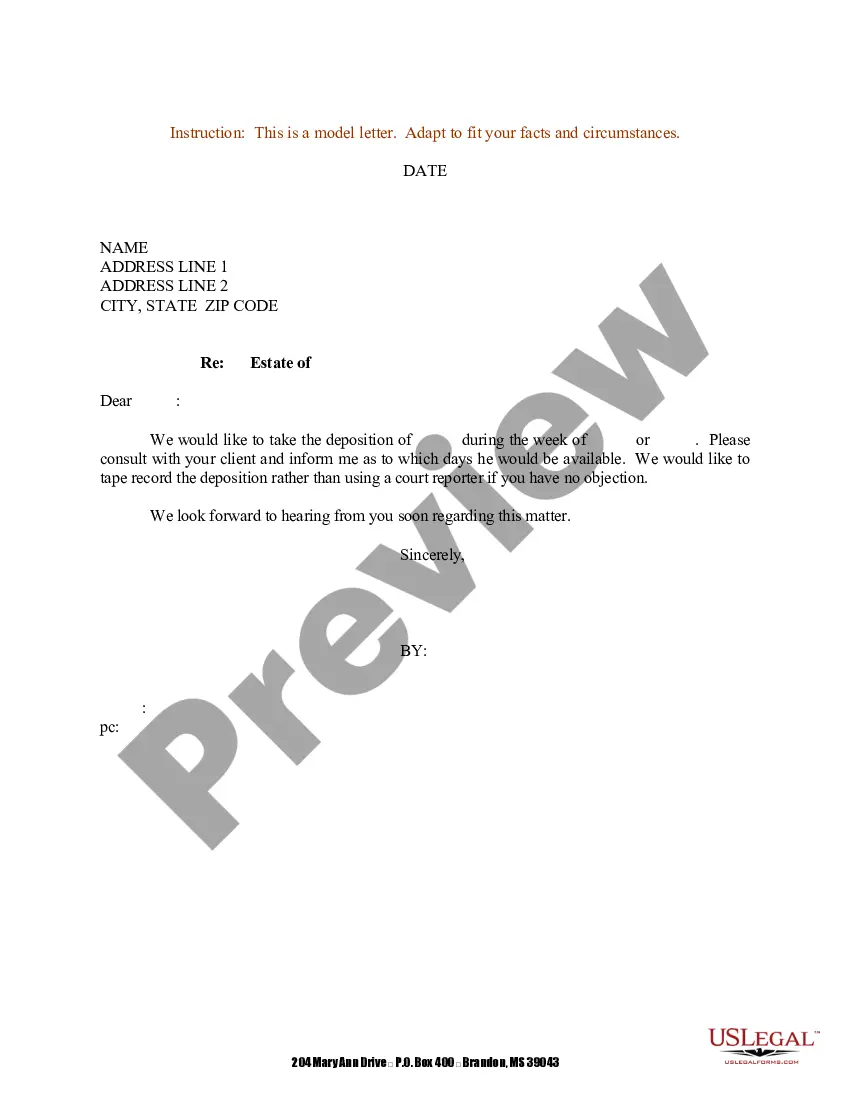
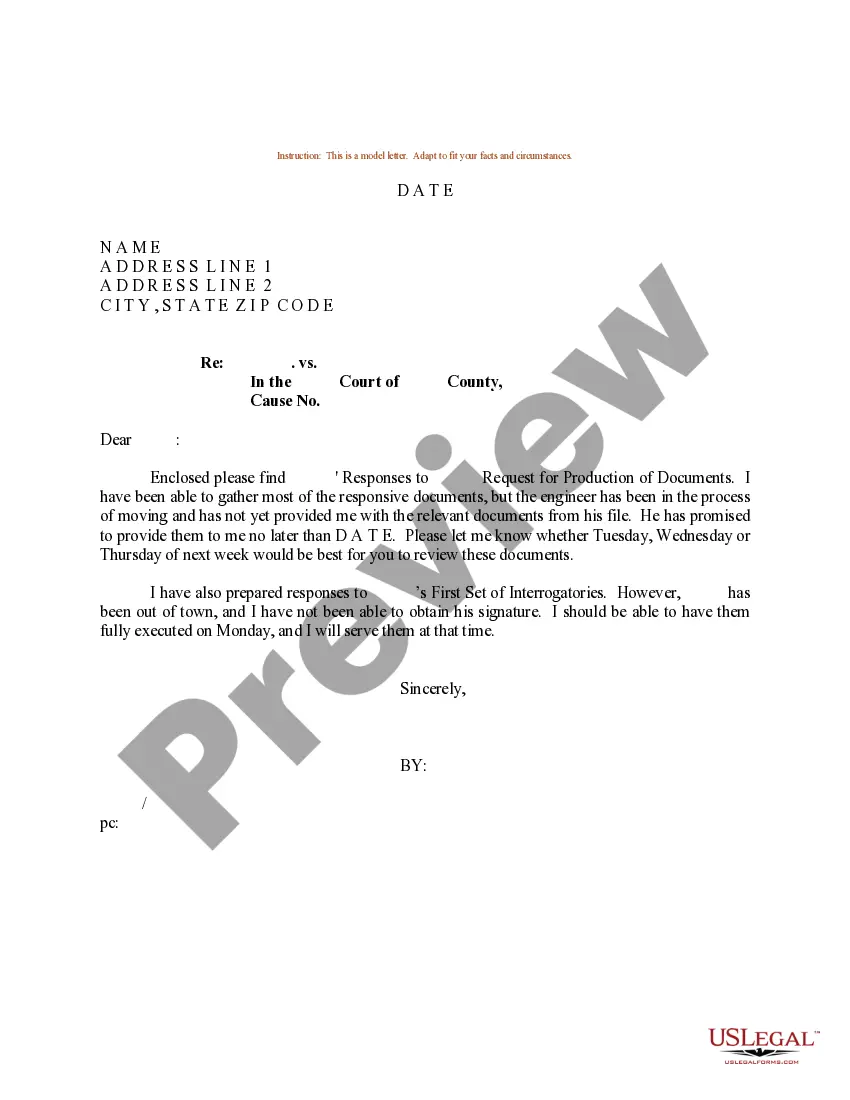
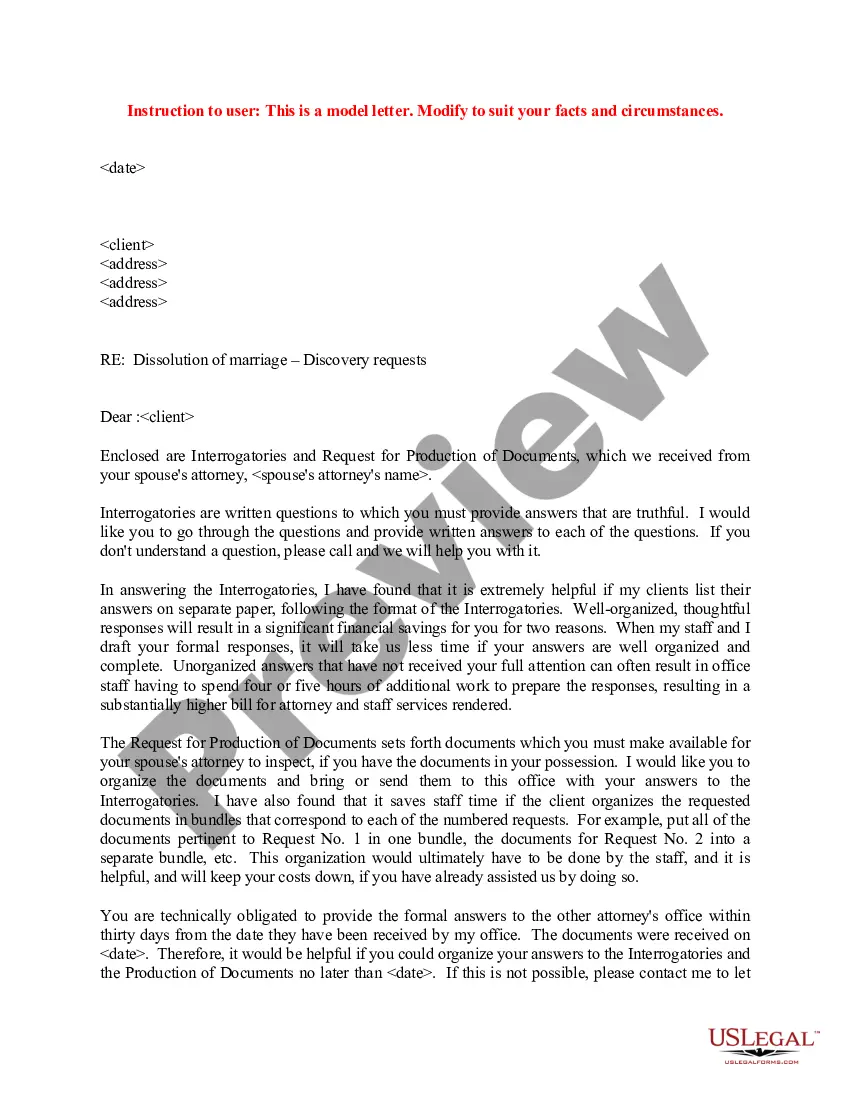
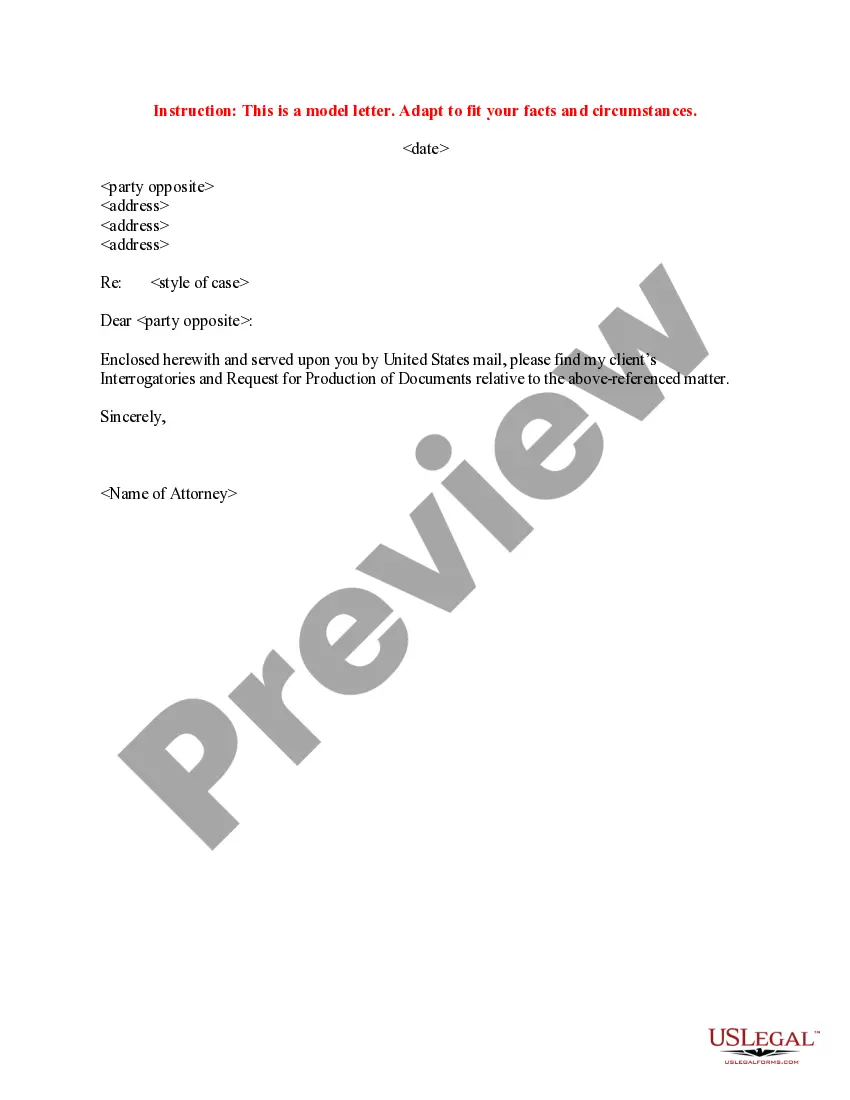
Any party may request any other party (1) to produce and permit the party making the request, or someone acting in the requesting party's behalf, to inspect and copy any designated documents, including electronically stored information, writings, drawings, graphs, charts, photographs, phono-records, and other data ...
Florida Rules of Civil Procedure § 1.350 lays out the scope of documents which may be requested and must be produced during the discovery period of litigation. How long should documents be maintained? There is no specific law or statute that requires how long general records must be maintained.
Unless otherwise limited by court order, the scope of discovery is as follows: Parties may obtain discovery regarding any nonprivileged matter that is relevant to any party's claim or defense and proportional to the needs of the case, considering the importance of the issues at stake in the action, the amount in ...
In Florida, the discovery phase typically begins after the defendant files an answer to the plaintiff's complaint. It can last several months to a year or more.
Proper Discovery Objections To Requests For Production Ambiguous (only if the question is really unintelligible) Cembrook v Superior Court (56 C2d 423, 430) Improper form CCP § 2031.030 Information equally available CCP § 2031.230 Insufficient particularity CCP § 2031.030(c)(1)
No Early Discovery. Under the new rules, you can't conduct additional discovery until you've served your initial disclosures. That means no depositions, interrogatories, or document requests will fly until you've handed over your required info. Waiting could stall your defense strategy.
Unless so stipulated by the parties, no deposition shall be taken before a person who is a relative, employee, attorney, or counsel of any of the parties, is a relative or employee of any of the parties' attorney or counsel, or is financially interested in the action.
Rule 1.370 Requests for Admission can be a powerful tool to narrow the disputed facts and issues in litigation. A request for admission may be utilized to conclusively establish the truth of any fact, opinion of fact, or application of law to fact.
Florida's statute of limitations for personal injury cases is generally two years from the date of the injury. However, the discovery rule allows for an exception: the statute of limitations may begin on the date you first discovered (or reasonably should have discovered) the injury.

