Resignation Letter With Acknowledgement In Virginia
Description

Get your form ready online
Our built-in tools help you complete, sign, share, and store your documents in one place.
Make edits, fill in missing information, and update formatting in US Legal Forms—just like you would in MS Word.
Download a copy, print it, send it by email, or mail it via USPS—whatever works best for your next step.
Sign and collect signatures with our SignNow integration. Send to multiple recipients, set reminders, and more. Go Premium to unlock E-Sign.
If this form requires notarization, complete it online through a secure video call—no need to meet a notary in person or wait for an appointment.
We protect your documents and personal data by following strict security and privacy standards.

Make edits, fill in missing information, and update formatting in US Legal Forms—just like you would in MS Word.

Download a copy, print it, send it by email, or mail it via USPS—whatever works best for your next step.

Sign and collect signatures with our SignNow integration. Send to multiple recipients, set reminders, and more. Go Premium to unlock E-Sign.

If this form requires notarization, complete it online through a secure video call—no need to meet a notary in person or wait for an appointment.

We protect your documents and personal data by following strict security and privacy standards.
Looking for another form?







Form popularity
FAQ
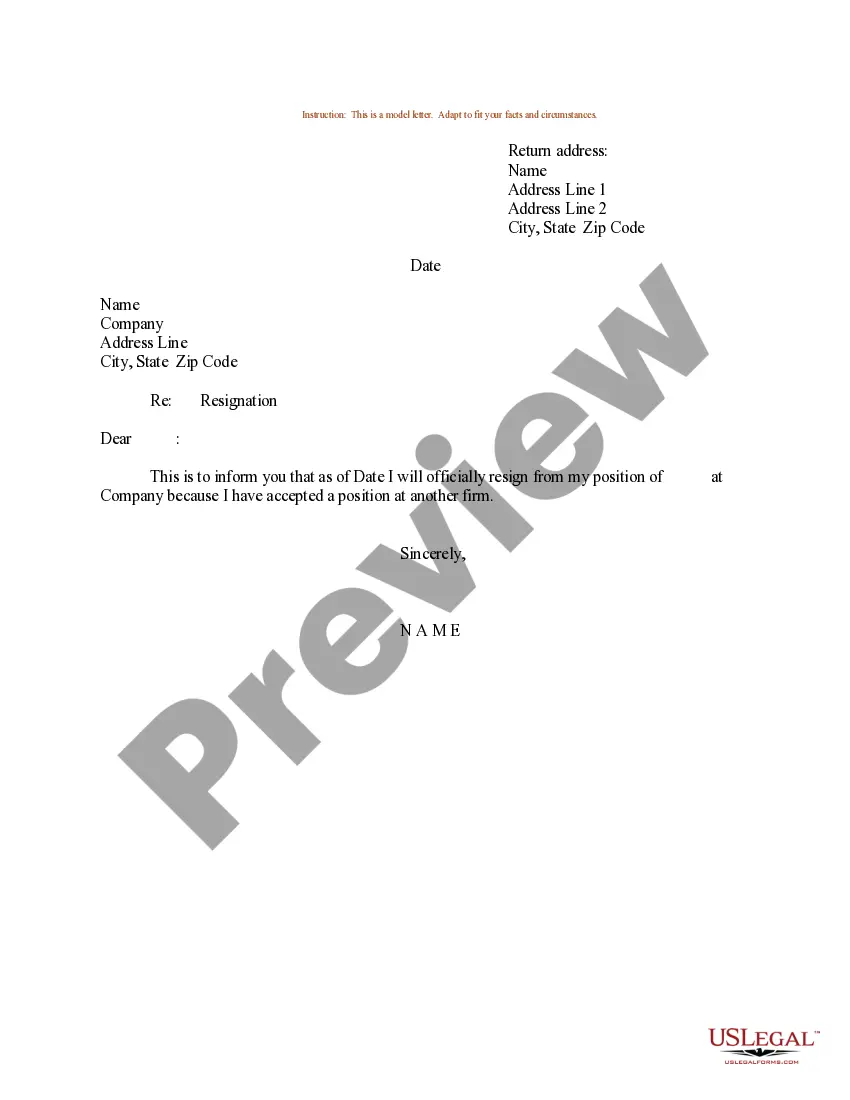
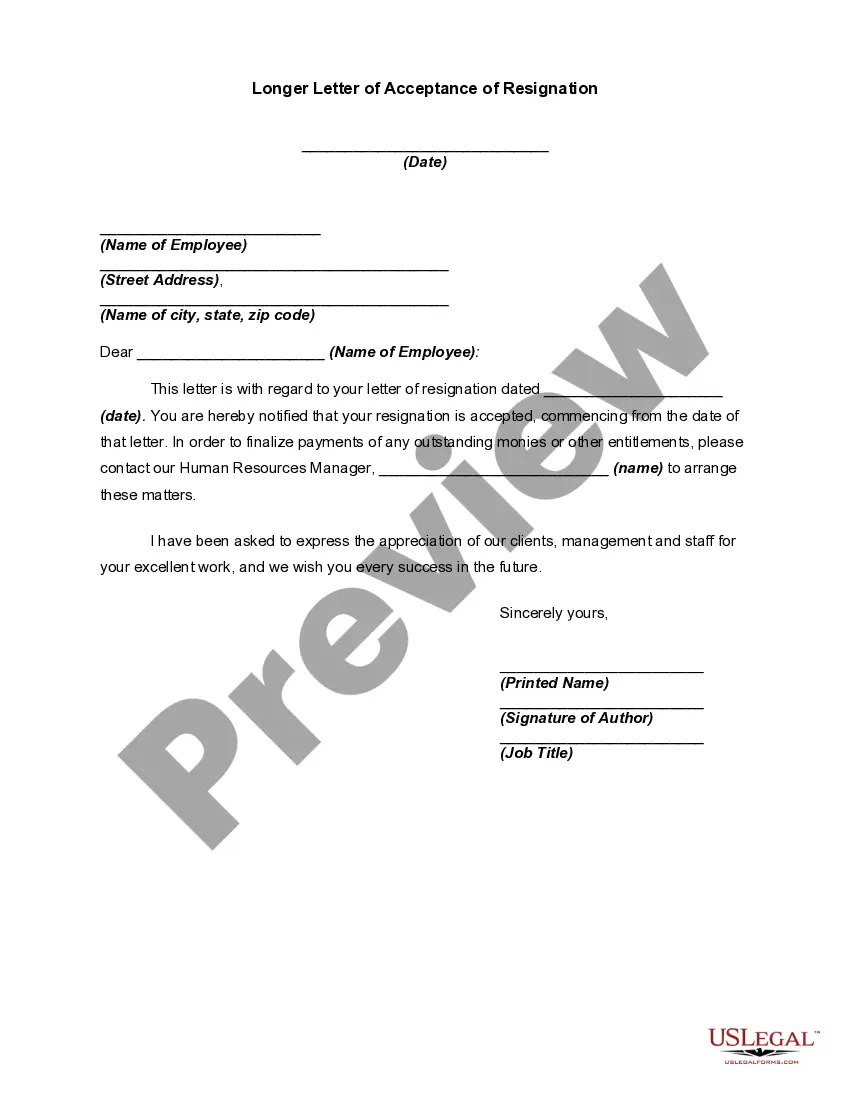
_________ Dear Mr./Ms. Last Name: The purpose of this letter is to acknowledge receipt and acceptance of the attached written voluntary resignation of date which you hand-delivered / mailed / emailed to name, title, at time. Based upon this letter, your resignation is effective date at time.
Dear Employee Name, I am writing to accept your resignation from your position at Company Name, effective on date per your request. Thank you for your contributions to Company Name. I am sure you will continue to work hard in your remaining time with us.
You do not have to respond formally when someone tells you they're resigning. But it's good practice to respond in writing. Your response should include: that you've received the employee's resignation.
It is a common misconception that an employee's notice of resignation is not valid unless it has been "accepted" by the employer. The position at common law is that a notice, once validly given, is effective and can neither be "refused" by the employer or "withdrawn" by the employee, without the other's agreement.
Subject: Resignation Accepted. Dear Employee Name, We want to formally acknowledge and accept your decision to resign from your position as Position at Company Name. While we are saddened by your decision to leave, we understand and fully support your decision to prioritize family responsibilities.
It is a common misconception that an employee's notice of resignation is not valid unless it has been "accepted" by the employer. The position at common law is that a notice, once validly given, is effective and can neither be "refused" by the employer or "withdrawn" by the employee, without the other's agreement.
If the employer has not formally (in writing) accepted the resignation, the employee could argue that the resignation was never accepted, or that the resignation never happened. The employee could even argue that the resignation was actually a termination and then file for unemployment.
Acceptance of a resignation tendered by an employee is necessary to make the resignation effective.
It confirms that the employer has received and accepted the employee's decision to leave the company, creating a clear record of the resignation and helping to avoid any misunderstandings down the line.

