Agreement Arbitration Sample Withdrawal In Santa Clara
Description

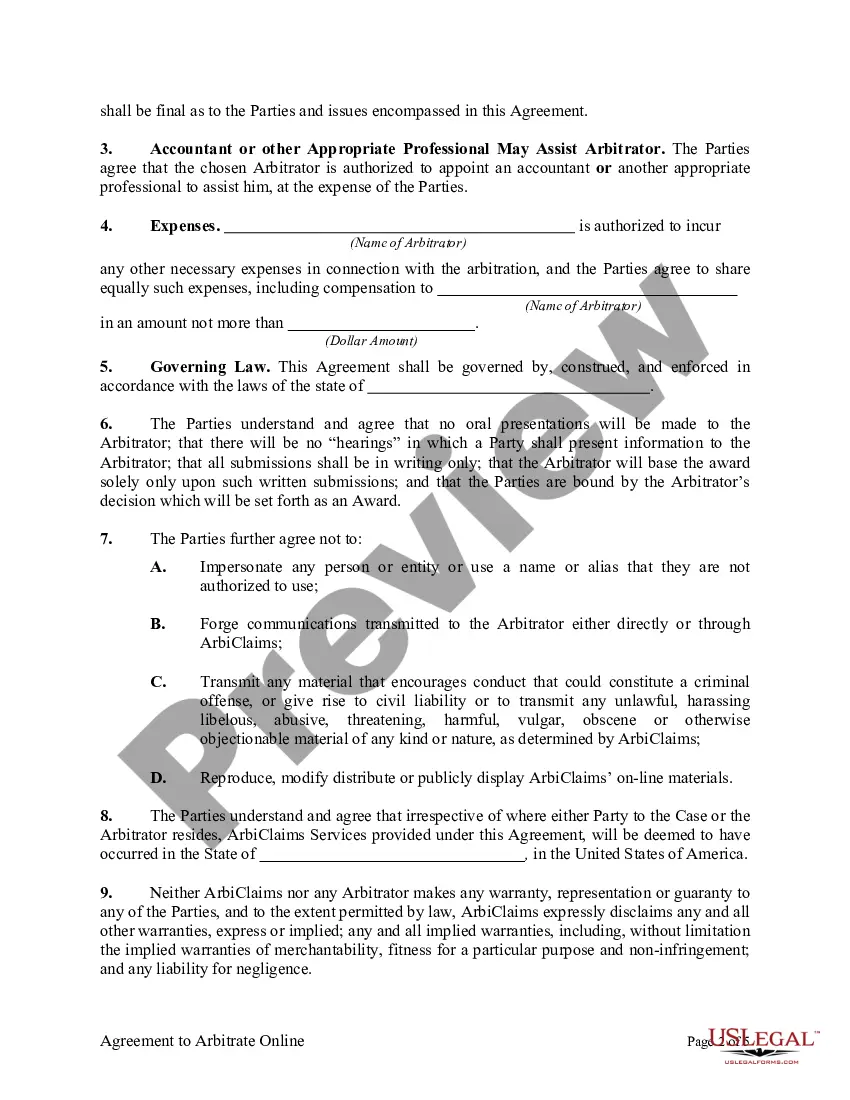
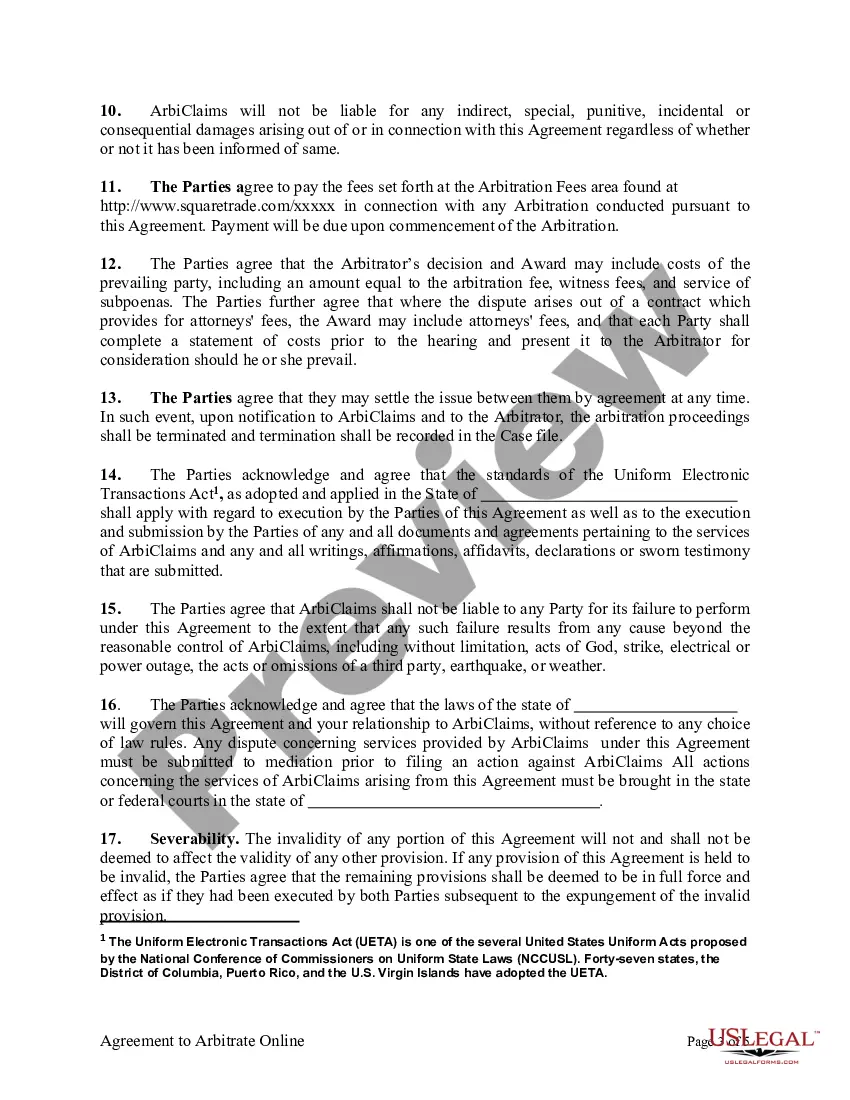

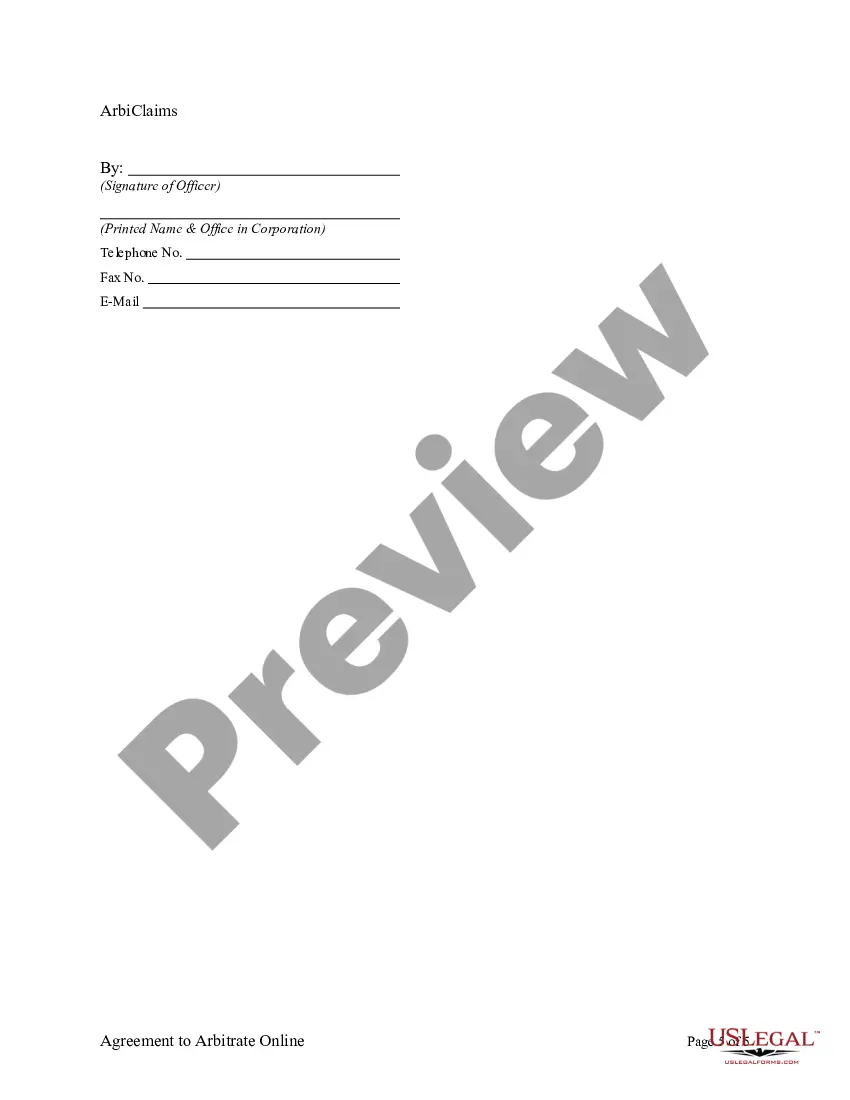



Get your form ready online
Our built-in tools help you complete, sign, share, and store your documents in one place.
Make edits, fill in missing information, and update formatting in US Legal Forms—just like you would in MS Word.
Download a copy, print it, send it by email, or mail it via USPS—whatever works best for your next step.
Sign and collect signatures with our SignNow integration. Send to multiple recipients, set reminders, and more. Go Premium to unlock E-Sign.
If this form requires notarization, complete it online through a secure video call—no need to meet a notary in person or wait for an appointment.
We protect your documents and personal data by following strict security and privacy standards.

Make edits, fill in missing information, and update formatting in US Legal Forms—just like you would in MS Word.

Download a copy, print it, send it by email, or mail it via USPS—whatever works best for your next step.

Sign and collect signatures with our SignNow integration. Send to multiple recipients, set reminders, and more. Go Premium to unlock E-Sign.

If this form requires notarization, complete it online through a secure video call—no need to meet a notary in person or wait for an appointment.

We protect your documents and personal data by following strict security and privacy standards.
Looking for another form?






Form popularity
FAQ
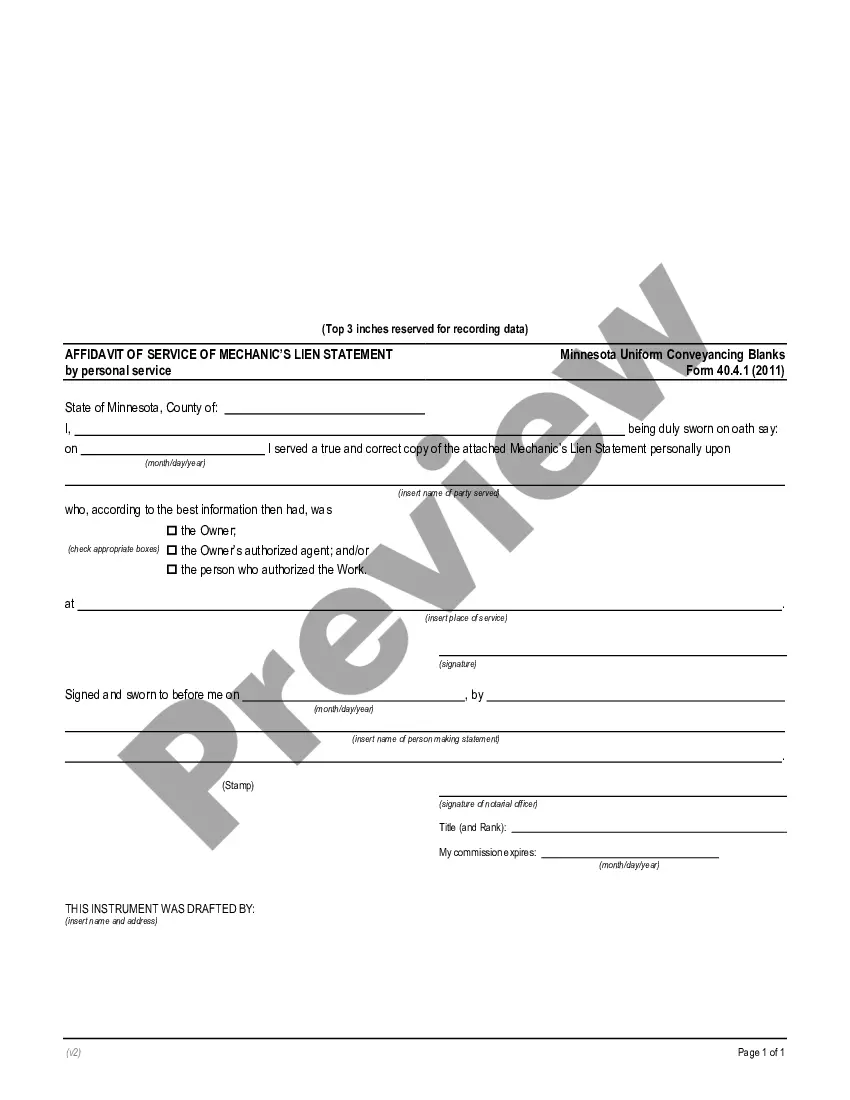
Tells the court that you had legal papers in a civil case - other than a summons - delivered to (served on) the other party. Lists the papers that were served and tells who they were served on, where, when, and how they were served, and who served them.
Proof of service is a document that functions like a legal “receipt” confirming the delivery of documents from one party to another in a legal matter. It is a written version of a sworn statement attesting to the completion of service of process.
An example of a Proof of Service is a signed declaration from the person who served the documents, stating the name of the person who was served and the date, time, and manner of service. A Proof of Service may also include an affidavit, which is a sworn statement that the documents were properly served.
Tells the court that you had the other party served in person with legal papers. Lists the papers that were served. It also tells when and where the papers were served and who served them.
The arbitrator will explain the process. Each side may present an uninterrupted opening statement setting forth its position as to the facts and the law. After opening statements, the parties present their evidence and witnesses. The arbitrator swears in the witnesses and makes rulings on the admissibility of evidence.
About Judicial Arbitration. Judicial Arbitration is like a trial. But it is less formal and there is no jury. Each side presents its case to a “neutral” person, also called “arbitrator.” The arbitrator is either a lawyer or a retired judge, and does not take sides or give advice.
The process server must fill out and sign the proof of service form, which shows how, when, and where the papers were served, and who received them. The server then gives you the proof of service. Make a copy of the proof of service. Take both the original and the copy to the court clerk to file.
(2) An arbitration agreement may be in the form of an arbitration clause in a contract or in the form of a separate agreement. (3) An arbitration agreement shall be in writing. (c) an exchange of statements of claim and defence in which the existence of the agreement is alleged by one party and not denied by the other.
The doctrine of separability, also known as the separability doctrine, is a fundamental concept in arbitration. It refers to the idea that an arbitration clause in a contract is considered to be a separate and distinct agreement from the main underlying contract in which it is embedded.
Tells the court that you had legal papers in a civil case - other than a summons - delivered to (served on) the other party. Lists the papers that were served and tells who they were served on, where, when, and how they were served, and who served them.
