Agreement Arbitration Document With Bank In Salt Lake
Description

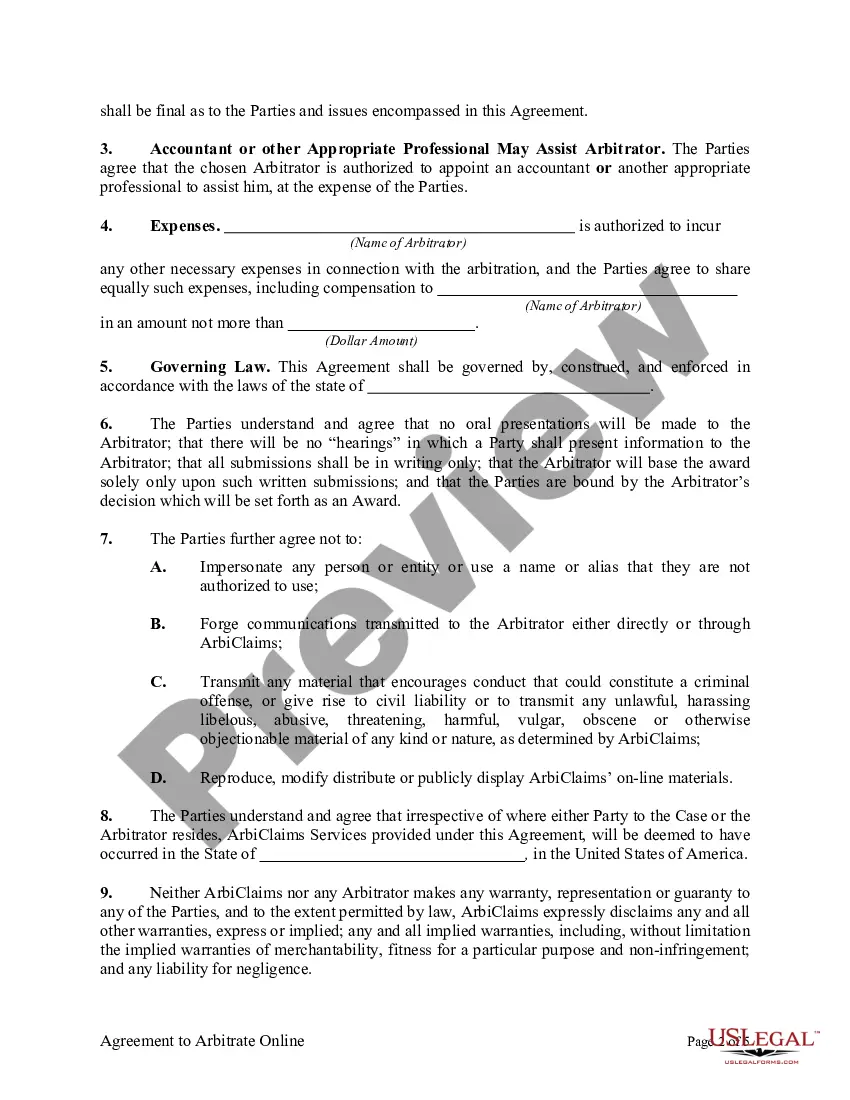
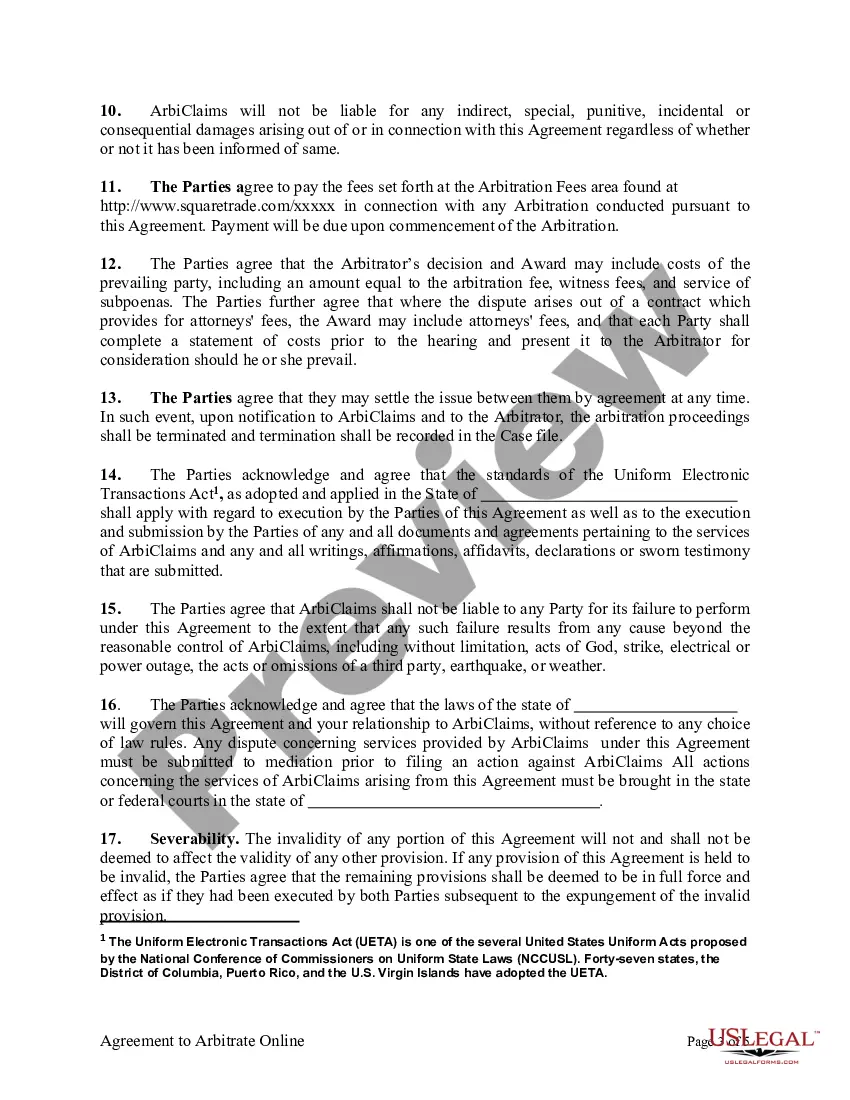




Get your form ready online
Our built-in tools help you complete, sign, share, and store your documents in one place.
Make edits, fill in missing information, and update formatting in US Legal Forms—just like you would in MS Word.
Download a copy, print it, send it by email, or mail it via USPS—whatever works best for your next step.
Sign and collect signatures with our SignNow integration. Send to multiple recipients, set reminders, and more. Go Premium to unlock E-Sign.
If this form requires notarization, complete it online through a secure video call—no need to meet a notary in person or wait for an appointment.
We protect your documents and personal data by following strict security and privacy standards.

Make edits, fill in missing information, and update formatting in US Legal Forms—just like you would in MS Word.

Download a copy, print it, send it by email, or mail it via USPS—whatever works best for your next step.

Sign and collect signatures with our SignNow integration. Send to multiple recipients, set reminders, and more. Go Premium to unlock E-Sign.

If this form requires notarization, complete it online through a secure video call—no need to meet a notary in person or wait for an appointment.

We protect your documents and personal data by following strict security and privacy standards.
Looking for another form?









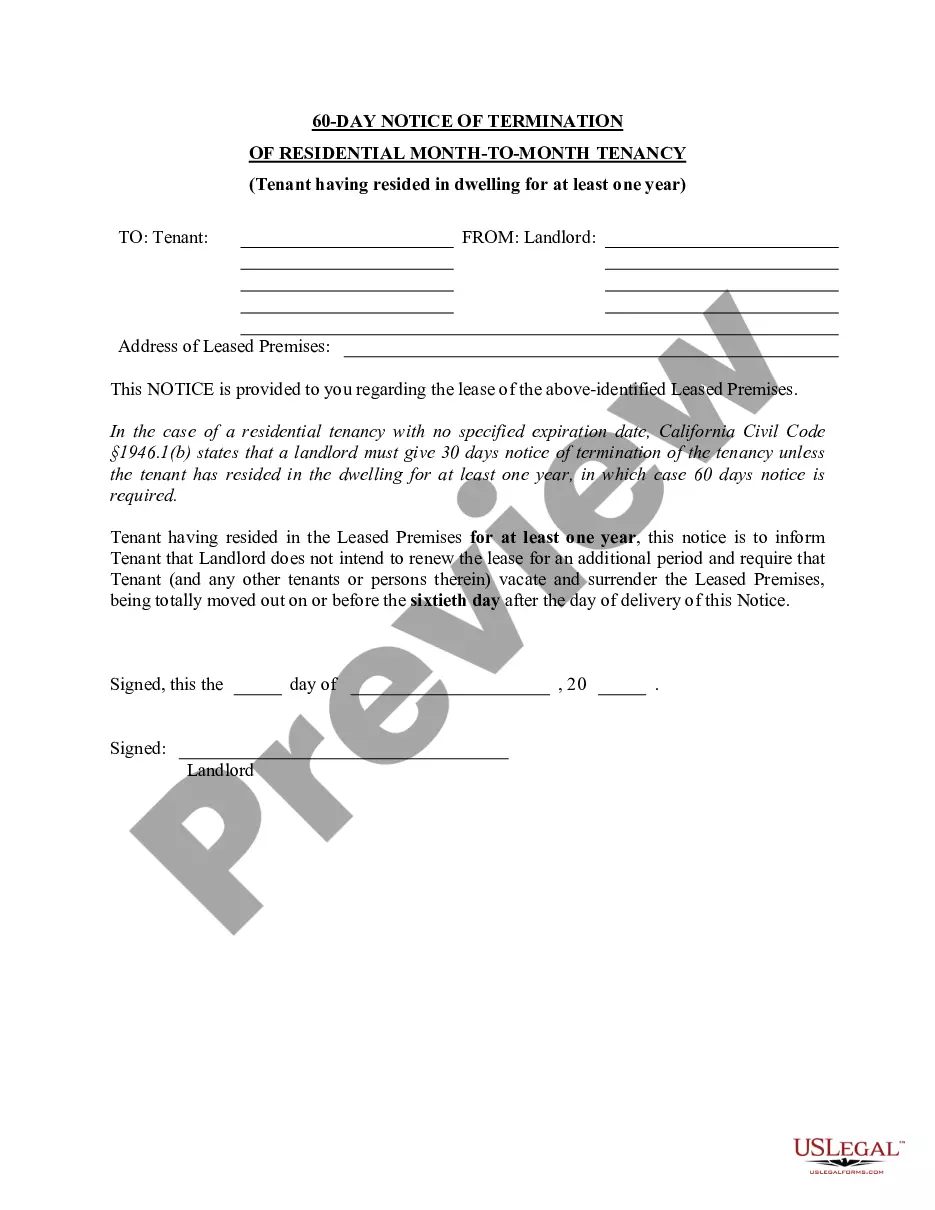
Form popularity
FAQ
If you've been sued for a debt, check your credit card agreement for an arbitration clause and file a Motion to Compel Arbitration into the case to avoid going to court. To find your arbitration clause, read the fine print, look for dispute resolution key terms, and utilize the CFPB's credit card agreement database.
Consumers are more likely to win in arbitration than in court. This research from ndp | analytics demonstrates that in disputes initiated by a consumer, consumers fare much better in arbitration than they do in litigation.
This means that any disputes between customers and banks over account fees, identity theft, or other charges will be decided by an arbitrator that the bank helps choose, rather than an impartial judge.
Opting out of the arbitration agreement isn't damaging to you. You can always do arbitration if you would prefer that, although if you'd like to join class actions or sue the judge will throw out your case if you are still in this agreement.
To reduce the costs and improve the efficiency of dispute resolution, businesses often require that their customers and employees to sign an arbitration agreement.
Arbitration agreements are used for various purposes in business and legal settings. By establishing a predetermined dispute resolution mechanism, parties can avoid the uncertainty, publicity, and often higher costs associated with traditional litigation.
Arbitration agreements require that persons who signed them resolve any disputes by binding arbitration, rather than in court before a judge and/or jury. What is binding arbitration? Binding arbitration involves the submission of a dispute to a neutral party who hears the case and makes a decision.
A claimant will typically start arbitration by sending a document known as a “request for arbitration” or a “notice to arbitrate” to its opponent.
Code of Arbitration Procedure Rule 12206 for Customer Disputes and Rule 13206 for Industry Disputes outline the time limits for submitting a claim in arbitration. These rules allow a claim to be filed within 6 years of the occurrence or event giving rise to the cause of action.
Arbitration is increasingly being recognised, including in the banking and financial sector, as a means of resolving disputes that can meet the needs of parties who are no longer satisfied with the characteristics - and often the timeframe - of litigation before national courts.