Agreement Arbitration Document Withdrawal In Sacramento
Description

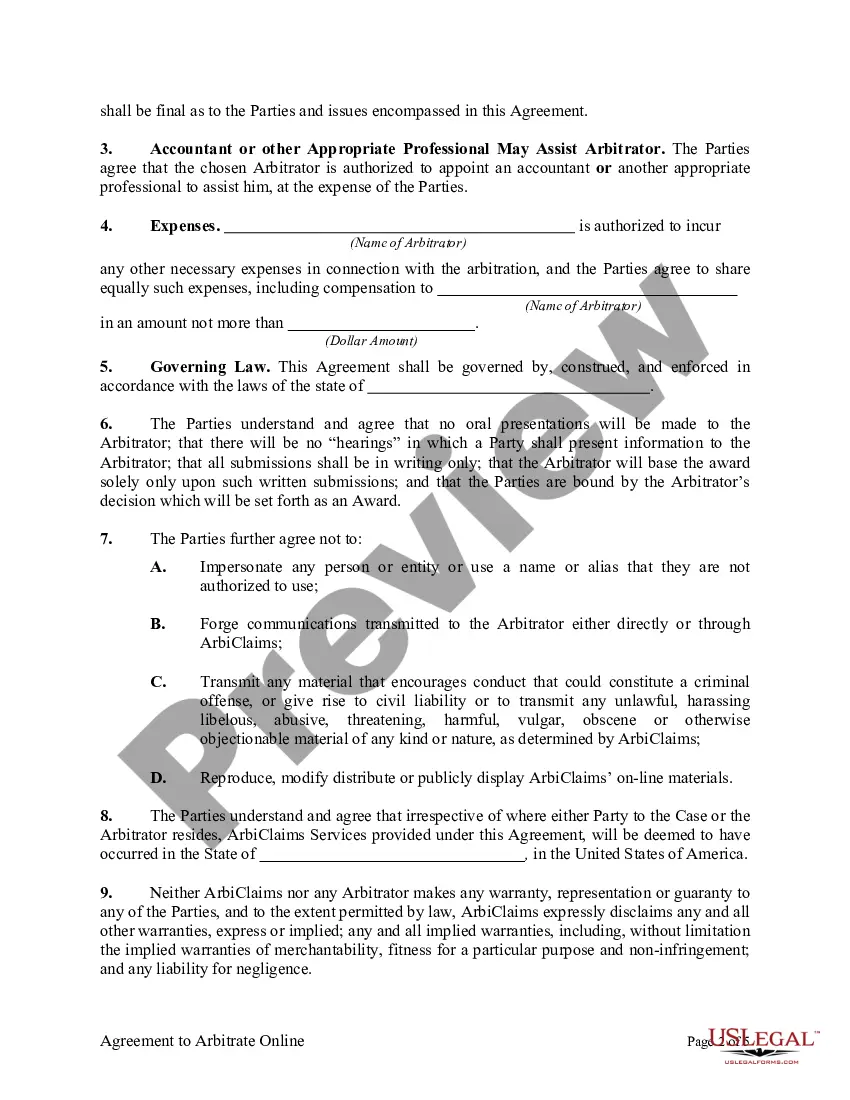
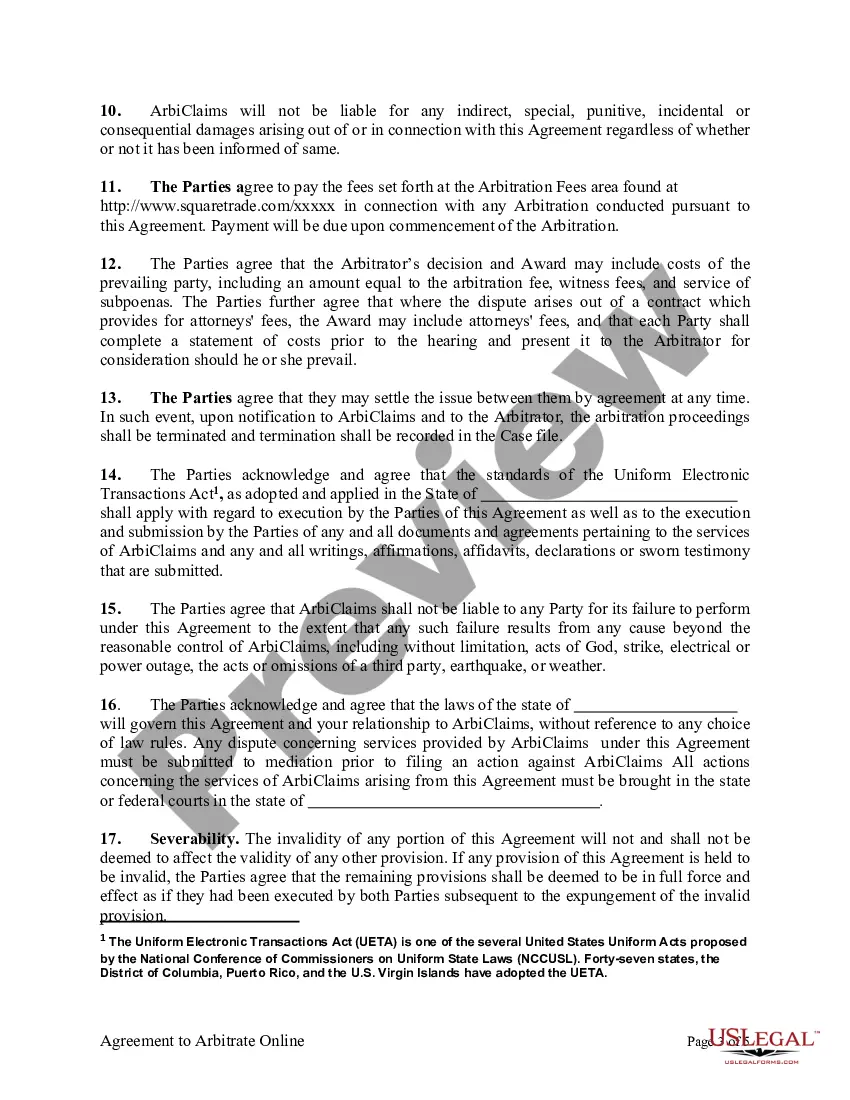




Get your form ready online
Our built-in tools help you complete, sign, share, and store your documents in one place.
Make edits, fill in missing information, and update formatting in US Legal Forms—just like you would in MS Word.
Download a copy, print it, send it by email, or mail it via USPS—whatever works best for your next step.
Sign and collect signatures with our SignNow integration. Send to multiple recipients, set reminders, and more. Go Premium to unlock E-Sign.
If this form requires notarization, complete it online through a secure video call—no need to meet a notary in person or wait for an appointment.
We protect your documents and personal data by following strict security and privacy standards.

Make edits, fill in missing information, and update formatting in US Legal Forms—just like you would in MS Word.

Download a copy, print it, send it by email, or mail it via USPS—whatever works best for your next step.

Sign and collect signatures with our SignNow integration. Send to multiple recipients, set reminders, and more. Go Premium to unlock E-Sign.

If this form requires notarization, complete it online through a secure video call—no need to meet a notary in person or wait for an appointment.

We protect your documents and personal data by following strict security and privacy standards.
Looking for another form?





Form popularity
FAQ
Arbitration is an out-of-court settlement procedure where disputes between parties are resolved by an unbiased third party known as an arbitrator. The arbitrator listens to both sides of the dispute, examines the evidence and arguments presented, and then makes a binding decision that is enforceable by law.
1.06 Posting of Civil Tentative Rulings. (A) A Tentative Ruling System is utilized in civil law and motion, writ, complex, Case Management, and other departments as designated. On the afternoon of the court day before each calendar, the judge will publish a tentative ruling on each matter on the next day's calendar.
Arbitration is another route to settlement, but unlike the two options discussed above, where resolution is voluntary, it is typically binding. Arbitration is a private court. Like mediation, the parties must voluntarily agree to enter into arbitration; you cannot be forced into arbitration.
Arbitration is performed out of court and the dispute is resolved by an impartial third party known as an arbitrator.
Pursuant to Local Rule section 2.35, a party seeking an ex-parte order shall notify the parties no later than a.m. the court day before the ex-parte appearance, absent a showing of exceptional circumstances pursuant to California Rules of Court 3.1203 .
The doctrine of separability, also known as the separability doctrine, is a fundamental concept in arbitration. It refers to the idea that an arbitration clause in a contract is considered to be a separate and distinct agreement from the main underlying contract in which it is embedded.
1.06 Tentative Ruling System. (A) In all civil law and motion, writ, and other departments as designated, a Tentative Ruling System is utilized. On the afternoon of the court day before each calendar, the judge will publish a tentative ruling on each matter on the next day's calendar.
As of January 16, 2024, Sacramento County Superior Court has expanded electronic filing (e-Filing) to Civil cases handled at the Gordon D. Schaber Courthouse and Hall of Justice Building. Until further notice, e-Filing is permissive (optional) for all parties.
Mediation is a voluntary, informal, and confidential process in which the Mediator - a neutral third party - facilitates settlement negotiations.
