Agreement Arbitrate Sample For Claim In Illinois
Description

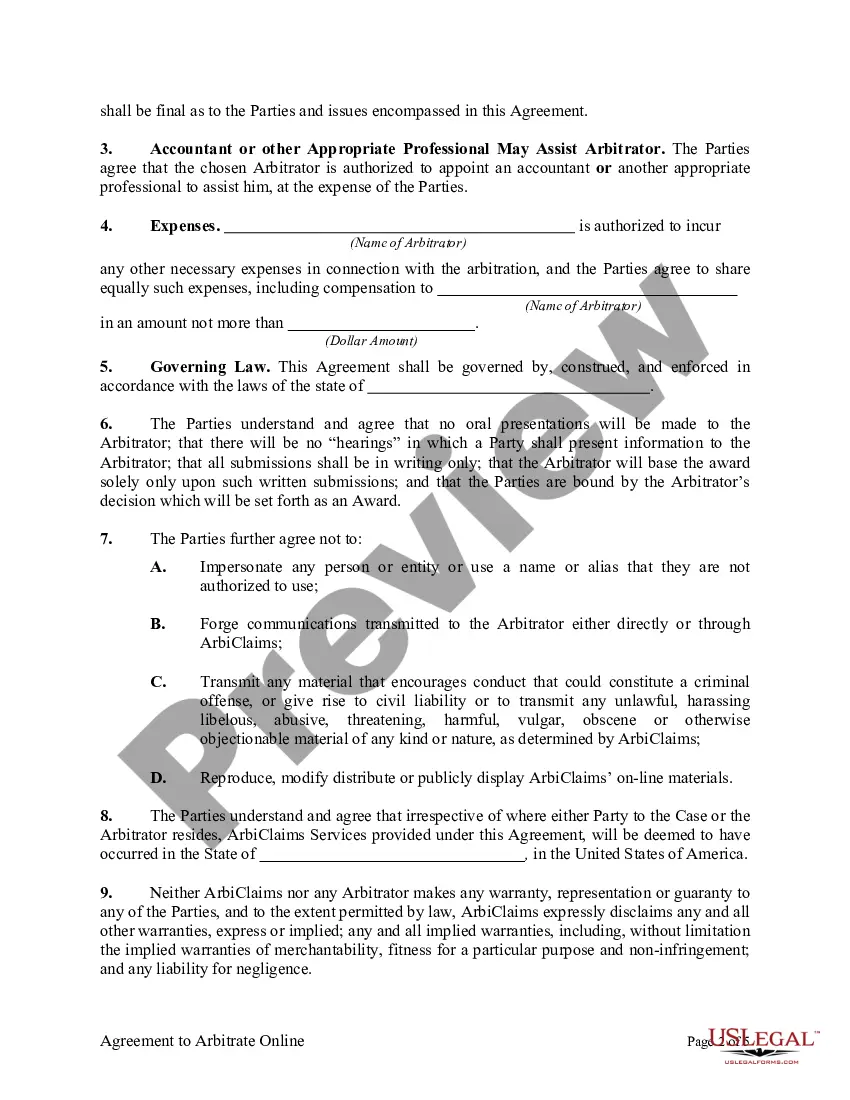
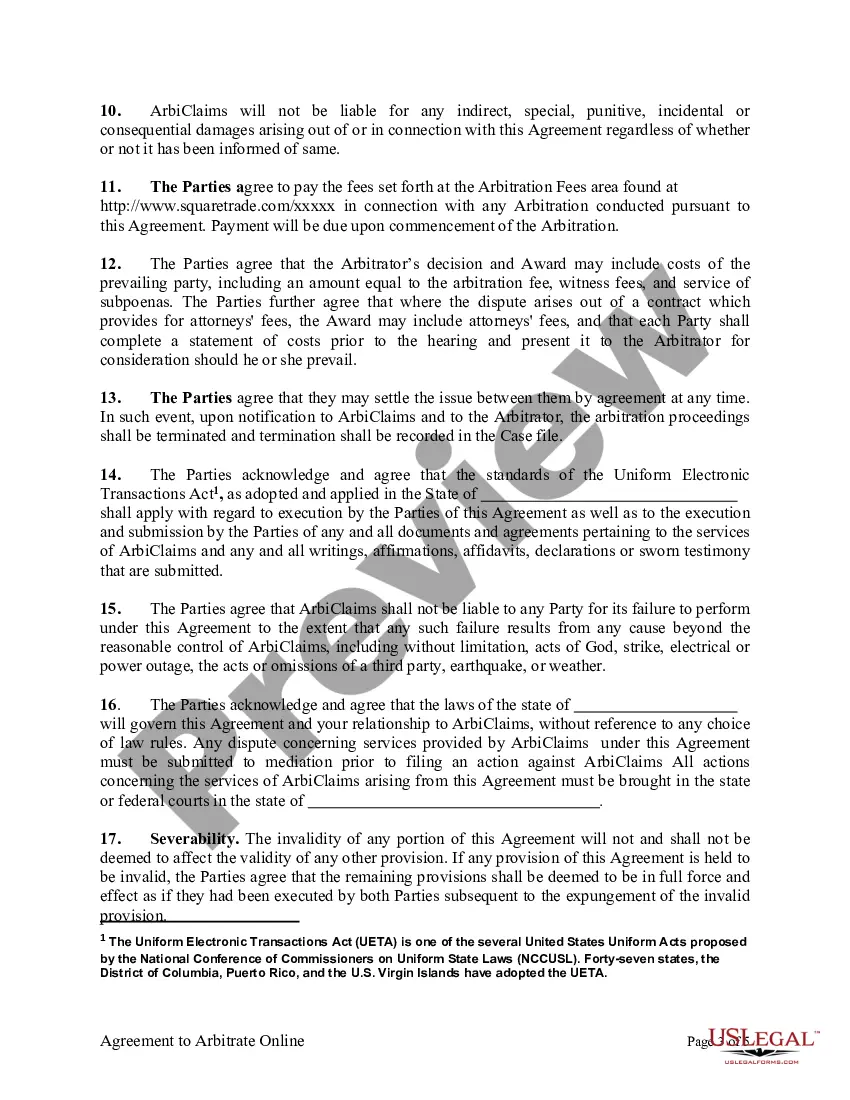

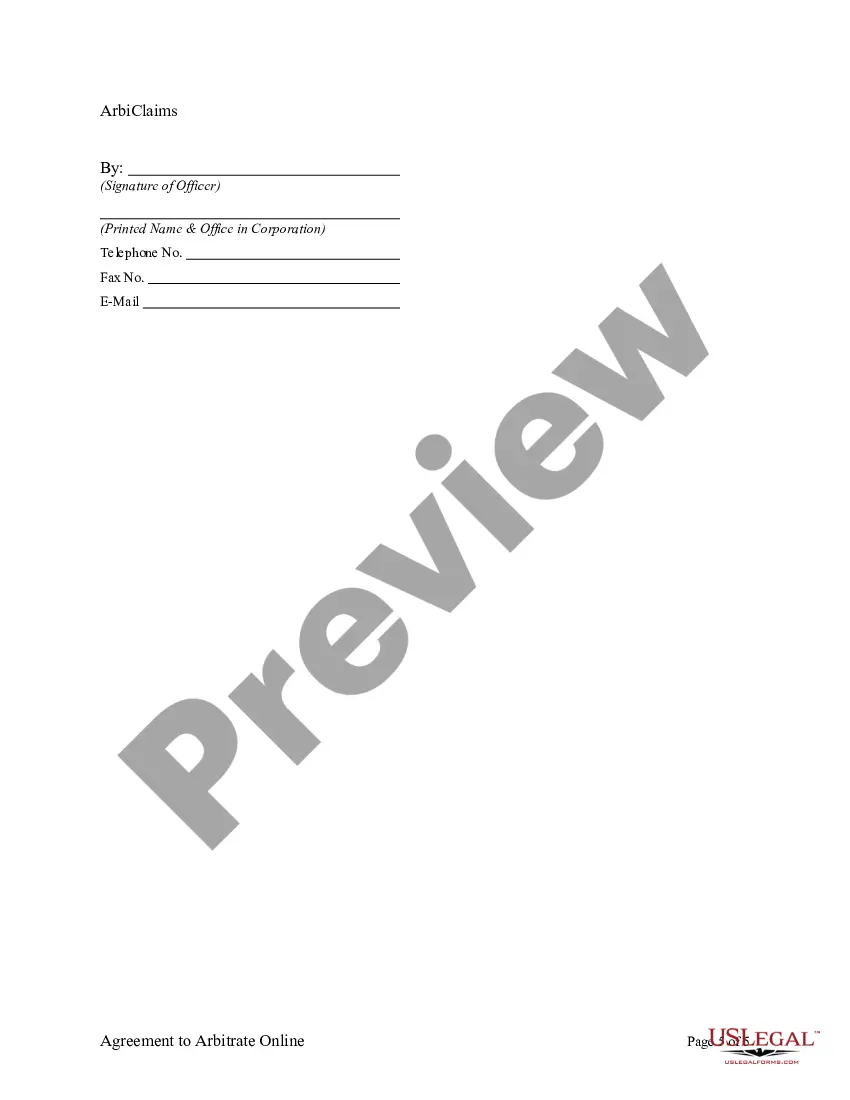


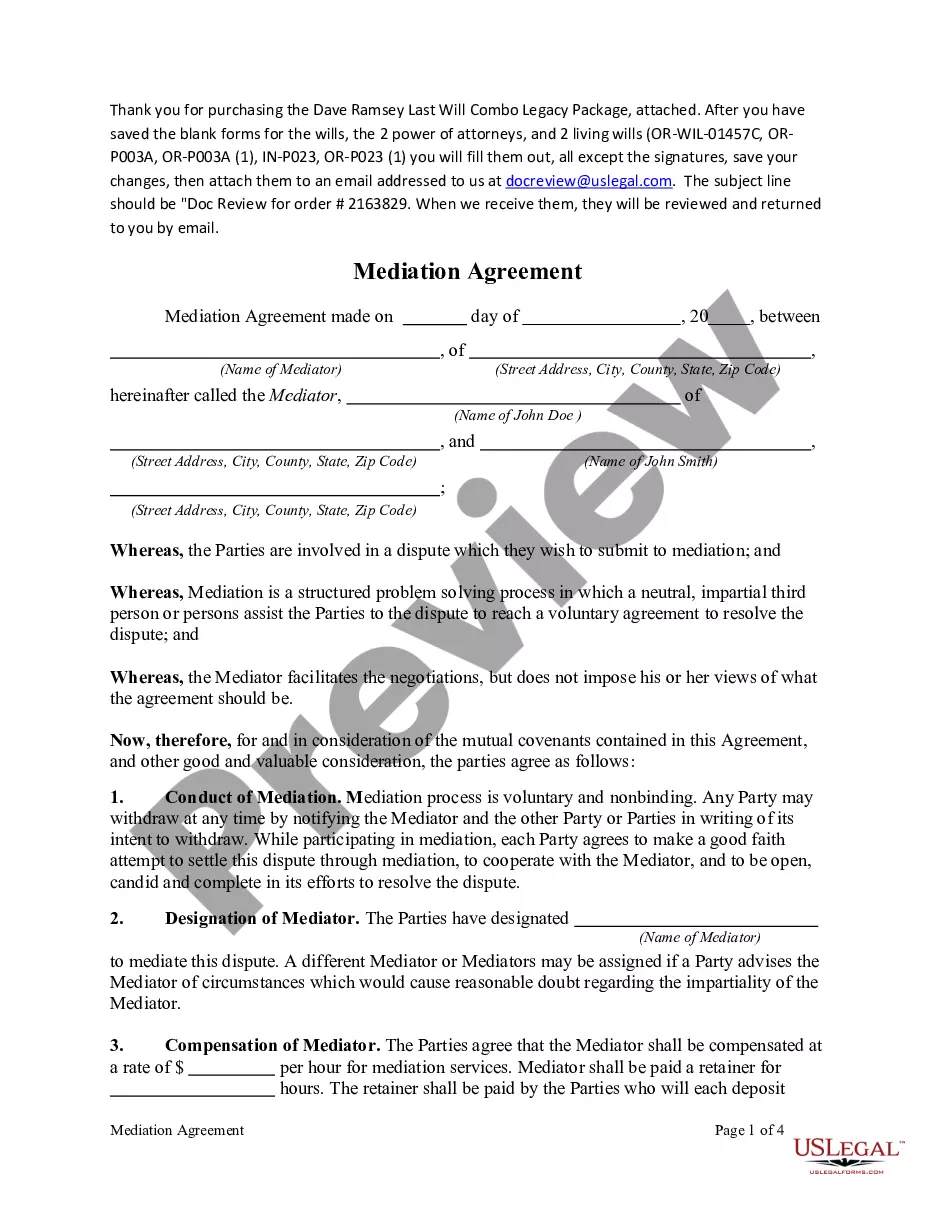
Get your form ready online
Our built-in tools help you complete, sign, share, and store your documents in one place.
Make edits, fill in missing information, and update formatting in US Legal Forms—just like you would in MS Word.
Download a copy, print it, send it by email, or mail it via USPS—whatever works best for your next step.
Sign and collect signatures with our SignNow integration. Send to multiple recipients, set reminders, and more. Go Premium to unlock E-Sign.
If this form requires notarization, complete it online through a secure video call—no need to meet a notary in person or wait for an appointment.
We protect your documents and personal data by following strict security and privacy standards.

Make edits, fill in missing information, and update formatting in US Legal Forms—just like you would in MS Word.

Download a copy, print it, send it by email, or mail it via USPS—whatever works best for your next step.

Sign and collect signatures with our SignNow integration. Send to multiple recipients, set reminders, and more. Go Premium to unlock E-Sign.

If this form requires notarization, complete it online through a secure video call—no need to meet a notary in person or wait for an appointment.

We protect your documents and personal data by following strict security and privacy standards.
Looking for another form?








Form popularity
FAQ
Arbitration might be the right choice for some cases. Limited discovery rights and costs might be useful when less is at stake. Arbitration might feel less adversarial, which could be an advantage where ongoing relationships are hoped to be preserved. Arbitration lends some confidentiality.
A clause that requires arbitration is known as a mandatory arbitration clause. Today's question is: Are such clauses enforceable in Illinois? The short answer is yes, and the long answer doesn't really change much.
Opting out of the arbitration agreement isn't damaging to you. You can always do arbitration if you would prefer that, although if you'd like to join class actions or sue the judge will throw out your case if you are still in this agreement.
If you already have claims against your employer when you are asked to sign the agreement, you should absolutely talk to a lawyer before signing. After all, an arbitration agreement gives up your right to sue in court, and that right is much more valuable when you have an actual claim to make against your employer.
The Scope of the Clause. This section of the clause is critical; it sets the boundaries for which disputes the tribunal is authorised to determine. Choice of Rules. The Number of Arbitrators. Appointing Authority. Choice of Venue. The language of the proceedings. Finality. Exclusion of the right of appeal.
The arbitrator's decision can give parties a realistic idea of the outcome of their case. If neither party appeals the decision, it will be binding, like an order by a judge. However, a party unhappy with the arbitrator's decision can request a new trial before a judge.
"A dispute having arisen between the parties concerning , the parties hereby agree that the dispute shall be referred to and finally resolved by arbitration under the LCIA Rules. The number of arbitrators shall be one/three. The seat, or legal place, of arbitration shall be City and/or Country.
This depends on the facts of your job, how the “agreement” is presented, and the court jurisdiction that controls your situation. If you do sign it, you will probably be stuck with arbitration as the only method of legal redress for any job-related problems.
The Scope of the Clause. This section of the clause is critical; it sets the boundaries for which disputes the tribunal is authorised to determine. Choice of Rules. The Number of Arbitrators. Appointing Authority. Choice of Venue. The language of the proceedings. Finality. Exclusion of the right of appeal.
Outline a concise factual background and then move on to a discussion of the issues at the heart of the case. Your arguments should flow easily from the relevant facts and applicable law. And, by all means, avoid exaggeration of the strengths of your case as well as disparagement of the opposing side.