Arbitration Agreement With Class Action Waiver In Hennepin
Description

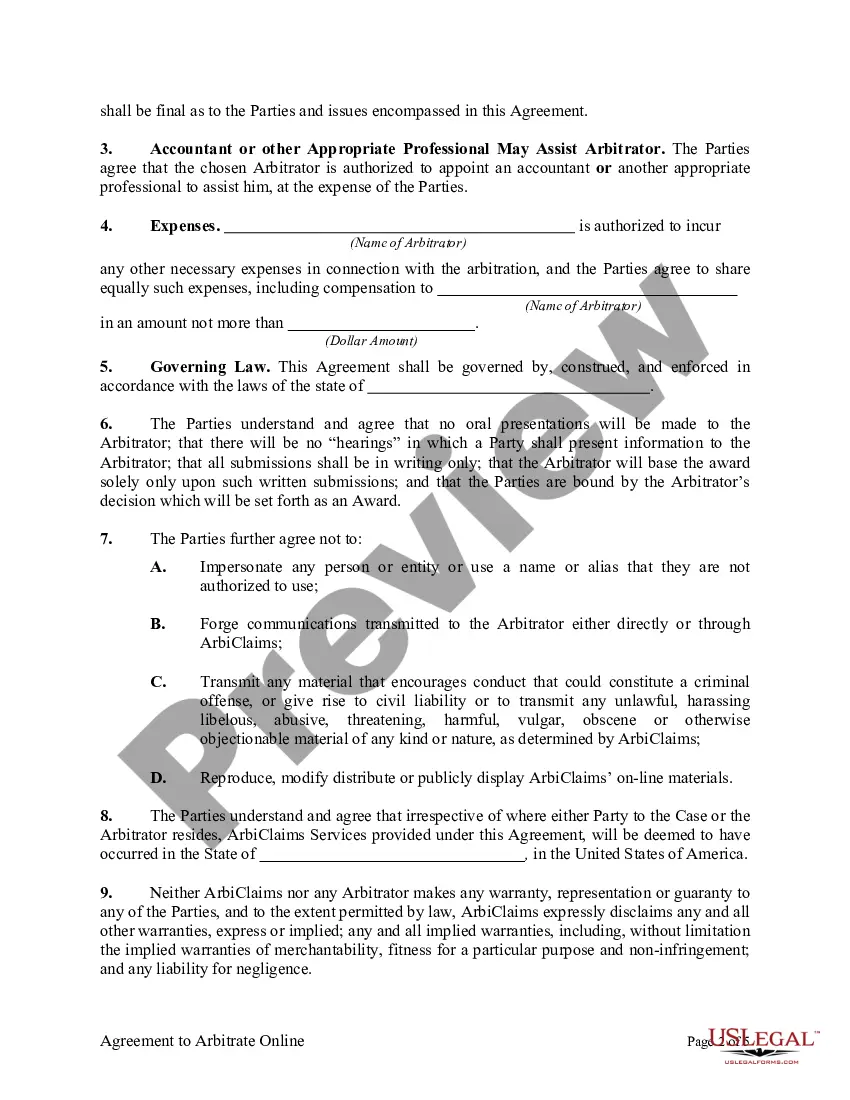
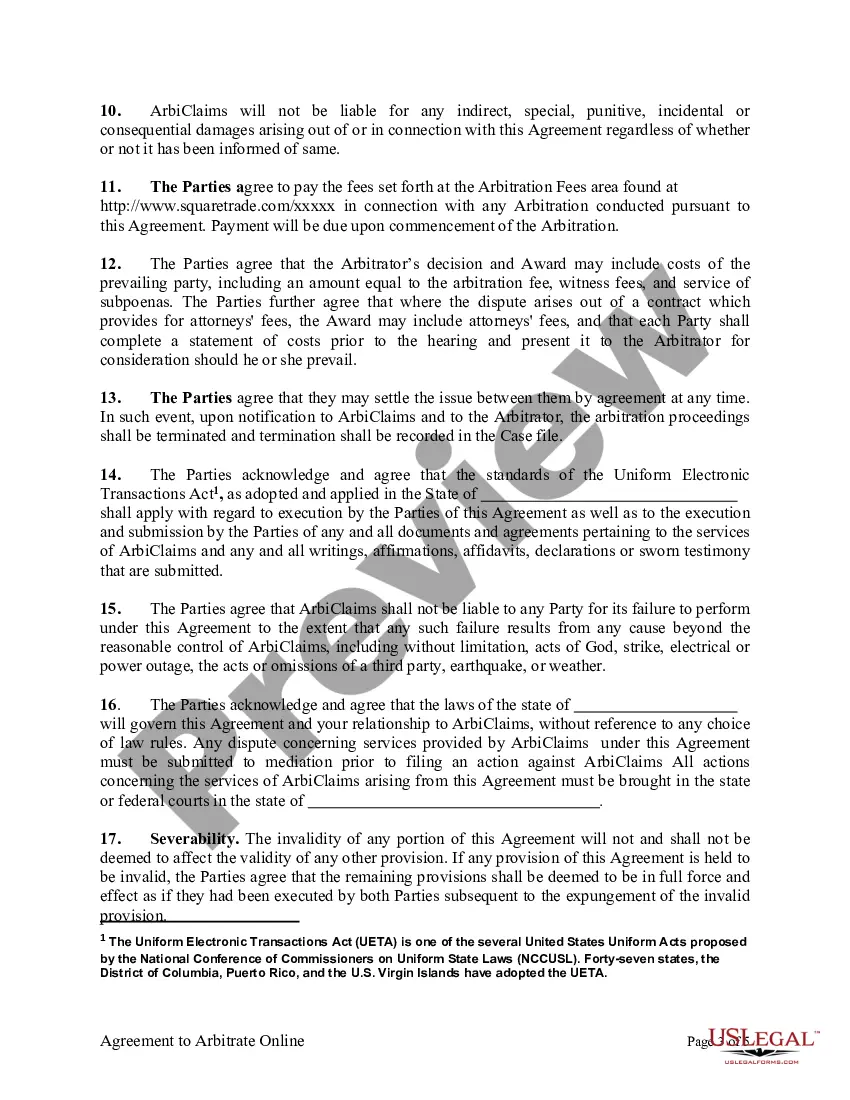




Get your form ready online
Our built-in tools help you complete, sign, share, and store your documents in one place.
Make edits, fill in missing information, and update formatting in US Legal Forms—just like you would in MS Word.
Download a copy, print it, send it by email, or mail it via USPS—whatever works best for your next step.
Sign and collect signatures with our SignNow integration. Send to multiple recipients, set reminders, and more. Go Premium to unlock E-Sign.
If this form requires notarization, complete it online through a secure video call—no need to meet a notary in person or wait for an appointment.
We protect your documents and personal data by following strict security and privacy standards.

Make edits, fill in missing information, and update formatting in US Legal Forms—just like you would in MS Word.

Download a copy, print it, send it by email, or mail it via USPS—whatever works best for your next step.

Sign and collect signatures with our SignNow integration. Send to multiple recipients, set reminders, and more. Go Premium to unlock E-Sign.

If this form requires notarization, complete it online through a secure video call—no need to meet a notary in person or wait for an appointment.

We protect your documents and personal data by following strict security and privacy standards.
Looking for another form?










Form popularity
FAQ
Settlement by agreement is the cheapest option and gives you the most control. Both mediation and arbitration are expensive, and arbitration is usually binding, so the ultimate decision is out of your control.
Class arbitration is not available unless clearly allowed under the express terms of the arbitration clause.
The Scope of the Clause. This section of the clause is critical; it sets the boundaries for which disputes the tribunal is authorised to determine. Choice of Rules. The Number of Arbitrators. Appointing Authority. Choice of Venue. The language of the proceedings. Finality. Exclusion of the right of appeal.
So long as a defendant can show a valid agreement to arbitrate and a valid class action waiver, then a putative class action plaintiff will be unable to proceed on a class basis.
A class action waiver is a provision found in some contracts which prohibits a party from filing a class action legal proceeding against the other party, or both parties waiving the right to file class actions against each other.
Any party may make an objection to an arbitrator at any time in the arbitration, up to the issuance of the Award or other terminating order. While a party may file multiple objections to an arbitrator, additional objections should not be made unless there are new grounds for making the objection.
The Court opined that the Federal Arbitration Act (FAA) establishes liberal federal policy favoring arbitration agreements, and such agreements may only be overridden when there is a contrary Congressional command.
See 9 U.S.C. § 1. In Concepcion, the U.S. Supreme Court ruled that class action waivers in arbitration agreements are enforceable.
However, if a plaintiff unwittingly entered into an arbitration agreement due to coercion or deception, or if the terms of the arbitration agreement undermine the plaintiff's ability to vindicate their rights, courts can and sometimes do step in and invalidate the contract.
Some contracts give you the right to opt out of the forced arbitration clause within a certain period of time, often 30 to 60 days, after signing the agreement by notifying the company that you wish to opt out. Check your contract for the deadline and for specific instructions for opting out.
