Agreement For Arbitration In Cook
Description

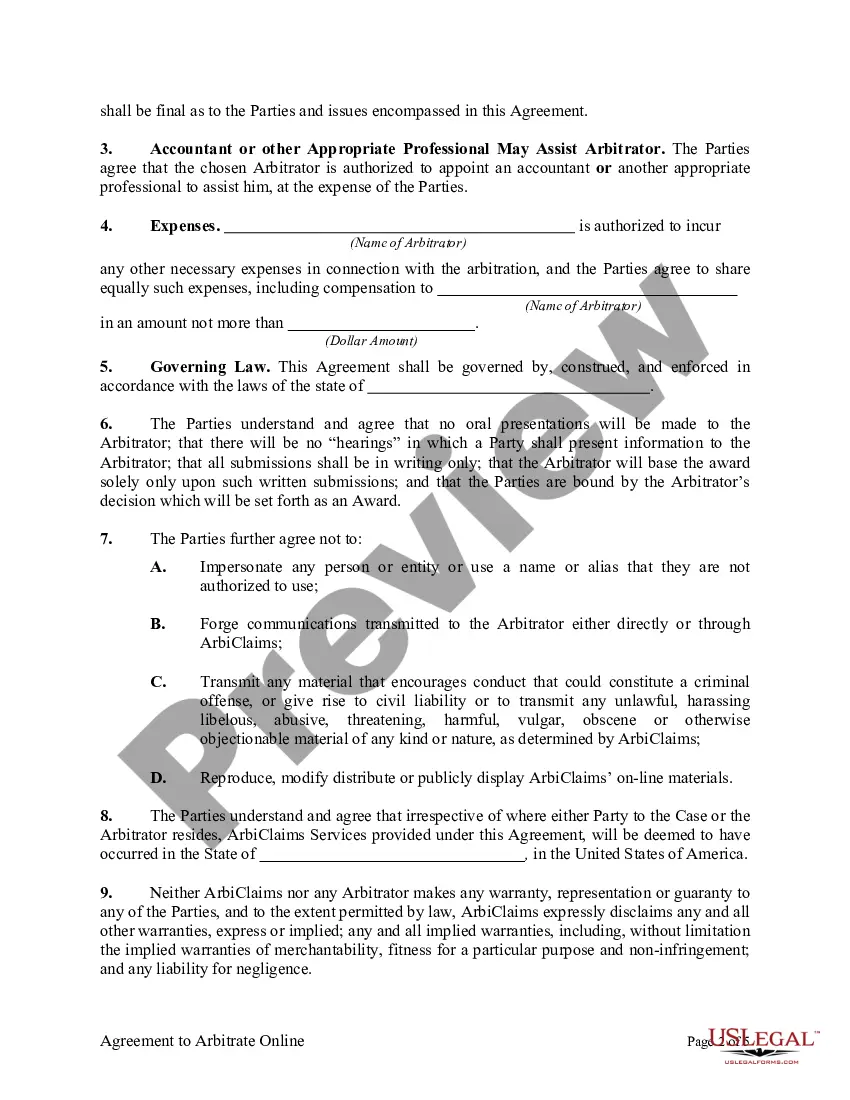
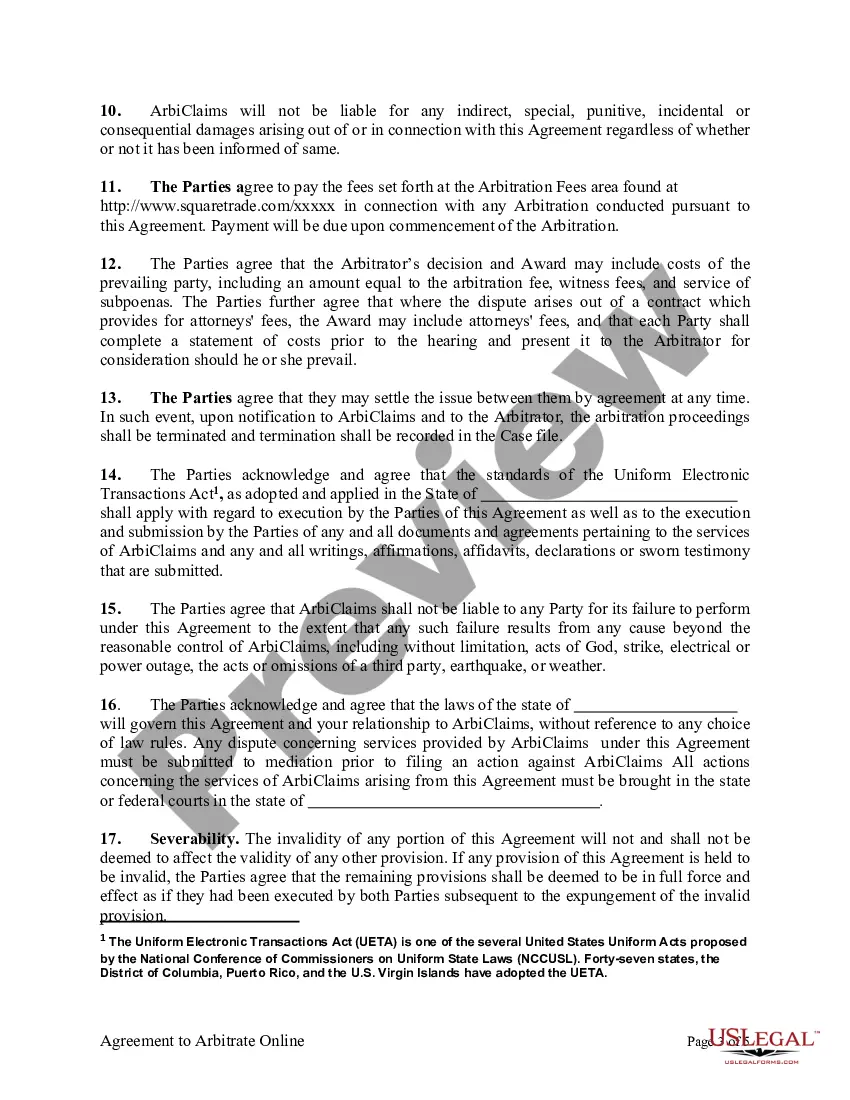




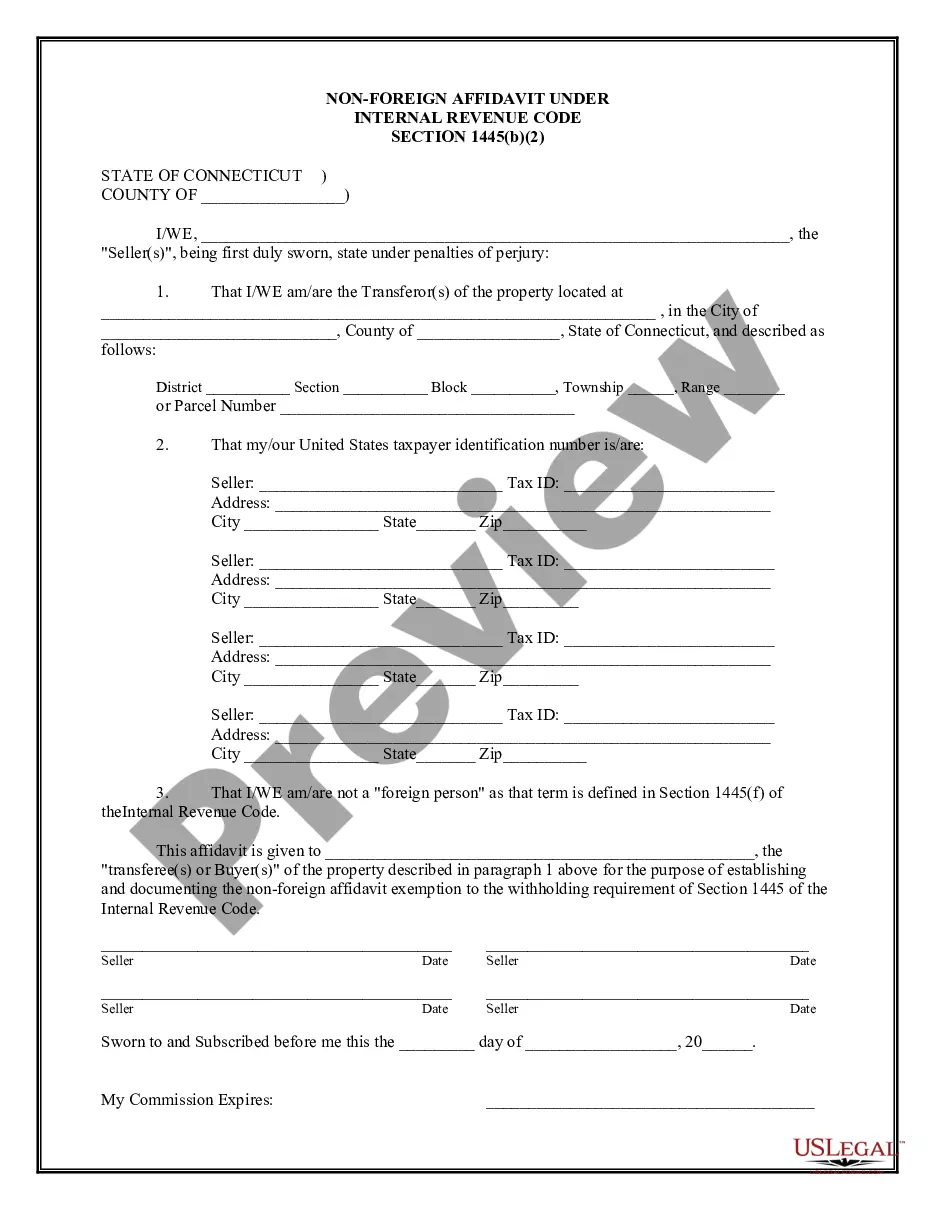
Get your form ready online
Our built-in tools help you complete, sign, share, and store your documents in one place.
Make edits, fill in missing information, and update formatting in US Legal Forms—just like you would in MS Word.
Download a copy, print it, send it by email, or mail it via USPS—whatever works best for your next step.
Sign and collect signatures with our SignNow integration. Send to multiple recipients, set reminders, and more. Go Premium to unlock E-Sign.
If this form requires notarization, complete it online through a secure video call—no need to meet a notary in person or wait for an appointment.
We protect your documents and personal data by following strict security and privacy standards.

Make edits, fill in missing information, and update formatting in US Legal Forms—just like you would in MS Word.

Download a copy, print it, send it by email, or mail it via USPS—whatever works best for your next step.

Sign and collect signatures with our SignNow integration. Send to multiple recipients, set reminders, and more. Go Premium to unlock E-Sign.

If this form requires notarization, complete it online through a secure video call—no need to meet a notary in person or wait for an appointment.

We protect your documents and personal data by following strict security and privacy standards.
Looking for another form?







Form popularity
FAQ
You can always agree to arbitration later if your lawyer advises you it's a good choice in the particular situation you find yourself in. There's no benefit to you in doing so months or years ahead of time.
Limited Appeal Options: One of the most significant downsides of arbitration is that it offers very limited options for appeal. Once the arbitrator makes a decision, it's usually final unless there was a substantial legal oversight.
Win Rate: Consumers prevailed in 41.7% of arbitrations that terminated with awards compared to 29.3% of litigations that terminated with awards. Employees prevailed in 37.7% of arbitrations that terminated with awards compared to 10.8% of litigations that terminated with awards.
Under Rule 25, commercial and personal injury cases with damages valued at less than $50,000 and that do not involve claims of medical malpractice, asbestos, construction, nursing home, and product liability are automatically referred to mandatory arbitration.
Arbitration is a fairer, faster, and less expensive way to resolve disputes than time-consuming and expensive litigation.
Arbitration agreements require that persons who signed them resolve any disputes by binding arbitration, rather than in court before a judge and/or jury. What is binding arbitration? Binding arbitration involves the submission of a dispute to a neutral party who hears the case and makes a decision.
The Scope of the Clause. This section of the clause is critical; it sets the boundaries for which disputes the tribunal is authorised to determine. Choice of Rules. The Number of Arbitrators. Appointing Authority. Choice of Venue. The language of the proceedings. Finality. Exclusion of the right of appeal.
Always get straight to the merits without berating the other side or whining about how badly it has treated you. Another threat to your credibility is the “kitchen sink” arbitration demand or a response that includes numerous claims or defenses that have little chance of succeeding.
Another important difference in pleading in arbitration is that there is no such thing as a “default” in appearance in arbitration. The failure to answer a demand or counterclaim is deemed a denial, and puts the asserted claims in issue, subject to prove-up by the complaining party.
Outline a concise factual background and then move on to a discussion of the issues at the heart of the case. Your arguments should flow easily from the relevant facts and applicable law. And, by all means, avoid exaggeration of the strengths of your case as well as disparagement of the opposing side.
