Stockholder Meeting Format In Ohio
Description



Get your form ready online
Our built-in tools help you complete, sign, share, and store your documents in one place.
Make edits, fill in missing information, and update formatting in US Legal Forms—just like you would in MS Word.
Download a copy, print it, send it by email, or mail it via USPS—whatever works best for your next step.
Sign and collect signatures with our SignNow integration. Send to multiple recipients, set reminders, and more. Go Premium to unlock E-Sign.
If this form requires notarization, complete it online through a secure video call—no need to meet a notary in person or wait for an appointment.
We protect your documents and personal data by following strict security and privacy standards.

Make edits, fill in missing information, and update formatting in US Legal Forms—just like you would in MS Word.

Download a copy, print it, send it by email, or mail it via USPS—whatever works best for your next step.

Sign and collect signatures with our SignNow integration. Send to multiple recipients, set reminders, and more. Go Premium to unlock E-Sign.

If this form requires notarization, complete it online through a secure video call—no need to meet a notary in person or wait for an appointment.

We protect your documents and personal data by following strict security and privacy standards.
Looking for another form?






Form popularity
FAQ
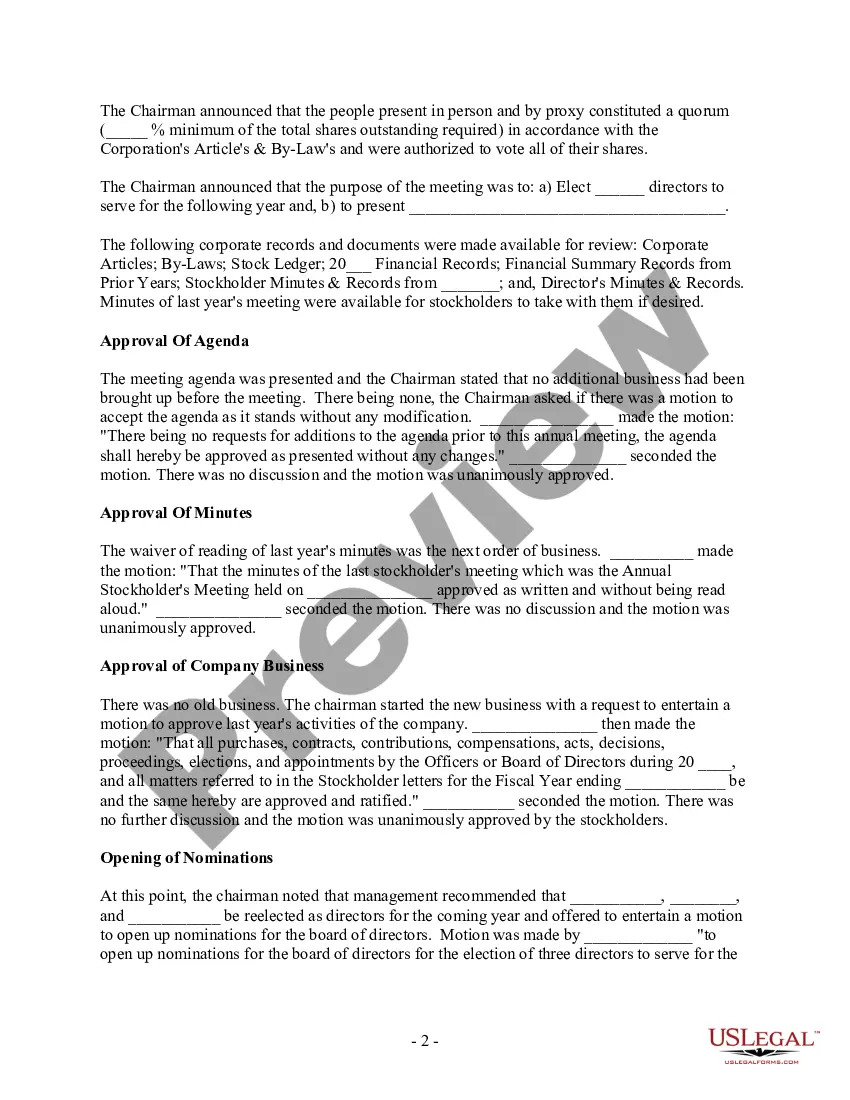
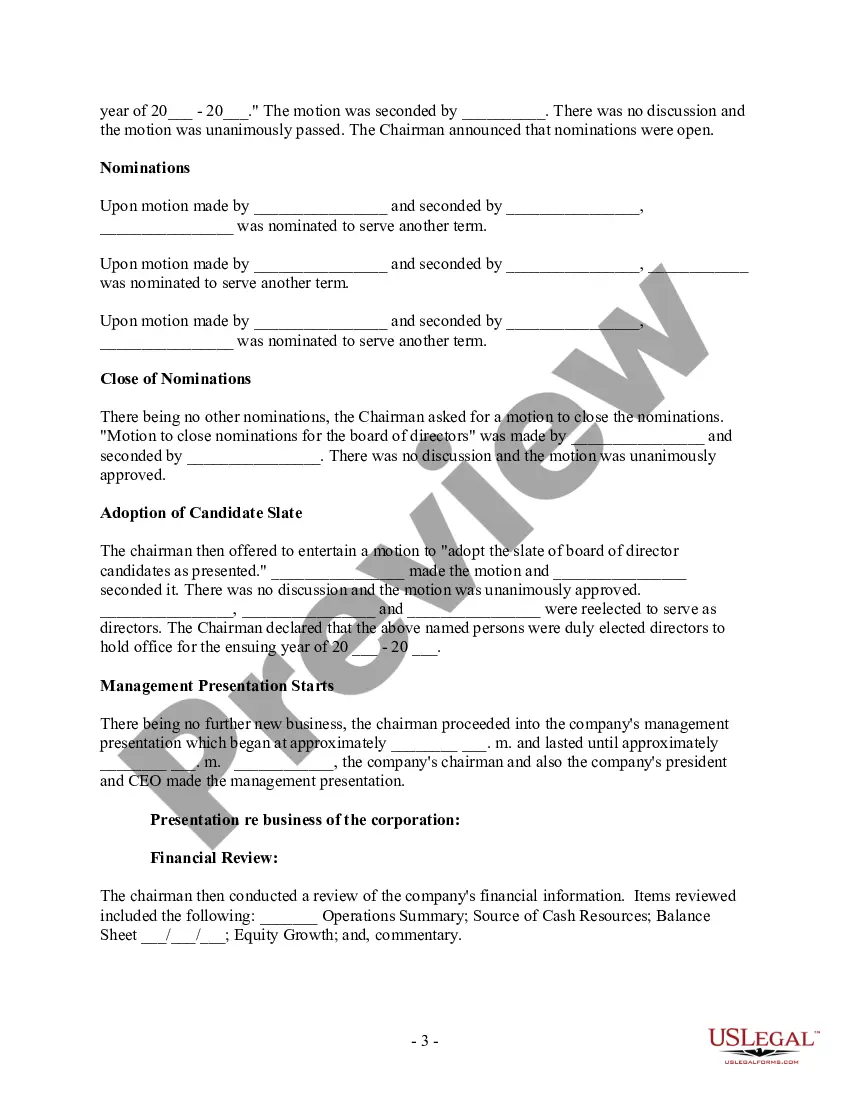
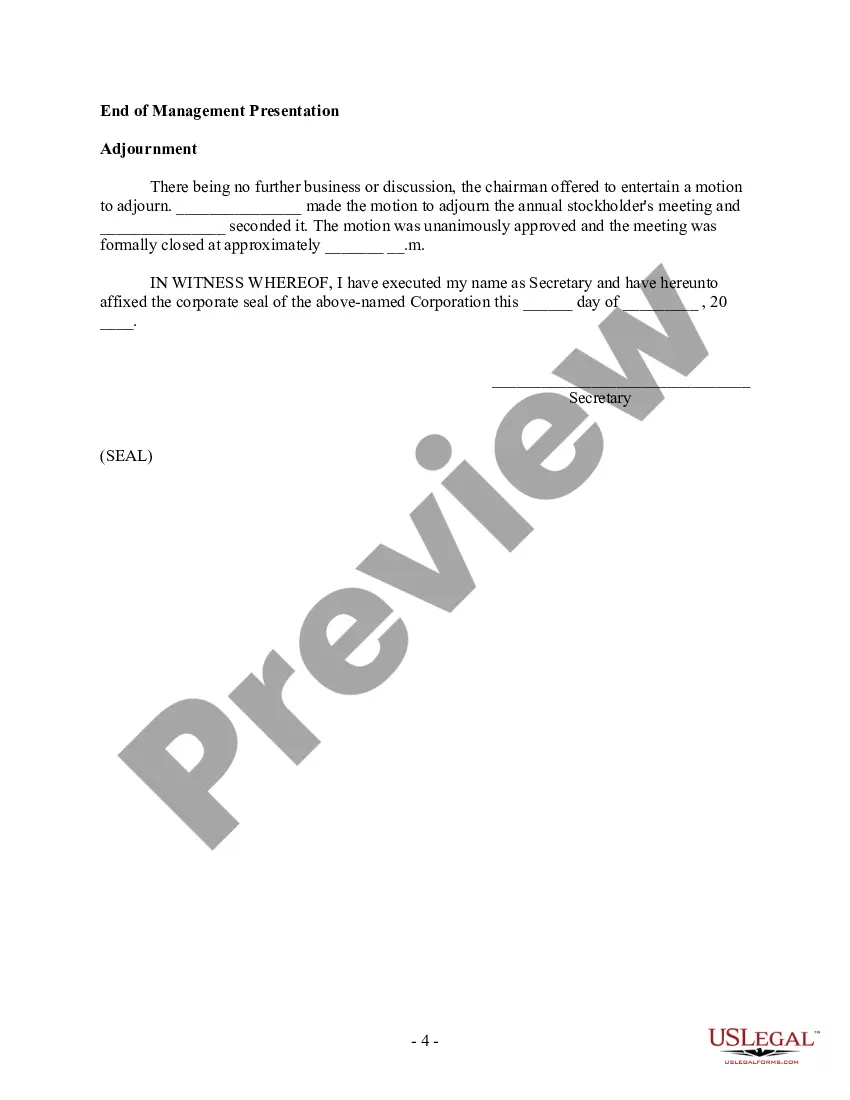
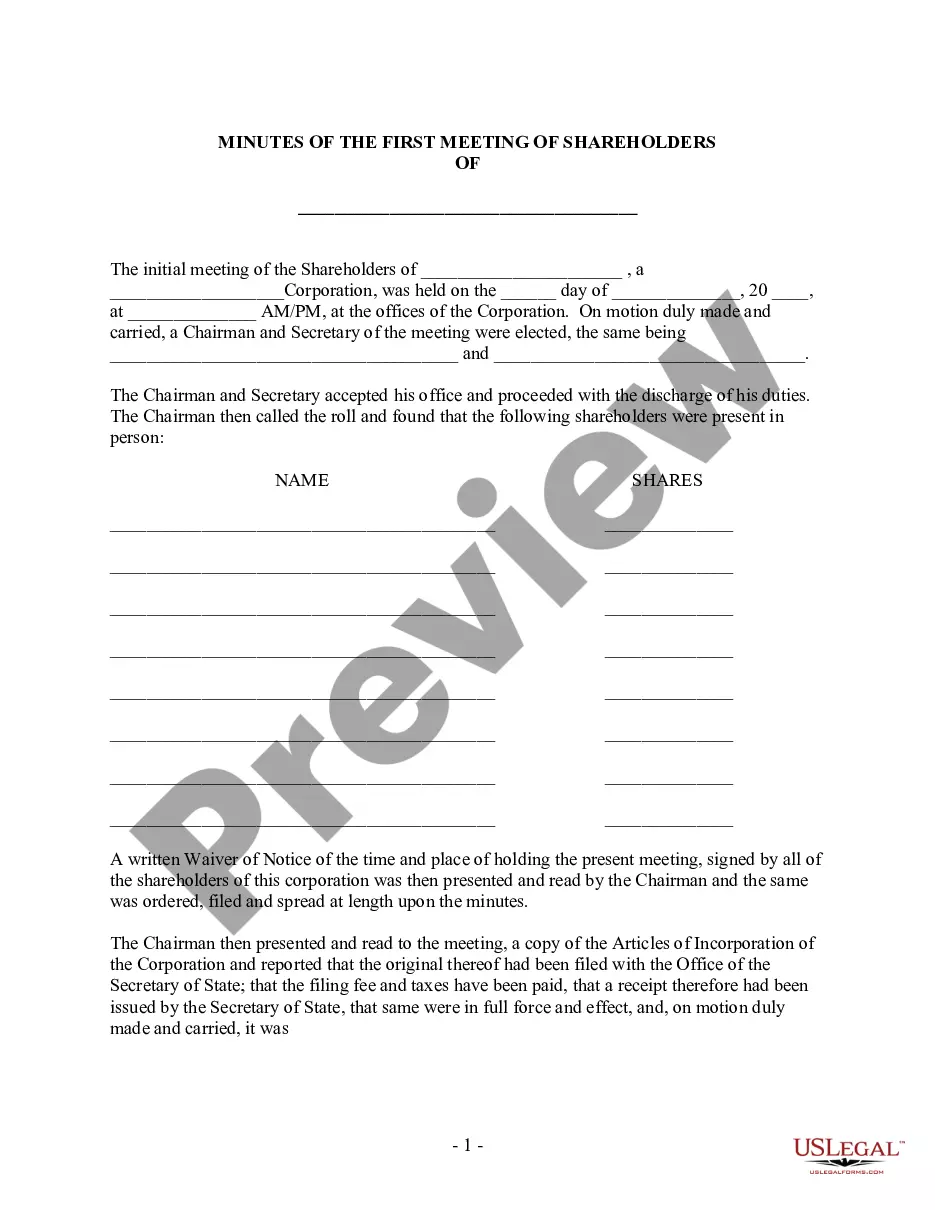
How to write meeting minutes Organization name. Meeting purpose. Start and end times. Date and location. List of attendees and absentees, if necessary. Space for important information like motions passed or deadlines given. Space for your signature and the meeting leader's signature.
All shareholders must be notified of the format, date, time, and place of the meeting. How far in advance notices should be distributed may depend on your state, but generally, they should be sent out more than 10 days prior to the meeting, but less than 60 days.
What should be recorded in meeting minutes? Any actions taken (or agreed to be taken) during the meeting. Voting outcomes on proposals brought forward to the board. The outcome of motions (taken or rejected) Items to be held over to a meeting at a later date.
As the lone attendee you must document the date, time and location of the meeting. You must also list the discussion items, summarize the key points and document the decisions made. You must note all the positions in attendance, even if you occupy all of them.
(i) Date, time and place of meeting; (ii) Purpose of the meeting; (iii) Notice of any special business to be conducted; (iv) Nature of special business in sufficient details; (v) The text of any special resolution or by-law to be submitted to the meeting; and (vi) Any additional details required by the by-laws or ...
Ensure that they align with the agenda and accurately reflect key outcomes and decisions. 10. Get the minutes approved: The board usually approves minutes to make them official, as they're an official and legal record of corporate meetings.
What should be recorded in meeting minutes? Any actions taken (or agreed to be taken) during the meeting. Voting outcomes on proposals brought forward to the board. The outcome of motions (taken or rejected) Items to be held over to a meeting at a later date.
During a shareholders' meeting, voting takes place by a show of hands, but it can also be carried out by secret ballot at the request of any shareholder or agent who is entitled to vote. You may vote to: Elect members of the board of directors. Appoint auditors.
Therefore, all shareholders should be invited to the meeting, at which point they will discuss official business items that need to be addressed. Such items might include electing of new board members, financial issues, and other future short-term and long-term goals and objectives.
