Stockholder Meeting With Example In Maryland
Description



Get your form ready online
Our built-in tools help you complete, sign, share, and store your documents in one place.
Make edits, fill in missing information, and update formatting in US Legal Forms—just like you would in MS Word.
Download a copy, print it, send it by email, or mail it via USPS—whatever works best for your next step.
Sign and collect signatures with our SignNow integration. Send to multiple recipients, set reminders, and more. Go Premium to unlock E-Sign.
If this form requires notarization, complete it online through a secure video call—no need to meet a notary in person or wait for an appointment.
We protect your documents and personal data by following strict security and privacy standards.

Make edits, fill in missing information, and update formatting in US Legal Forms—just like you would in MS Word.

Download a copy, print it, send it by email, or mail it via USPS—whatever works best for your next step.

Sign and collect signatures with our SignNow integration. Send to multiple recipients, set reminders, and more. Go Premium to unlock E-Sign.

If this form requires notarization, complete it online through a secure video call—no need to meet a notary in person or wait for an appointment.

We protect your documents and personal data by following strict security and privacy standards.
Looking for another form?









Form popularity
FAQ
Shareholders must be given clear advance notice of the meeting's date, time, place, and agenda, typically within a state-specified timeframe. A corporation's bylaws or certificate of incorporation may allow the board, executives, or qualifying shareholders to call a special meeting.
Annual General Meeting (AGM) During these meetings, corporate board members present annual financial reports and accounts to be ratified by shareholders. Shareholders can also question board decisions and vote on the appointment, election, or removal of company directors.
Stakeholder meetings provide an opportunity to address concerns, manage expectations and identify potential risks early on. This proactive approach helps prevent conflicts and ensures that everyone is working towards a shared vision.
Notification of the meeting's date and time will include a copy of the meeting's agenda, which is often centered around the election of members to the board of directors, approval of an accounting firm to review the company's financial records, and an opportunity to vote on any proposals that are put before the board, ...
The owners of a company are its shareholders, who are some of its most important stakeholders. A company organizes a general meeting of shareholders to debate and resolve important business matters.
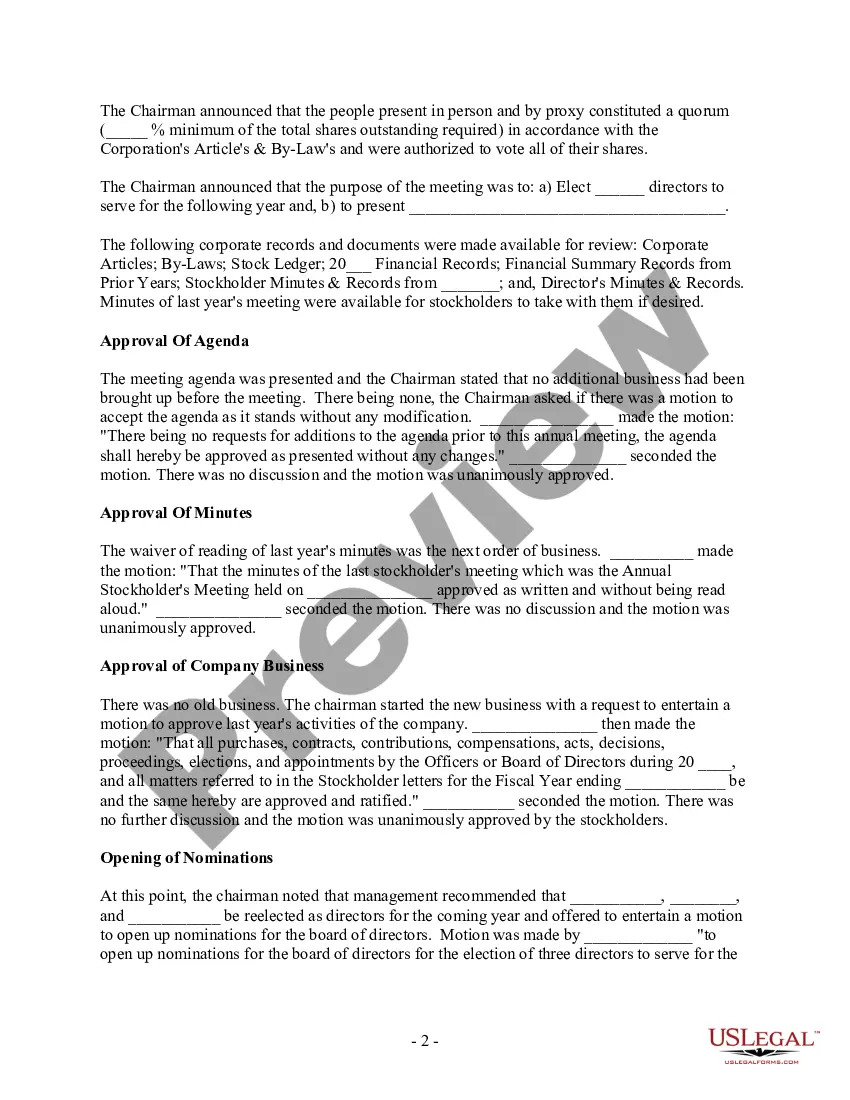
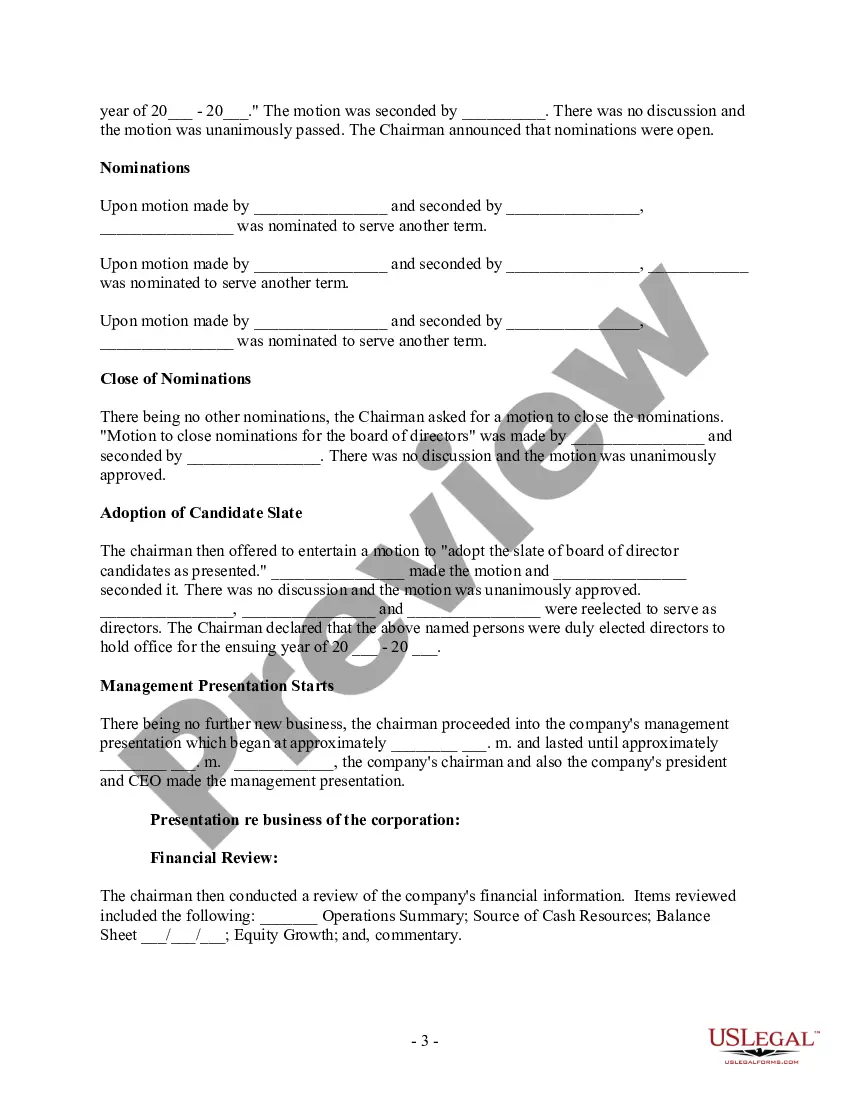
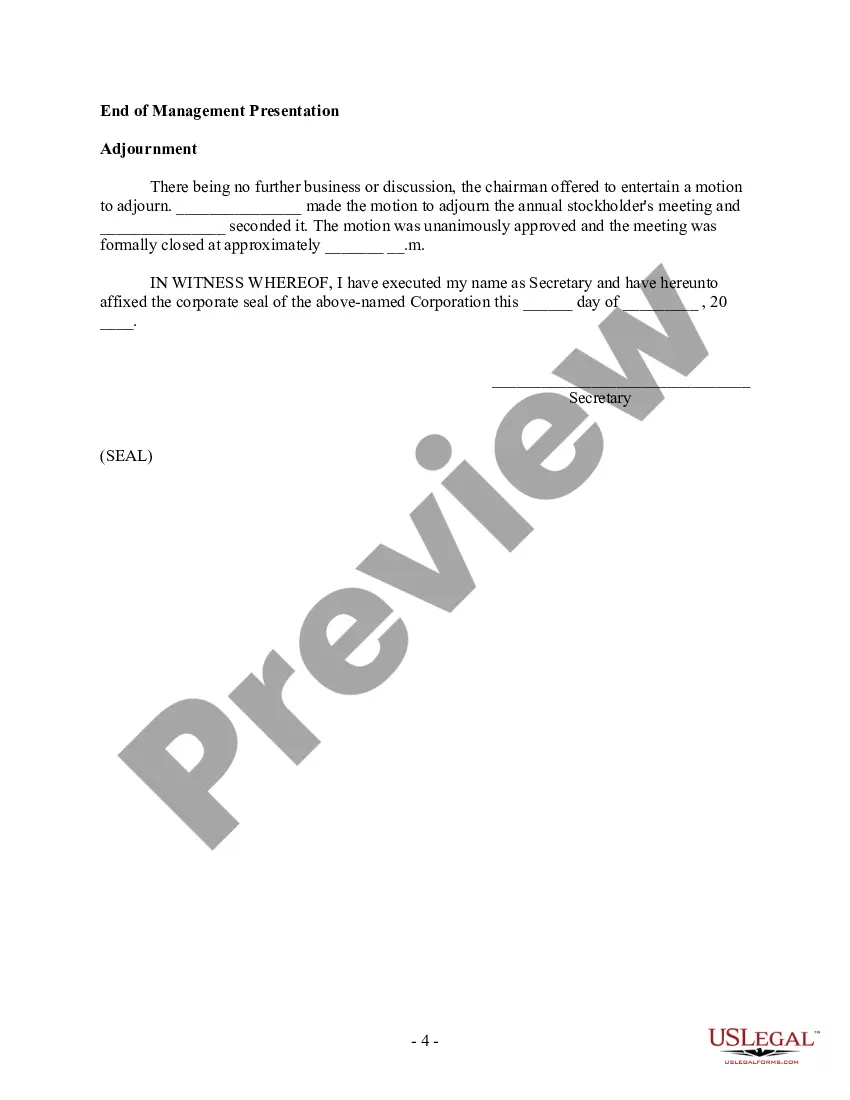
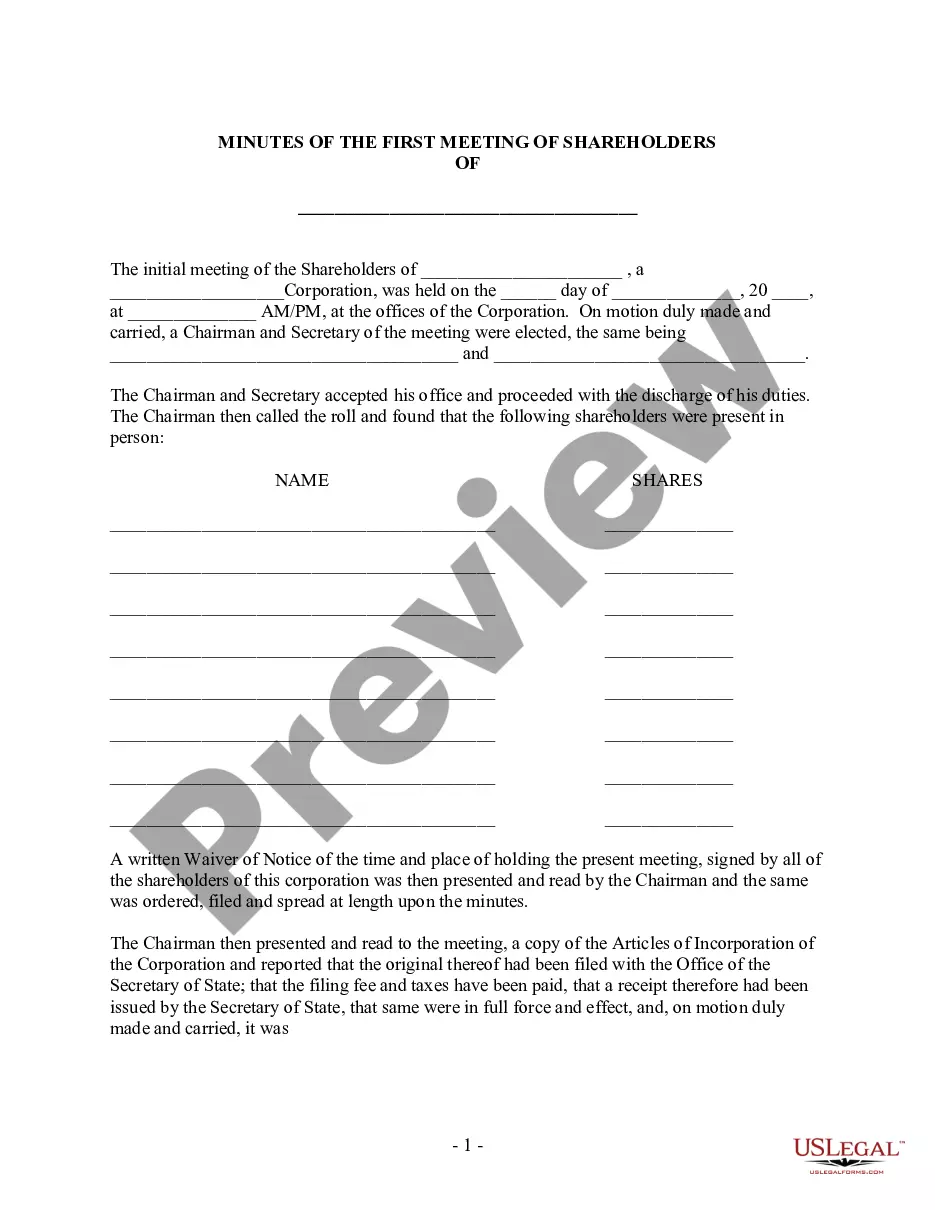
To write effective meeting minutes, include: Information about the corporation, such as the state of incorporation and the company's name. The names of the chairperson, shareholders, and secretary. The date and address of the meeting. Decisions for each item on the agenda.
Annual shareholder meetings, sometimes referred to as annual general meetings, are intended to give shareholders an opportunity to learn about a company's financial situation, obtain updated concerning business goals and any proposed changes in leadership or policy, elect new members to the Board of Directors, and vote ...
Special meetings of the shareholders may be called for any purpose or purposes, at any time, by the Chief Executive Officer; by the Chief Financial Officer; by the Board or any two or more members thereof; or by one or more shareholders holding not less than 10% of the voting power of all shares of the corporation ...
(1) The Board may, whenever it deems fit, call an extraordinary general meeting of the company . Provided that in case of a Specified IFSC public company, the Board may subject to the consent of all the shareholders, convene its extraordinary general meeting at any place within or outside India.
In general, companies require a letter or similar notification from investors having a sufficient number of shares, demanding a special meeting and stating the purpose for that meeting. The company can then set the date for the meeting, typically within a 30 to 90 day time period after receipt of the demand.
