Stockholder Meeting For Agm In Clark
Description



Get your form ready online
Our built-in tools help you complete, sign, share, and store your documents in one place.
Make edits, fill in missing information, and update formatting in US Legal Forms—just like you would in MS Word.
Download a copy, print it, send it by email, or mail it via USPS—whatever works best for your next step.
Sign and collect signatures with our SignNow integration. Send to multiple recipients, set reminders, and more. Go Premium to unlock E-Sign.
If this form requires notarization, complete it online through a secure video call—no need to meet a notary in person or wait for an appointment.
We protect your documents and personal data by following strict security and privacy standards.

Make edits, fill in missing information, and update formatting in US Legal Forms—just like you would in MS Word.

Download a copy, print it, send it by email, or mail it via USPS—whatever works best for your next step.

Sign and collect signatures with our SignNow integration. Send to multiple recipients, set reminders, and more. Go Premium to unlock E-Sign.

If this form requires notarization, complete it online through a secure video call—no need to meet a notary in person or wait for an appointment.

We protect your documents and personal data by following strict security and privacy standards.
Looking for another form?

Form popularity
FAQ
The shareholder's meeting has very important duties such as approving the financial statements or electing the board of directors. Substantially, the shareholders' meeting represents the requests of the owner, in other words, of the shareholders of the company.
Key Takeaways. General meetings are formal meetings of a company's shareholders or guarantors (aka its members). These meetings are optional for private companies but compulsory for public companies.
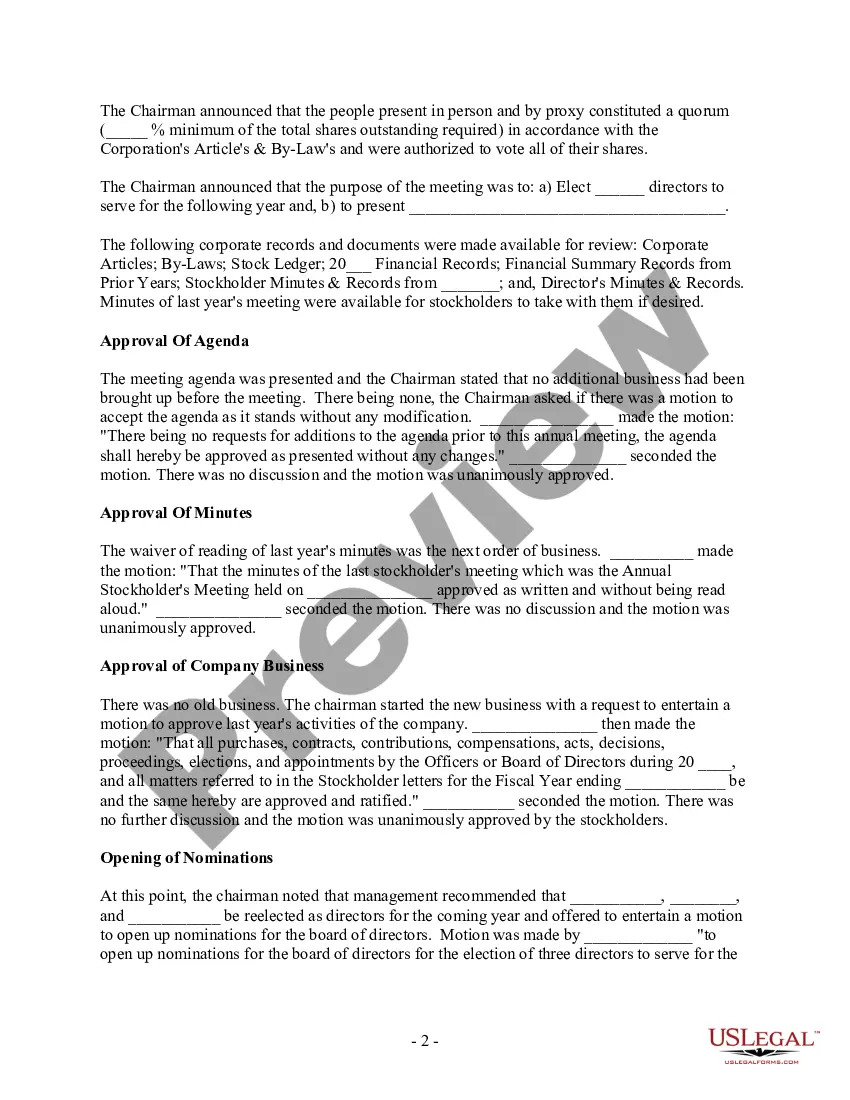
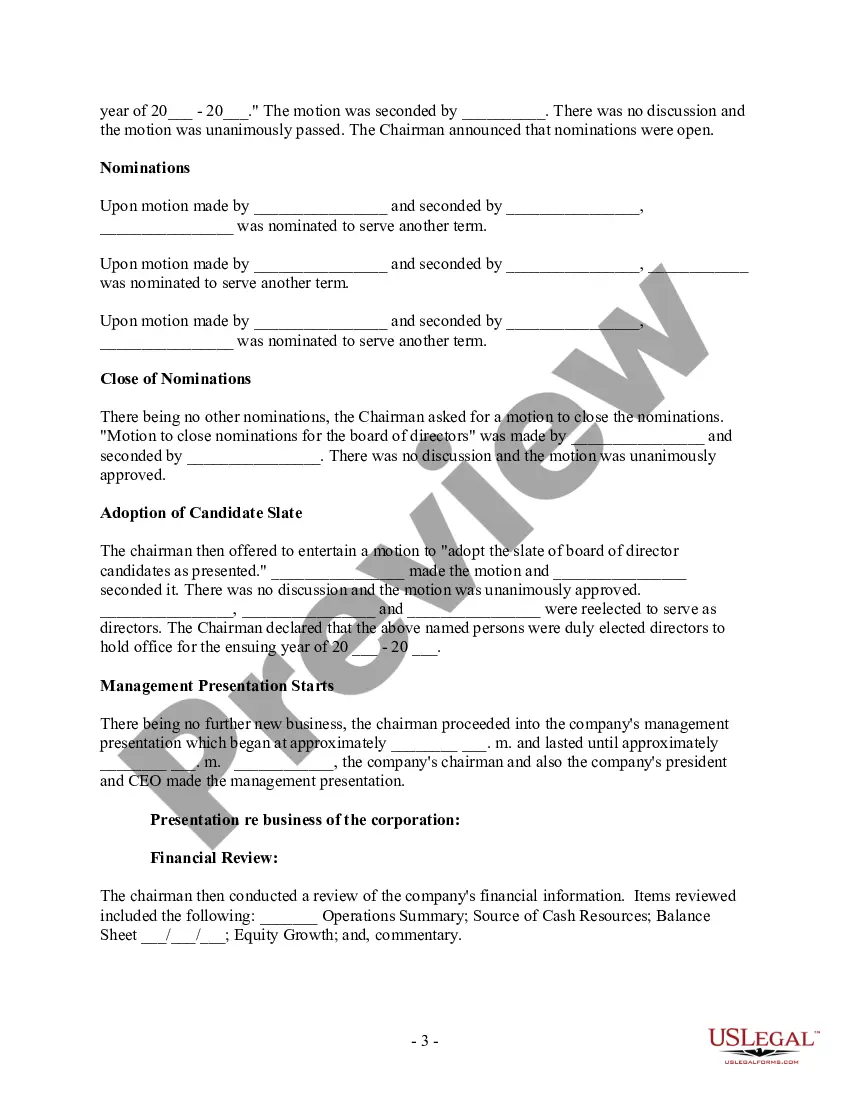
An AGM (also known as an annual shareholder meeting) is a yearly meeting between shareholders and board members where they gather to: Discuss business matters. Review financial statements. Address resolutions.
Menu Inversionistas. In ance with the current Statutes, two types of general assemblies can be held: ordinary and extraordinary. Ordinary general shareholders meetings are those convened to discuss any matter that is not reserved for extraordinary general shareholders meetings.
In order to have a legal meeting you must have a quorum of shareholders present. Typically, a quorum is defined as a representative of more than half of all shares outstanding. There are many other items that can be included on the agenda for an annual shareholder meeting.
An AGM (also known as an annual shareholder meeting) is a yearly meeting between shareholders and board members where they gather to: Discuss business matters. Review financial statements. Address resolutions. Elect or remove board directors.
AGM processes to follow Notify attendees in writing 21 days before you hold an AGM. You need to give your organisation, your membership, stakeholders, funders, and board members notice in writing at least 21 days before you hold an AGM. Know your constitution. Who attends AGMs and who has the right to vote?
Your report could cover: Any successes, developments or project completions. Any challenges you encountered – what you would change if given the opportunity. Suggestions for work to be carried over to the next year. Acknowledge any people who have supported you in your role.
A general meeting is a members' meeting, but certain non-members may also be entitled to attend. It's important to check the articles of association and any shareholders' agreement to determine the rules and restrictions for attending general meetings.
