Sample Salary Offer Letter In Virginia
Description
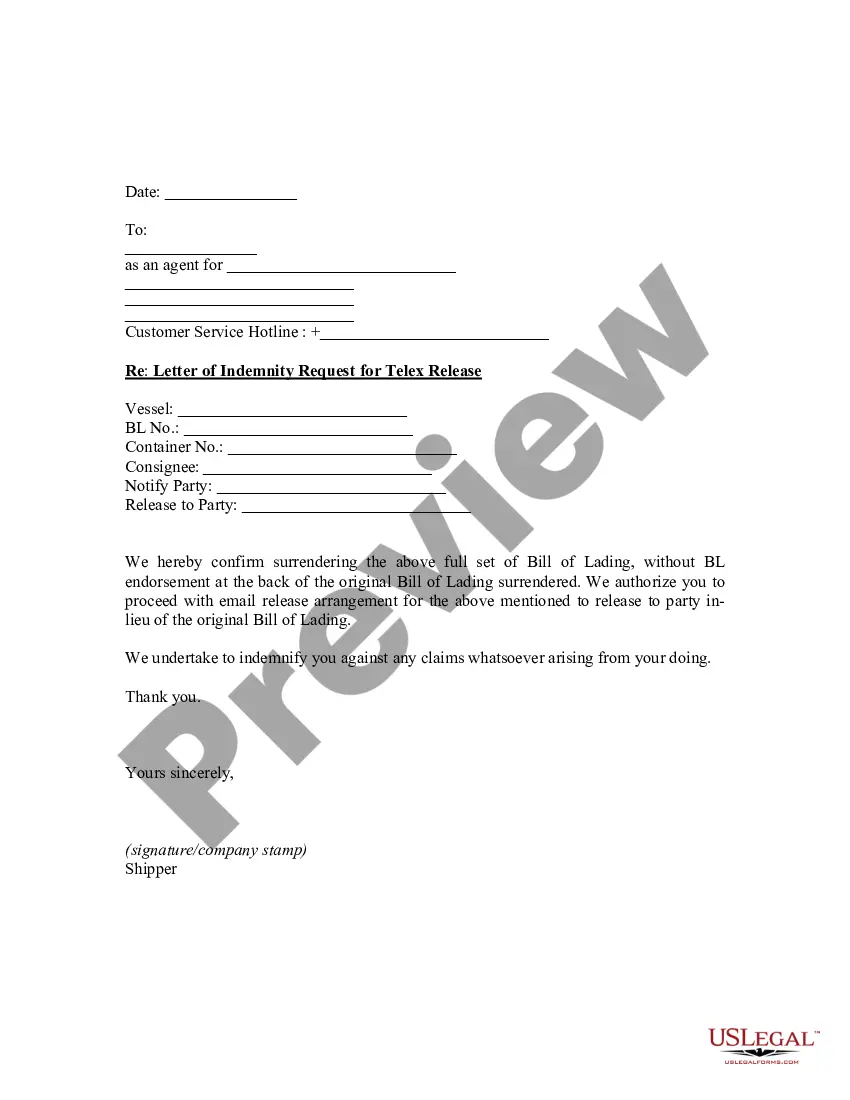
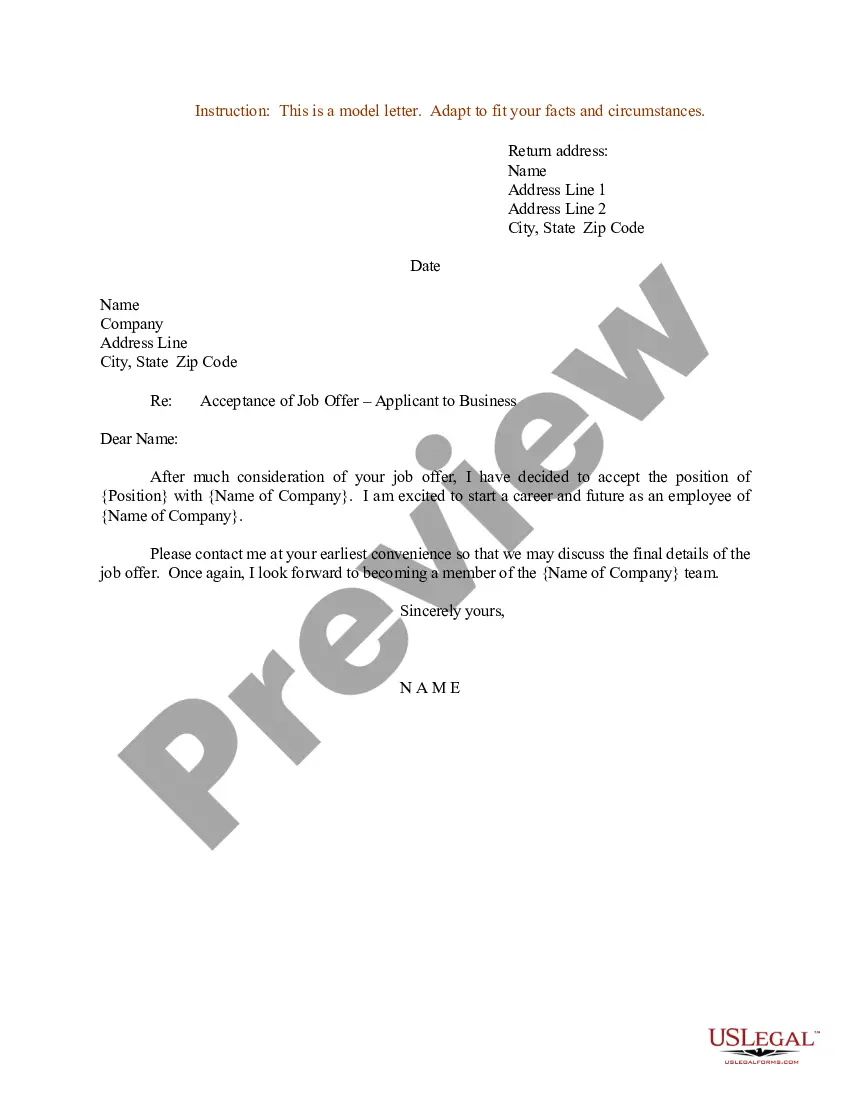
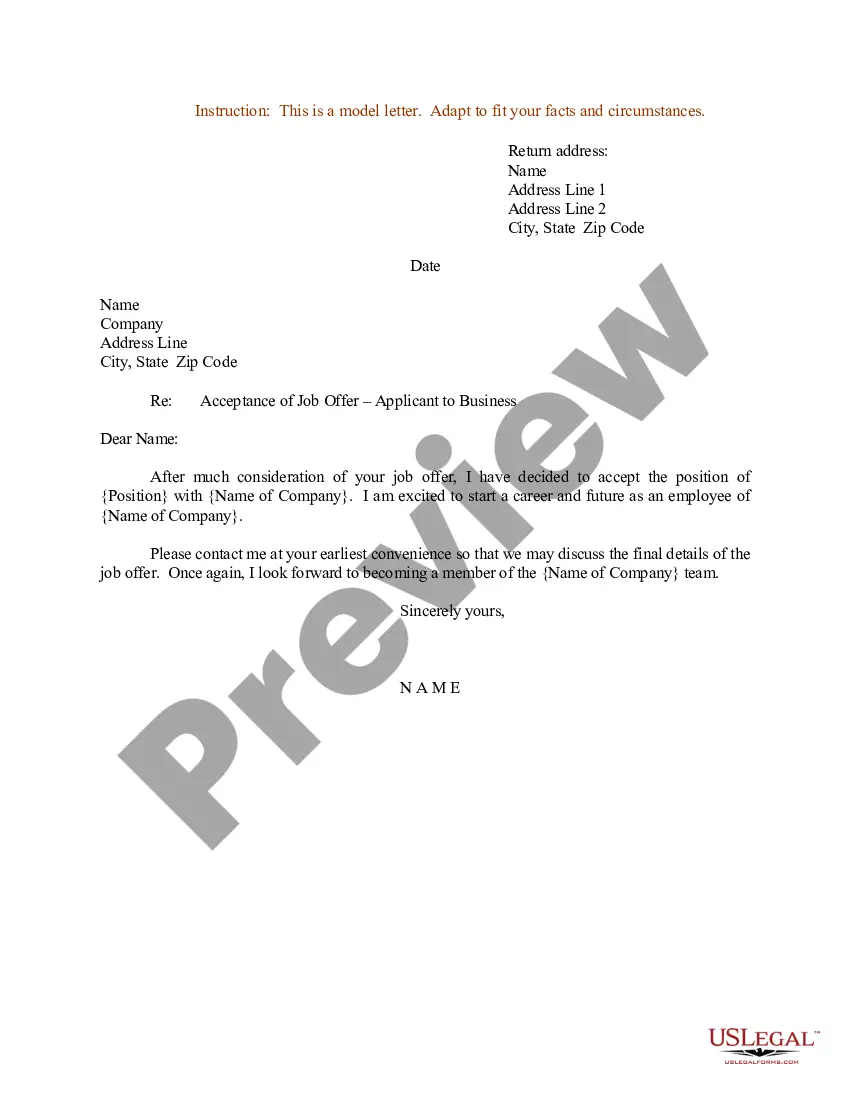
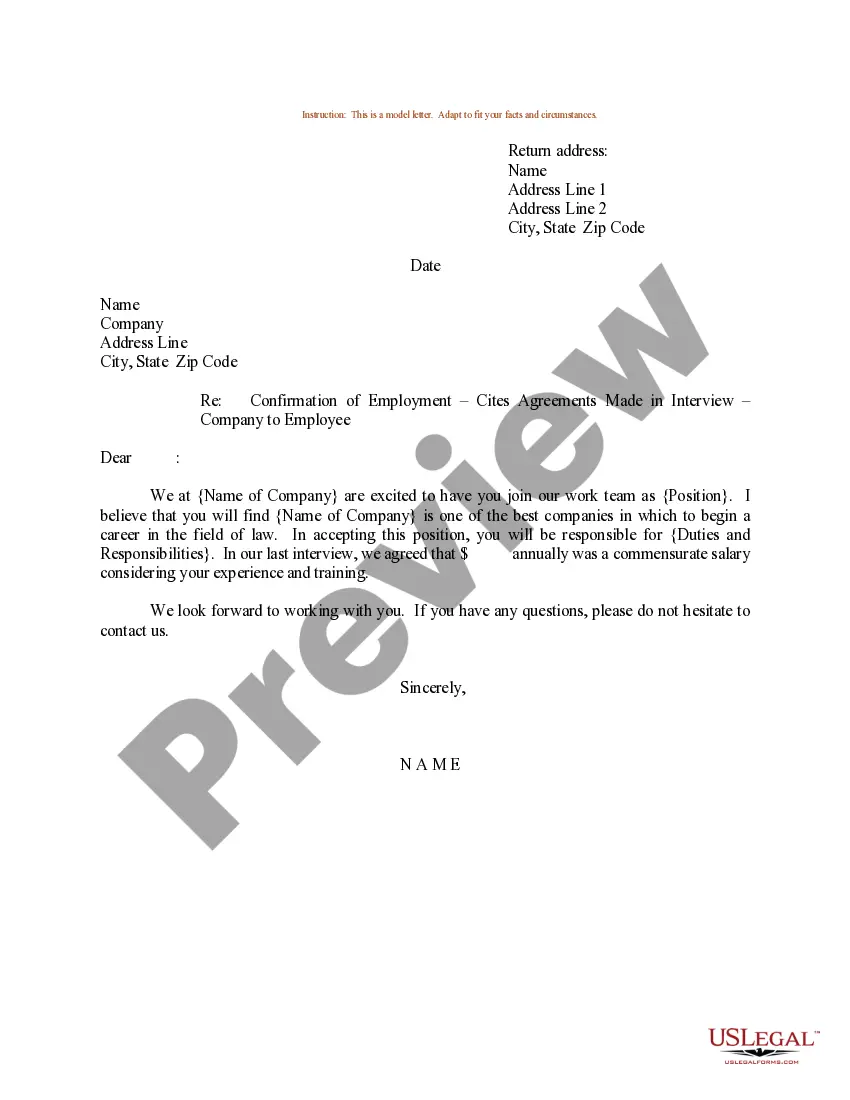
Get your form ready online
Our built-in tools help you complete, sign, share, and store your documents in one place.
Make edits, fill in missing information, and update formatting in US Legal Forms—just like you would in MS Word.
Download a copy, print it, send it by email, or mail it via USPS—whatever works best for your next step.
Sign and collect signatures with our SignNow integration. Send to multiple recipients, set reminders, and more. Go Premium to unlock E-Sign.
If this form requires notarization, complete it online through a secure video call—no need to meet a notary in person or wait for an appointment.
We protect your documents and personal data by following strict security and privacy standards.

Make edits, fill in missing information, and update formatting in US Legal Forms—just like you would in MS Word.

Download a copy, print it, send it by email, or mail it via USPS—whatever works best for your next step.

Sign and collect signatures with our SignNow integration. Send to multiple recipients, set reminders, and more. Go Premium to unlock E-Sign.

If this form requires notarization, complete it online through a secure video call—no need to meet a notary in person or wait for an appointment.

We protect your documents and personal data by following strict security and privacy standards.
Looking for another form?
Form popularity
FAQ
Here are a few tips to help you prepare for salary negotiation: Start by evaluating what you have to offer. Research the market average. Prepare your talking points. Schedule a time to discuss. Rehearse with a trusted friend. Be confident. Lead with gratitude. Ask for the top of your range.
Be Specific: Clearly state the salary you are seeking, based on your research and current salary. Justify Your Request: Reference your research, your current salary, and the value you bring to the company. If the salary cannot be adjusted, consider negotiating other aspects, such as: Signing bonuses Performance bonuses.
What to include in a job offer letter 1 Welcome message. A welcome message may be included at the beginning of the letter to congratulate the candidate on being offered the new position. 2 Job title. 3 Salary and compensation. 4 Start date. 5 Employment type. 6 Work schedule. 7 Reporting structure. 8 Terms and conditions.
Just say that you're excited for the offer and ask if there's anything they can do to bump up the salary. Don't give a specific number unless you absolutely have to. There's always wiggle room in the first offer because they expect you to negotiate. Don't listen to the people saying it's too late now.
Dear Candidate's Name, We are pleased to offer you the position of Job Title at Company Name. After careful consideration, we're confident that you possess the skills and experience necessary to excel in this role. As the Job Title, you will be responsible for brief mention of job responsibilities.
Suggest a Specific Amount: Propose a specific salary that you feel is fair and justified. Invite Further Discussion: Show that you are open to negotiation and discussion. Close Professionally: Thank them again and express your hope for a positive response. Dear (Hiring Manager's Name),
How to make a salary counteroffer Ask for time to make your decision. Conduct research on industry compensation. Assess your qualifications and experience. Review and evaluate the initial offer. Determine your counteroffer value. Submit your counteroffer. Prepare for the employer's response. Negotiate the offer as needed.
After an interview, an employer may offer an applicant a job in person or by a follow-up phone call or email. Afterward, the employer may provide the selected applicant with an Employment Offer Letter to formally offer them the position.
How to list salary requirements Use a salary range. When you list your salary requirements, consider writing a sentence that states your preferred salary range instead of an absolute figure. Say that you're flexible. Say that your salary requirements are negotiable.
