Sample Job Offer Letter With Probation Period In Virginia
Description
Get your form ready online
Our built-in tools help you complete, sign, share, and store your documents in one place.
Make edits, fill in missing information, and update formatting in US Legal Forms—just like you would in MS Word.
Download a copy, print it, send it by email, or mail it via USPS—whatever works best for your next step.
Sign and collect signatures with our SignNow integration. Send to multiple recipients, set reminders, and more. Go Premium to unlock E-Sign.
If this form requires notarization, complete it online through a secure video call—no need to meet a notary in person or wait for an appointment.
We protect your documents and personal data by following strict security and privacy standards.

Make edits, fill in missing information, and update formatting in US Legal Forms—just like you would in MS Word.

Download a copy, print it, send it by email, or mail it via USPS—whatever works best for your next step.

Sign and collect signatures with our SignNow integration. Send to multiple recipients, set reminders, and more. Go Premium to unlock E-Sign.

If this form requires notarization, complete it online through a secure video call—no need to meet a notary in person or wait for an appointment.

We protect your documents and personal data by following strict security and privacy standards.
Looking for another form?





Form popularity
FAQ
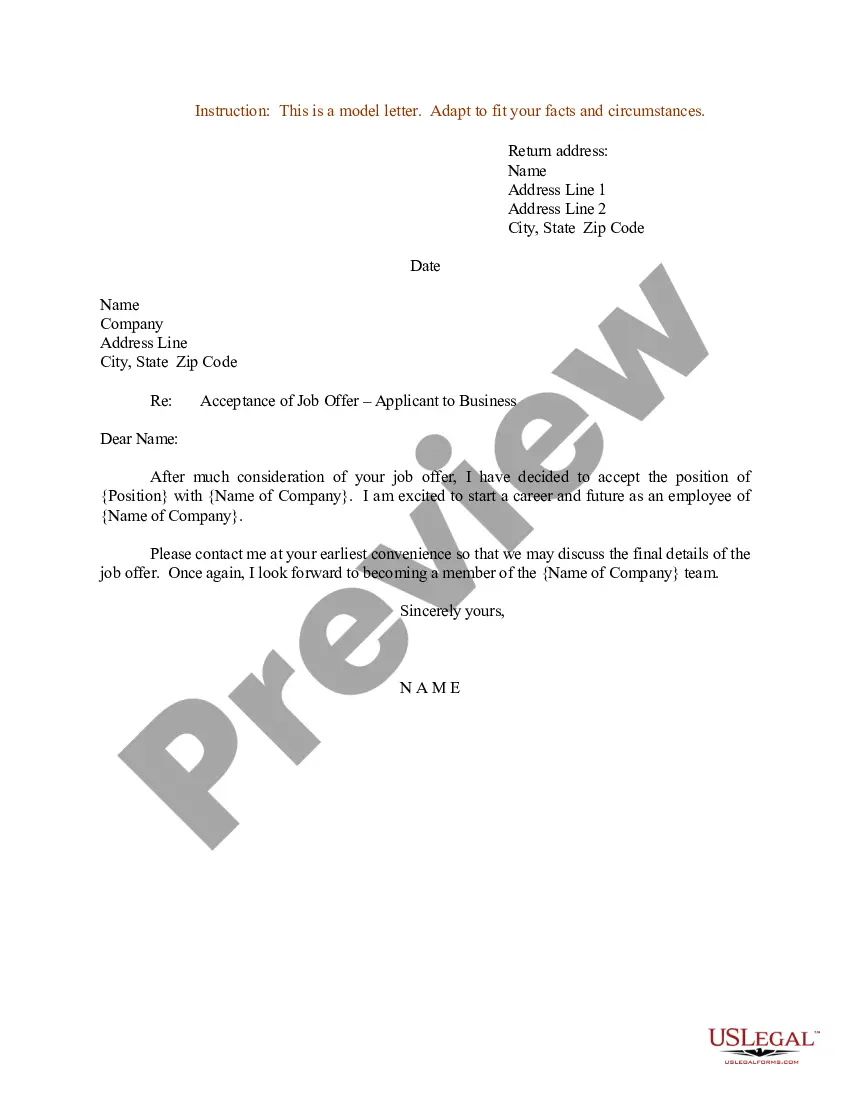
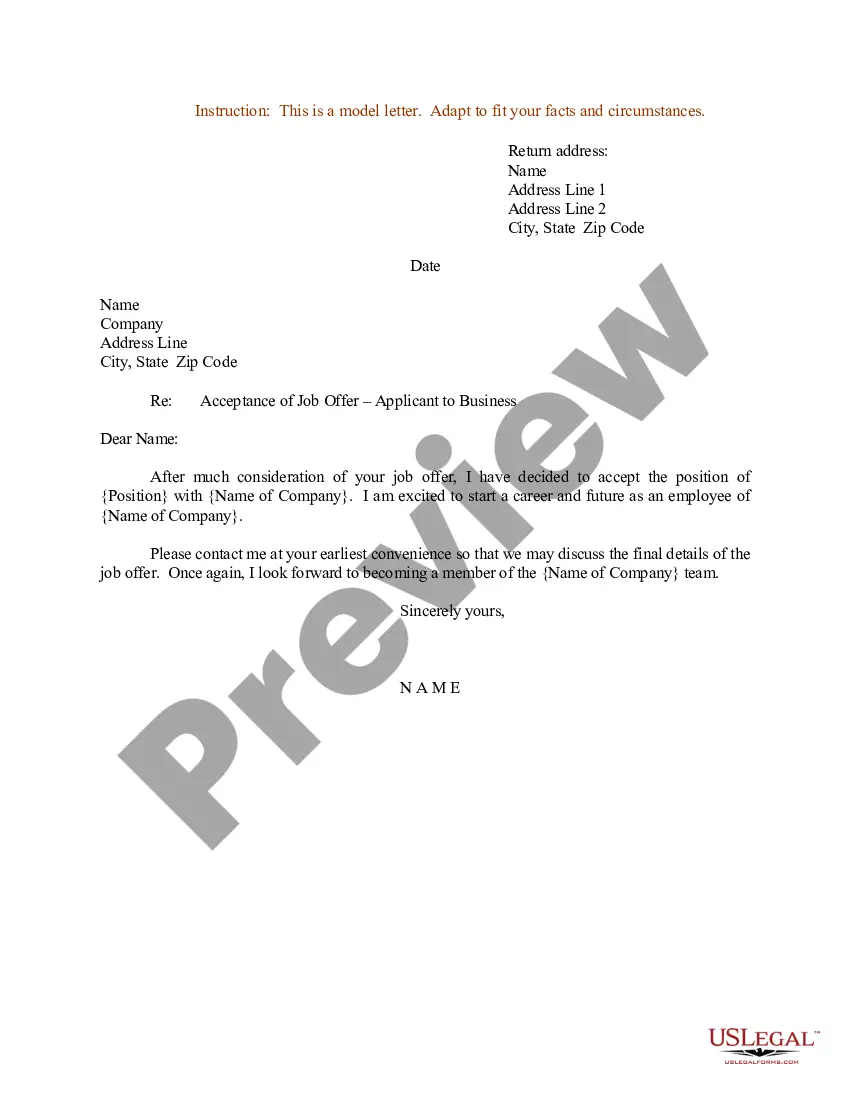
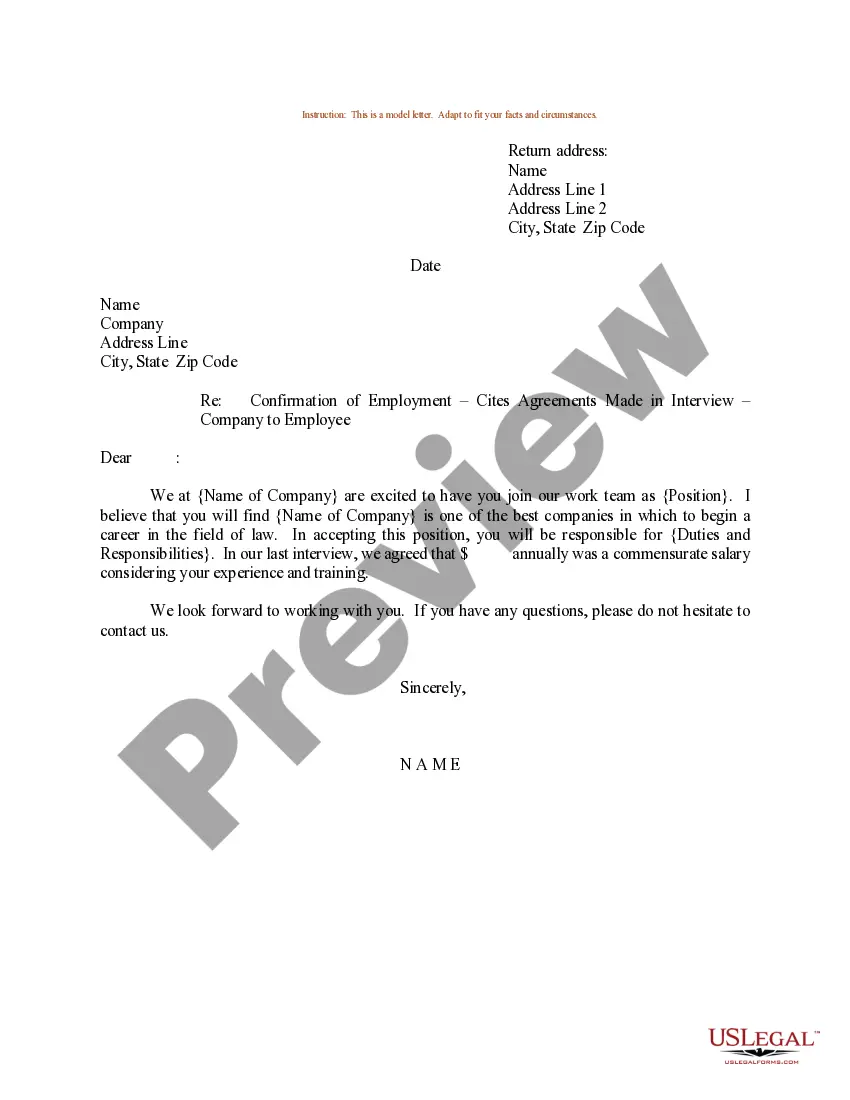
Company name is delighted to offer you the full-time, part-time, etc. position of job title with an anticipated start date of start date, contingent upon background check, drug screening, etc.. As the job title, you will be responsible for brief mention of job responsibilities and expectations.
While a signed offer letter is a formal part of the hiring process, it is not a legally binding contract in the same way that an employment contract is.
In some cases, an offer letter might contain specific terms that could create contractual obligations. For instance, if an offer letter specifies a fixed term of employment or includes specific clauses about termination procedures, it might be viewed as a contract.
Your initial employment will include a probationary period of 30, 60, 90, etc. days, during which you will not be able to perform list restricted work activities during probationary period and will be directly supervised by Title, Name of supervisor.
If the employer doesn't sign the letter, it is not legally binding. You can also back out of the offer letter before committing to your new job, but if a new employee reneges on their employment contract, they'd be in legal trouble.
If you accepted a job offer and the employer rescinded it (took it back) before you started work, you might have legal claims for breach of contract, promissory estoppel, or even fraud. However, you should carefully consider your options before filing a lawsuit.
After the employee receives the offer letter, they should sign their signature indicating that they agree with the terms and formally accept the position. Most offer letters are also reviewed and signed by the hiring manager or a senior member of the company.
Clearly state the job title and position being offered. Include the key details of the offer, such as salary, benefits and any additional compensation. Outline the start date and working hours, including full-time, part-time, contract or internship duration.
A conditional offer of employment should be written like a traditional job offer, with a full description of the job responsibilities, salary, etc. However, it also lays out conditions that must be met in order for the employee to start work.
Conditional offers mean you must meet the conditions stated on your letter of offer. Conditions may include forwarding your examination results or achieving an English proficiency test score. If you receive a conditional offer, you may be allowed to accept your offer.

