Letter With Job Offer In Illinois
Description
Get your form ready online
Our built-in tools help you complete, sign, share, and store your documents in one place.
Make edits, fill in missing information, and update formatting in US Legal Forms—just like you would in MS Word.
Download a copy, print it, send it by email, or mail it via USPS—whatever works best for your next step.
Sign and collect signatures with our SignNow integration. Send to multiple recipients, set reminders, and more. Go Premium to unlock E-Sign.
If this form requires notarization, complete it online through a secure video call—no need to meet a notary in person or wait for an appointment.
We protect your documents and personal data by following strict security and privacy standards.

Make edits, fill in missing information, and update formatting in US Legal Forms—just like you would in MS Word.

Download a copy, print it, send it by email, or mail it via USPS—whatever works best for your next step.

Sign and collect signatures with our SignNow integration. Send to multiple recipients, set reminders, and more. Go Premium to unlock E-Sign.

If this form requires notarization, complete it online through a secure video call—no need to meet a notary in person or wait for an appointment.

We protect your documents and personal data by following strict security and privacy standards.
Looking for another form?







Form popularity
FAQ
An offer letter process involves the hiring managers informing the selected candidate about the selection, making the verbal offer, writing the official letter of employment, securing the acceptance, closing the offer, and the final onboarding. The offer letter process should not be rushed but navigated with care.
Dear (Employer's Name), Thank you for offering me the position of (Job Title) at (Company Name). I am delighted and grateful to accept this offer and I look forward to joining your team. I appreciate the opportunity you have given me to work with such a reputable and respected organization.
Whereas an offer letter is unofficial (avoiding statements that promise future wages or employment), an employment contract is exactly the opposite, setting wages and length of employment in legally binding stone.
A signed offer letter can be legally binding to an extent, but it depends on the content and how it's presented. If it clearly outlines the key terms of employment, it may create a binding agreement. However, it's generally not as binding as a formal employment contract.
Dear (Employer's Name), Thank you for offering me the position of (Job Title) at (Company Name). I am delighted and grateful to accept this offer and I look forward to joining your team. I appreciate the opportunity you have given me to work with such a reputable and respected organization.
While an offer letter is a formal job offer, it is usually considered as an invitation to enter into a contract rather than a binding agreement. On the other hand, employment contracts are legally binding documents that establish the rights and obligations of both parties and are enforceable by law.
Some important details about an offer letter are: It is NOT a legally binding contract. It does NOT include promises of future employment or wages.
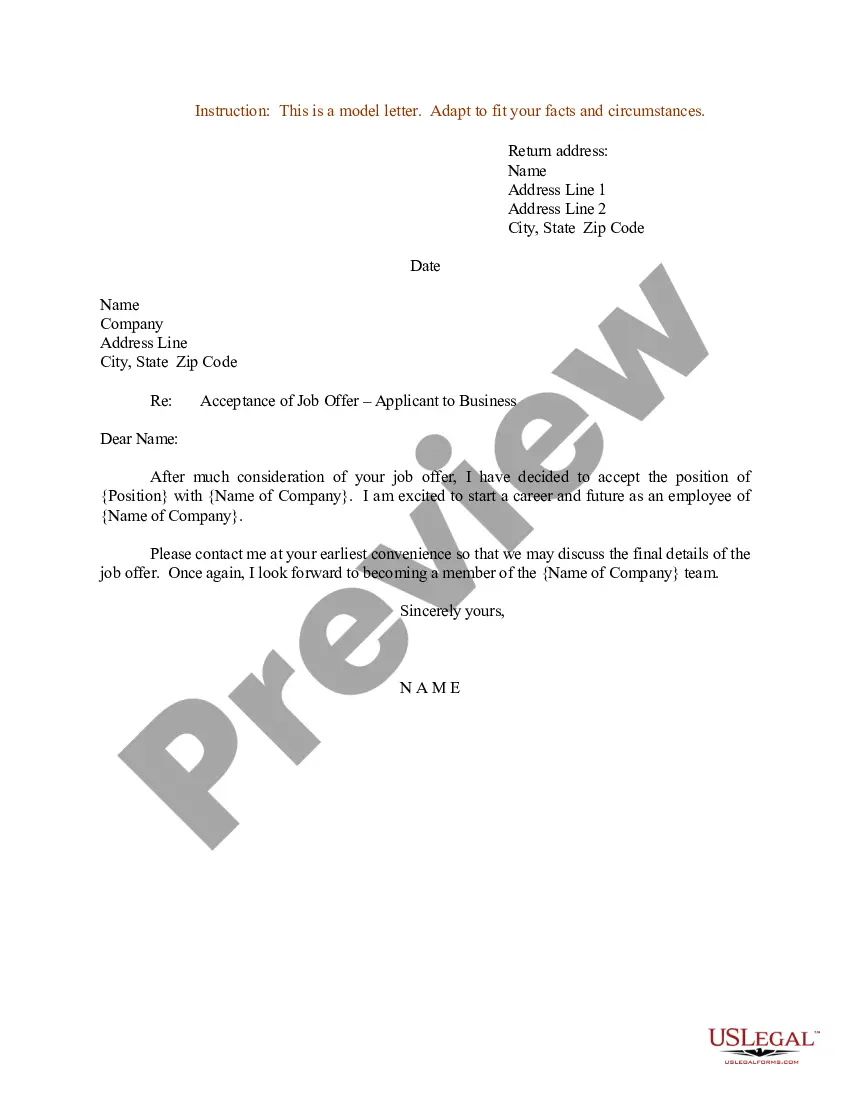
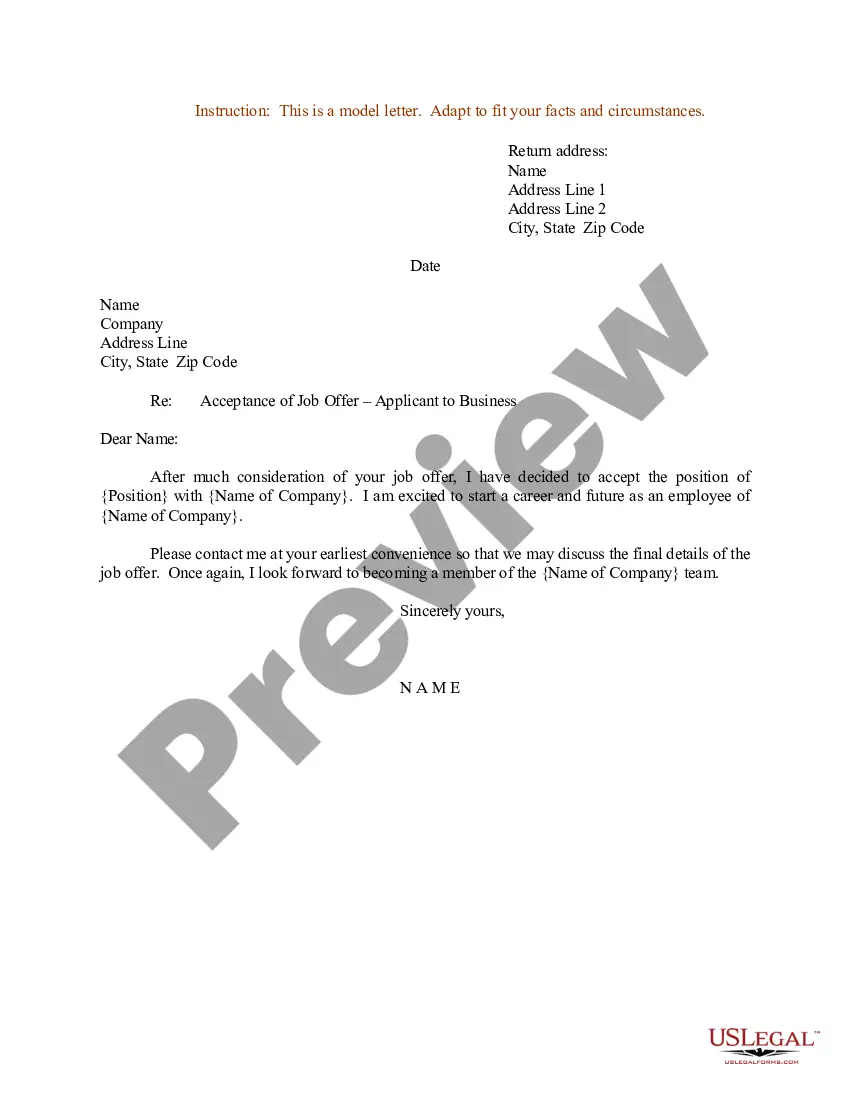
I am pleased to accept your job offer as (position title) at (Company XYZ). I look forward to working under (Supervisor) and hope to meet the goals outlined with the position. The duties of this role are well aligned with my qualifications and skills.
How do you politely accept a job offer? Express your gratitude for the opportunity, confirm your acceptance clearly and professionally, and ask about the next steps in the hiring process. Keep a positive and professional tone throughout the conversation.
No, an offer letter differs from an employment contract. While an offer letter is a formal, initial communication indicating a company's intent to hire and outlines basic job details, it is not as legally binding or detailed as an employment contract.
