Letter Acceptance Template For Business In Fairfax
Description
Get your form ready online
Our built-in tools help you complete, sign, share, and store your documents in one place.
Make edits, fill in missing information, and update formatting in US Legal Forms—just like you would in MS Word.
Download a copy, print it, send it by email, or mail it via USPS—whatever works best for your next step.
Sign and collect signatures with our SignNow integration. Send to multiple recipients, set reminders, and more. Go Premium to unlock E-Sign.
If this form requires notarization, complete it online through a secure video call—no need to meet a notary in person or wait for an appointment.
We protect your documents and personal data by following strict security and privacy standards.

Make edits, fill in missing information, and update formatting in US Legal Forms—just like you would in MS Word.

Download a copy, print it, send it by email, or mail it via USPS—whatever works best for your next step.

Sign and collect signatures with our SignNow integration. Send to multiple recipients, set reminders, and more. Go Premium to unlock E-Sign.

If this form requires notarization, complete it online through a secure video call—no need to meet a notary in person or wait for an appointment.

We protect your documents and personal data by following strict security and privacy standards.
Looking for another form?









Form popularity
FAQ
Section 4-7.2-1. (B) Gross receipts do not include revenues that are attributable to taxable business activity conducted in another jurisdiction within the Commonwealth of Virginia and the volume attributable to that business activity is deductible pursuant to Code of Virginia Sections 58.1-3708 and 58.1-3709.
Follow these steps to closing your business: Decide to close. File dissolution documents. Cancel registrations, permits, licenses, and business names. Comply with employment and labor laws. Resolve financial obligations. Maintain records.
Closing a business generally occurs in three steps: (1) voting to dissolve the business and making a plan, (2) winding up the business's operations by distributing all assets to creditors and owners, and (3) submitting some paperwork to the Virginia SCC.
Fairfax County Government's email format typically follows the pattern of First.Last@fairfaxcounty; this email format is used 97% of the time. Other contacts within LeadIQ's database had email formats such as Last.First@fairfaxcountyFLast@fairfaxcounty.
Business closures typically require documentation, which can include lease terminations, bills of sale, a copy of the business license from the new county of business, cancellation, and/or final tax returns (which must be marked as final).
All business owners, including owners of home-based businesses, are subject to the BPOL tax. Business owners are required to register their business with the Department of Tax Administration (DTA) within 75 days of beginning business operations in Fairfax County.
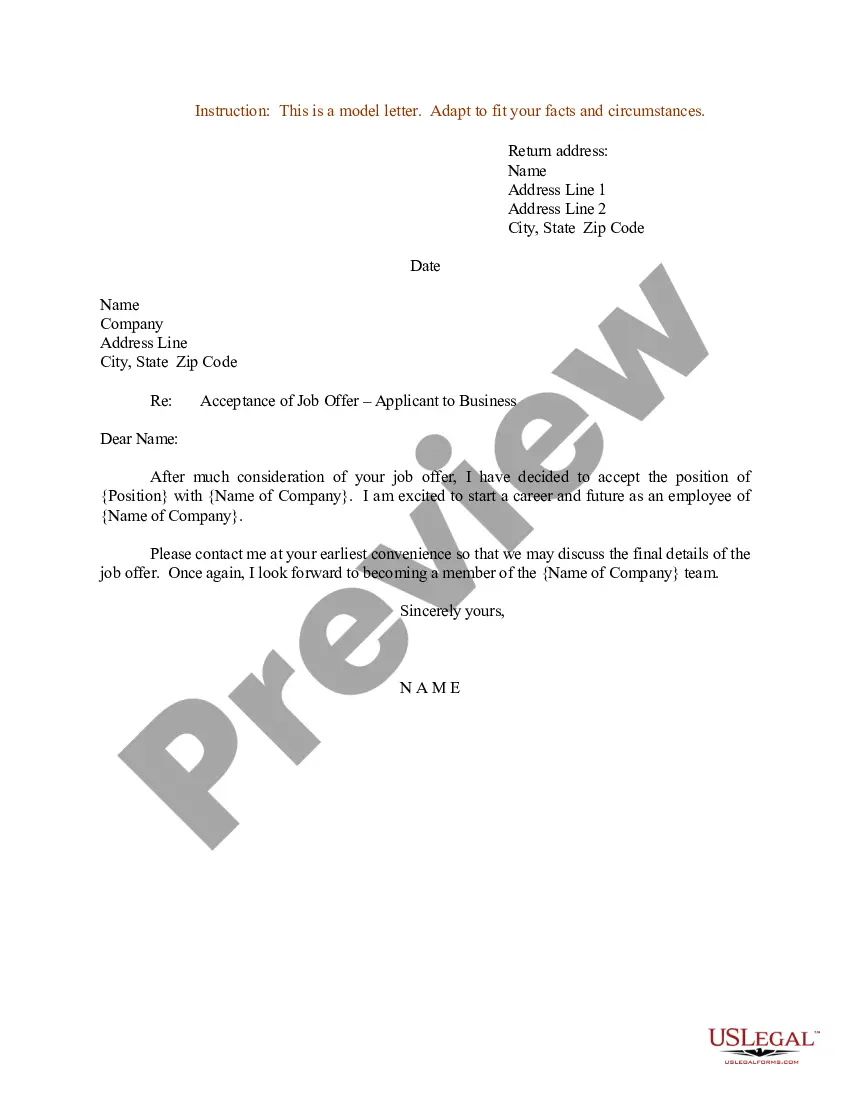
It's in the name – an acceptance letter is a type of professional letter used to formally respond to offers or requests. Most commonly, they're used to accept job offers, but they could also be used to accept an award, event invitation, or even a school placement. They're more than a formal way to say “yes”, though.
The letter must include the following important details: Expression of gratitude for the job offer. Clear written acceptance of the job offer. Confirmation of the terms of employment, such as salary, job title and any benefits. Clarification of your start date. Signature.
How to write a letter of acceptance Address the letter to the recruiter. Express your gratitude for the offer. Confirm the terms of employment. Format your letter appropriately. Proofread your letter. Send your letter and follow up with the recruiter.
How To Write An Offer Letter Acceptance Email Review your job offer. Read your job offer carefully. Start drafting your email. Write a concise subject line. Address your email to the right person. Express gratitude. Make a formal statement of acceptance. Conclude and sign. Format your email.

